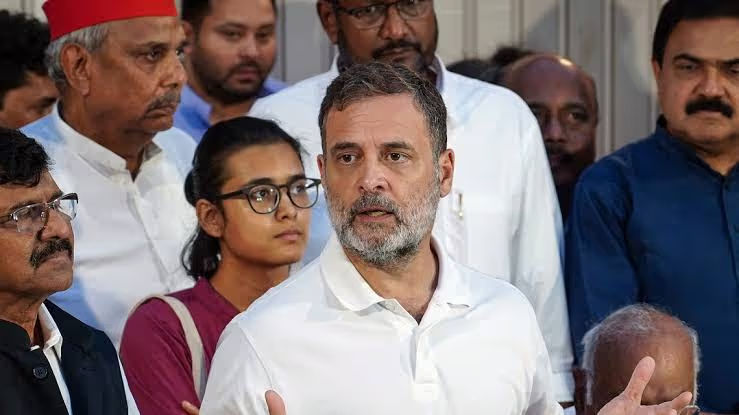
West Bengal introduces Annapurna Yojana; eligible beneficiaries to receive ₹3,000 directly into their bank accounts.
West Bengal Launches Annapurna Yojana: Direct Financial Assistance of ₹3,000 to Reach Nearly Two Crore Beneficiaries
Kolkata, June 4: In a major social welfare initiative aimed at providing financial support to women across the state, the Government of West Bengal formally launched the Annapurna Yojana today. The scheme was inaugurated at Nabanna, the state secretariat, by the Minister of Urban Development and also Minister of Women, Child Development and Social Welfare, Agnimitra Paul, in the presence of Chief Minister Suvendu Adhikari and senior government officials.
The launch of the Annapurna Yojana marks one of the most significant social security interventions undertaken by the state government in recent years. The scheme seeks to provide direct financial assistance to eligible women beneficiaries through the Direct Benefit Transfer (DBT) mechanism, ensuring transparency and timely disbursement of funds.
Under the first phase of implementation, eligible beneficiaries will begin receiving ₹3,000 directly into their bank accounts from today, providing immediate financial support to millions of families across the state. According to government estimates, nearly two crore people are expected to benefit from the scheme once it is fully implemented.
First Phase Begins with Over 28 Lakh Beneficiaries
The state government has announced that in the initial phase, the financial assistance amount will be credited to the bank accounts of more than 28 lakh beneficiaries. Officials have indicated that the process of identifying eligible beneficiaries will continue in stages, with the beneficiary database being regularly updated to include additional applicants who meet the eligibility criteria.
Authorities stated that the beneficiary list will be revised and updated every seven days. This mechanism has been designed to ensure that newly verified applicants can be added quickly and receive benefits without unnecessary delays.
The government expects the number of beneficiaries to rise substantially over the coming months as more women complete the registration process and verification procedures.
Focus on Women's Financial Security
The Annapurna Yojana has been introduced with the objective of strengthening the economic security of women, particularly those belonging to financially weaker sections of society. Rising living costs, inflationary pressures, and increasing household expenditures have placed a significant burden on many families. The government believes that direct financial assistance can help women meet essential expenses and improve household financial stability.
Under the scheme, women between the ages of 25 and 60 years will be eligible to receive benefits, subject to the fulfillment of prescribed criteria. The assistance is intended to support beneficiaries in meeting daily needs, purchasing essential commodities, and improving their overall quality of life.
Government officials have emphasized that empowering women financially has broader social benefits, including increased household welfare, improved child development outcomes, and greater economic participation by women.
Chief Minister Highlights Administrative Efforts
Speaking at the inauguration ceremony, Chief Minister Suvendu Adhikari praised the efforts of state administration officials who worked tirelessly to ensure the scheme could be operationalized immediately after its launch.
He noted that launching a large-scale welfare programme involving millions of beneficiaries required extensive coordination among various government departments, district administrations, banking institutions, and local authorities.
According to the Chief Minister, officials worked continuously to verify beneficiary details, establish digital payment systems, prepare beneficiary databases, and ensure that financial assistance could reach recipients without delay.
He remarked that the successful commencement of fund transfers on the very first day demonstrates the effectiveness of administrative planning and execution.
The Chief Minister also reiterated the government's commitment to expanding social security measures and ensuring that welfare benefits reach deserving citizens in a transparent and efficient manner.
Government Adopts Cautious Approach Following Past Irregularities
During the event, Minister Agnimitra Paul highlighted the importance of maintaining transparency and accountability in welfare programmes.
She stated that the government is exercising additional caution while implementing the Annapurna Yojana because significant irregularities and fraudulent practices had reportedly been identified in the earlier Lakshmir Bhandar scheme.
According to the minister, lessons learned from previous experiences have prompted the administration to adopt stricter verification procedures and stronger monitoring mechanisms.
She explained that beneficiary details are being scrutinized carefully to eliminate the possibility of duplicate registrations, fake identities, or ineligible applicants receiving benefits.
The government has introduced multiple layers of verification involving district administrations, local bodies, and field-level officials to ensure that assistance reaches only genuine beneficiaries.
Officials believe that these safeguards will enhance public confidence in the scheme and reduce the likelihood of misuse of public funds.
Registration Window Open for 90 Days
To ensure broad participation, the government has provided a 90-day registration period for eligible women wishing to enroll under the scheme.
During this period, applicants can submit their details through designated channels and complete the required verification procedures. Government officials have urged eligible women to register as early as possible to avoid last-minute congestion and delays.
Awareness campaigns are expected to be conducted across districts, municipalities, and rural areas to inform potential beneficiaries about eligibility conditions, required documentation, and registration procedures.
The administration is also expected to deploy special camps and facilitation centres to assist applicants who may face difficulties with documentation or digital registration processes.
Officials believe that the extended registration window will provide sufficient time for eligible women from both urban and rural areas to enroll in the scheme.
Distribution of Sanction Letters Begins
As part of the launch event, the government announced that sanction letters would be distributed immediately to selected beneficiaries across the state.
Under the programme, 100 beneficiaries from each block and municipal area will receive sanction letters following the inauguration. Additionally, another 100 beneficiaries from the Kolkata Municipal Corporation area will also be handed sanction letters.
The symbolic distribution of sanction letters is intended to formally acknowledge the inclusion of beneficiaries under the scheme and mark the beginning of benefit disbursement.
Officials stated that the beneficiaries selected for receiving sanction letters represent various districts and regions, demonstrating the statewide reach of the programme.
The event also served as an opportunity for government representatives to interact directly with beneficiaries and communicate the objectives and benefits of the scheme.
Beneficiary Selection Process
Reports indicate that the preparation of beneficiary lists involved extensive coordination among local administrative authorities.
Recommendations for inclusion were reportedly obtained from respective Sub-Divisional Officers (SDOs), Block Development Officers (BDOs), and municipal authorities. These officials played a crucial role in identifying eligible applicants and verifying submitted information.
The government has emphasized that local-level verification is essential for ensuring the credibility of beneficiary databases. Since local authorities possess better knowledge of community conditions and household circumstances, their recommendations help improve the accuracy of beneficiary identification.
Officials stated that the verification process includes examination of documents, residence details, age criteria, and other eligibility conditions.
The administration has also established mechanisms for reviewing grievances and correcting errors that may arise during beneficiary selection.
Potential Economic Impact
Experts believe that the Annapurna Yojana could have a significant impact on local economies, particularly in rural and semi-urban regions.
Direct cash transfers often lead to increased household spending on food, healthcare, education, and essential goods. As beneficiaries utilize the financial assistance for daily needs, local markets and small businesses may experience increased economic activity.
Economists have frequently noted that targeted social assistance programmes can contribute to poverty reduction and stimulate consumption among lower-income households.
For many women, receiving financial assistance directly in their bank accounts can also strengthen financial independence and encourage greater participation in formal banking systems.
The use of Direct Benefit Transfer mechanisms further reduces intermediaries and ensures that government support reaches intended recipients efficiently.
Importance of Direct Benefit Transfer
The Annapurna Yojana relies on the Direct Benefit Transfer framework, which has become a key component of welfare delivery across India.
Under the DBT system, funds are transferred directly from government accounts to beneficiaries' bank accounts. This reduces administrative costs, minimizes leakages, and enhances transparency.
Officials noted that direct transfers eliminate many of the challenges traditionally associated with welfare distribution, including delays and unauthorized deductions.
Beneficiaries can access funds through banking channels, making the process more convenient and secure.
The government expects the DBT-based implementation model to improve the overall effectiveness of the scheme and ensure timely delivery of benefits.
Looking Ahead
With the formal launch of the Annapurna Yojana, the West Bengal government has initiated an ambitious programme that could potentially benefit nearly two crore people across the state.
The coming months will be critical as authorities continue beneficiary registration, verification, and periodic updates of beneficiary lists. The government's ability to maintain transparency, prevent irregularities, and ensure timely fund disbursement will largely determine the success of the initiative.
As the first payments begin reaching beneficiaries' bank accounts, attention will also focus on the broader social and economic impact of the programme. If implemented effectively, the Annapurna Yojana could emerge as one of the state's largest women-centric social security schemes, providing meaningful financial assistance to millions of households.
For now, the launch represents a significant milestone in West Bengal's welfare landscape, with the government expressing confidence that the scheme will strengthen financial security for women and contribute to improved living standards across the state.
Related Posts