Beyond the Supercar: Tesla’s Flying Roadster Demo Revives Elon Musk’s Most Ambitious Promise
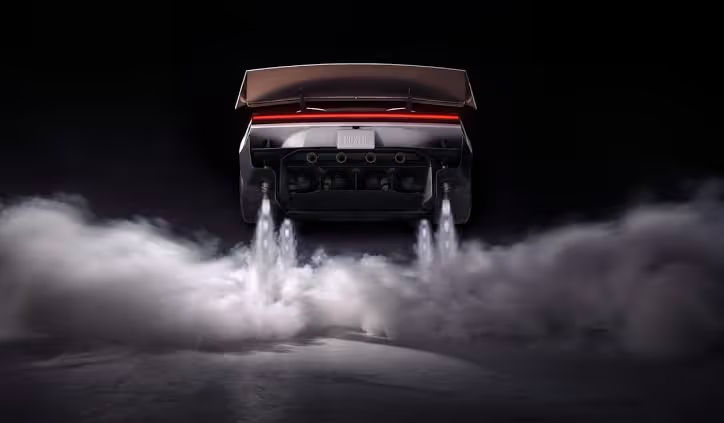
Tesla has brought its long-delayed next-generation Roadster back into the spotlight with a dramatic demonstration that appeared to take the electric sports car into the air. At an event held at a SpaceX testing facility in Texas on October 15, Elon Musk presented a vehicle that climbed an inverted ramp, performed airborne manoeuvres and returned to the ground using technology Tesla associates with SpaceX. The spectacle has reignited interest in the idea of a flying car, but important questions about production, practical flight and everyday use remain unanswered.
Key details at a glance
- Unveiled: October 15, 2026, in Texas, United States.
- Vehicle: Tesla's next-generation, two-seat Roadster electric sports car.
- Demonstration: The vehicle climbed a curved ramp, travelled upside down, performed a brief airborne manoeuvre and landed.
- Technology described: A suction or fan system and thrusters associated with SpaceX technology.
- Production target: Tesla said production was planned for 2028.
- Important distinction: A dramatic demonstration is not proof that the vehicle is ready for routine flight or public-road use.
A Roadster reveal unlike a conventional car launch
Tesla's October 15 event was designed to be more than a standard unveiling. Instead of simply placing a new car on a stage, the company presented a demonstration that combined the appearance of an electric supercar with technology intended to make the vehicle perform unusual movements.
The event took place at a SpaceX testing facility in McGregor, Texas. In the demonstration described by CNN, the Roadster used suction beneath the vehicle to travel up a steep, curved ramp and remain upside down before launching off the structure, turning in the air and landing.
Tesla also showed the vehicle using its thrusters to jump over a line of other vehicles. The audience reacted enthusiastically, and Musk responded after the successful demonstration with the words, "Well, it worked," according to Euronews.
The vehicle was unoccupied during the demonstration. CNN reported that Musk said the decision was made to avoid putting a driver at risk during the experimental manoeuvres. That detail matters: the display showed a vehicle performing a controlled stunt, not a person travelling in a flying car.
How does Tesla say the flying system works?
The Roadster's demonstration combined two different concepts. A fan-based suction system was used to hold the vehicle against the curved ramp, while thrusters were used for the airborne portion of the stunt.
Tesla vehicle engineering chief Lars Moravy described the suction system during the event, according to Euronews. Musk said the vehicle included altitude-control thrusters and rear thrusters, describing its potential movement as similar to a rocket.
The company has linked the project to SpaceX, Musk's rocket business. The collaboration builds on a concept Musk discussed years ago: incorporating rocket-style thrusters into the Roadster to improve performance and potentially allow it to leave the ground.
However, the exact technical specifications, operating limits and real-world capabilities of the demonstrated system still require scrutiny. A successful staged manoeuvre does not, on its own, establish how the technology would work in ordinary driving conditions, adverse weather or a passenger-carrying flight.
Performance claims: acceleration, speed and range
Tesla made ambitious performance claims for the new Roadster. According to Reuters and other reports covering the reveal, the company said the vehicle could accelerate from zero to 60 miles per hour in less than one second, reach a top speed above 230 mph and travel more than 300 miles on a charge.
Those figures would put the Roadster among the most extreme performance vehicles announced by a major electric-car manufacturer. However, they are manufacturer claims presented during the reveal, not independent test results established through a complete series of public production-vehicle tests.
The proposed acceleration figure is particularly ambitious. Performance can vary with the vehicle's configuration, tyres, surface, battery conditions and test methodology. Independent testing will be important to establish how the final vehicle performs outside a promotional demonstration.
When will the new Tesla Roadster enter production?
Tesla said production was planned for 2028. The announcement marks another milestone for a project first introduced in prototype form in 2017, when the company presented a second-generation Roadster and made ambitious promises about its future performance.
The programme has faced repeated delays over the years. The company originally expected the redesigned car to reach customers much earlier, but development priorities and changing timelines pushed the anticipated launch back.
The October 2026 reveal offers a fresh look at the vehicle and a more dramatic demonstration than earlier presentations. It does not, however, guarantee that production, deliveries or every advertised feature will arrive on the stated schedule.
The 2028 date should therefore be understood as Tesla's announced production target, not confirmation that customers will receive finished vehicles at a particular time.
What about the price and reservations?
Tesla's reservation information following the reveal described several configurations, including Performance, Thrust and Rocket variants. Reuters reported reservation deposits of $50,000 for a Performance version and $250,000 for a Thrust version. The Rocket variant was described as invite-only and associated with a full flight system.
These deposits are not the same as a confirmed final retail price. The complete pricing structure, final production specifications, delivery arrangements and the availability of the most experimental features remain important questions for prospective buyers.
Anyone considering a reservation should read the current terms carefully, including the refund policy, the precise vehicle configuration being reserved and any conditions attached to the proposed technology.
Is it really a flying car?
The phrase "flying car" captures the spectacle of the demonstration, but it can also create expectations that go beyond what has been established. Traditional flying cars are generally understood as vehicles intended to provide some combination of road transport and flight. The Roadster demonstration showed a car performing brief airborne manoeuvres using thrusters in a controlled setting.
That is a significant technical demonstration, but it does not answer every question associated with a practical flying vehicle. Passengers, operating procedures, emergency handling, repeatability, maintenance and applicable aviation and road regulations all matter if such a system is to move beyond a specialised demonstration.
Wired's reporting highlighted the regulatory questions raised by a vehicle that leaves the ground. The applicable requirements would depend on the final design, how it is operated and the relevant authorities' decisions. The October 15 display alone should not be interpreted as evidence that the vehicle has permission to fly in ordinary public settings.
For now, the most accurate description is a high-performance electric sports car demonstrated with rocket-style propulsion technology capable of brief airborne manoeuvres. Its ultimate role and practical flight capability remain to be established.
Why the announcement matters for Tesla
The Roadster is more than another model announcement. It is a showcase product intended to draw attention to Tesla's engineering ambitions and reinforce the brand's reputation for pushing electric-vehicle performance.
The timing is also significant. Tesla has increasingly focused on autonomous driving, robotics and other technology programmes. The Roadster offers a different kind of public spectacle: a human-oriented sports car built around extraordinary performance claims and an experimental propulsion concept.
Reuters reported that analysts were watching the reveal alongside broader questions about Tesla's business priorities and upcoming financial results. The car may attract attention and strengthen the company's technology image, but the commercial importance of the project will depend on its eventual price, production scale, delivery record and customer demand.
The Roadster's development history also makes execution especially important. After years of waiting, customers and observers will be looking for evidence that the announced vehicle can move from an impressive demonstration to a finished product.
How the public and industry reacted
The demonstration generated enthusiastic reactions from Tesla supporters and observers who praised the visual impact of the event. Business Insider's coverage highlighted the excitement surrounding the Roadster's return and its role as a new flagship product for the automaker.
Reactions have not been uniformly uncritical. Automotive publication Edmunds approached the performance and flight claims cautiously, while Wired raised questions about the practical and regulatory implications of a car that can leave the ground.
These responses reflect two separate questions. The first is whether the demonstration was technically impressive. The second is whether the vehicle can become a reliable, commercially viable product with capabilities that are safe and legally usable beyond a controlled test site.
Enthusiasm about the first question does not settle the second. Production testing, independent performance verification and clear information about the final vehicle will be needed before prospective buyers can judge what the Roadster will actually deliver.
What happens next?
The next phase for Tesla will be turning the reveal into a vehicle that can meet its engineering targets and production schedule. Several developments will be worth watching:
- Production progress: Whether Tesla meets its stated 2028 production target.
- Independent testing: Whether the advertised acceleration, speed and range are confirmed under clearly described test conditions.
- Flight-system details: More information about the thrusters, flight duration, control systems and limits of the airborne configuration.
- Regulatory status: Clarification of which configurations can be used on public roads and whether any airborne operation would be permitted under relevant rules.
- Pricing and delivery: Confirmation of final prices, reservation terms, customer deliveries and the availability of different variants.
- Safety and reliability: Evidence that the final system can be operated and maintained safely outside a controlled promotional environment.
The bottom line
Tesla's October 15 Roadster reveal delivered an unusual demonstration: a sports car travelling upside down on a curved ramp, lifting into the air, turning and landing with the help of thruster technology. The display renewed interest in Elon Musk's long-running promise of a vehicle that can do more than drive.
The company has announced a 2028 production target and made ambitious claims about acceleration, top speed, range and flight capability. Yet a dramatic prototype demonstration is only one step in bringing such a vehicle to market.
The central questions are now whether Tesla can deliver the Roadster on schedule, verify its performance claims and explain how its most experimental features will work in practice. Until those questions are answered, the flying Roadster is best understood as a striking technology demonstration with a future that is not yet fully established.