Nana Patekar’s Legacy: The Unfiltered Performer Who Bridged Marathi Theatre and Bollywood
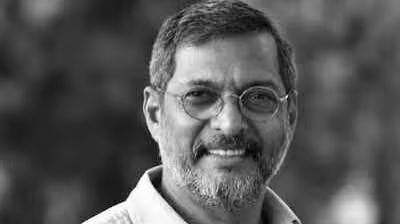
Indian cinema has lost one of its most distinctive performers. Veteran actor and filmmaker Nana Patekar has died at the age of 75, following a medical emergency at his residence in Goa. His death marks the end of a career that moved between Marathi theatre, regional cinema and mainstream Bollywood without losing the intense, unconventional screen presence that made him recognisable to audiences.
Patekar's career spanned nearly five decades. He was not defined by a single type of role: he could portray threatening figures, troubled characters, dramatic leads and comic personalities. His performances often relied on a distinctive voice, tightly controlled expressions and an intensity that could make even a supporting role memorable.
The central story of his career: Patekar built a lasting place in Indian cinema by moving between serious artistic work and popular entertainment, while maintaining a performance style that audiences could immediately recognise.
What Is Known About His Death
Reports published on October 8 said Patekar was found unconscious at his home in Goa and taken to hospital. Hospital information reported by news organisations said doctors attempted to revive him with continuous cardiopulmonary resuscitation, but he could not be saved. He was declared dead that morning at the age of 75.
His son, Malhar Patekar, confirmed the death to media outlets and described it as due to natural causes. Reports attributed the immediate medical emergency to cardiac arrest. Officials also said a medico-legal case had been registered and that a post-mortem examination would be conducted.
The news prompted tributes from colleagues, political leaders and people across the film industry. Their responses reflected the impact of an actor whose work reached beyond one language or one generation of moviegoers.
From Marathi Theatre to the Big Screen
Born Vishwanath Patekar in Maharashtra in 1951, Nana Patekar developed his craft through theatre before becoming a prominent figure in Hindi and Marathi cinema. His film debut came with Gaman in 1978, beginning a screen career that would eventually span a wide range of genres and characters.
His theatre background remained an important part of his artistic identity. Stage performance demands control over voice, timing, physical presence and audience attention. Those qualities became hallmarks of Patekar's screen work, particularly in scenes built around confrontation, emotional pressure or forceful dialogue.
Rather than relying only on conventional leading-man roles, he developed a reputation for characters who were complicated, unpredictable or morally difficult. That range helped him work across both independent-minded filmmaking and mainstream commercial productions.
The Films That Defined His Reputation
Several performances helped establish Patekar as one of India's most recognisable character actors. His role in the crime drama Parinda brought major recognition, including a National Film Award for Best Supporting Actor. The film also demonstrated his ability to create a powerful presence without needing to dominate every scene.
He later appeared in films including Prahaar, Krantiveer, Agni Sakshi, Khamoshi: The Musical, Ab Tak Chhappan, Apaharan and Raajneeti. His performances crossed genres, from crime dramas and political stories to emotional films and comedies.
Why Welcome introduced him to another generation
For audiences who knew him mainly through intense dramatic roles, the comedy Welcome offered a different side of his screen personality. His portrayal of Uday Shetty became widely associated with his comic timing, deadpan reactions and ability to make a character memorable through delivery as much as dialogue.
The role demonstrated that his intensity was not limited to serious cinema. He could use the same commanding presence for comedy, allowing his career to connect with audiences who might otherwise have known him through different film traditions.
Natsamrat and His Marathi Cinema Legacy
Patekar's contribution to Marathi cinema remained central to his career. His performance in Natsamrat, a film adapted from the celebrated Marathi play, earned particular recognition and further demonstrated his connection to theatre and emotionally demanding roles.
The film placed him in a story about an accomplished stage actor confronting the realities of life beyond the spotlight. Its themes of family, identity, ageing and the fragility of an artist's world gave Patekar an opportunity to draw on the dramatic tradition that had helped shape his career.
He received three National Film Awards during his career and was awarded the Padma Shri, one of India's highest civilian honours. Those distinctions reflected recognition of his work across different forms of Indian cinema.
Nana Patekar: Career at a Glance
- Born: Vishwanath Patekar, 1951, in Maharashtra, India.
- Film debut: Gaman (1978).
- Career: Nearly five decades across Hindi cinema, Marathi cinema and theatre.
- Notable films: Parinda, Krantiveer, Ab Tak Chhappan, Welcome and Natsamrat.
- Honours: Three National Film Awards and the Padma Shri.
A Career That Refused to Fit One Category
Patekar's appeal came partly from his refusal to remain within a single screen identity. He could be unsettling in a crime drama, emotionally exposed in a family story or sharply comic in a commercial film. The change in tone did not erase his recognisable style; it showed how adaptable that style could be.
His performances often favoured directness over polish. Characters could be abrasive, wounded, intimidating or unexpectedly funny. That approach made him particularly effective in stories where conflict and imperfect personalities mattered more than conventional glamour.
His career also illustrated the relationship between regional cinema and Bollywood. Marathi theatre and film were not simply early chapters before mainstream success; they remained an important part of his artistic identity throughout his working life.
Tributes Reflect His Influence Across Generations
Following news of his death, tributes came from across the Indian film industry and public life. Prime Minister Narendra Modi praised Patekar's individuality, intensity and versatility. Actor Akshay Kumar also paid tribute to his distinctive screen presence and the honesty he brought to his performances.
Such tributes point to a career remembered for more than box-office success. Patekar's performances left an impression on co-stars, filmmakers and audiences because his characters often carried an unmistakable emotional force, even when he was not the central figure in a story.
More Than a Filmography
Nana Patekar's legacy cannot be reduced to a list of popular films or awards. It rests in the variety of characters he played, his roots in theatre and the way he moved between regional and mainstream cinema. His work showed that a performer could build a lasting identity through individuality rather than fitting neatly into a conventional star image.
As Indian cinema remembers Patekar, his performances remain a record of an artist who could command attention through voice, restraint, humour and emotional intensity. His death at 75 closes a significant chapter in Hindi and Marathi cinema, but the characters he brought to the screen will continue to introduce his work to future audiences.
Keywords:
Related Posts