France’s School Gates Become the New Front Line as Student Protests Force Hundreds of Closures
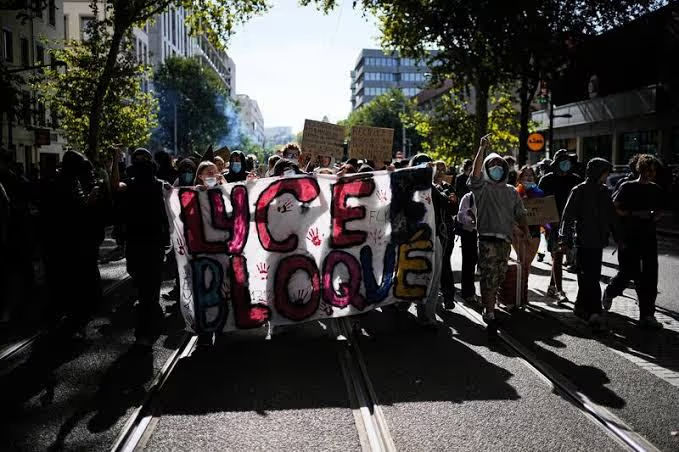
France is facing a growing education crisis as student protests that began over school staffing and deteriorating conditions have spread across the country, forcing authorities to partially or completely close as many as 500 high schools.
What began in September as demonstrations over shortages of teachers, crowded classrooms and poor school infrastructure has developed into a nationwide protest movement. Blockades, class disruptions and clashes with police have now placed the French government's response under increasing pressure.
The immediate disruption: France's education minister said lessons would be totally or partly suspended in around 400 to 500 high schools because security conditions had not been met. The measure was described as a precaution ahead of further demonstrations planned by protest organisers.
How a School Dispute Became a National Protest
The current movement began in the Paris region in mid-September. Students and teachers initially mobilised around concerns at a high school in Créteil, including a lack of teaching staff and inadequate conditions.
The demonstrations then spread beyond the Paris suburbs. Students in other parts of France began organising class strikes, blocking school entrances and taking part in demonstrations.
Reuters reported earlier that the protests had expanded to hundreds of high schools by the end of September, with students complaining about teacher shortages and deteriorating school infrastructure.
Why Are French Students Protesting?
The protests are not centred on a single issue. Students have raised concerns about the quality and availability of education, conditions inside schools and perceived inequalities between different communities.
Demonstrators have complained about classrooms lacking adequate facilities, insufficient teachers and long school days. Reports from some schools have also highlighted problems including damaged buildings, leaks, pests and uncomfortable temperatures.
For students in poorer areas, the issue has become closely connected to the question of whether they receive the same educational opportunities as students in better-resourced parts of the country.
The protest movement has therefore developed into something broader than a dispute over individual schools: it has become a public argument about the condition and fairness of France's education system.
Up to 500 Schools Face Closure
Education Minister Édouard Geffray said between 400 and 500 high schools could have lessons completely or partially suspended on Monday because security conditions were considered insufficient.
The government said the closures were a safety measure rather than a permanent shutdown of the schools. The aim was described as a progressive return to normal lessons where security conditions allow it.
According to the minister, 24 schools had been burned or ransacked since the beginning of the protest movement. Al Jazeera reported that at least 170 students and 78 education personnel had been injured.
France Protest Crisis at a Glance
- Schools potentially affected: Around 400–500 high schools.
- Schools reportedly burned or ransacked: 24.
- Students reported injured: At least 170.
- Education personnel reported injured: 78.
- People arrested during the wider unrest: More than 5,000, according to the interior minister.
- Main grievances: Teacher shortages, school conditions, class sizes, long hours and inequality.
The Numbers Show How Quickly the Movement Has Grown
The scale of disruption has increased significantly since the first demonstrations. On Friday, authorities said around 400 schools were already closed, while hundreds more were experiencing protests or disruptions.
By Sunday, the education ministry was preparing for another major wave of disruption as organisers called for students to return to the streets. The planned demonstrations have made it difficult for the government to restore normal classes across the affected areas.
The interior minister has also reported more than 5,000 arrests over the previous week, with about 85 percent of those arrested being minors. The figures underline the unusually young profile of the protest movement and the difficult position facing authorities.
When Protest Turns Into Violence
The demonstrations have not remained peaceful everywhere. Some protests have involved clashes with police, fires and damage to school property. Police have responded with arrests and crowd-control measures.
The government has condemned violence and argued that schools should remain places for education rather than become sites of blockades or destruction.
At the same time, critics of the police response have accused authorities of using excessive force against young demonstrators. Amnesty International has called for students to be listened to rather than repressed, according to Al Jazeera's reporting.
This has created a difficult balance for the government: authorities must protect students, teachers and school property while also responding to legitimate complaints about educational conditions.
The Government Faces Pressure on Two Fronts
The protests are unfolding at a particularly sensitive moment for President Emmanuel Macron's government.
Education is one of the largest areas of government spending, and the proposed 2027 budget has become part of the wider political debate. Students and their supporters are demanding improvements while the government is simultaneously facing pressure over public finances.
This means the dispute is no longer simply about individual schools. It has become connected to larger questions about government spending, public services and inequality.
Why Tuesday Could Be a Turning Point
Protest organisers have called for another major mobilisation on Tuesday. That demonstration could determine whether the movement maintains its momentum after the latest school closures.
A larger turnout would increase pressure on the government to announce concrete measures addressing the students' complaints. A decline in participation, meanwhile, could indicate that the movement is beginning to lose momentum.
The involvement of France's powerful CGT labour union also raises the possibility that the student movement could overlap with broader demonstrations by workers over economic and public-service issues. AP reported that the union has urged workers to participate in a major demonstration on Tuesday.
What Happens Next for France's Schools?
The immediate priority is reopening schools safely. But returning students to classrooms will not by itself resolve the complaints that triggered the demonstrations.
The government faces pressure to address teacher shortages, school infrastructure and inequalities while also preventing further violence and property damage.
For the protesters, the central question is whether the government will provide concrete changes rather than temporary responses to the unrest. For authorities, the challenge is ensuring that those demands can be addressed without allowing violence to further disrupt education.
The bigger issue: France's school protests have moved beyond classroom grievances. With hundreds of schools disrupted, thousands of arrests reported and a new round of demonstrations planned, the government is now facing a wider test over education, public services and its response to youth unrest.
A Crisis That Started Inside the Classroom
The most important feature of France's current unrest is how quickly concerns inside schools have developed into a national political issue. Students began by highlighting conditions they experience every day: classrooms, teachers, facilities and the amount of time spent at school.
Those complaints have now reached the streets, bringing police, politicians, teachers and labour organisations into the dispute.
Whether the movement results in lasting changes to France's education system will depend on what happens after the demonstrations subside. For now, however, the closure of hundreds of schools shows that the argument over France's classrooms has become a much larger national confrontation.