Pokhara’s School Bus Tragedy Raises Hard Questions About Who Keeps Student Transport Safe
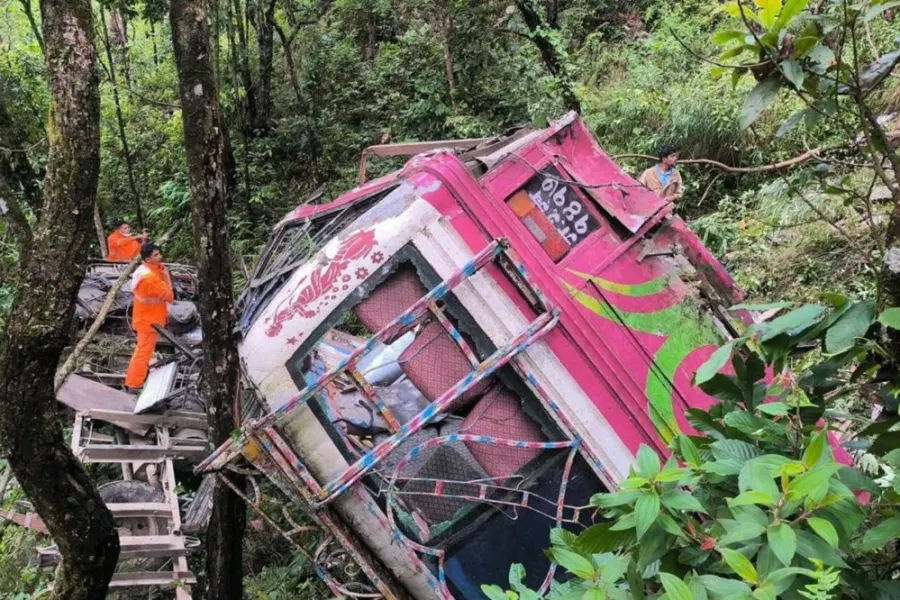
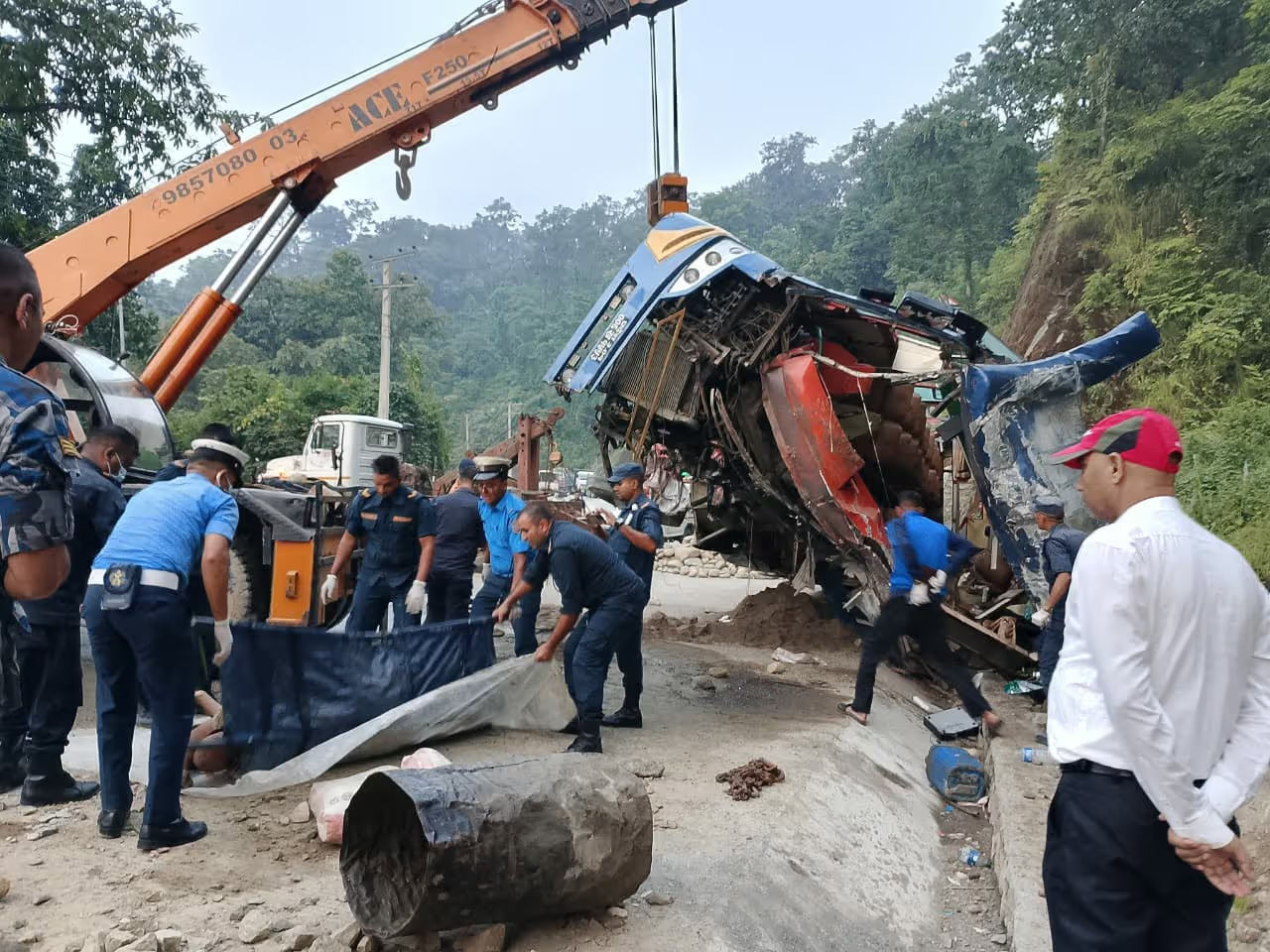
A school journey in Pokhara ended in tragedy on Friday morning after a bus carrying students plunged down a steep slope near Majhthana in Pokhara Metropolitan City-28, Kaski district. Five people, including four schoolchildren, died in the crash, while other passengers were injured. The incident has prompted an investigation into the circumstances of the accident and the condition of the vehicle used to transport students.
The bus, registered as Ga 2 Kha 1417, was operated by Kalika school and was travelling from the Majhthana area towards Kalikasthan when it went off the road at a location known as Okhle Bhir. Reports estimated that the vehicle fell approximately 150 to 200 metres down the slope.
Key facts: Five people died, including four students and one adult passenger. The crash occurred near Majhthana in Pokhara-28 on October 9, 2026. Authorities are investigating the cause, and questions have been raised about the vehicle's suitability for school transport.
What Happened Near Majhthana?
The accident occurred on Friday morning as the school bus was carrying students along a route connecting Majhthana with the Kalika area. According to reports, the bus left the road and descended a steep slope, leaving passengers trapped or injured in the wreckage.
Police and rescue personnel responded to the scene, while the injured were transported to Western Regional Hospital, also known as Gandaki Hospital, under the Pokhara Academy of Health Sciences. Medical staff treated the survivors as relatives gathered at the hospital to seek information about their family members.
Early news reports gave different casualty figures while rescue and hospital information was being updated. Subsequent reporting confirmed five deaths, including four students and an adult passenger.
Four Students Among the Dead
The loss of four schoolchildren has made the accident particularly devastating for the local community. The fifth victim was an adult passenger who had reportedly boarded the bus after asking for a lift.
Later reports identified the deceased as Mamata Tiwari, 15; Shubhechha Tiwari, 15; Rumika Nepali, 14; Asim Kandel, 13; and Baburam Tiwari, 65. The exact spellings and details of the victims' identities should be checked against the latest official statements before republication.
The injured included students who sustained head, back and other injuries. Hospital reporting indicated that some required more serious treatment, while others were described as being in moderate or comparatively stable condition.
For families, classmates and teachers, the consequences extend well beyond the crash site. The deaths have raised immediate concerns about how school journeys are planned, which vehicles are used and what safeguards are in place before children board them.
The Bus's Condition Is Now Under Scrutiny
One of the most significant developments following the accident was the focus on the condition and use of the bus. Reporting by myRepublica said preliminary assessments raised concerns that the vehicle appeared to be in poor condition. It also reported that the bus did not have the required yellow paint associated with school buses.
According to that report, investigators were examining the circumstances in which a vehicle normally used on the Pokhara-Begnas route was being used to carry schoolchildren. These details have intensified questions about whether the vehicle met the relevant requirements for transporting students.
However, concerns about the bus's condition do not by themselves establish why it plunged down the slope. Authorities have said the precise cause has yet to be determined. The investigation must establish whether vehicle condition, a mechanical problem, road conditions, driver-related factors or another circumstance contributed to the crash.
What Investigators Need to Establish
- Why the bus left the road and descended the slope.
- Whether the vehicle was mechanically sound and suitable for transporting students.
- Whether the bus met applicable requirements for school transport.
- Whether the route, road conditions or other circumstances contributed to the accident.
- What measures can reduce the risk of a similar incident.
Pokhara Metropolitan City Forms an Investigation Committee
Pokhara Metropolitan City formed a five-member committee to investigate the crash and recommend measures to improve student transport safety. According to myRepublica, the committee is led by Senior Education Officer Badrinath Subedi and includes representatives with mechanical engineering, education, municipal police and traffic police responsibilities.
The committee has been tasked with establishing the facts, examining the cause of the accident, assessing the bus's condition and recommending steps to help prevent similar incidents in the future.
A thorough investigation is important not only for determining what happened on this particular journey, but also for identifying whether existing transport checks and safety practices were followed. Any conclusions about responsibility should wait until the investigation has gathered sufficient evidence.
A Wider Question About School Transport Safety in Nepal
School transport is a daily necessity for many families. For students travelling between rural settlements and schools, a bus can provide essential access to education. But that dependence makes the condition of vehicles, the competence of drivers and compliance with safety requirements especially important.
The Pokhara crash brings several practical questions into focus. Are vehicles used for school journeys inspected regularly? Are buses assigned to carry children appropriate for that purpose? Are operators following the relevant safety requirements, and do authorities have effective ways to identify problems before an accident occurs?
These are questions raised by the circumstances reported in this case, rather than conclusions that apply to every school or transport operator in Nepal. The investigation should clarify which requirements were relevant and whether any were breached.
Why vehicle checks and accountability matter
A school bus carries a particularly vulnerable group of passengers. Regular mechanical inspections, appropriate vehicle selection, responsible operation and effective oversight can all form part of a broader safety system. These measures cannot guarantee that every accident will be prevented, but they can help identify risks before children are put in danger.
The value of the committee's findings will depend on whether they establish the facts clearly and lead to practical follow-up. If shortcomings are identified, authorities will need to determine which corrective actions are appropriate and who is responsible for implementing them.
What Happens Next?
Investigators are expected to examine the crash circumstances and the condition of the bus before drawing conclusions. Information from the injured driver, vehicle inspections and other evidence may help establish why the bus left the road.
Until those findings are available, the cause of the accident remains unconfirmed. Claims about a specific mechanical failure or individual responsibility should not be treated as established facts.
The investigation also presents an opportunity for local authorities and relevant education and transport stakeholders to review the systems used to transport students. Any recommendations will need to be assessed and followed through if they are to make a meaningful difference.
A Tragedy That Demands Answers
The Pokhara school bus accident has taken the lives of five people, including four children, and left injured passengers and grieving families facing a difficult recovery. The immediate priority is the care of survivors and support for those affected.
The longer-term responsibility is to establish what happened and address any safety failures that the evidence identifies. A transparent investigation can help provide answers to the victims' families and guide steps to make school transport safer.
For now, the central question remains unanswered: what caused the bus to plunge down the slope? The findings of the investigation will be crucial in determining what happened and what needs to change to help prevent another tragedy.