Peshawar School Roof Collapse: How a Morning Class Turned Into a National Safety Crisis
A school day in Peshawar, northwestern Pakistan, turned into a major emergency on October 15, 2026, when a roof collapsed at a private educational institution during morning classes. Children were trapped beneath the debris, emergency teams rushed to the scene, and hospitals treated injured students. The tragedy prompted an investigation into the building's structural condition and renewed attention to the safety of school facilities.
Key facts at a glance
- Location: Al-Khair Education Centre in the Dir Colony area of Peshawar, Khyber Pakhtunkhwa, Pakistan.
- Date: Thursday, October 15, 2026.
- Incident: A higher-floor roof reportedly collapsed onto classrooms below.
- Casualties: Reuters and Associated Press later reported 35 deaths, including 34 children and one teacher. Other reports published during and after the rescue operation gave different totals.
- Injuries: Initial and later reports described more than 45 injured children, with some requiring urgent medical treatment.
- Investigation: Authorities launched an inquiry, and police said the school owner had been arrested.
What happened at the Peshawar school?
The collapse occurred at the privately run Al-Khair Education Centre in Peshawar, the capital of Khyber Pakhtunkhwa province. Students were attending lessons when a roof on an upper level gave way and fell onto classrooms beneath it, according to rescue officials and reporting by international news agencies.
The failure brought down parts of the multi-storey structure and trapped children inside the damaged building. The incident was reported at approximately 8:48 a.m. local time, according to a regional rescue official cited by Reuters.
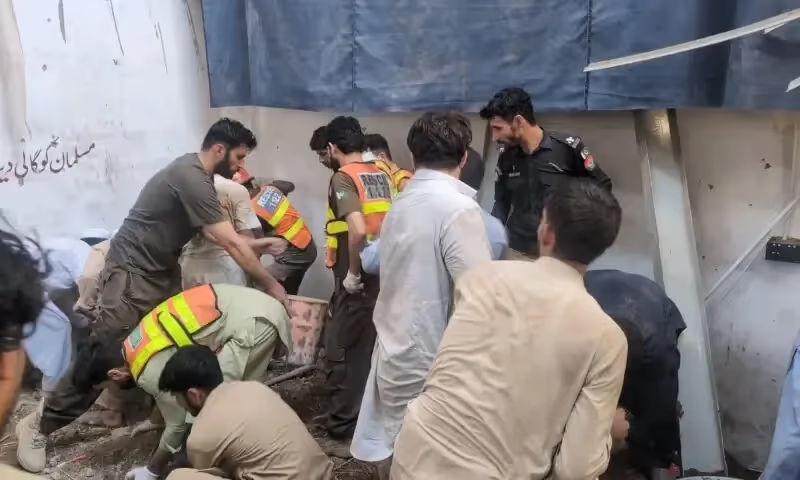
Parents, relatives and local residents rushed to the scene as rescue personnel worked to reach those beneath the rubble. Television footage carried by news organisations showed responders and residents moving debris and carrying injured children to waiting ambulances.
The school was in a densely populated neighbourhood. The narrow surroundings and the damaged structure added to the urgency of the rescue operation, while families gathered nearby seeking information about their children.
Death toll changed as reports developed
Casualty figures were not consistent across the initial reports on October 15. Early updates reported lower numbers while rescue teams continued searching the collapsed building and hospitals received victims.
A statement released by UNICEF Pakistan on October 15 said at least 28 children and one teacher had died, with more than 50 children injured. Pakistan's newspaper Dawn subsequently reported 33 deaths on October 15, including 32 students and a female teacher.
Later reporting from Reuters and the Associated Press put the total at 35 deaths, including 34 children and one teacher. The Associated Press also reported that more than 50 people had been injured.
The varying totals underline how figures can change during a major emergency as victims are identified, hospital information is updated and news organisations revise their reporting. This article retains the source-specific figures rather than treating all reports as if they agreed.
Rescue teams worked to reach trapped students
Emergency responders, police and local residents took part in the rescue operation. According to Al Jazeera's reporting, nearly 100 rescuers helped at the site, while parents and community members also assisted the response.
Injured children were transported to hospitals, including Lady Reading Hospital in Peshawar. Medical staff treated students with injuries ranging from minor wounds to severe trauma. Hospital and rescue officials said some children were in critical condition.
The response involved more than removing debris. Families needed information about missing children, injured students required urgent care, and officials had to determine whether anyone remained trapped inside the damaged structure.
Rescue officials later said those believed to be trapped had been recovered. The operation brought an immediate emergency phase to a close, but it left families grieving and authorities facing questions about how the building had been allowed to operate.
What did authorities say caused the collapse?
Peshawar police chief Mian Saeed described the building as structurally weak. Reuters reported his assessment that construction or additional load on a weak structure contributed to the collapse.
According to Al Jazeera, police said the school owner, identified in its report as Mohammad Khan, blamed recent rains for weakening a roof. Authorities had not completed their investigation at the time of the initial reporting.
These statements represent explanations reported during the early investigation. They should not be treated as a final engineering finding. Establishing the precise cause requires a detailed examination of the building, its materials, structural design, maintenance and any work carried out before the incident.
Police said the school owner had been arrested. An arrest is a procedural development and does not, by itself, establish criminal responsibility. The outcome will depend on the evidence collected and the applicable legal process.
Government orders an investigation
Pakistan's Prime Minister Shehbaz Sharif expressed grief over the deaths and directed authorities to investigate the incident. According to Radio Pakistan, the prime minister spoke with Khyber Pakhtunkhwa Governor Faisal Karim Kundi and requested a comprehensive report.
The prime minister also directed officials to ensure appropriate medical care for injured students and assistance for affected families. The governor told him that the school owner had been arrested and an inquiry had begun.
President Asif Ali Zardari also expressed condolences to the families. UNICEF Pakistan issued a statement calling for urgent action to ensure that schools, whether public or privately operated, meet building safety standards and receive regular safety inspections.
The investigation is important not only for identifying what happened at this particular school, but also for determining whether any regulatory or inspection failures contributed to the disaster.
A wider concern about school building safety
The Peshawar collapse has drawn attention to the physical conditions in which children receive their education. Schools need safe classrooms, structurally sound buildings, appropriate maintenance and effective emergency procedures.
In communities where families depend on lower-cost private education, building safety and regulatory oversight are particularly important. Affordable education should not mean that students are exposed to preventable structural risks.
Reuters reported that Pakistan spends less than one per cent of its gross domestic product on education. That broader funding context does not, on its own, explain the Peshawar collapse, but it highlights the challenges facing a system in which schools must provide education while maintaining safe facilities.
The tragedy also follows an earlier deadly incident in Lahore. Reuters reported that at least 14 children died in June when the roof of a tutoring centre collapsed in a building described as dilapidated. The circumstances of the Lahore incident were separate, but the two disasters raise similar questions about inspections, construction quality and enforcement.
What needs to happen next?
The immediate priority is the recovery of injured students and support for affected families. Beyond the emergency response, several practical steps may help prevent similar incidents:
- Independent structural inspections: Qualified engineers should assess school buildings and identify dangerous roofs, walls, foundations and unauthorised additions.
- Enforcement of building standards: Authorities should investigate violations and ensure that unsafe facilities are repaired or closed when necessary.
- Transparent investigation findings: Officials should publish their conclusions when the inquiry is complete, including any identified construction or oversight failures.
- Clear accountability: If evidence establishes negligence or legal violations, the responsible parties should face action under the law.
- Emergency preparedness: Schools should maintain evacuation procedures, emergency contacts and plans for responding to structural hazards.
- Support for survivors: Injured children, grieving families, classmates and teachers may need continuing medical and psychological support.
These measures are general safety priorities, not findings that every listed failure occurred at Al-Khair Education Centre. The official investigation must establish which conditions were present in this case.
A tragedy that demands answers
The Peshawar school roof collapse on October 15 was a devastating loss for children, families and the wider community. The rescue effort brought emergency workers and residents together, while the changing casualty reports reflected the difficulty of tracking a rapidly developing disaster.
The central questions now concern how the building failed, whether warning signs were missed and what authorities can do to reduce risks at other educational institutions. Those answers will depend on a credible investigation and meaningful follow-up.
For families sending children to school, a safe classroom is a basic expectation. Ensuring that expectation is met requires sound construction, routine inspection, effective oversight and accountability when standards are not followed.