India’s Tricolour Protest Dispute: Why Rahul Gandhi’s CJP Backing Puts Jantar Mantar at the Centre of a Rights Debate
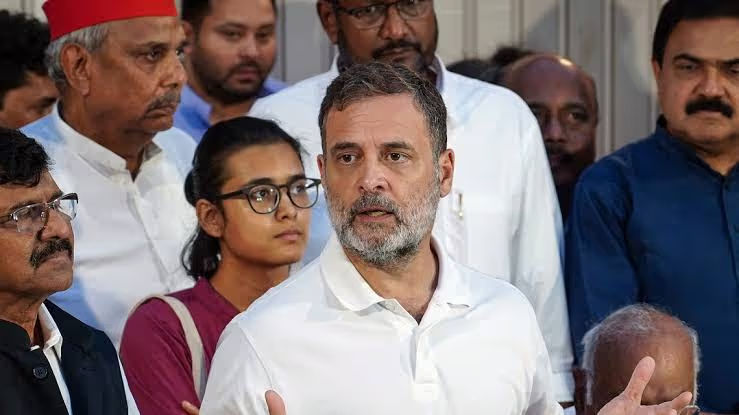
A protest involving India's national flag has developed into a wider political confrontation over the right to demonstrate in the capital. Congress leader and Leader of the Opposition Rahul Gandhi has publicly backed Cockroach Janta Party (CJP) leaders Ashutosh Ranka and Saurav Das after they were sent to five days of judicial custody following an incident at Jantar Mantar in New Delhi.
Gandhi said that waving the Tricolour during a peaceful protest was not a crime and described jailing young people in those circumstances as an act of cowardice. His intervention brought renewed attention to a dispute over protest restrictions, police enforcement and the role of opposition parties in defending the right to peaceful assembly.
The case also involves a separate question: authorities say the activists entered a location that had been removed from the list of designated protest sites. That allegation, rather than the flag alone, is central to the police account of the incident.
Why this matters: The dispute is not simply about a political leader supporting protesters. It concerns the boundaries between peaceful political expression, restrictions on public demonstrations and the enforcement of orders governing access to protest sites.
What Rahul Gandhi Said About the CJP Leaders
On October 14, Rahul Gandhi criticised the judicial custody of CJP leaders Ashutosh Ranka and Saurav Das. In a public statement, he said that waving the national flag at Jantar Mantar during a peaceful protest was not a crime and argued that jailing young people for doing so was an act of cowardice.
Gandhi framed the episode as part of a broader struggle over citizens' rights. He referred to students, young people, journalists and opposition groups as participants in a common demand for constitutional rights. He also said that Jantar Mantar belonged to the people of India and pledged that it would be reclaimed.
The statement marked a notable public expression of support for the CJP leadership. According to reporting by The Indian Express and other outlets, the Congress had previously maintained distance from the group and its protests.
Gandhi's remarks are a political response to the arrests, not a judicial finding about the legality of the demonstrators' actions. The circumstances of the detention and the allegations made by police remain important to understanding the case.
Why Ashutosh Ranka and Saurav Das Were Detained
The controversy centres on an incident at Jantar Mantar, a long-established demonstration area in central Delhi. Delhi Police had recently removed the location from the list of designated protest sites and introduced revised arrangements for demonstrations.
Police said that on October 13, CJP members entered the restricted protest area after crossing barriers and raised slogans while displaying the national flag. Authorities alleged that members of the group entered without permission, trespassed and obstructed police personnel.
Police also referred to alleged repeated attempts to disturb public peace and violations of conditions associated with earlier releases. These are allegations made by authorities and should not be treated as proof of guilt.
Ranka and Das were sent to five days of judicial custody on October 14. Another CJP member, Ajinkya Shinde, was dealt with separately and released on a personal bond, according to reporting by The Indian Express.
Key Details of the Case
- Location: Jantar Mantar, New Delhi.
- Political group: Cockroach Janta Party (CJP).
- Leaders sent to judicial custody: Ashutosh Ranka and Saurav Das.
- Custody order reported: October 14, 2026, for five days.
- Opposition response: Rahul Gandhi publicly criticised the jailing of the young leaders.
- Central dispute: Alleged entry into a protest area that police said was no longer authorised for demonstrations.
Jantar Mantar's Changing Role as a Protest Site
Jantar Mantar has historically served as a recognised venue for demonstrations in India's capital. Its location in central Delhi has made it a focal point for campaigners, political groups, civil society organisations and citizens seeking to draw attention to public issues.
The decision to remove it from the list of designated protest sites has therefore become a central issue in the current dispute. Authorities can impose restrictions on public gatherings under applicable laws and orders, including measures intended to maintain public order. Critics, however, argue that restrictions on established demonstration spaces can make it harder for citizens to express dissent visibly.
The immediate legal question is whether the actions of the protesters breached the applicable restrictions and whether the authorities acted within the law. The broader political question is how restrictions should be balanced with the ability of citizens to organise peaceful demonstrations.
These questions are related but not identical. Support for the right to protest does not automatically settle whether a particular action complied with a valid police order. Equally, an allegation of trespass does not by itself resolve wider concerns about how public protest spaces are regulated.
The Tricolour Becomes the Centre of a Political Argument
The Indian national flag carries a powerful symbolic meaning in public life. Gandhi's statement placed the Tricolour at the centre of the political argument, presenting its display during a peaceful demonstration as an expression of citizenship and dissent.
For the CJP leaders and their supporters, the flag has become part of a wider message about the right to challenge government decisions. The group's protest activity has also been linked to objections over electoral-roll revisions and demands for accountability from the country's election administration.
Police, meanwhile, have argued that the arrests concerned alleged violations of restrictions and public-order requirements. That distinction is essential: the presence of the national flag does not independently establish what happened before the arrests or settle the legal questions surrounding entry into the site.
The debate is consequently about more than a symbol. It concerns the circumstances in which citizens can assemble, the limits imposed by authorities and whether those limits are applied in a proportionate and lawful manner.
The Electoral-Roll Controversy Behind the Protests
The CJP demonstrations form part of a wider wave of protests over electoral-roll revisions and the role of the Election Commission. Critics of the revision process have raised concerns about the removal of large numbers of names from voter lists and have called for accountability from Chief Election Commissioner Gyanesh Kumar.
Opposition groups and activists have alleged that the changes could disenfranchise eligible voters or disproportionately affect some communities. The Election Commission has denied wrongdoing and has said that errors can be addressed through the applicable procedures.
These allegations remain contested. The existence of a large-scale voter-list revision does not by itself prove deliberate manipulation, and claims about political intent require evidence. At the same time, concerns about eligible voters being omitted from electoral rolls are significant because voter registration is fundamental to participation in elections.
The protest-site dispute has therefore unfolded against a broader backdrop of disagreement about electoral integrity, government accountability and the space available for opposition voices to organise.
Opposition Support Widens the Political Impact
Gandhi was not the only opposition figure to criticise the custody order. Reporting by Indian media outlets said other opposition leaders also expressed support for Ranka and Das and questioned the decision to send them to jail. Their responses have increased the political visibility of the case.
The episode also places the Congress in a more direct position on the CJP's protest campaign. Public backing from the Leader of the Opposition may give the activists greater national visibility, while also making the dispute part of the broader contest between opposition parties and the central government.
That political effect should be distinguished from the legal proceedings. Statements by politicians can influence public debate, but the allegations against the activists must be assessed through the applicable legal process.
What Happens Next in Delhi?
The dispute has continued beyond the arrests. CJP founder Abhijeet Dipke called for further public mobilisation, including a planned gathering in the Connaught Place area on October 16. The proposal drew attention from authorities and prompted legal efforts seeking restrictions on the planned event.
Reports indicated that the Supreme Court did not immediately issue the requested blanket prohibition and left the matter for further consideration. Delhi authorities also announced the temporary closure of Central Park in Connaught Place for administrative reasons amid heightened security preparations.
The status and conditions of any planned demonstration can change in response to police directions or subsequent court orders. Organisers, participants and the public should rely on current official instructions rather than assume that a proposed gathering has unconditional permission to proceed.
The legal process concerning the CJP leaders is also distinct from decisions about future demonstrations. The allegations in the current case and the permissions for any new gathering will be dealt with according to the applicable procedures.
What This Dispute Reveals About Protest Rights
The Jantar Mantar episode illustrates a recurring challenge in democratic systems: how to maintain public order while preserving meaningful opportunities for peaceful dissent. Authorities have responsibilities to manage public spaces and enforce lawful restrictions, while citizens have legitimate interests in expressing political views and challenging government decisions.
The central questions are practical as well as constitutional. Are alternative protest locations accessible? Are restrictions communicated clearly? Are enforcement decisions proportionate to the circumstances? And can citizens challenge restrictions through transparent legal processes?
Answering those questions requires more than political slogans. It requires examining the applicable orders, the facts of the incident and the reasoning behind decisions taken by police and courts.
A Political Statement With a Wider Significance
Rahul Gandhi's support for the CJP leaders has turned a local confrontation at Jantar Mantar into a larger national discussion. The dispute now touches on protest regulations, the use of public spaces, electoral concerns and the role of opposition parties in defending civil liberties.
Gandhi's assertion that peacefully waving the Tricolour is not a crime expresses his political position. The police maintain that the activists violated restrictions governing the site. Establishing the legal significance of the incident requires keeping those claims separate and considering the relevant evidence and orders.
Ultimately, the importance of the case lies in how the authorities, courts and political actors handle that tension. The outcome may influence not only the CJP leaders' immediate legal situation, but also the continuing debate over where and how citizens can demonstrate in India's capital.
Keywords:
Related Posts