Red Carpet, Two-Month Truce: Trump and Xi Buy Time While the U.S.-China Tech Rivalry Gets Harder to Contain
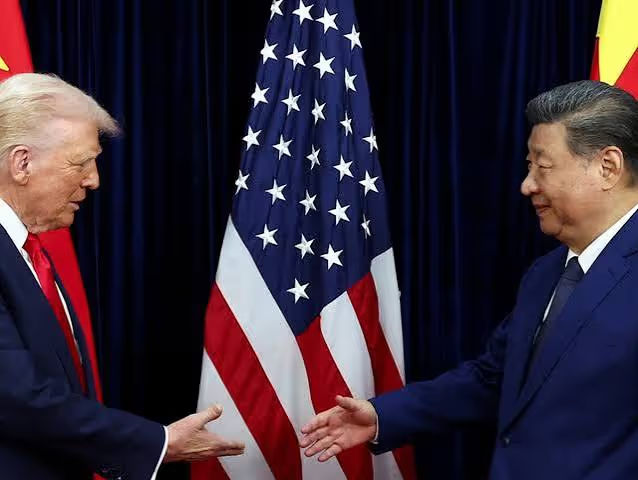
Chinese President Xi Jinping has arrived in Washington for a closely watched state visit, receiving an unusually personal airport welcome from U.S. President Donald Trump just as Washington and Beijing agreed to extend their fragile trade truce by another two months.
Trump and First Lady Melania Trump travelled to Joint Base Andrews in Maryland on Wednesday evening to greet Xi and Chinese First Lady Peng Liyuan as they stepped off their aircraft.
The planeside reception was an unusual diplomatic gesture and set the ceremonial tone for a three-day visit that will include a formal White House welcome, bilateral talks, a state dinner and other events.
Behind the red carpet, however, the world's two largest economies remain divided across some of the most consequential issues shaping global politics and technology: artificial intelligence, semiconductor access, tariffs, rare-earth supplies, Taiwan and China's economic relationship with Iran.
The bigger story: Washington and Beijing have avoided an immediate return to escalating tariffs by extending their trade truce until January 10, 2027. But the summit is increasingly about something larger than tariffs: whether the two powers can manage a long-term strategic rivalry without allowing competition over AI, advanced technology and security to repeatedly destabilise their economic relationship.
Trump Personally Greeted Xi at Joint Base Andrews
Xi arrived in the Washington area on September 23, beginning his first state visit to the U.S. capital in more than a decade.
Instead of waiting for the Chinese leader to arrive at the White House, Trump travelled to Joint Base Andrews to welcome him personally.
Trump and Melania Trump greeted Xi and Peng Liyuan on the tarmac after their Air China aircraft arrived.
The couples exchanged handshakes before the Chinese delegation began the formal programme of the state visit.
The rare planeside welcome underscored the diplomatic importance Washington is placing on maintaining direct communication between the leaders of the world's two largest economies.
Xi's Washington Visit Is His First in More Than a Decade
The visit carries additional significance because Xi has not made a state visit to Washington in more than ten years.
It also marks another face-to-face meeting between Trump and Xi following earlier talks in Busan, South Korea, in October 2025 and Beijing in May 2026.
The frequency of those meetings reflects an effort by both governments to keep high-level diplomatic channels open even as strategic competition continues.
Neither side has suggested that the underlying rivalry has disappeared.
Instead, the immediate objective appears to be preventing disputes from escalating into a broader economic confrontation.
The U.S. and China Extended Their Trade Truce by Two Months
The most immediate economic development came shortly after Xi's arrival.
U.S. Treasury Secretary Scott Bessent announced that Washington and Beijing had agreed to extend their existing trade arrangement by another two months.
The agreement had been scheduled to expire on November 10, 2026.
It will now remain in effect until January 10, 2027.
The extension gives negotiators additional time to work on unresolved economic disputes without immediately returning to the tariff escalation that previously threatened trade between the two countries.
The Busan Agreement Put the Earlier Trade Fight on Pause
The current truce traces back to an agreement reached when Trump and Xi met in Busan, South Korea, in October 2025.
Under that arrangement, the two sides stepped back from some of the most disruptive measures that had threatened global supply chains.
The agreement included pauses or adjustments involving tariffs, critical minerals and high-technology trade restrictions.
The latest extension does not settle every economic dispute between Washington and Beijing.
Instead, it effectively gives both sides another negotiating window.
Why a Two-Month Extension Matters
Two months is relatively short in the context of a trade relationship as large and complicated as the one between the United States and China.
But extending the agreement removes an immediate deadline that could otherwise have forced both governments to decide whether to restore suspended measures.
The extension can therefore be viewed as a temporary stabilisation mechanism rather than a comprehensive trade settlement.
The Extension Gives Both Governments Time to Negotiate
- Tariff arrangements can remain under negotiation.
- Discussions over rare-earth supplies can continue.
- Agricultural and manufacturing market access remains on the agenda.
- Technology export restrictions can be discussed separately from broader trade.
- Both governments avoid an immediate return to the previous escalation cycle.
The January deadline also means the underlying disagreements have been postponed rather than eliminated.
Artificial Intelligence Has Moved to the Centre of the Relationship
Trade may provide the most familiar source of tension between Washington and Beijing, but artificial intelligence is becoming increasingly central to their strategic competition.
The United States and China are the two most influential national players in the development of advanced AI systems.
Their competition extends across AI models, semiconductors, computing infrastructure, research talent, data centres and industrial applications.
U.S. policy has increasingly focused on preventing the most advanced American technology from strengthening Chinese military or strategic capabilities.
Beijing, meanwhile, has repeatedly criticised U.S. technology restrictions as efforts to constrain China's development.
AI Chips Are One of Washington's Most Powerful Levers
Advanced semiconductors have become a critical component of U.S.-China competition because training sophisticated AI models requires enormous computing power.
American companies remain central to several parts of the global semiconductor ecosystem.
Washington has therefore used export controls and other restrictions to limit Chinese access to some advanced technologies.
China has responded by accelerating domestic semiconductor development while using its own position in critical-material supply chains as economic leverage.
That has transformed what was once primarily a tariff dispute into a much broader contest over the infrastructure underlying the next generation of technology.
AI Safety Is Also Expected to Be Discussed
Competition is not the only AI issue surrounding the summit.
Officials and policy experts have also discussed the possibility of U.S.-China engagement on risks created by increasingly capable artificial intelligence systems.
Both countries have incentives to maintain their technological advantages, but they also face some shared risks as AI systems become more powerful and widely deployed.
Areas of possible discussion include AI safety, model governance and ways to reduce the risk of dangerous misunderstandings involving advanced systems.
Any cooperation would exist alongside, rather than replace, the two countries' intense competition for AI leadership.
Rare Earths Remain a Major Economic Pressure Point
Rare-earth minerals and related materials remain another major subject in U.S.-China negotiations.
These materials are essential for products ranging from electronics and electric vehicles to defence equipment and advanced industrial systems.
China's dominant position in important parts of the processing and supply chain gives Beijing significant influence over global availability.
U.S. officials have sought more predictable Chinese exports while simultaneously trying to reduce American dependence on Chinese supply chains.
The resulting relationship is complicated: the two countries are attempting to reduce strategic dependence on one another while remaining deeply economically connected.
Taiwan Remains One of the Most Sensitive Issues
No discussion of U.S.-China relations can avoid Taiwan.
Beijing considers Taiwan part of China and has consistently opposed U.S. arms sales to the self-governed island.
The United States does not maintain formal diplomatic relations with Taiwan but supports its self-defence under longstanding U.S. policy and law.
Ahead of the Washington meetings, Chinese officials reiterated that Taiwan remains a major red line for Beijing.
Xi is expected to press China's position during discussions with Trump.
Washington, meanwhile, faces pressure from lawmakers and security officials to maintain support for Taiwan.
Why Taiwan matters to the summit: Trade disagreements can often be negotiated through tariffs, purchases and market-access commitments. Taiwan involves competing security and sovereignty positions, making it substantially harder to resolve through conventional economic bargaining.
Iran Adds Another Layer to the Talks
The Middle East is also expected to feature in the leaders' discussions.
Washington has sought greater Chinese cooperation over Iran, including issues involving energy trade and regional security.
China maintains important economic ties with Iran and is a significant participant in global energy markets.
That gives Beijing potential diplomatic and economic influence but also creates another area where U.S. and Chinese priorities do not always align.
The White House Is Preparing a Major State Ceremony
The diplomatic symbolism surrounding Xi's visit extends far beyond the airport greeting.
The White House has planned an elaborate state arrival ceremony involving 479 U.S. military personnel representing branches of the American armed forces.
Trump and Xi are expected to participate in formal ceremonies before moving into bilateral discussions.
The programme includes military honours and a flyover featuring a B-2 Spirit bomber and four F-22 Raptors.
Trump and First Lady Melania Trump are also scheduled to host Xi and Peng Liyuan at a state dinner.
America's Biggest Technology Leaders Are Expected at the State Dinner
The expected guest list provides another indication of how closely U.S.-China diplomacy is now connected to technology.
Senior American technology and business executives expected at events surrounding the visit include leaders associated with some of the world's most influential AI, semiconductor, cloud and consumer-technology companies.
Reported expected attendees include:
- Elon Musk.
- Jeff Bezos.
- Apple CEO Tim Cook.
- Nvidia CEO Jensen Huang.
- Google CEO Sundar Pichai.
- OpenAI CEO Sam Altman.
- Dell Technologies CEO Michael Dell.
- Citigroup CEO Jane Fraser.
Their expected presence reflects how issues once considered purely commercial have become central to national security and foreign policy.
The Summit Is About Managing Competition, Not Ending It
The ceremonial welcome could suggest a major diplomatic thaw, but the substance of the relationship remains more complicated.
Washington continues to pursue restrictions in sensitive technology sectors.
Beijing continues to resist policies it views as attempts to constrain China's economic and technological development.
The countries also remain divided over Taiwan and several international security issues.
The current diplomatic effort is therefore better understood as an attempt to manage competition rather than eliminate it.
The Relationship Has Shifted From Tariff War to Targeted Competition
Earlier phases of the U.S.-China trade conflict were defined by sweeping tariffs affecting large categories of goods.
The current phase is increasingly targeted.
Strategic competition now focuses heavily on sectors with long-term economic and security significance.
- Artificial intelligence.
- Advanced semiconductors.
- Critical minerals.
- Cloud computing.
- Energy.
- Defence-related technologies.
- Advanced manufacturing.
This targeted competition can be less visible to consumers than a broad tariff war while still having major implications for global supply chains.
Neither Economy Can Easily Walk Away From the Other
Despite years of strategic rivalry, the United States and China remain deeply connected economically.
American companies continue to depend on Chinese manufacturing and supply chains in many sectors.
Chinese businesses and consumers remain important participants in global markets in which American companies operate.
Both governments are attempting to reduce vulnerabilities in strategically sensitive sectors without completely severing broader commercial ties.
That creates a relationship defined simultaneously by competition, dependence and selective cooperation.
Trump-Xi Washington Visit: Key Facts
- Xi arrived: September 23, 2026.
- Location: Washington area, United States.
- Airport welcome: Trump personally greeted Xi at Joint Base Andrews.
- Visit: Three-day state visit.
- Trade truce: Extended by two months.
- Previous deadline: November 10, 2026.
- New deadline: January 10, 2027.
- Major economic issues: Tariffs, rare earths, market access and advanced technology.
- Major strategic issues: Artificial intelligence, Taiwan and Iran.
- White House ceremony: Scheduled to include 479 U.S. military personnel.
Why the January 10 Deadline Could Matter
The new January 10 deadline creates another point at which the relationship could face renewed pressure.
Negotiators now have roughly two additional months beyond the previous November deadline to make progress.
A broader agreement could potentially provide greater stability.
If major disagreements remain unresolved, however, both sides could once again face decisions about tariffs, export restrictions or other economic measures.
The extension therefore reduces immediate pressure without guaranteeing a permanent solution.
What to Watch During the Trump-Xi Talks
The significance of the summit will ultimately depend less on the ceremonies than on what emerges from the negotiations.
Several areas deserve particular attention.
- Whether the two sides announce additional tariff changes.
- Whether China makes new commitments involving rare-earth exports.
- Whether Washington adjusts restrictions affecting non-sensitive trade.
- Whether the governments announce any framework for AI safety discussions.
- How Xi and Trump address Taiwan.
- Whether China makes commitments related to Iran or energy.
- Whether the January trade deadline is accompanied by a roadmap toward a longer-term agreement.
The Real Test Comes After the Red Carpet
Trump's planeside welcome and the elaborate White House programme demonstrate that both governments see value in maintaining leader-level diplomacy.
The two-month trade extension reinforces that message by removing an immediate source of economic escalation.
But neither development resolves the structural disputes shaping the relationship.
The United States wants to preserve its advantages in advanced technology while reducing strategic dependence on China.
China wants continued access to global markets and technology while resisting restrictions it views as attempts to contain its development.
Those goals overlap in some areas and conflict directly in others.
Washington's Most Important Outcome May Simply Be More Time
The most immediate achievement surrounding Xi's arrival may not be a sweeping trade deal or diplomatic breakthrough.
It may simply be time.
Extending the trade truce until January gives negotiators additional room to address economic disputes while the presidents maintain direct communication.
That matters because the U.S.-China relationship now reaches far beyond the bilateral trade balance.
Decisions made in Washington and Beijing can influence semiconductor supply chains, AI development, global manufacturing, energy markets, financial markets and security across the Indo-Pacific.
The red carpet at Joint Base Andrews therefore represents only one side of the visit.
Behind the ceremony is a much harder question: whether two countries competing for technological, economic and strategic influence can build enough stability to prevent that competition from repeatedly turning into confrontation.
Keywords:
Related Posts