From Missiles to Melting Mountains: Balen Shah Uses Nepal’s Flood Disaster to Challenge What the World Calls ‘Security’
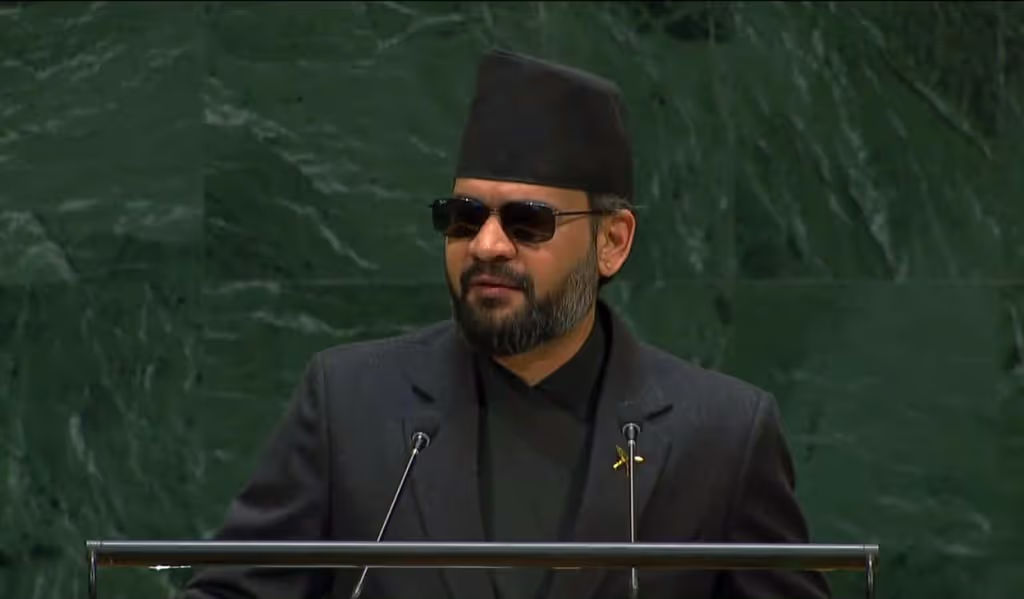
Nepal Prime Minister Balendra Shah used his first address to the United Nations General Assembly to turn the country's recent Himalayan flood catastrophe into a much broader argument about climate justice, regional cooperation and the priorities of the international system.
Addressing the 81st session of the UN General Assembly in New York, Shah told world leaders that the devastation recently witnessed in Nepal should not be treated as an isolated national disaster.
His argument was that a warming Himalayan region creates consequences extending far beyond Nepal's borders, while poorer and climate-vulnerable countries are being forced to spend scarce resources repeatedly rebuilding infrastructure damaged by a crisis to which they contributed relatively little.
But Shah's address went further than climate finance.
He questioned a global system that, in his telling, can move military equipment efficiently across continents while ordinary people in developing countries struggle to obtain basic agricultural, energy and development supplies.
The bigger story: Shah did not present Nepal's Himalayan disaster only as a demand for climate assistance. He used it to question how the world defines security itself — arguing that protecting people from floods, food insecurity, supply disruptions and climate-driven economic losses should matter alongside traditional military security.
Nepal's Disaster Became the Starting Point of the Speech
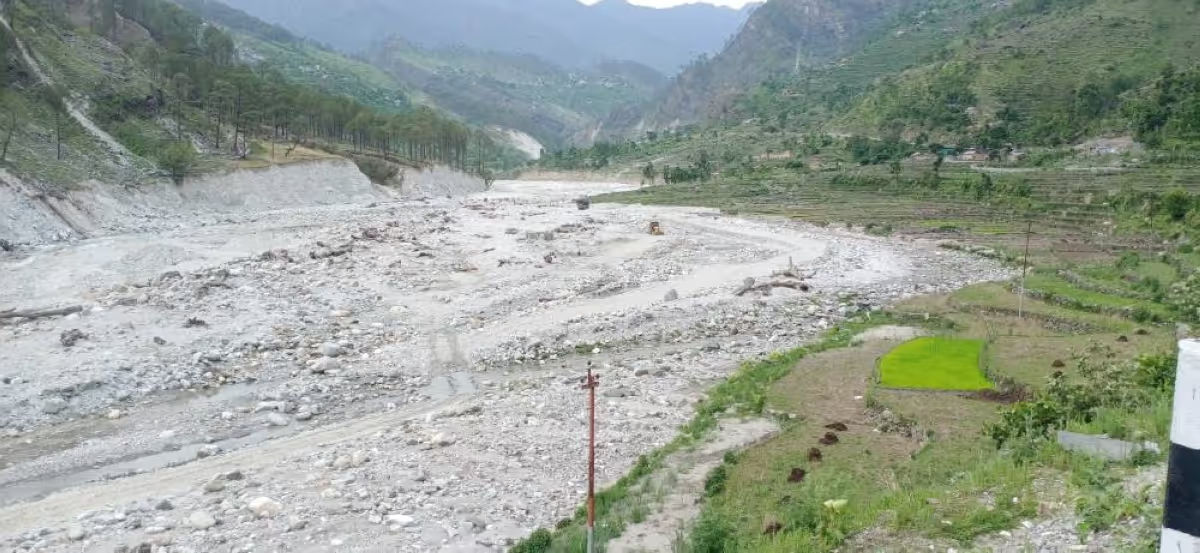
Shah began his UN address not with a broad list of Nepal's diplomatic priorities but with the human consequences of the recent Bhotekoshi-Trishuli disaster.
He described families waiting for relatives who may never return and communities searching through mud, rocks and water following the catastrophic flooding.
Roads, bridges, schools, homes, farms, energy infrastructure and livelihoods were destroyed.
Shah told delegates that the disaster had disrupted Nepal's development progress and created a massive reconstruction challenge.
His central warning was that what happened in Nepal should not be understood simply as an isolated Himalayan tragedy.
The Himalayas Were Presented as a Warning System for the Planet
Shah framed the Himalayas as part of a much larger environmental system supporting populations far beyond Nepal.
The Hindu Kush Himalayan region provides water, ecosystems, agriculture and livelihoods for populations across Asia.
Shah told the General Assembly that nearly two billion people are connected to the region.
His argument was straightforward: instability in the mountains does not remain in the mountains.
Water originating in Himalayan river systems flows across national borders and supports communities far downstream.
Climate Change Does Not Stop at Political Borders
The recent disaster provided Shah with a geographical example of that interconnectedness.
He said the devastation affected areas around the Nepal-China frontier before floodwaters continued downstream toward India.
The episode, he argued, demonstrates why Himalayan climate risks cannot be managed by individual countries acting independently.
Glacial systems, rivers, landslides and extreme weather do not follow national borders.
A hazard developing in one country can create consequences in another within hours.
Shah Proposed a Nepal-India-China Himalayan Climate Mechanism
One of the most concrete proposals in the address was the creation of a Himalayan Climate Resilience Mechanism.
Shah proposed that the initiative be led by Nepal, India and China.
The mechanism would be designed to increase cooperation across the Himalayan region rather than treating climate risks as isolated national problems.
Shah's Proposed Areas of Cooperation Include
- Sharing satellite information and scientific data.
- Monitoring potentially dangerous glacial lakes.
- Improving cross-border early-warning systems.
- Sharing technical expertise.
- Coordinating disaster preparedness.
- Strengthening cross-border disaster response.
Shah argued that the Himalayas should become an area of international cooperation rather than a region where critical environmental information remains fragmented between countries.
Why India and China Matter to Nepal's Climate Proposal
Geography makes cooperation with both neighbours particularly important for Nepal.
Nepal sits between India and China, while Himalayan rivers, glaciers and weather systems interact across their borders.
Data collected upstream can be critical to communities downstream.
Information about glacial lakes, rainfall, river flows and potential hazards can improve the time available for warnings and evacuation.
Shah's proposal therefore treats climate monitoring as a regional security issue requiring cooperation even where the countries may disagree on other geopolitical matters.
Nepal Says It Created Little of the Problem but Faces a Large Share of the Cost
Climate justice formed the economic core of Shah's argument.
He said Nepal contributes less than 0.1 percent of global greenhouse-gas emissions.
Yet the country faces retreating glaciers, unstable mountain slopes, increasingly unpredictable rivers, floods and landslides.
Each major disaster can destroy infrastructure that took years or decades to build.
That creates a development problem as well as an environmental one.
A Climate Disaster Can Erase Years of Development
Shah stressed that climate disasters do not simply produce an immediate humanitarian emergency.
They also destroy the physical systems on which development depends.
- Roads can disappear.
- Bridges can be swept away.
- Schools can be destroyed.
- Homes and farms can be lost.
- Hydropower infrastructure can be damaged.
- Local businesses can lose their economic base.
- Governments can be forced to redirect development budgets toward reconstruction.
Shah argued that this creates a cycle in which vulnerable countries repeatedly spend money rebuilding what climate-related disasters destroy.
Shah Challenged the Idea of Rebuilding Through More Debt
Another major part of the address concerned climate finance.
Shah argued that vulnerable countries should not be expected to finance resilience to externally driven climate risks primarily by taking on additional debt.
He called for greater access to grant-based climate financing and criticised mechanisms that require vulnerable states to navigate complex procedures before receiving assistance.
His argument was that climate finance should reflect both responsibility for historic emissions and countries' ability to respond.
Climate Justice, Shah Said, Is More Than Money
Shah broadened the definition of climate justice beyond financial compensation.
He framed it as a question of who bears the cost of climate change and who receives meaningful influence over the decisions made in response.
Mountain communities, small island states, landlocked countries, least-developed countries and future generations, he argued, should not have their interests treated as secondary simply because they possess less economic or political power.
In this framing, climate justice becomes both an economic and governance issue.
Six Words Summarised Nepal's Climate Argument
Shah organised one of the central parts of his message around six ideas.
After Disaster
- Relief.
- Rehabilitation.
- Reconstruction.
Before the Next Disaster
- Responsibility.
- Reparation.
- Resilience.
The distinction was important to the broader argument of his speech.
Relief, rehabilitation and reconstruction respond to damage that has already happened.
Responsibility, reparation and resilience attempt to address why vulnerable countries repeatedly face those losses and how future damage can be reduced.
Then the Speech Shifted From Climate to the Global System
One of the most distinctive parts of Shah's address came when he moved from Himalayan disasters to global supply chains.
He described the everyday difficulties faced when Nepal needs essential goods.
A farmer may struggle to receive fertilizer when planting season arrives.
Infrastructure projects can face shortages of materials such as bitumen.
Families can experience disruptions in cooking-fuel supplies.
Shah contrasted those experiences with the speed and efficiency of international military logistics.
Shah's argument was that the international system has become remarkably efficient at moving the tools of war while remaining far less reliable at delivering basic goods that support food security, development and everyday livelihoods.
Why the Weapons-versus-Food Comparison Matters
The comparison was not simply a rhetorical criticism of military spending.
It supported Shah's broader argument about how international security is defined.
Traditional security policy focuses heavily on military capability, borders and geopolitical competition.
Shah's speech placed greater emphasis on what is often described as human security: whether people have food, livelihoods, infrastructure, protection from disasters and the ability to live without being repeatedly pushed into crisis.
From that perspective, a farmer unable to obtain fertilizer during planting season can represent a security failure even when no military conflict is occurring inside that country.
Nepal Was Not the Only Country Shah Mentioned
Shah deliberately expanded the argument beyond Nepal.
He pointed toward other South Asian countries including:
- Bangladesh.
- Bhutan.
- India.
- Maldives.
- Pakistan.
- Sri Lanka.
His argument was that countries across the region face varying combinations of climate vulnerability and economic disruption generated by events over which they often have limited influence.
This was Shah's argument about the global system; the extent to which particular international conflicts or supply-chain disruptions are responsible for specific shortages varies and requires case-by-case evidence.
Shah Said the Existing International System Is Under Strain
The speech then widened into a discussion of international institutions.
Shah argued that the system created after the Second World War was built around principles including sovereignty, international law and human dignity.
He said that system is now under strain and argued that military and economic power too often influences whose concerns receive attention.
His response was not to reject multilateral institutions.
Instead, he argued for strengthening multilateralism so that smaller and poorer states have meaningful influence within it.
Nepal's Message Was Reform, Not Withdrawal From the UN System
Shah reaffirmed Nepal's support for multilateral cooperation.
His criticism focused on whether the international system produces equitable outcomes for states with less economic and geopolitical influence.
The distinction matters.
Nepal's position in the speech was not that global institutions are unnecessary, but that cooperation becomes more important when climate risks, supply chains and river systems cross national borders.
Shah Also Thanked India and China
Despite calling for greater responsibility from the international community, Shah also used the speech to thank countries and organisations that assisted Nepal following the disaster.
He specifically acknowledged neighbouring India and China for their assistance.
He also thanked the United Nations system, humanitarian organisations, other friendly countries and individuals who supported Nepal.
That acknowledgement accompanied his proposal that Nepal, India and China jointly lead a new Himalayan climate mechanism.
The Proposal Could Turn Geography Into Climate Cooperation
Nepal's position between India and China is normally discussed through the lens of geopolitics.
Shah's proposal attempted to frame the same geography differently.
Instead of treating Nepal's position between two major powers primarily as a strategic balancing problem, the climate mechanism would use it as a basis for regional environmental cooperation.
Whether such a mechanism is ultimately established will depend on diplomatic negotiations and the willingness of India and China to participate.
Shah's UN address represented a proposal, not an agreement already accepted by the three governments.
Balen Shah's UN Speech: Key Facts
- Speaker: Nepal Prime Minister Balendra Shah.
- Forum: 81st Session of the United Nations General Assembly.
- Location: New York.
- Central issue: Nepal's recent Himalayan flood disaster and climate vulnerability.
- Nepal's emissions: Less than 0.1 percent of global greenhouse-gas emissions, according to Shah.
- Regional proposal: Himalayan Climate Resilience Mechanism.
- Proposed leaders: Nepal, India and China.
- Regional significance: Shah said the Hindu Kush Himalaya supports nearly two billion people.
- Climate-finance position: Greater support and grant-based finance for vulnerable countries.
- Broader argument: Reform international cooperation so vulnerable countries have greater protection and influence.
Shah Presented Nepal's Political Change as Generational
The address also touched on Nepal's domestic political transition.
Shah described younger citizens' demands for integrity and accountability as part of a broader generational shift.
He said his government's domestic priorities include creating dignified employment, strengthening social security and providing opportunities for Nepalis to build their futures at home.
He connected those goals to climate resilience because repeated disasters can destroy employment, infrastructure and development opportunities.
Nepal Wants to Move From Disaster Response to Preparedness
Shah argued that Nepal's existing approach to climate disasters must evolve.
Responding after floods and landslides is not enough if extreme events become more frequent or destructive.
His proposed approach includes:
- Investing in stronger infrastructure.
- Improving early-warning systems.
- Strengthening institutions.
- Expanding climate insurance.
- Supporting innovation.
- Reducing dependence on fossil fuels.
- Expanding resilience at the local level.
- Improving regional disaster cooperation.
Nepal Says It Is Already Contributing to Climate Action
Shah also highlighted actions Nepal has already taken.
He pointed to forest restoration, hydropower development, electric mobility and local adaptation efforts as examples of Nepal attempting to pursue a lower-carbon and more resilient development model.
His argument was that a least-developed and highly climate-vulnerable country should not be expected to carry the financial burden of adaptation alone.
The Speech Turned the Himalayas Into a Global Issue
One of the clearest objectives of the address was to prevent Himalayan climate risks from being viewed as remote problems affecting only mountain communities.
The Hindu Kush Himalayan region feeds major river systems and supports enormous populations downstream.
Changes in glaciers, snowpack and mountain hydrology can therefore affect water availability, agriculture, energy systems and disaster risks far from the high mountains themselves.
Shah's message was that protecting the Himalayas is not solely Nepal's responsibility because the consequences of Himalayan instability are not confined to Nepal.
But Climate Attribution Still Requires Scientific Care
Shah explicitly framed Nepal's recent disaster within the wider climate crisis.
Scientists broadly recognise that a warming climate is altering glaciers, snow, permafrost and hydrological systems across high mountain regions.
However, determining precisely how much climate change contributed to any individual flood, landslide or glacial collapse requires event-specific scientific analysis.
The political argument presented at the UN and the scientific attribution of a particular disaster are therefore related but not identical questions.
The Speech's Most Unusual Argument Was About Priorities
Climate finance proposals are familiar at international summits.
Calls for early-warning systems and stronger infrastructure are also increasingly common.
What gave Shah's address a more distinctive character was the way he linked those demands to the broader architecture of global security and trade.
His comparison between military logistics and access to fertilizer or fuel was intended to ask a basic question:
If the international system can mobilise enormous resources quickly when states consider something a security priority, should protecting food systems, vulnerable communities and climate-exposed infrastructure receive comparable urgency?
That Question Extends Beyond Nepal
Nepal is a relatively small economy, but the questions raised in Shah's address apply to many climate-vulnerable countries.
Small island states face rising seas.
Mountain countries face changing glaciers and unstable slopes.
Low-income states can lose significant portions of their infrastructure during a single extreme event.
Countries with high debt burdens can then face difficult choices between reconstruction and continued investment in health, education and development.
This is why climate negotiations increasingly involve not only emissions reductions but also adaptation, loss and damage, financing and international economic justice.
What Would Make the Himalayan Mechanism Meaningful?
Shah's proposal will ultimately be judged by whether it develops beyond a UN speech.
A functioning regional mechanism would require practical cooperation between Nepal, India and China.
Potential measures could include shared monitoring standards, faster exchange of hydrological and satellite data, coordinated early warnings and clear procedures for emergency communication.
Financing and institutional responsibilities would also need to be negotiated.
None of those details are settled simply because the proposal has now been made publicly.
What Happens After the UN Speech Matters More Than the Speech Itself
International speeches can place issues on the diplomatic agenda, but they do not automatically produce new institutions or financing.
Nepal will now need to turn Shah's proposals into diplomacy.
That would mean engaging India and China over the proposed Himalayan mechanism while pressing climate-finance institutions and development partners for greater support.
It would also require Nepal to strengthen its own preparedness, institutions and infrastructure.
The measure of the address will therefore be whether its proposals survive beyond the General Assembly hall.
From the Rooftop of the World, Nepal Is Asking a Different Security Question
Shah's first UN General Assembly address began with the destruction left behind by a Himalayan flood.
But it ended up asking a much larger question about what governments and international institutions choose to protect.
Nepal's argument is that climate resilience, reliable food supplies, functioning infrastructure and protection from disasters are not secondary development concerns.
They are fundamental components of human security.
The proposed Nepal-India-China climate mechanism gives that argument a concrete regional test.
If the three countries can cooperate on monitoring glaciers, sharing warnings and preparing for disasters, the Himalayas could become a rare area where shared vulnerability creates cooperation across political boundaries.
If the proposal goes nowhere, Shah's warning risks joining a long list of climate appeals heard at international summits but followed by limited action.
That is the deeper challenge behind Nepal's message from New York: not whether the world can hear warnings coming from the Himalayas, but whether it can reorganise its priorities quickly enough to act on them.
Keywords:
Related Posts