Trump news at a glance: president touts ‘strong talks’ with Iran that Iran says have not happened
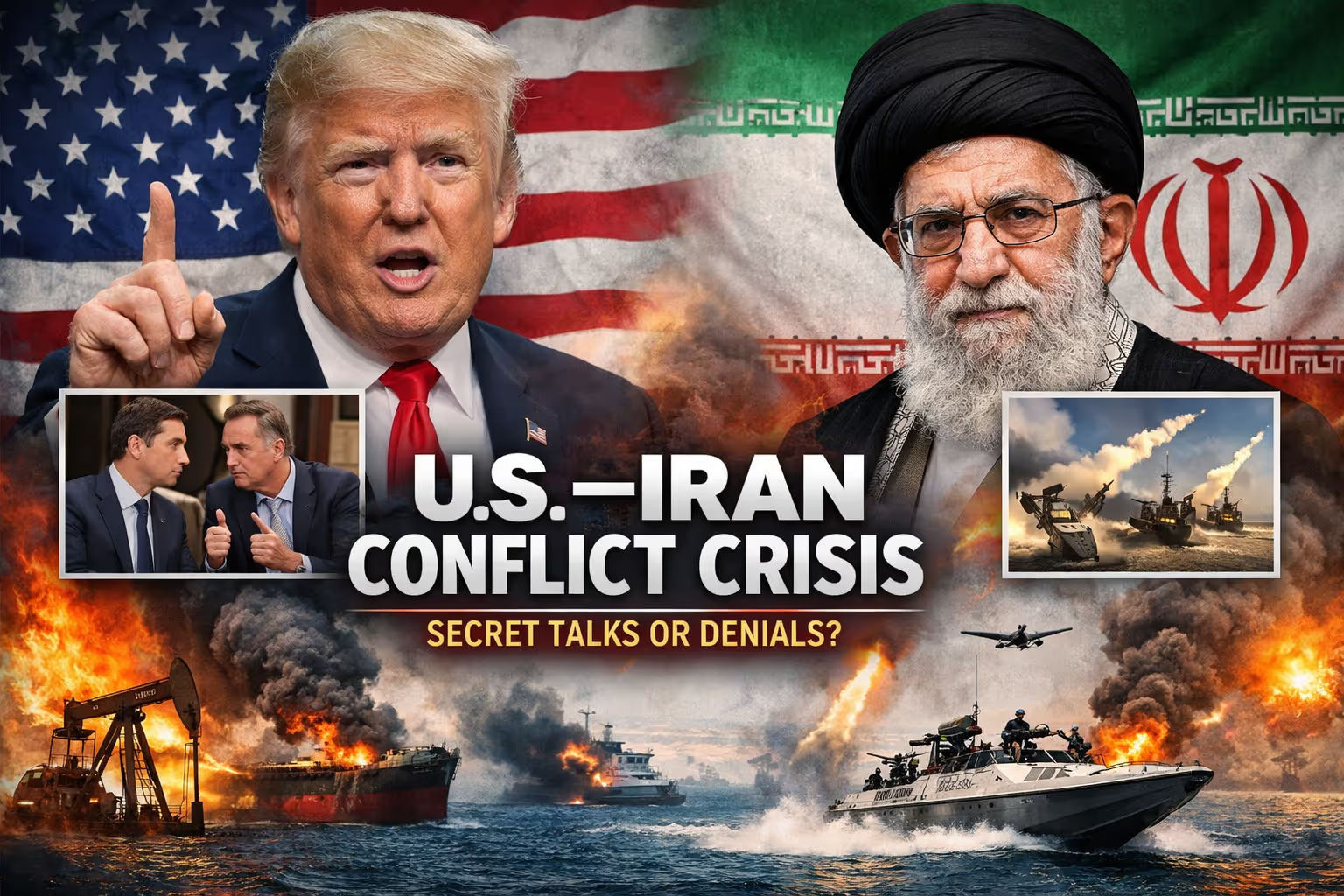
US–Iran Tensions Rise Amid Conflicting Claims of Secret Talks
In a rapidly evolving geopolitical situation, former U.S. President Donald Trump has claimed that the United States and Iran have engaged in recent high-level discussions that could potentially de-escalate ongoing tensions between the two nations. However, these assertions have been firmly denied by Iranian authorities, adding a new layer of uncertainty and confusion to an already volatile conflict in the Middle East.
The developments come against the backdrop of heightened military threats, economic concerns, and fears of a broader regional conflict that could have far-reaching global consequences.
Trump Claims ‘Major Points of Agreement’ in Talks
According to statements made by Donald Trump on Monday, there have been “very good and productive conversations” between U.S. and Iranian representatives over the past day. Trump further suggested that these discussions had led to “major points of agreement,” raising hopes that a diplomatic breakthrough might be on the horizon.
Speaking to reporters in Palm Beach, Florida, Trump elaborated that key figures from his inner circle, including his Middle East envoy Steve Witkoff and senior advisor Jared Kushner, had conducted what he described as “very, very strong talks” with Iranian officials just a day earlier.
In a separate social media post, Trump announced that he had extended a previously set deadline related to the conflict by five days. This extension, he implied, was a direct result of the progress being made in these alleged negotiations.
Trump also speculated that a formal agreement to end hostilities could be reached soon, signaling optimism that diplomacy might succeed where threats and military posturing have thus far failed.
Tehran Denies Any Negotiations
Contradicting Trump’s statements, Iran’s government has categorically denied that any such talks have taken place. A spokesperson for Iran’s foreign ministry stated that no discussions have occurred between Tehran and Washington since the beginning of the U.S. bombing campaign, which has now entered its 24th day.
Iranian officials have maintained a consistent stance that they are not engaged in any direct or indirect negotiations with the United States under current conditions. The denial not only challenges Trump’s narrative but also raises questions about the accuracy or intent behind his claims.
Analysts suggest that such conflicting statements could either reflect miscommunication between unofficial channels or be part of a broader strategy by both sides to influence public perception and diplomatic leverage.
Escalating Threats and Military Posturing
The situation has been further complicated by a series of aggressive statements and threats exchanged over the weekend. Trump warned that the United States would “hit and obliterate” Iran’s power stations and energy infrastructure if Tehran failed to ensure the free flow of shipping through the strategically critical Strait of Hormuz.
This narrow waterway is one of the world’s most vital النفط (oil) transit routes, with a significant portion of global energy supplies passing through it. Any disruption in this region could have immediate and severe impacts on global oil markets.
In response, Iranian officials issued their own warnings, threatening to target infrastructure across the Middle East if attacked. This tit-for-tat rhetoric has significantly raised fears of a wider regional conflict that could involve multiple countries and destabilize an already fragile geopolitical landscape.
Global Economic Implications
The escalating tensions have already begun to impact global markets, particularly in the energy sector. Oil prices have shown volatility amid fears of supply disruptions, with investors closely monitoring developments in the Strait of Hormuz.
A prolonged conflict or escalation could lead to:
Sharp increases in oil prices
Disruptions in global trade routes
Rising inflation worldwide
Economic instability in both developed and developing nations
Countries heavily dependent on oil imports, including India, could face increased fuel costs and inflationary pressures if the situation worsens.
Diplomatic Uncertainty and Mixed Signals
The conflicting narratives from Washington and Tehran highlight the deep mistrust that continues to define U.S.–Iran relations. While Trump’s claims suggest that backchannel diplomacy might be underway, Iran’s outright denial indicates that any such efforts, if they exist, are either highly secretive or nonexistent.
Experts note that in high-stakes geopolitical conflicts, it is not uncommon for leaders to use public statements strategically. Trump’s remarks could be aimed at:
Projecting strength and control over the situation
Reassuring domestic and international audiences
Pressuring Iran into negotiations
On the other hand, Iran’s denial could be intended to:
Maintain a firm negotiating position
Avoid appearing weak or compromised
Signal resistance to U.S. pressure
Role of Key Figures
The involvement of figures like Steve Witkoff and Jared Kushner adds another dimension to the story. Both individuals have previously played roles in diplomatic efforts in the Middle East, and their alleged participation in talks suggests that unofficial or parallel diplomatic channels may be in play.
However, without confirmation from Iran, their exact role remains unclear.
Strait of Hormuz: A Flashpoint
At the center of the crisis lies the Strait of Hormuz, a geopolitical chokepoint that has long been a source of tension between Iran and Western powers. Any threat to its security immediately triggers global concern due to its importance in the international energy supply chain.
Iran has historically threatened to block the strait in response to economic sanctions or military pressure, while the United States has repeatedly emphasized its commitment to keeping the passage open.
The recent exchange of threats regarding the strait has intensified fears that even a minor incident could escalate into a full-scale conflict.
Potential Scenarios Going Forward
Given the current situation, several possible scenarios could unfold:
1. Diplomatic Breakthrough
If Trump’s claims hold any truth, there is a possibility that quiet negotiations are indeed taking place. A successful agreement could de-escalate tensions and stabilize the region.
2. Continued Stalemate
The most likely short-term outcome is a continuation of the current situation, with both sides maintaining their positions while avoiding direct large-scale confrontation.
3. Military Escalation
If either side acts on its threats, the conflict could quickly spiral into a broader war involving regional allies and potentially global powers.
International Reactions
The international community is closely watching the developments, with many countries urging restraint and a return to diplomacy. Organizations such as the United Nations have historically called for peaceful resolution in similar crises.
Global leaders are particularly concerned about:
The risk of civilian casualties
Disruption to global trade
The possibility of a wider regional war
Conclusion
The latest developments in U.S.–Iran relations underscore the fragile and unpredictable nature of international diplomacy in times of conflict. While Donald Trump’s claims of productive talks offer a glimmer of hope, Iran’s firm denial highlights the deep divisions and mistrust that continue to hinder meaningful progress.
As threats escalate and the risk of conflict looms, the world remains on edge, watching closely to see whether diplomacy will prevail or whether the situation will deteriorate further.
For now, the truth behind the alleged talks remains uncertain, leaving policymakers, analysts, and global markets grappling with a complex and rapidly changing reality.
Related Posts