Nvidia’s AI Engine Keeps Accelerating: Record-Breaking Revenue Tests Investor Confidence After Huang’s Reported Exit
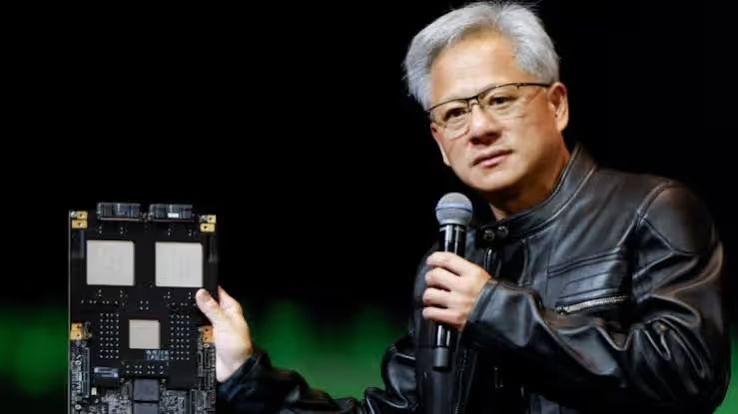
Nvidia has delivered another extraordinary financial performance, reporting quarterly revenue of approximately $115.8 billion as demand for artificial intelligence computing continues to expand worldwide. The results comfortably exceeded Wall Street expectations, with the company's data-centre division generating more than $107 billion in revenue. The announcement comes during an unusually turbulent period for the semiconductor giant, following the departure of its longtime co-founder and chief executive, Jensen Huang. With chief financial officer Colette Kress now serving as interim CEO, investors are watching closely to determine whether Nvidia can maintain its extraordinary growth without the founder who helped transform it into the centre of the global AI revolution.
The earnings report provides an important indication of the strength of the artificial intelligence market. Technology companies continue investing heavily in data centres, advanced processors and computing infrastructure to develop and operate increasingly sophisticated AI systems.
Nvidia remains one of the biggest beneficiaries of this investment cycle. Its graphics processing units, networking products and software platforms have become essential components of modern AI infrastructure.
However, the latest financial results are about more than revenue growth. They also represent the first major earnings test for Nvidia's management team since Huang's departure, placing additional attention on the company's leadership, strategy and long-term ability to maintain its competitive position.
Nvidia Earnings: Key Numbers at a Glance
- Quarterly revenue: Approximately $115.8 billion.
- Annual revenue growth: 103% compared with the same quarter a year earlier.
- Quarterly growth: Revenue increased 20% compared with the previous quarter.
- Data-centre revenue: $107.6 billion, up 110% year over year.
- Non-GAAP diluted earnings per share: $2.68.
- GAAP diluted earnings per share: $2.70.
- Next-quarter revenue forecast: $130 billion, plus or minus 3%.
- Interim CEO: Colette Kress, Nvidia's chief financial officer.
- Leadership situation: The board has confirmed it does not intend to reinstate Jensen Huang as CEO.
Nvidia Reports $115.8 Billion in Quarterly Revenue
Nvidia announced revenue of $115.8 billion for its third quarter of fiscal 2027, covering the three months ended October 25. The figure represents a 103% increase compared with the $57 billion reported during the corresponding period a year earlier.
Revenue also increased 20% compared with the previous quarter, when Nvidia recorded $96.2 billion. The latest performance demonstrates that demand for the company's computing products remains exceptionally strong despite concerns about the sustainability of massive investments in artificial intelligence.
The results exceeded analysts' expectations. Market estimates had placed quarterly revenue at approximately $109.15 billion, meaning Nvidia delivered several billion dollars more than Wall Street had anticipated.
Earnings also came in above expectations. Nvidia reported non-GAAP diluted earnings per share of $2.68, compared with analyst expectations of approximately $2.47. Its GAAP diluted earnings per share reached $2.70.
The company's net income under GAAP accounting increased to approximately $65.3 billion, compared with $31.9 billion during the same quarter a year earlier.
These figures underline the scale of Nvidia's current business. The company is generating quarterly revenue that would have been considered extraordinary annual revenue for many major technology businesses only a few years ago.
Data-Centre Business Powers Nvidia's Extraordinary Growth
The biggest contributor to Nvidia's performance was its data-centre division, which generated $107.6 billion in quarterly revenue. This represented an increase of 110% compared with the same period last year and approximately 21% growth from the previous quarter.
The division has become the foundation of Nvidia's business as technology companies compete to build the infrastructure needed for advanced artificial intelligence.
Modern AI systems require enormous amounts of computing power. Training large language models, operating AI assistants, generating images and videos, and processing information at scale all require powerful processors working together inside specialised data centres.
Nvidia supplies much of the hardware and software needed to build these systems. Its GPUs are designed to handle large numbers of calculations simultaneously, making them particularly useful for machine-learning workloads.
Major cloud providers and AI companies continue investing in Nvidia-powered infrastructure because they need additional capacity to serve growing numbers of users and develop more advanced models.
The scale of the data-centre business also reveals how dramatically Nvidia has changed. The company originally became known for graphics processors used in gaming, but its largest source of revenue now comes from infrastructure supporting artificial intelligence and accelerated computing.
Why AI Infrastructure Spending Is Driving the Semiconductor Boom
The global AI industry has moved beyond experimental applications. Companies are increasingly integrating AI into software development, search, customer service, productivity tools, healthcare research, financial services and industrial operations.
This expansion requires significantly more computing infrastructure. Businesses need powerful processors, high-speed networking equipment, advanced cooling systems and large-scale data centres to support increasingly demanding workloads.
Nvidia has positioned itself at the centre of this transformation by supplying not only processors but also complete computing platforms.
Its competitive advantage comes from a combination of hardware, networking technology, software and a large developer ecosystem. The CUDA platform, for example, has encouraged developers and researchers to build applications specifically designed to run on Nvidia GPUs.
This ecosystem makes it difficult for customers to replace Nvidia products quickly. Switching to another supplier can involve changes to software, infrastructure, engineering processes and development workflows.
As a result, Nvidia benefits from both the growing demand for AI computing and the established relationships it has built with customers across the technology industry.
Fourth-Quarter Revenue Forecast Reaches $130 Billion
Beyond its latest financial results, Nvidia provided an optimistic outlook for the following quarter. The company expects fourth-quarter fiscal 2027 revenue to reach approximately $130 billion, with a possible variation of 3% above or below that figure.
This forecast is higher than the average analyst expectation of approximately $125.25 billion reported before the announcement.
The guidance suggests that Nvidia expects demand for its AI computing products to remain strong rather than slow down immediately after another record-setting quarter.
The company also said its forecast does not assume any data-centre computing revenue from China. This is an important detail because restrictions on advanced semiconductor exports continue to affect Nvidia's ability to serve parts of the Chinese market.
The forecast includes an additional week in the company's fiscal fourth quarter, which is relevant when comparing the period with previous quarters.
Vera Rubin Platform Begins Shipping as Nvidia Expands Its AI Roadmap
Another important development in the earnings announcement was the progress of Nvidia's next-generation Vera Rubin computing platform.
Nvidia confirmed that the Vera Rubin NVL72 platform had begun shipping. The company described the rollout as the fastest product ramp in its history, highlighting the speed at which it is attempting to bring new AI infrastructure to market.
Vera Rubin is designed to support the next generation of advanced AI workloads. As AI models become larger and more demanding, technology companies need systems capable of delivering greater computing performance while improving efficiency.
Nvidia's platform combines processors, networking and other system components to create integrated computing infrastructure rather than relying on individual chips operating independently.
The company reported that Vera Rubin systems were running at several partners, including CoreWeave, Google Cloud, Microsoft Azure, Oracle Cloud Infrastructure and Nebius. Additional infrastructure is expected to come online through its wider ecosystem.
The rollout is strategically important because Nvidia must continue introducing new products while competitors attempt to challenge its dominance in AI computing.
Its ability to deliver new generations of hardware on schedule could help maintain customer confidence and encourage major cloud providers to continue building around its technology.
Colette Kress Faces Her First Major Earnings Test as Interim CEO
The earnings announcement also marked an important moment for Colette Kress, who is now leading Nvidia as interim chief executive following Jensen Huang's departure.
Kress previously served as Nvidia's executive vice-president and chief financial officer. She has been closely involved in the company's financial management during a period of extraordinary growth.
Her experience makes her a familiar figure to investors and senior employees. However, leading Nvidia during a period of leadership uncertainty presents challenges that extend beyond financial management.
The company must maintain its product roadmap, protect relationships with major customers, manage global supply arrangements and reassure employees that its long-term strategy remains intact.
During the earnings discussion, Kress emphasised the strength of Nvidia's business momentum and the company's continued focus on innovation. She also indicated that the leadership transition would not change its ambitions.
Investors are likely to judge her leadership not only by the financial results but also by how effectively she manages the company through its succession process.
Nvidia Board Says Jensen Huang Will Not Be Reinstated
One of the most closely watched developments surrounding the earnings announcement was the company's position on Jensen Huang's possible return.
Nvidia's board chairman, Harvey Jones, confirmed that the company does not intend to reinstate Huang as chief executive. The board has accepted his departure and is continuing with the search for a permanent replacement.
The statement came after Huang publicly indicated that he would be willing to return if the board decided that doing so would be in the company's best interests.
His comments had attracted attention from supporters who believe his experience and influence remain valuable to Nvidia. A campaign calling for his return also gained public support.
However, the board's position indicates that it intends to move forward with a new leadership structure rather than reverse the transition.
Nvidia has retained executive search firm Heidrick and Struggles to help identify a permanent chief executive. The company is considering candidates as it looks for someone capable of leading one of the world's most strategically important technology businesses.
Why Jensen Huang's Departure Matters to Investors
Huang co-founded Nvidia in 1993 and led the company through its transformation from a graphics-chip manufacturer into a central supplier of artificial intelligence infrastructure.
His influence extended across product development, corporate strategy, customer relationships and the company's public identity. For many investors, Huang was not simply the person managing Nvidia; he was one of the most recognisable figures associated with its technological direction.
His departure therefore raises questions about how much of Nvidia's success depends on the founder's personal leadership and how effectively the existing management team can continue executing the company's strategy.
The board's decision not to reinstate him makes the search for a permanent successor particularly important.
Nvidia's next chief executive will inherit a business with enormous revenue, major customer commitments and a substantial technology roadmap. The challenge will be maintaining the company's pace of innovation while managing a complex global semiconductor ecosystem.
Leadership Controversy and National Security Scrutiny
Huang's departure followed intense media attention surrounding allegations about his personal relationships, including reports involving a businesswoman suspected by US intelligence officials of having connections to Chinese intelligence.
The reports attracted particular attention because Nvidia's advanced processors are strategically important technology. The United States has introduced export restrictions intended to limit China's access to certain high-performance computing chips.
The situation has therefore raised questions about corporate governance, executive oversight and the protection of sensitive business information.
Nvidia has also established a National Security and Export Control Oversight Committee to oversee relevant policies, compliance and international trade risks.
The controversy should be understood carefully. Allegations about personal relationships or suspected intelligence connections are not, by themselves, proof of espionage or evidence that confidential company information was transferred to a foreign government.
Nevertheless, the situation has placed Nvidia under greater scrutiny at a time when its technology is closely connected to international competition in artificial intelligence and advanced computing.
China Remains a Major Uncertainty for Nvidia
Nvidia's relationship with China remains one of the most complicated issues facing the company.
China represents an important technology market, but US export controls have restricted the sale of certain advanced processors to Chinese customers.
Nvidia has previously argued that American companies should be able to compete internationally while complying with national security requirements. However, the rules governing advanced semiconductor exports continue to change.
In its latest financial outlook, Nvidia specifically stated that it was not assuming data-centre computing revenue from China.
This means the company's near-term revenue forecast is not relying on a recovery in those sales. Strong demand from other markets is currently providing the company with substantial growth opportunities.
The issue remains important because restrictions could affect future sales, customer relationships and the competitive position of American semiconductor companies in international markets.
How Did Nvidia Shares React to the Earnings Announcement?
Nvidia's financial results arrived after a difficult period for its shares. The leadership controversy and wider concerns about technology-sector valuations had contributed to significant volatility.
The Guardian reported that Nvidia shares had fallen substantially following Huang's departure, wiping hundreds of billions of dollars from the company's market value.
Despite the uncertainty, the latest earnings announcement provided investors with a strong set of financial numbers. Nvidia's shares moved higher in after-hours trading following the results, as the revenue performance and forward guidance exceeded expectations.
However, the earnings response should not be interpreted as a complete resolution of the company's leadership or market concerns.
Investors still need to evaluate whether Nvidia can maintain its growth rate, protect its competitive advantage and manage the transition without disrupting its relationships with customers and technology partners.
The share price may also remain sensitive to broader market sentiment, interest rates, AI investment trends and changes in semiconductor export policies.
Is the Artificial Intelligence Boom Still Strong?
Nvidia's results offer a powerful indication that demand for AI infrastructure remains substantial.
Some investors have questioned whether technology companies are spending too much on AI data centres and whether the financial returns from these investments will justify their enormous costs.
Building large-scale AI infrastructure requires billions of dollars in spending. Companies must purchase processors, construct facilities, secure electricity supplies and invest in networking and cooling systems.
The concern is that demand could eventually slow if AI services fail to generate enough revenue to justify these investments.
Nvidia's latest performance suggests that major customers are still purchasing substantial amounts of computing capacity. Its data-centre revenue growth and next-quarter forecast indicate that the infrastructure buildout remains active.
Nevertheless, strong chip sales do not automatically prove that every AI investment will produce a profitable return. The long-term sustainability of the AI boom will depend on whether businesses can turn their computing investments into valuable products, services and productivity improvements.
Competition in the AI Chip Market Is Increasing
Nvidia's dominant position has attracted growing competition from other semiconductor manufacturers and technology companies developing their own AI processors.
AMD continues expanding its data-centre GPU portfolio, while major cloud providers are investing in custom silicon designed specifically for their own AI workloads.
Companies such as Google, Amazon and Microsoft have strong incentives to reduce their dependence on external chip suppliers by developing more of their own computing hardware.
These efforts could create additional competition in the coming years. However, challenging Nvidia requires more than producing a powerful processor.
Customers also need reliable software, networking capabilities, system integration, technical support and access to sufficient manufacturing capacity.
Nvidia's established ecosystem gives it an advantage, but the company cannot assume that its current market position will remain unchanged indefinitely.
What Nvidia's Results Mean for the Global Technology Industry
Nvidia's earnings are important beyond the company itself because they provide insight into spending across the wider technology industry.
Major cloud providers, AI developers and enterprise technology companies depend on advanced computing infrastructure to expand their services.
When Nvidia reports strong demand, it can indicate that customers are continuing to invest in the hardware required to support AI development.
Its performance also affects semiconductor manufacturers, data-centre operators, networking suppliers and companies involved in the construction and operation of large computing facilities.
A sustained slowdown in Nvidia's business could therefore have consequences across the technology supply chain. Conversely, continued growth may encourage further investment in AI infrastructure.
This is why investors and technology companies closely monitor Nvidia's revenue, product launches and forward guidance. Its results have become an important reference point for understanding the direction of the global AI market.
What Happens Next for Nvidia?
Nvidia now faces two major responsibilities: maintaining its financial momentum and successfully managing its leadership transition.
The company will need to deliver on its $130 billion revenue forecast while continuing to expand production and ship its next-generation computing platforms.
Its ability to maintain strong relationships with major cloud providers and AI developers will remain essential. Customers need confidence that Nvidia can supply the hardware and software required for their long-term infrastructure plans.
The search for a permanent CEO will also remain a major focus. The board must identify a leader who understands the semiconductor industry, can manage a global technology business and has the credibility to guide Nvidia through its next stage of growth.
Meanwhile, export restrictions, competition and questions about the profitability of AI infrastructure will continue to influence the company's future.
The coming quarters will reveal whether Nvidia can maintain its extraordinary growth rate while adapting to a new leadership structure.
A Financial Victory During a Defining Leadership Transition
Nvidia's latest earnings report demonstrates that demand for artificial intelligence computing remains powerful. With $115.8 billion in quarterly revenue, 103% annual growth and a $130 billion forward revenue forecast, the company has delivered another performance that exceeded market expectations.
Its data-centre business continues to drive the majority of its growth, while the introduction of the Vera Rubin platform signals that Nvidia is preparing for another generation of AI infrastructure.
Yet the company is entering a new chapter without the founder who guided it for more than three decades. Colette Kress and the wider leadership team must now demonstrate that Nvidia's technology, customer relationships and business strategy can remain successful through the transition.
The board's decision not to reinstate Jensen Huang makes the search for a permanent successor even more significant. Investors will be watching not only the company's revenue but also its ability to maintain innovation, stability and confidence across the global technology industry.
Nvidia has shown that its AI business is still accelerating, even during one of the most unusual periods in its history. The financial numbers are impressive, but the bigger test is whether the world's leading AI chipmaker can preserve its momentum and define its next era without the founder who built its empire.