MoI Unveils Public Awareness Exhibition at The Avenues
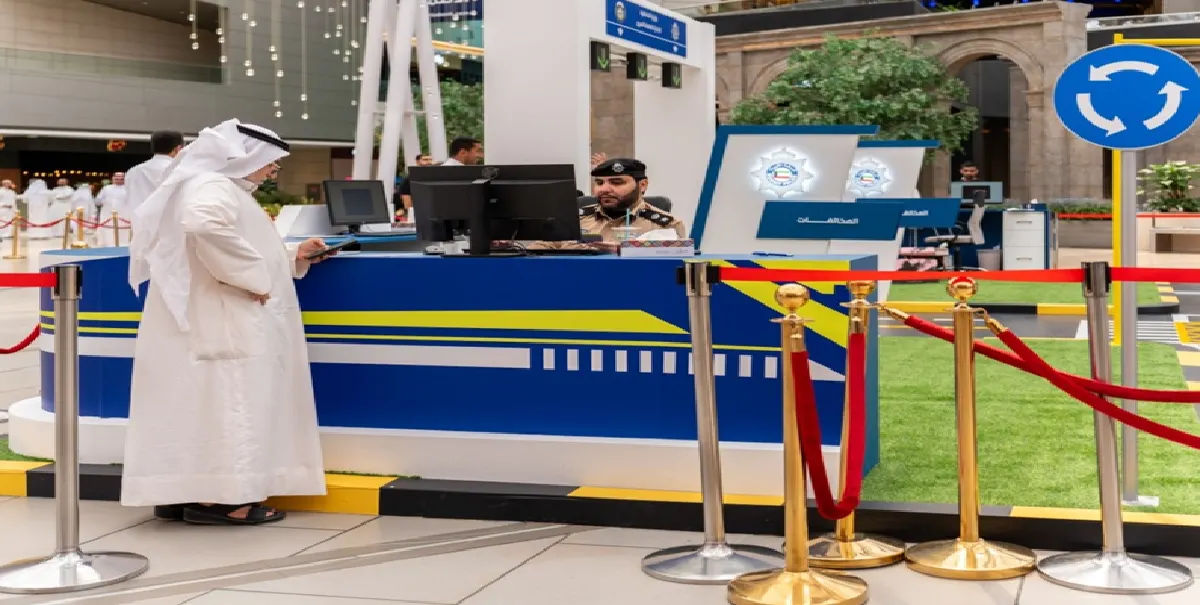
Kuwait’s Ministry of Interior Opens ‘Be Aware’ Exhibition at The Avenues
Public awareness event combines security education, government services and direct interaction with Ministry of Interior departments
KUWAIT CITY: Kuwait’s Ministry of Interior has opened the three-day “Be Aware” exhibition at The Avenues Mall, bringing security-awareness activities and several government services directly to citizens and residents.
The exhibition was inaugurated on Thursday, July 16, 2026, by Ministry of Interior Undersecretary Major General Abdulwahab Al-Wuhaib. It forms part of the ministry’s continuing efforts to improve public understanding of security procedures, encourage responsible behaviour and introduce people to the work carried out by its different departments.
Unlike a conventional exhibition that only displays information, “Be Aware” combines awareness campaigns with practical services. Visitors can speak directly with ministry representatives, receive guidance about administrative procedures and, where eligible, complete certain transactions at the exhibition.
The event also allows members of the public to examine security vehicles and specialised equipment used by Interior Ministry personnel. The ministry hopes that this direct interaction will strengthen trust between security institutions and the community while making government services more accessible.
Important points
The “Be Aware” exhibition was inaugurated at The Avenues Mall on July 16, 2026.
The event was opened by Ministry of Interior Undersecretary Major General Abdulwahab Al-Wuhaib.
The exhibition runs for three days.
Its main objective is to strengthen security awareness and explain Ministry of Interior services.
Eligible visitors can resolve blocks linked to certain minor traffic violations.
Serious traffic offences are excluded from the temporary relief offered at the exhibition.
Services include releasing eligible impounded vehicles and completing biometric fingerprint registration.
Visitors can pay fines and access maritime licensing and vessel-registration services.
Security vehicles and specialised operational equipment are displayed to the public.
Ooredoo Telecommunications Company is supporting the exhibition as its strategic partner.
Ministry brings its services closer to the public
Major General Al-Wuhaib toured the exhibition’s different pavilions after the inauguration. During the tour, officials briefed him on the services provided by participating ministry sectors and the educational programmes being presented to visitors.
The exhibition has been designed as a public-facing platform rather than a gathering intended only for security professionals. Each pavilion introduces a different area of the Ministry of Interior’s work, allowing visitors to understand how various departments contribute to public safety, traffic regulation, identification, law enforcement and maritime administration.
One of the exhibition’s central messages is that public security is a shared responsibility. The police and other government departments enforce laws and respond to emergencies, but citizens and residents also play an important role by following regulations, reporting suspicious activity and understanding the correct procedures for accessing government services.
By holding the event in one of Kuwait’s most heavily visited shopping destinations, the ministry can reach people who may not ordinarily attend a government awareness programme. Families, young people, workers and visitors from different communities can enter the exhibition while visiting the mall and speak directly with officials.
The location therefore turns a public awareness campaign into an accessible community event.
Opportunity to resolve certain traffic blocks
One of the exhibition’s most notable features is the assistance being offered to motorists with eligible traffic-related restrictions.
The General Traffic Department is allowing citizens and residents to request the removal of vehicle-registration blocks arising from certain minor violations, provided that the applicable fines are paid and other requirements are satisfied.
This opportunity does not apply to serious traffic offences. According to information reported from the exhibition, the ministry is offering a second chance in suitable cases while maintaining strict measures against dangerous or reckless conduct.
A traffic block can prevent a vehicle owner from completing some administrative procedures until an outstanding violation or related issue has been resolved. By placing traffic officials at the exhibition, the ministry enables eligible individuals to understand the reason for a restriction and take the necessary steps to clear it.
The initiative may reduce the need for visitors to travel to different government offices or spend additional time determining which department is responsible for their case.
However, the exclusion of serious offences is equally significant. It demonstrates that the exhibition is not intended to cancel accountability or provide blanket exemptions. Instead, it offers an organised way of resolving minor administrative and traffic-related problems while preserving penalties for behaviour that threatens public safety.
Release of eligible impounded vehicles
The exhibition also provides assistance concerning the release of certain impounded vehicles.
Vehicles may be impounded because of traffic violations, legal restrictions or administrative issues. Owners usually need to settle the relevant violation and complete official procedures before a vehicle can be released.
At “Be Aware,” visitors can consult representatives and determine whether their vehicle is eligible for release. Where the required conditions are met, the procedure may be completed or advanced through the exhibition.
The inclusion of vehicle-release services transforms the event from a purely educational campaign into a practical service centre.
This approach can improve communication between motorists and the authorities. People often experience confusion when a case involves several procedures, documents or fines. Face-to-face guidance provides an opportunity for officials to explain what is required and why a particular action has been taken.
At the same time, motorists are reminded that traffic regulations exist to protect road users. The service element is therefore accompanied by an awareness message: administrative assistance does not remove the obligation to drive carefully and comply with the law.
Biometric fingerprint registration available
Another important service available at the exhibition is biometric fingerprint registration.
Biometric systems use physical characteristics, including fingerprints, to verify a person’s identity. Such registration helps government agencies maintain accurate identity records and reduce the possibility of impersonation or document misuse.
Kuwait has previously made biometric registration available at security directorates, border facilities, dedicated centres and several major commercial complexes, including The Avenues Mall.
Providing the service during the exhibition gives eligible visitors another opportunity to complete the process while learning why biometric identification has become an important part of modern security administration.
Biometric information may support identity verification in areas such as residency transactions, border security and official government procedures. From the ministry’s perspective, reliable identification strengthens the accuracy and efficiency of security operations.
For the public, the presence of trained personnel can make the process easier to understand. Visitors can ask questions about the procedure and receive direct guidance rather than depending entirely on unofficial online explanations.
The ministry’s decision to include biometric registration shows how awareness and service delivery are being combined within a single public event.
Maritime licences and vessel-registration services
The exhibition is not limited to road traffic and personal identification. Visitors can also access information and services connected with Kuwait’s maritime sector.
Services available at the event include matters related to maritime licences, the payment of relevant fines and the renewal of registration documents for marine vessels.
These services may be relevant to boat owners, fishing-vessel operators and people involved in recreational or commercial marine activities.
Kuwait’s coastline and maritime environment are important for transportation, fishing, recreation and national security. Regulation is therefore necessary to ensure that vessels are properly registered and operated in accordance with applicable requirements.
By including maritime departments in the exhibition, the Ministry of Interior is drawing attention to an area of public safety that may receive less attention than road traffic.
Just as motorists must follow road-safety rules, vessel owners and operators must comply with maritime licensing, registration and safety requirements.
Visitors can use the exhibition to learn which documents they need, how fines can be paid and how vessel-registration papers can be renewed.
Security vehicles and specialised equipment displayed
A major attraction of the exhibition is the display of security vehicles and specialised field equipment used by Ministry of Interior personnel.
Such displays provide the public with a closer understanding of the tools used during patrols, emergencies, traffic operations and other security assignments.
For many visitors, particularly children and young people, the equipment displays may be the most visible and engaging part of the event. However, they also serve an educational purpose.
Showing operational equipment helps explain that security work depends on trained personnel, technology, communication systems and specialised resources.
Visitors can learn how different ministry sectors respond to incidents and why particular vehicles or devices are needed. This can create greater appreciation for the technical and operational demands placed on security personnel.
Public exhibitions also allow ministry representatives to explain the responsible use of security equipment and the circumstances in which specialised units may be deployed.
The display can therefore reduce the distance between security organisations and the community. Rather than seeing ministry vehicles only during emergencies or enforcement operations, people can examine them in a controlled educational environment.
Strengthening community engagement
The broader purpose of the exhibition is to strengthen cooperation between the Ministry of Interior and the community.
Modern security challenges cannot be addressed exclusively through enforcement. Road accidents, fraud, identity-related offences, public disorder and other risks are influenced by how well the public understands laws and responds to official guidance.
Awareness campaigns can help prevent offences before they occur. For example, motorists who understand the consequences of dangerous driving may be more likely to follow traffic rules. Residents who understand official identification requirements may be less vulnerable to fraud or misinformation.
The “Be Aware” message encourages people to remain informed, alert and responsible.
Direct interaction is particularly valuable because it allows communication in both directions. Ministry officials can explain policies, while members of the public can raise questions and describe difficulties they face when using government services.
This feedback may help government departments identify procedures that are unclear or areas where additional public education is required.
The exhibition also demonstrates a move towards more accessible government services. Instead of requiring every person to visit a traditional government office, departments can temporarily establish service points in public locations.
Why The Avenues is a strategic venue
The choice of The Avenues Mall is important to the exhibition’s outreach strategy.
A large shopping centre attracts visitors from different age groups, professions and nationalities. Kuwait has a diverse population, and public-safety information needs to reach both citizens and expatriate residents.
An exhibition inside a busy mall can attract people who might not actively search for a security-awareness event. Visitors may notice the ministry’s pavilions while shopping, dining or spending time with family.
This makes the awareness campaign more inclusive and increases its potential audience.
The mall environment can also make interaction with government officials feel less formal. Some visitors may be more comfortable asking questions at an open exhibition booth than at a crowded administrative office.
However, temporary mall exhibitions cannot replace permanent government-service centres. Their main value lies in outreach, education and the completion of selected transactions.
Complex cases may still require further examination by the responsible department. Nevertheless, bringing initial assistance to a public venue can save time and direct individuals towards the correct procedure.
Ooredoo supports the exhibition
The three-day programme is being supported by Ooredoo Telecommunications Company as a strategic partner.
Private-sector participation can provide organisational, technological and promotional support for public-awareness initiatives. Telecommunications companies have wide contact with the public and can help government messages reach a larger audience through digital platforms and communication networks.
Ooredoo Kuwait has previously supported community and government initiatives as part of its corporate social-responsibility activities, including programmes related to public safety and awareness.
The partnership reflects the idea that community safety is not solely the responsibility of government institutions. Businesses, schools, civil-society organisations and individuals can all contribute to spreading verified information and encouraging responsible behaviour.
However, the Ministry of Interior remains responsible for the official procedures and services provided at the exhibition.
Awareness combined with immediate assistance
The most distinctive aspect of “Be Aware” is its combination of education with practical help.
Visitors are not only being told to follow regulations. They are being given an opportunity to resolve selected issues, pay fines, register biometric information, seek the release of eligible vehicles and obtain guidance on maritime procedures.
This service-based approach can make public-awareness campaigns more effective because visitors receive an immediate benefit from participating.
A person who arrives to resolve a traffic restriction may also learn about road safety. Someone completing biometric registration may gain a clearer understanding of identity-security procedures. A vessel owner renewing documents may receive updated information about maritime regulations.
The model therefore connects enforcement, prevention and service delivery.
A broader step towards accessible public security
The “Be Aware” exhibition represents Kuwait’s efforts to make security institutions more visible and approachable.
By bringing together traffic services, biometric registration, maritime procedures and operational displays, the Ministry of Interior is presenting a broad picture of its responsibilities.
The event also sends an important message that compliance should be based not only on fear of penalties but also on an understanding of why laws and procedures exist.
Traffic rules protect lives, biometric systems strengthen identity verification, vessel-registration requirements support maritime safety, and public cooperation helps security agencies perform their duties more effectively.
At the same time, the exhibition offers a limited opportunity to resolve minor administrative problems without weakening action against serious offences.
Conclusion
The Ministry of Interior’s “Be Aware” exhibition at The Avenues is both an awareness campaign and a temporary public-service platform.
Through the event, citizens and residents can learn about ministry operations, interact with officials and access selected services related to traffic violations, impounded vehicles, biometric fingerprints and maritime administration.
The exhibition’s main significance lies in bringing government services directly into a busy community space.
The display of security vehicles and specialised equipment helps visitors understand the practical work of security departments, while the participation of different ministry sectors highlights the wide range of responsibilities involved in maintaining public safety.
The strict exclusion of serious traffic offences also makes clear that public convenience will not come at the expense of road safety or legal accountability.
Supported by Ooredoo, the three-day exhibition reflects a partnership-based approach to public awareness. It encourages citizens, residents, government agencies and private organisations to work together to create a safer and better-informed society.
Ultimately, “Be Aware” is intended to remind the public that security begins with awareness, responsible behaviour and cooperation with the authorities.
Tags:
Related Posts