Dharmendra Pradhan Resignation Live: CJP Claims Centre Accepted Additional Demands, Urges Protesters to Return Home
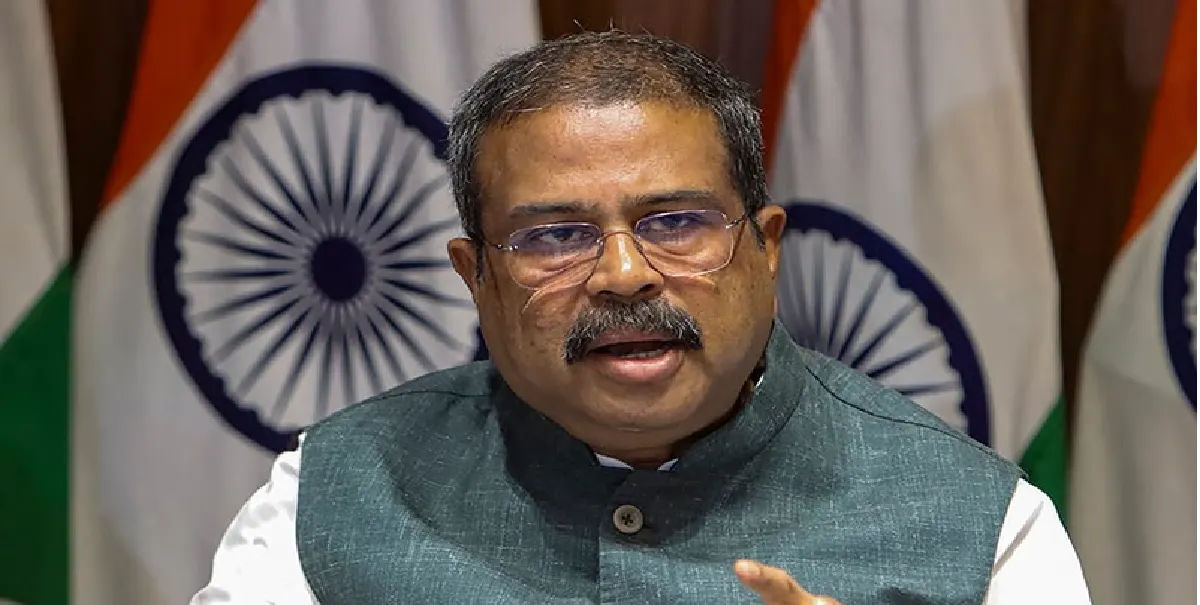
Dharmendra Pradhan Resignation: CJP Ends Protest After Centre Accepts Key Demands
Updated: July 25, 2026
The Cockroach Janta Party (CJP) has called off its protest at Delhi’s Jantar Mantar with immediate effect after the Central government reportedly accepted its principal demands. The announcement came hours after Dharmendra Pradhan resigned as Union Education Minister, marking a major development in the weeks-long confrontation between student protesters and the government over the alleged NEET-UG paper leak and wider concerns about the integrity of India’s examination system.
CJP representatives asked their supporters to leave the protest site peacefully and return home. The decision was announced at a joint press conference attended by CJP spokespersons Saurav Das and Ashutosh Ranka, along with Union ministers JP Nadda and Jitendra Singh. The CJP said it was withdrawing the agitation in good faith, based on assurances given by the government during several rounds of negotiations.
The development represents a significant political victory for the youth-led movement. Pradhan’s resignation had remained the CJP’s central and non-negotiable demand throughout the protest. However, the organisation initially refused to end its agitation immediately after news of the resignation emerged. Its representatives said they wanted the government to provide clear assurances regarding the remaining demands, particularly the withdrawal of police cases and compensation for affected families.
What happened at the joint press conference?
At the joint press conference, CJP representatives announced that the government had accepted or provided assurances on the movement’s principal demands. The first and most politically important demand had already been met through Dharmendra Pradhan’s resignation.
The government also reportedly assured the CJP that police cases registered against student protesters would be withdrawn. According to the announcement, students who participated in the demonstrations would not face punitive action in the future merely because of their involvement in the protest. This assurance was especially important to the movement because clashes, detentions and police action had been reported during demonstrations in Delhi.
The Centre further assured the representatives that the families of students who reportedly died by suicide amid the distress surrounding the NEET controversy would receive the maximum compensation permitted under the applicable rules and regulations. The exact amount, eligibility criteria, verification procedure and payment timeline were not fully detailed in the announcement.
Earlier reports indicated that protesters had demanded substantial financial support for the affected families. However, the final public statement referred to compensation according to government rules rather than confirming one uniform amount for every family. Therefore, it will be important to examine the eventual written order or administrative guidelines before concluding how much compensation will be paid.
Why did Dharmendra Pradhan resign?
The resignation followed sustained protests over alleged irregularities in the NEET-UG examination, one of India’s most important entrance tests for admission to undergraduate medical programmes. The controversy reportedly affected more than two million candidates and generated widespread anger among students who had spent years preparing for the examination.
Protesters argued that the alleged leak and the authorities’ handling of the examination crisis damaged the credibility of the testing system. Many candidates and their families faced uncertainty over results, re-examinations, admissions and the possibility that dishonest candidates could receive an unfair advantage.
The CJP maintained that the Union Education Minister should accept moral and political responsibility for the breakdown. According to the movement, ministerial accountability was necessary because the problem was not limited to the actions of a few individuals accused of leaking or selling examination papers. It raised broader questions about the supervision of national examinations, institutional preparedness, cybersecurity, confidentiality and the government’s ability to protect students’ futures.
Pradhan’s resignation therefore became a symbolic demand as well as an administrative one. For the protesters, removing the minister would demonstrate that senior public officials could be held accountable when a major failure affected millions of students. Media reports described the resignation as an unusual example of a senior minister leaving office following sustained public pressure.
How did the CJP protest grow?
The Cockroach Janta Party has been described as a satirical, youth-based public movement rather than a conventional registered political party. It emerged online before expanding into street demonstrations and campaigns focused on students, examination irregularities, unemployment and government accountability.
What began as an unconventional digital movement gradually developed into a major protest campaign. Students, competitive examination candidates, young professionals and activists participated in demonstrations, with Jantar Mantar becoming the movement’s principal protest site in Delhi.
The agitation gathered further attention when protesters attempted to march towards Parliament and were stopped by the police. Reports stated that police used tear gas and batons during confrontations with some demonstrators. The authorities maintained heavy security around central Delhi, while protesters accused the administration of using excessive force to suppress a peaceful movement.
The CJP continued to insist that its demonstrations were intended to remain peaceful. Its representatives repeatedly appealed to supporters not to engage in violence or damage public property. However, tensions increased as the government initially resisted the demand for Pradhan’s resignation and sought additional time to respond.
The movement also received attention because of the involvement of activist Sonam Wangchuk, who reportedly undertook a prolonged hunger strike in support of the protesters’ demands. The hunger strike, nationwide demonstrations and images of police action increased public pressure on the government to open formal negotiations.
Why did the protest continue after the resignation?
News of Pradhan’s resignation was initially celebrated by protesters at Jantar Mantar. Nevertheless, CJP leaders made it clear that the resignation alone would not automatically end the movement.
They insisted that the government must also address the consequences faced by ordinary protesters and the families affected by the examination controversy. The CJP wanted written or public assurances that FIRs and police cases would be withdrawn, students would be protected from future action and compensation would be provided.
This explains the gap between the resignation announcement and the eventual decision to call off the protest. The movement’s leaders used the remaining period of negotiation to secure commitments on additional demands.
After the third round of discussions, the CJP and government representatives appeared together at the press conference. This joint appearance gave the movement greater confidence that the assurances had official backing. CJP representatives then asked supporters to leave Jantar Mantar and other protest locations peacefully.
What does withdrawing the police cases mean?
The assurance regarding police cases could provide major relief to students who were booked, detained or identified during the protests. A criminal case, even before conviction, can cause serious difficulties for a young person. It may affect educational opportunities, employment verification, travel and participation in future public examinations.
However, the precise legal process must still be observed. A political announcement does not automatically erase every case. Depending on the nature of the FIR, the government or police may need to submit withdrawal requests before the appropriate courts. Courts may then consider whether the cases can legally be closed or quashed.
It also remains necessary to determine whether the assurance covers all protesters, only students, only peaceful demonstrators or only cases directly related to the CJP agitation. Cases involving allegations of serious violence or damage to property may be treated differently unless the government issues a broader order.
Therefore, the written notification and subsequent court proceedings will be more important than the press conference alone. The announcement establishes the government’s intention, but implementation will show how widely the protection is applied.
Compensation for affected families
The compensation commitment addresses one of the most sensitive aspects of the controversy. Protest groups and relatives have linked several student deaths to the distress, fear and uncertainty created by the examination crisis. Reuters reported that the CJP attributed 21 student deaths to the controversy, while noting that the figure had not been independently verified.
For this reason, every case will likely require careful verification. Authorities may examine medical records, police reports, family statements and the circumstances surrounding each death before determining eligibility.
The expression maximum compensation as per rules and regulations suggests that payments will be made through an existing government framework or a specially approved relief mechanism. It does not necessarily mean that every family will receive the same amount.
Along with financial assistance, affected families may seek an official acknowledgement of the psychological and emotional consequences of examination failures. Compensation cannot replace a life, but it may provide immediate support and demonstrate that the administration recognises the seriousness of the harm.
The situation also highlights the need for stronger mental-health support for students preparing for high-pressure entrance examinations. Counselling facilities, crisis support, transparent communication and timely grievance redressal should become essential components of the examination system.
Political significance of the resignation
Pradhan’s departure is likely to have consequences beyond the Education Ministry. It shows that a sustained youth mobilisation can force the government to negotiate and make significant concessions.
The resignation may also encourage opposition parties to intensify their criticism of the Centre’s management of education and competitive examinations. Opposition leaders are likely to present the episode as evidence that the government initially failed to appreciate the seriousness of student anger.
For the government, accepting the resignation may help reduce immediate tensions and restore normalcy in Delhi. It may also allow the administration to present the decision as part of a broader effort to rebuild confidence in the examination system.
At the same time, the government will need to ensure that the resignation is not treated as the final solution. Changing the minister does not automatically correct weaknesses in paper security, examination management, recruitment procedures, digital infrastructure or accountability mechanisms.
The appointment of the next Education Minister will therefore be closely watched. Students will expect the new minister to introduce credible reforms, improve communication and ensure that examination scandals are investigated quickly.
What should happen next?
The first requirement is the publication of a written agreement or official government notification. It should clearly explain which police cases will be withdrawn, which students will be protected and how the compensation process will operate.
Second, the government must complete a transparent investigation into the alleged NEET paper leak. Those responsible for planning, facilitating or benefiting from the leak should face legal action. Accountability should include officials or institutions whose negligence allowed the breach to occur.
Third, examination agencies must strengthen security throughout the testing process. This should cover the preparation, printing, transportation and digital storage of question papers, along with the management of examination centres.
Fourth, the government should create a rapid-response mechanism for major examination disputes. Students should not be forced to depend on protests, court cases or social-media campaigns to obtain basic information.
Finally, student representatives should be included in future discussions on examination reforms. Their direct experience can help identify administrative weaknesses that officials may overlook.
Conclusion
The CJP’s decision to end its protest marks the conclusion of an important phase of the student movement, but it does not end the wider debate about examination integrity and youth accountability.
The resignation of Dharmendra Pradhan, assurances concerning the withdrawal of police cases and the promise of compensation represent major gains for the protesters. The CJP has therefore presented the outcome as a victory for peaceful democratic pressure.
However, the success of the agreement will ultimately depend on implementation. Police cases must actually be withdrawn, eligible families must receive compensation and meaningful reforms must be introduced to prevent future examination leaks.
For millions of students, the most important outcome will not simply be the resignation of one minister. It will be the creation of an examination system in which their hard work, time and future are protected by fairness, transparency and accountability.
Important points
Dharmendra Pradhan resigned as Union Education Minister on July 25, 2026.
His resignation was the CJP’s core demand.
The CJP called off the protest with immediate effect.
Protesters at Jantar Mantar were asked to return home peacefully.
The government reportedly agreed to withdraw police cases against student protesters.
The government assured that students would not face future action for participating in the protest.
Families of eligible students who died by suicide are expected to receive maximum compensation under applicable rules.
CJP representatives withdrew the agitation in good faith after talks with Union ministers.
The written orders on FIR withdrawal and compensation will determine how the agreement is implemented.
The larger challenge is to reform the examination system and prevent future paper leaks and irregularities.
Tags:
Related Posts