Balen Shah Latest News: Nepal PM Faces Early Challenges as Reform Agenda Gains Momentum
Balen Shah Latest News: Nepal PM Faces Early Challenges as Reform Agenda Gains Momentum
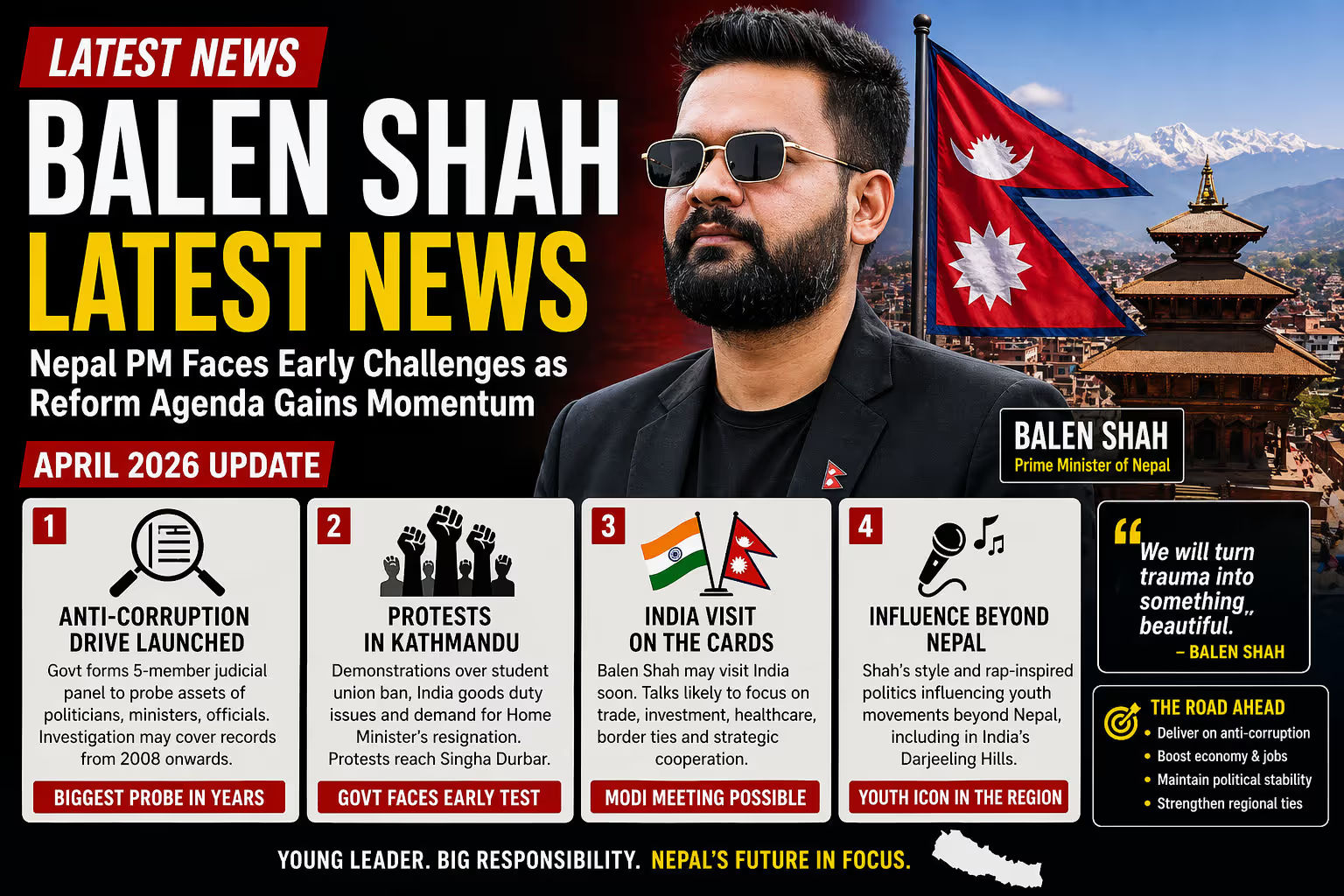
Balen Shah, also known formally as Balendra Shah, remains one of South Asia’s most closely watched young leaders as Nepal enters a new political phase. Just weeks after taking office as Prime Minister, the former Kathmandu mayor and anti-establishment figure is already confronting major tests—from anti-corruption reforms and public protests to foreign policy expectations and economic pressure.
Shah rose to national prominence as an engineer, rapper, and independent-minded reformer before becoming mayor of Kathmandu. His popularity among young voters later helped transform him into the face of political change in Nepal. After his party’s sweeping election victory earlier this year, Shah was sworn in as Nepal’s youngest prime minister in March 2026.
Now, the focus has shifted from campaign promises to governance.
Massive Anti-Corruption Drive Launched
One of the biggest developments under Shah’s government is the creation of a five-member judicial panel to investigate the assets and wealth of current and former politicians, ministers, bureaucrats, and senior officials.
According to reports, the inquiry could review financial records stretching back to Nepal’s democratic transition after the monarchy ended in 2008. The move is being seen as one of the most ambitious anti-corruption efforts in Nepal’s modern political history.
The panel is reportedly headed by retired Supreme Court judge Rajendra Kumar Bhandari, giving the investigation added institutional weight. Supporters say the probe reflects Shah’s commitment to transparency and accountability, which were central themes of his political rise.
For many young Nepalis frustrated by years of unstable coalition politics and corruption allegations, this announcement has been welcomed as a sign that the new administration intends to act quickly.
However, critics caution that launching probes is easier than completing them. They argue that the real test will be whether the investigations lead to credible prosecutions, asset disclosures, and systemic reform.
Public Protests Emerge Within Weeks
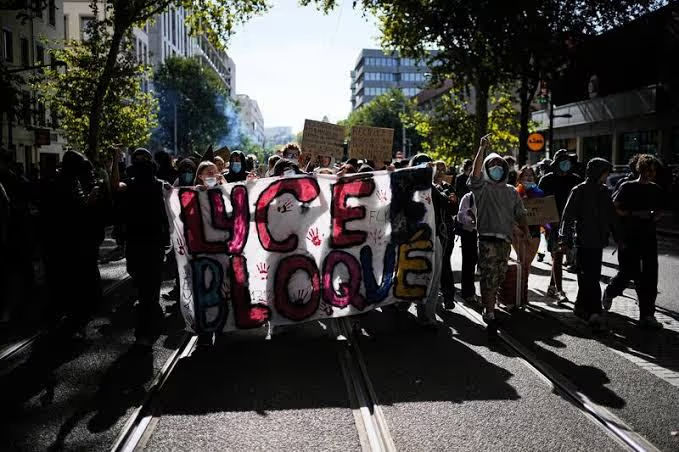
Despite initial enthusiasm, Shah’s government has already encountered street protests in Kathmandu.
Several demonstrations have reportedly focused on new administrative measures, economic concerns, and demands for accountability from ministers in the new cabinet. Opposition groups and student organizations have also mobilized in parts of the capital, showing that public patience may be limited even for a popular new leader.
This is not unusual in Nepal, where public demonstrations are a common part of democratic politics. Yet the timing is significant: Shah entered office with strong expectations for rapid change.
His supporters often present him as a leader who can break old political patterns. That reputation now raises the pressure on his government to deliver immediate results in jobs, governance, inflation control, and infrastructure.
Why Balen Shah Became Popular
To understand current developments, it is important to understand Shah’s rise.
Unlike traditional party leaders who built careers through decades inside party organizations, Shah came from outside Nepal’s conventional political elite. He first became widely known through rap music that criticized corruption, migration pressures, weak governance, and social inequality.
Later, as mayor of Kathmandu, he gained national attention for civic actions including waste management drives, enforcement campaigns, and administrative activism. His image as a decisive and unconventional leader attracted urban youth and first-time voters.
During Nepal’s recent political churn, many citizens—especially younger voters—wanted alternatives to the long-dominant parties. Shah became the symbol of that sentiment.
Economic Pressures Facing the New Government
Even with strong public support, Shah inherits a difficult economic environment.
Nepal faces several structural challenges:
Heavy dependence on remittances from overseas workers
Youth unemployment and underemployment
Pressure on public finances
Trade imbalance with neighbors
Infrastructure gaps
Brain drain through migration
Reports in recent weeks highlighted how many young Nepalis still seek jobs abroad despite political change at home. That reflects a key reality: symbolic change alone will not stop outward migration unless domestic opportunities improve.
For Shah, this means economic delivery may matter even more than anti-corruption headlines.
If his administration can improve investment confidence, simplify bureaucracy, create urban employment, and modernize services, it could strengthen long-term support. If not, disillusionment could return quickly.
India-Nepal Relations Under Watch
Another major topic is Shah’s expected diplomatic engagement with India.
Recent reports suggest preparations for a possible India visit where Shah may meet Narendra Modi. Potential agenda items include trade, healthcare cooperation, border management, investment, strategic coordination, and people-to-people ties.
India remains Nepal’s most important economic and geographic partner. The two countries share an open border, deep cultural links, and major trade flows. Any Nepali government must carefully manage this relationship while also balancing ties with China and other partners.
Shah’s earlier public image included sharp criticism of establishment politics and foreign dependency. As prime minister, however, practical diplomacy is now essential.
Analysts say his foreign policy approach will reveal whether he can transition successfully from activist-style politics to statecraft.
Governance vs Outsider Politics
Many reformist leaders face the same challenge after entering office: governing is harder than campaigning.
As an outsider figure, Shah built support by criticizing entrenched elites. But now he leads institutions he once challenged.
That means he must navigate:
coalition management or parliamentary discipline
bureaucratic resistance
legal due process
competing activist demands
fiscal constraints
media scrutiny
foreign policy realities
Some observers also note that anti-establishment movements often struggle once they must make compromises.
If Shah appears too conventional, supporters may feel betrayed. If he remains confrontational, institutions may resist him.
Balancing idealism with pragmatism could define his premiership.
Youth Expectations Are Extremely High
One of Shah’s greatest strengths is youth appeal—but that can also become a risk.
Young Nepalis supported him because they wanted:
clean politics
faster governance
jobs and entrepreneurship
merit-based opportunity
digital modernization
accountability
These demands are urgent, not long-term.
Unlike older political bases that may tolerate slow incremental progress, younger voters often expect visible outcomes quickly. Social media also amplifies disappointment faster than traditional politics.
Therefore, Shah may need early “quick wins” such as service reforms, corruption enforcement, transport improvements, licensing simplification, and digital government tools.
Opposition Still Waiting
Traditional parties may have lost momentum in the election, but they remain influential across Nepal’s institutions, provinces, and local networks.
If Shah stumbles, opposition groups are likely to portray his administration as inexperienced or overly theatrical. That means each controversy—whether protests, policy missteps, or delays—could be politically costly.
At the same time, if Shah succeeds, Nepal’s party system could undergo a long-term generational transformation.
Symbol of Political Change Beyond Nepal
Balen Shah’s rise has also drawn attention outside Nepal. Reports from India’s Darjeeling region noted political groups experimenting with rap-style campaign messaging inspired partly by Shah’s popularity and youth-centric communication model.
This reflects a wider regional trend: younger voters increasingly respond to authenticity, direct communication, and non-traditional political branding.
Shah embodies that shift.
What Comes Next?
The next few months are likely to determine whether Balen Shah becomes:
A durable reformist prime minister
A popular figure constrained by institutions
A transitional protest-era leader unable to govern effectively
Much depends on three measurable outcomes:
1. Anti-Corruption Results
Can investigations lead to real accountability?
2. Economic Confidence
Can jobs, investment, and growth improve?
3. Political Stability
Can he maintain momentum without constant unrest?
Final Assessment
Balen Shah has entered office with rare public energy, especially among young citizens tired of traditional politics. His launch of a major anti-corruption probe has reinforced his reformist credentials, but early protests and economic realities show that symbolism alone will not be enough.
He now stands at the difficult intersection of hope and governance.
If Shah converts popularity into competent administration, he could reshape Nepal’s political future. If expectations outrun delivery, the same public that elevated him may become impatient.
For now, Nepal’s newest prime minister remains one of the most consequential political figures to watch in South Asia.
Related Posts