Nepal-Tibet Flood Disaster Deepens as Death Toll Surpasses 600 and Thousands Remain Missing
Kathmandu, Nepal — August 29, 2026
The devastating flash floods that struck Nepal and China's Tibet region have grown into a major humanitarian disaster, with the death toll rising above 600 and thousands of people still missing as rescue teams continue searching through destroyed villages and debris-covered valleys.
The disaster has affected communities on both sides of the Nepal-China border. In Nepal alone, authorities have reported more than 1,900 people missing, while Chinese authorities have reported hundreds missing in Tibet. Combined figures have pushed the number of missing people close to 3,000.
Death Toll Continues to Rise
The number of confirmed deaths has increased rapidly as rescue teams gain access to areas that were previously cut off by floodwater, mud and destroyed infrastructure.
Latest reports put the combined death toll at more than 600. Nepal has recorded the majority of the deaths, while fatalities have also been reported on the Chinese side of the border.
Officials have warned that the final toll could rise further as search teams reach remote settlements and examine areas buried beneath enormous amounts of mud and debris.
Thousands of People Remain Missing
One of the most alarming aspects of the disaster is the rapidly increasing number of people reported missing.
Nepal's disaster authorities reported 1,924 people missing on the country's side of the border, while China's state media reported another 554 missing in Tibet. Together, the figures account for nearly 2,500 people, although later reports have indicated that the overall number could approach 3,000 as authorities continue verifying names and reports from affected communities.
Hundreds of foreign nationals are also among those reported missing. The affected region was being visited by foreign workers, trekkers and pilgrims, adding an international dimension to the rescue operation.
More Than 3,700 People Rescued in Nepal
Despite the scale of the destruction, rescue teams have managed to evacuate thousands of people from dangerous areas.
More than 3,700 people have been rescued in Nepal, with Nepal Army helicopters playing a major role in evacuating stranded residents and transporting emergency supplies.
Rescue operations remain extremely difficult because roads, bridges and other infrastructure have been destroyed or buried. Poor weather and unstable terrain are also slowing efforts to reach isolated communities.
Villages and Infrastructure Devastated
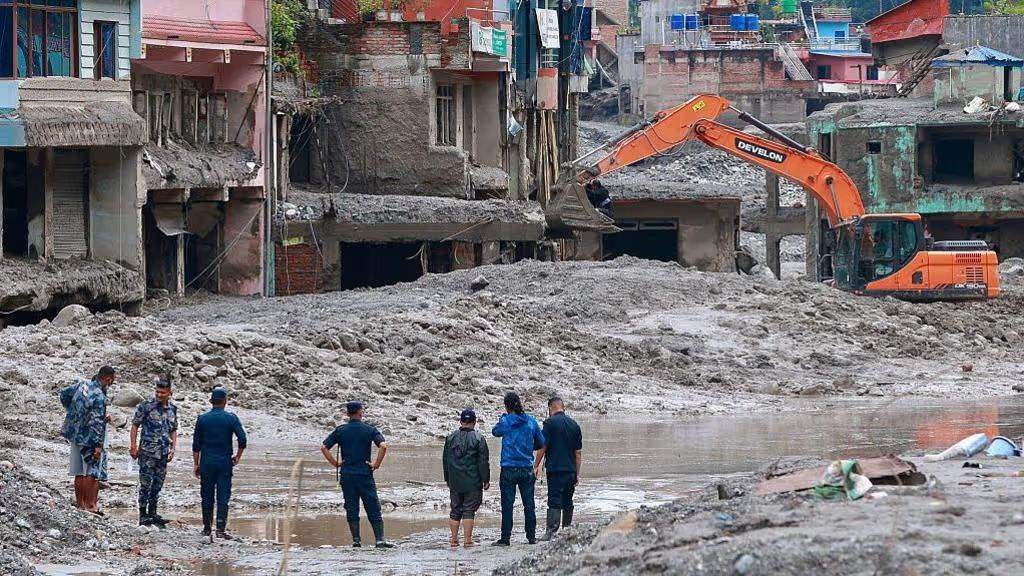
The floods swept through several settlements along rivers and valleys near the Nepal-Tibet border, carrying enormous amounts of water, rocks, mud and debris.
Entire sections of communities have been damaged or destroyed. Roads and bridges connecting remote settlements have been washed away, making it difficult for emergency teams to deliver food, medicine and other essential supplies.
The destruction of communication and transportation infrastructure has also made it harder for families to contact relatives and determine whether they have survived.
Families Wait for News of Missing Relatives
Hospitals, aid centres and temporary shelters have become gathering points for families searching for missing relatives.
Many people have been forced to rely on photographs, phone records and information from rescue teams to identify loved ones. As the search continues, families face growing uncertainty over the fate of relatives who remain unaccounted for.
The humanitarian situation has become particularly difficult in areas where homes and local infrastructure have been completely destroyed.
Concerns Over Further Flooding
Rescue operations have also been complicated by concerns about additional flooding.
The disaster created unstable water and debris conditions in parts of the Himalayan region, raising fears that further flooding could affect already devastated communities.
Authorities have been monitoring water levels and unstable areas while emergency teams attempt to keep residents away from locations that could face additional hazards.
Foreign Nationals Among the Missing
The floods struck during a period when the Himalayan region was receiving tourists, trekkers, workers and religious pilgrims.
As a result, nationals from numerous countries have been reported missing in Nepal and Tibet. Rescue teams and foreign governments are working to determine the status of their citizens.
The presence of large numbers of foreign visitors has added complexity to an already challenging search-and-rescue operation.
Humanitarian Aid Mobilised
Emergency agencies and humanitarian organisations have begun delivering food, clothing, medical supplies and other essential items to survivors.
However, damaged roads and bridges are making it difficult to transport relief supplies to some of the hardest-hit areas.
Rescue workers are therefore relying heavily on helicopters and other emergency transport methods to reach isolated communities.
Key Developments So Far
The combined death toll in Nepal and Tibet has risen above 600.
Thousands of people remain missing across Nepal and Tibet.
Nepal has reported more than 1,900 people missing.
More than 3,700 people have been rescued in Nepal.
Hundreds of foreign nationals are among those reported missing.
Rescue operations continue despite damaged roads, bridges and difficult weather conditions.
What Happens Next?
The immediate priority remains finding survivors, locating missing people and providing emergency assistance to communities that have lost homes and access to basic services.
Search teams are expected to continue working through the affected areas as authorities update casualty and missing-person figures. Officials are also assessing damage to roads, bridges, hydropower facilities and other critical infrastructure.
With thousands still unaccounted for, the coming days will be critical for rescue operations and for determining the full human and economic impact of the disaster.
A Growing Himalayan Humanitarian Crisis
The scale of the Nepal-Tibet floods has turned the disaster into one of the region's most serious humanitarian emergencies in recent years.
The combination of extreme flooding, landslides, damaged infrastructure and difficult Himalayan terrain has created enormous challenges for rescuers.
While thousands have already been rescued, the fate of many others remains unknown. Authorities and rescue agencies continue to work against time as families wait for information about their missing loved ones.
The disaster has also renewed attention on the vulnerability of Himalayan communities to sudden floods and other high-altitude hazards, highlighting the importance of early-warning systems, resilient infrastructure and coordinated disaster preparedness.
Keywords:
Related Posts