The details of BYD’s upcoming 5,000-car delivery to Australia have yet to be clarified.
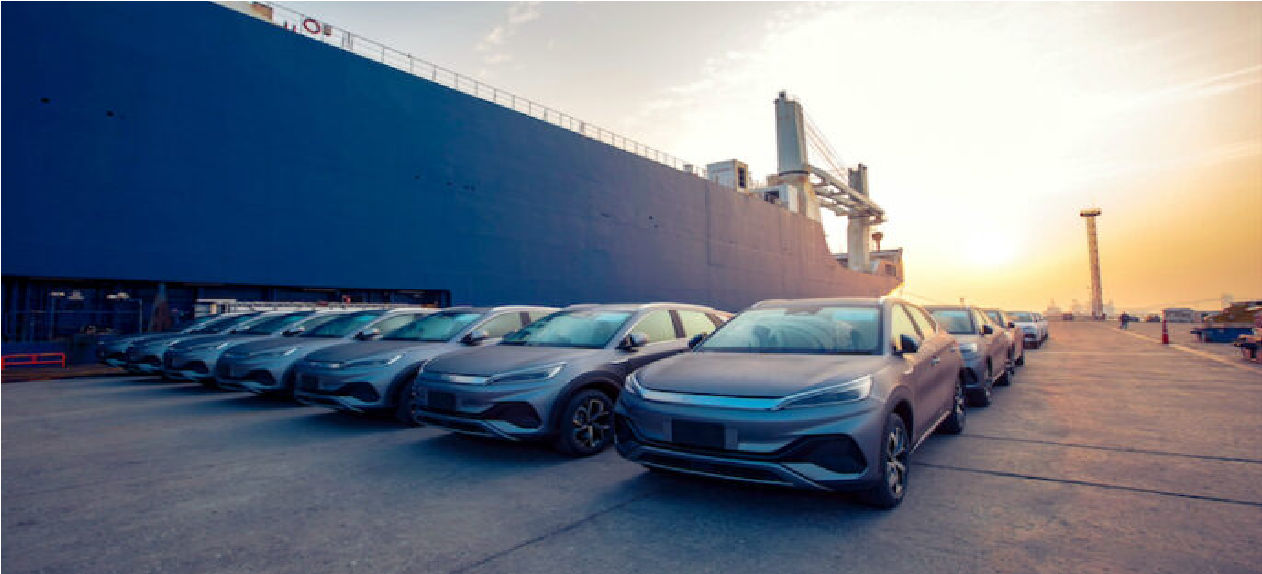
BYD’s 5,000-Car Australia Delivery Signals Growing EV Demand, but Future Shipments Remain Uncertain
Melbourne, June 2026: Chinese electric vehicle giant BYD has successfully completed one of the most significant automotive shipments ever seen in the Australian market, delivering nearly 5,000 vehicles directly from China aboard its self-owned cargo vessel, the BYD Zhengzhou. The shipment, which arrived in Melbourne on June 2, highlights the company's growing ambitions in Australia and underscores the rising demand for electric and plug-in hybrid vehicles across the country.
However, despite the successful operation and widespread publicity surrounding the shipment, BYD executives have indicated that the timing and frequency of future voyages by the vessel remain uncertain. The company's leadership has emphasized that any return journey to Australia will depend largely on market conditions and customer demand.
The arrival of the BYD Zhengzhou has attracted considerable attention from industry observers, customers, competitors, and policymakers alike. The vessel's journey represents a new chapter in automotive logistics, demonstrating how manufacturers are increasingly taking control of transportation networks to improve delivery times and meet rapidly growing demand.
Landmark Arrival in Melbourne
The BYD Zhengzhou arrived at Melbourne Port carrying approximately 4,810 vehicles, including electric vehicles (EVs) and plug-in hybrid electric vehicles (PHEVs) from both the BYD brand and its premium subsidiary, Denza.
The shipment was particularly significant because it involved a vessel owned directly by BYD rather than a third-party shipping operator. Industry analysts note that this is among the first instances in recent years where a major global automotive manufacturer has used its own vessel specifically to expedite deliveries to Australia.
For Australian consumers who had placed orders for BYD vehicles approximately ten to twelve weeks earlier, the arrival represented a welcome development. Many customers had been waiting eagerly for deliveries amid strong demand and limited supply in the growing EV market.
BYD's Expanding Presence in Australia
Australia has emerged as an increasingly important market for BYD over the past few years. The company's competitively priced electric vehicles, combined with growing consumer interest in sustainable transportation, have helped BYD establish a significant foothold in the country.
The manufacturer has experienced rapid growth as Australian drivers increasingly consider electric mobility as an alternative to traditional petrol and diesel-powered vehicles. Government incentives, environmental awareness, and rising fuel costs have further accelerated the transition toward electric transportation.
Recognizing these opportunities, BYD has invested heavily in expanding its distribution and supply capabilities. The deployment of the BYD Zhengzhou vessel demonstrates the company's willingness to innovate in logistics to maintain customer satisfaction and support its growth objectives.
Future Voyages Yet to Be Finalized
Despite the success of the shipment, BYD executives remain cautious about committing to a regular schedule for future voyages.
Speaking at a media conference in Melbourne, BYD Asia-Pacific General Manager Liu Xueliang explained that decisions regarding the vessel's return would be based on market requirements rather than a fixed timetable.
According to Liu, the company has not finalized plans for another voyage and expects future visits by BYD-owned vessels to occur only when justified by demand levels.
His comments suggest that while the company values the flexibility provided by owning its own shipping fleet, it intends to deploy those assets strategically rather than routinely.
Industry experts interpret this approach as a pragmatic business decision. Operating large vehicle carriers involves substantial costs, and manufacturers must carefully balance transportation efficiency against operational expenses.
Commitment to the Australian Market
Although Liu refrained from announcing specific schedules, he offered reassurance that Australia remains an important destination for the company.
He emphasized that the Melbourne voyage was merely the beginning of BYD's direct maritime operations in the country.
According to company officials, the use of a self-owned vessel demonstrates BYD's long-term commitment to serving Australian customers and supporting the expansion of electric mobility throughout the region.
Executives indicated that the company would continue exploring ways to improve delivery timelines and strengthen supply chains as demand evolves.
This commitment is particularly important given Australia's geographic isolation, which often presents logistical challenges for vehicle manufacturers importing products from Asia, Europe, and North America.
Delivering 30,000 Vehicles in Two Months
The BYD Zhengzhou shipment forms part of a broader effort by the company to dramatically increase vehicle deliveries to Australia during May and June.
BYD has committed to supplying approximately 30,000 vehicles to the Australian market during the two-month period. This figure is roughly three times higher than the company's typical delivery volume during a comparable timeframe.
Such a substantial increase reflects the strength of consumer demand as well as BYD's confidence in the Australian market.
Automotive analysts note that achieving this target would significantly strengthen BYD's position among Australia's leading EV brands and potentially increase its market share within the broader automotive industry.
The shipment strategy also illustrates how manufacturers are adapting supply chains to accommodate surging demand for electric vehicles worldwide.
Rising Fuel Prices Drive EV Interest
One factor contributing to increased demand has been volatility in global energy markets.
Recent geopolitical tensions and conflicts in the Middle East have led to concerns about fuel supply disruptions and rising petrol prices. As fuel costs increase, many consumers begin evaluating alternatives that offer lower operating expenses.
Electric vehicles are often viewed as attractive options during periods of elevated fuel prices because they reduce dependence on petrol and can offer lower running costs over time.
Industry observers believe these market conditions helped accelerate interest in BYD's products, contributing to the decision to deploy the Zhengzhou vessel.
The shipment therefore represents not only a logistical achievement but also a response to broader economic and geopolitical developments influencing consumer purchasing decisions.
Strategic Use of BYD's Shipping Fleet
The BYD Zhengzhou is one of eight specialized car-carrying vessels owned by the company.
These ships are designed to transport large volumes of vehicles efficiently between manufacturing facilities and overseas markets. By operating its own fleet, BYD gains greater control over shipping schedules, capacity allocation, and delivery timelines.
This approach differs from the traditional model in which automakers rely primarily on independent maritime shipping providers.
Ownership of transportation assets can provide significant strategic advantages during periods of high demand or shipping congestion. It allows companies to prioritize key markets and respond more rapidly to changing conditions.
However, maintaining a dedicated shipping fleet also requires substantial investment and operational expertise.
For BYD, the fleet appears to serve as a flexible tool that can be deployed selectively when market conditions justify accelerated deliveries.
Industry Reaction and Debate
The arrival of the vessel has not been without controversy.
Some industry participants have questioned whether the highly publicized shipment represents a meaningful operational innovation or simply an effective marketing exercise.
Among the most prominent critics was Ford Australia Marketing Director Ambrose Henderson, who suggested that the attention surrounding the shipment may have been exaggerated.
Henderson argued that large vehicle shipments are commonplace within the automotive industry and noted that Ford routinely imports significant volumes of vehicles into Australia.
From his perspective, the arrival of a ship carrying approximately 5,000 vehicles does not necessarily constitute a groundbreaking event.
He characterized part of the publicity surrounding the voyage as promotional in nature and suggested that some aspects of the story had been sensationalized.
A Public Relations Success Regardless
Regardless of differing opinions, many observers agree that the shipment has succeeded in generating public awareness.
The image of a BYD-branded vessel arriving in Melbourne loaded with thousands of electric vehicles captured widespread media attention and reinforced the company's image as an ambitious and rapidly growing global automaker.
Public relations experts note that logistics achievements often serve dual purposes. They can improve operational performance while simultaneously strengthening brand visibility.
For BYD, the Zhengzhou voyage appears to have accomplished both objectives by accelerating deliveries and generating extensive publicity.
Growing Competition in Australia's EV Market
The shipment arrives at a time of intensifying competition in Australia's electric vehicle sector.
Global manufacturers are increasingly targeting the Australian market as consumer adoption of EVs continues to rise. Traditional automakers and emerging EV-focused companies alike are introducing new models across various price segments.
Competition is expected to become even more intense as technology improves, charging infrastructure expands, and vehicle prices become more accessible.
BYD's decision to invest heavily in logistics and supply-chain capabilities reflects the importance of maintaining a competitive advantage in this rapidly evolving environment.
Fast and reliable deliveries can significantly influence purchasing decisions, particularly when consumers face long waiting periods for popular vehicle models.
Looking Ahead
The arrival of the BYD Zhengzhou marks an important milestone in the evolution of Australia's electric vehicle market. The shipment demonstrates both the scale of demand for EVs and the lengths manufacturers are willing to go to satisfy customer expectations.
While BYD has not yet confirmed when its next self-owned vessel will arrive in Australia, company executives have made it clear that the Melbourne voyage will not be a one-time event.
Future deployments will depend on market demand, customer requirements, and broader business considerations. However, the successful completion of the operation provides a blueprint for how automotive manufacturers may increasingly use dedicated shipping assets to strengthen supply chains and improve customer service.
As Australia continues its transition toward cleaner transportation technologies, the BYD Zhengzhou's arrival may be remembered as a symbol of a changing automotive landscape—one in which electric vehicles, advanced logistics, and global competition are reshaping the future of mobility.
Related Posts