The Pentagon’s Political Shield: House Republicans Stall the Impeachment Push Against Pete Hegseth
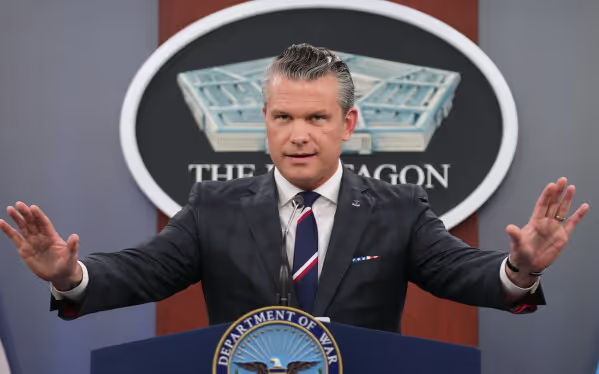
US Defence Secretary Pete Hegseth has survived an immediate attempt to advance impeachment proceedings against him after Republicans in the House of Representatives voted to send eight articles of impeachment to the Republican-led House Judiciary Committee. The 211–204 procedural vote effectively blocked a direct impeachment vote, giving the controversial Pentagon chief a political reprieve as questions surrounding the administration's handling of the Iran war continue to divide Washington.
The effort was led by Republican Representative Thomas Massie of Kentucky, who accused Hegseth of serious constitutional and legal violations connected to US military operations in Iran, Yemen, the Caribbean and Venezuela. The allegations received backing from Democratic lawmakers, but Massie failed to persuade other Republicans to break ranks with the Trump administration.
The vote came just hours after Hegseth publicly dismissed the impeachment campaign as a political stunt and defended his record during a rare briefing at the Pentagon. President Donald Trump also stood firmly behind his defence secretary, celebrating the result as a major political victory.
Key Details of the Hegseth Impeachment Vote
- Official: US Defence Secretary Pete Hegseth.
- Impeachment sponsor: Republican Representative Thomas Massie of Kentucky.
- House vote: 211 in favour and 204 against referring the articles to committee.
- Impeachment articles: Eight separate articles alleging serious misconduct and constitutional violations.
- Republican position: Massie was the only Republican to vote against the procedural motion.
- Democratic position: Democrats opposed the motion, although 11 members did not vote.
- President's response: Donald Trump praised the outcome and defended Hegseth.
- Hegseth's response: He described the impeachment campaign as a farce and defended the legality of US military operations.
- Next political challenge: Democrats indicated that the issue could return when they take control of Congress.
House Republicans Block the Impeachment Push
The US House of Representatives voted 211–204 in favour of referring the eight impeachment articles against Hegseth to the House Judiciary Committee. The procedural decision prevented the articles from moving towards a direct vote on impeachment in the chamber.
The motion was supported by Republicans, who maintained control of the House at the time of the vote. Massie was the only Republican to oppose it, while Democrats broadly voted against referring the charges to committee.
Eleven Democratic representatives did not participate in the vote, including former House Speaker Nancy Pelosi. A spokesperson for Pelosi said she was attending an annual event honouring veterans in San Francisco and would have voted against the procedural motion.
The outcome was important because Massie needed additional Republican support to defeat the motion. Had enough lawmakers voted against referring the articles, the House could have proceeded towards a direct consideration of the impeachment charges.
Instead, the Republican majority was able to prevent that immediate step. The decision gave Hegseth political breathing room and avoided a direct House vote on the accusations against him.
Thomas Massie Leads the Impeachment Campaign
The impeachment effort was introduced by Representative Thomas Massie, a Republican who has increasingly broken with the Trump administration on major policy issues. His resolution contained eight separate articles accusing Hegseth of abusing his authority and violating constitutional responsibilities through decisions involving US military operations.
Massie's decision to target a senior member of his own party's administration made the campaign particularly unusual. Rather than presenting the effort as a purely Democratic challenge, he argued that the allegations deserved scrutiny regardless of political affiliation.
He had hoped that Republicans concerned about the Iran conflict and Hegseth's management of the Pentagon would join him. However, the vote demonstrated that the administration retained strong support among House Republicans.
Following the result, Massie expressed disappointment with his colleagues. He compared Republicans supporting the procedural motion to passengers remaining aboard a sinking ship, arguing that they were ignoring the political and constitutional consequences of the decisions under scrutiny.
His attempt did not succeed, but the vote placed the allegations against Hegseth firmly into the national political debate.
What Are the Eight Impeachment Articles About?
The resolution outlined eight allegations concerning Hegseth's conduct as the head of the US military establishment. The accusations covered military decisions in several regions, the use of executive authority and the treatment of political critics.
A central part of the case concerned the US-led war against Iran. Massie argued that Hegseth had helped direct military action without the required authorisation from Congress. The dispute raised broader questions about the constitutional division of war powers between the president and the legislative branch.
The articles also addressed US military operations in Yemen and strikes against boats suspected of carrying illegal drugs in the Caribbean and eastern Pacific. Critics have questioned the legal basis for some of these operations, particularly where lethal force was used against individuals who had not been brought before a court.
Other allegations concerned the military operation that resulted in the capture of Venezuelan President Nicolás Maduro, as well as claims that Hegseth retaliated against Democratic Senator Mark Kelly after he criticised the administration.
The resolution also raised concerns about civilian casualties during military operations. One allegation referred to a US strike on a school in Minab, Iran, which the Guardian reported had killed more than 168 people.
These claims formed the basis of Massie's impeachment case. They were allegations presented in a political resolution, not findings established through an impeachment trial or a final judicial ruling.
Main Areas Covered by the Impeachment Articles
- Iran: Alleged military action without the required congressional authorisation.
- Civilian casualties: Allegations concerning failures to comply with laws intended to minimise civilian deaths.
- Yemen: Questions over the legality of US military operations and bombing campaigns.
- Caribbean and Pacific: Allegations involving lethal strikes against boats suspected of drug trafficking.
- Venezuela: Hegseth's alleged involvement in the military operation to capture Nicolás Maduro.
- Free speech: Claims that the defence secretary retaliated against Senator Mark Kelly for his criticism.
The Iran War Becomes the Centre of the Political Dispute
The conflict involving Iran has become one of the most politically divisive issues facing the Trump administration. The war has raised concerns over its legal justification, financial cost, impact on fuel prices and the possibility of a prolonged military commitment.
Massie argued that the administration had bypassed Congress when authorising military action against Iran. Under the US Constitution, Congress has the power to declare war, while the president serves as commander-in-chief of the armed forces. The division of these responsibilities has repeatedly generated disputes during US military interventions.
The conflict had also become a political liability for Republicans. Anger over the war contributed to the party's poor performance in the midterm elections, with voters expressing concerns about its impact on household expenses and national priorities.
According to Reuters, the conflict had settled into an effective stalemate, with military attention focused on securing the strategically important Strait of Hormuz. The situation continued to create uncertainty around regional security and global energy markets.
A Reuters/Ipsos poll published around the time of the House vote found that a majority of Americans wanted the newly elected Democratic-majority Congress to take action to bring the war to an end once it assumed office.
The disagreement over Iran therefore extends beyond Hegseth personally. It reflects a wider debate over the administration's foreign policy, the authority to use military force and the extent to which Congress should oversee decisions that could lead to a prolonged conflict.
Hegseth Calls the Impeachment Effort a "Farce"
Before the House vote, Hegseth addressed reporters at the Pentagon and rejected the impeachment campaign in strong terms. He described the effort as a farce and a political stunt, arguing that the resolution was intended to undermine the administration rather than address genuine concerns about military leadership.
The defence secretary also defended his record and maintained that his orders to US forces were lawful. He rejected the accusations surrounding the Iran conflict and argued that the historical assessment of the war would be different from the criticism being directed at the administration.
The briefing was notable because Hegseth had not held a Pentagon press conference for approximately six months. His appearance came at a politically sensitive moment, as lawmakers prepared to decide whether the impeachment articles should advance.
Hegseth's defence was supported by senior members of the administration. President Trump continued to praise his performance, while Vice President JD Vance also expressed support.
Vance argued that the dispute was not simply about the Iran war but also about Hegseth's efforts to challenge the Pentagon bureaucracy. His comments reflected the administration's attempt to frame the impeachment campaign as a political attack on its broader military reform agenda.
Donald Trump Celebrates the Result
President Donald Trump quickly celebrated the House decision after the procedural motion passed. In a social media post, he declared that the attempt to impeach Hegseth had failed and praised the defence secretary as a patriotic figure.
Trump also criticised Massie for introducing the resolution, accusing Democrats of using impeachment as a political weapon against his administration.
The president's response highlighted how closely Hegseth's political survival is tied to Trump's support. As one of the administration's most visible officials, the defence secretary has become a central figure in debates over the Iran war and the direction of US military policy.
The Pentagon also described the procedural outcome as a major victory. Department spokesperson Sean Parnell said the referral of the articles to the Judiciary Committee represented a total victory for Hegseth, the department and American service members.
However, the political victory does not settle the underlying disputes. The allegations remain part of the wider debate over military authority, civilian casualties and congressional oversight.
Why the Senate Was Unlikely to Remove Hegseth
Even if the impeachment effort had advanced through the House, removing Hegseth from office would have required another major political hurdle. Under the US Constitution, the House of Representatives has the power to impeach federal officials, while the Senate conducts the trial and decides whether to convict and remove them.
A conviction in the Senate requires a two-thirds majority of senators present. Republicans held a 53-seat majority in the chamber at the time, making it difficult for opponents of Hegseth to secure the votes necessary for removal.
This meant that the impeachment effort faced significant obstacles even before the House procedural vote took place. The likelihood of a successful Senate conviction was considered low, particularly without substantial Republican support.
Hegseth would have become the first US defence secretary to be impeached if the House had approved the articles. The last civilian leader of the US military to face impeachment was William Belknap, who served as secretary of war in the nineteenth century and was impeached in 1876.
Democrats May Renew the Impeachment Push
Although the House vote blocked the immediate effort, Democrats indicated that the issue could return when the new Congress begins its work.
The midterm elections reshaped the political landscape, giving Democrats control of Congress and creating the possibility of stronger scrutiny of the Trump administration's military decisions.
House Democratic leader Hakeem Jeffries had strongly supported the impeachment resolution. He accused Hegseth of abusing his authority, undermining national security and helping lead what he described as a reckless and costly war against Iran.
Jeffries said Democrats would discuss whether to pursue another impeachment effort at the appropriate time. A future investigation could involve testimony from senior military officers, including generals and admirals who had left their positions under Hegseth's leadership.
Democrats could also examine other controversial areas of Pentagon policy, including the administration's approach to Ukraine and military strikes against suspected drug-trafficking vessels.
A change in congressional control would not automatically result in Hegseth's removal. However, it could give Democrats greater authority to hold hearings, request documents and investigate decisions made by the defence secretary.
Hegseth's Leadership at the Pentagon Under Scrutiny
The impeachment controversy comes after a turbulent period at the Pentagon. Hegseth has pursued major changes to military leadership, personnel policies and the department's approach to internal administration.
His tenure has included the departure or removal of senior military officers, disputes over diversity programmes and changes to the rules governing journalists' access to the Pentagon.
Supporters argue that these changes are necessary to reshape the military, strengthen its operational focus and challenge what they consider an entrenched bureaucracy. Critics, however, say the approach has weakened institutional stability and created unnecessary conflict within the armed forces.
His relationship with Congress has also become increasingly strained. Some Republicans have expressed concerns that the controversy surrounding the defence secretary could become a political liability as the administration seeks a substantial increase in military spending.
The proposed defence budget increase, from approximately $950 billion to $1.5 trillion, makes congressional cooperation particularly important. Disputes over military leadership and the Iran war could complicate efforts to secure support for the administration's spending plans.
What the Vote Means for US Politics
The decision to block the impeachment effort reveals the continuing influence of party loyalty in Washington. Despite concerns about the Iran war and Hegseth's leadership, Republicans largely remained united behind the administration during the vote.
It also demonstrates the limits of an impeachment campaign when the party controlling the House is unwilling to support it. Even a resolution introduced by a member of the president's own party could not advance without a significant break in Republican ranks.
At the same time, the vote has not removed the wider political pressure facing Hegseth. The Iran war remains unpopular among many voters, and the new Democratic majority is expected to increase congressional scrutiny of military policy.
The dispute could therefore become part of a larger confrontation between the Trump administration and the incoming Congress over executive authority, military operations and the constitutional responsibilities of elected representatives.
What Happens Next?
For now, Hegseth remains in office, and the immediate impeachment effort has been blocked. The referral to the House Judiciary Committee prevents the articles from proceeding towards a direct House vote under the current political circumstances.
Democrats are expected to consider their options as the new Congress prepares to take office. Possible steps could include renewed impeachment proceedings, congressional investigations and hearings examining the administration's military decisions.
The administration, meanwhile, is likely to continue defending Hegseth and its approach to the Iran conflict. Trump has made clear that he considers the defence secretary an important member of his team, while Hegseth has shown no indication of backing away from his defence of the Pentagon's actions.
The broader question concerns how much authority the executive branch should exercise when directing military operations and how effectively Congress can hold senior officials accountable.
The House vote may have provided Pete Hegseth with a temporary political shield, but it has not ended the controversy surrounding his leadership. With the Iran war continuing to divide Washington and Democrats preparing to exercise greater oversight, the Pentagon chief's political battle may be far from over.