The Silent Seconds Before Disaster: Suspected Driver Microsleep Leaves Six Dead in Colombia Bus Crash
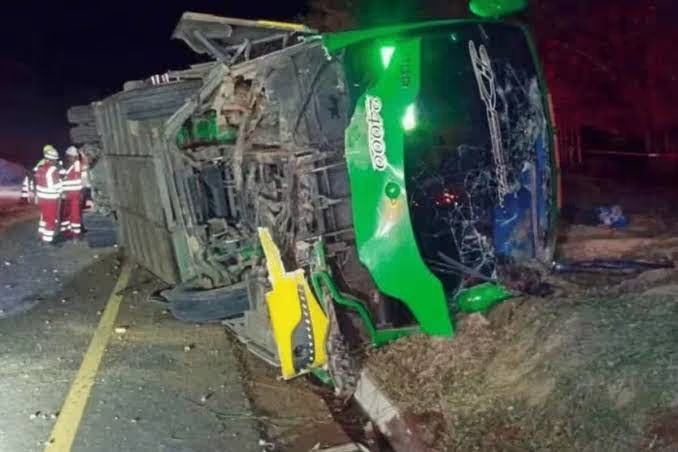
A passenger bus overturned on a highway in southwestern Colombia, killing at least six people and leaving 11 others injured in a serious road accident that has raised renewed concerns about driver fatigue and highway safety. Colombian National Police said the vehicle was travelling towards the capital, Bogotá, when it overturned along the Garzón–Neiva highway. Investigators are examining whether the driver briefly fell asleep at the wheel, an episode known as microsleep, although authorities have not yet established the exact circumstances behind the crash.
The accident occurred while the bus was travelling from the community of San Vicente, in the southern department of Caquetá, towards Bogotá. The vehicle overturned in the neighbouring department of Huila, prompting an emergency response from police and rescue personnel.
The incident left families grieving and several passengers requiring medical attention. Images and videos shared on social media showed emergency workers assisting injured people near the overturned vehicle, while distressed individuals gathered beside the wreckage.
Although authorities suspect that a brief episode of driver sleepiness may have contributed to the accident, the investigation remains ongoing. The incident has once again highlighted the dangers of operating passenger vehicles when drivers are exhausted, particularly on long-distance journeys.
Key Details of the Colombia Bus Crash
- Fatalities: At least six people were killed in the accident.
- Injuries: Eleven passengers were reported injured.
- Location: The crash occurred on the Garzón–Neiva highway in Colombia's Huila department.
- Journey: The bus had departed from San Vicente in the southern department of Caquetá and was heading towards Bogotá.
- Suspected cause: Police believe the driver may have experienced microsleep, briefly falling asleep while driving.
- Investigation: Authorities were still determining the exact circumstances surrounding the incident.
- Emergency response: Rescue personnel assisted injured passengers and the overturned bus was subsequently removed from the highway.
- Traffic: The affected road was reopened after the wreckage was cleared.
Bus Overturns on the Garzón–Neiva Highway
The accident took place on the Garzón–Neiva highway in southwestern Colombia. The road connects communities in the Huila region and forms part of an important transport route used by people travelling between southern parts of the country and the capital.
According to information provided by the National Police, the bus was travelling towards Bogotá after beginning its journey in San Vicente, a community in the department of Caquetá.
During the journey, the vehicle overturned on the highway. The circumstances leading to the incident were not immediately clear, and authorities began examining what may have caused the driver to lose control.
The overturned bus obstructed the affected stretch of road while emergency personnel responded to the scene. Videos circulated on social media showing the vehicle lying on its side, with rescue workers attending to injured passengers and people standing nearby in distress.
Emergency teams worked to assist those who had survived the crash and manage the aftermath of the accident. Once the vehicle was removed from the roadway, traffic was restored along the affected section.
The National Police confirmed that at least six people had died and 11 had sustained injuries. Authorities had not immediately released the identities of the victims.
Police Suspect Driver Experienced Microsleep
One of the main questions surrounding the accident is whether the driver briefly fell asleep while operating the bus.
A police report reviewed by The Associated Press indicated that the driver may have experienced an episode of microsleep, a brief and involuntary period of sleep that can last only a few seconds.
During microsleep, a person can temporarily lose awareness of their surroundings. For someone operating a moving vehicle, even a short lapse in attention can have devastating consequences.
A driver travelling at highway speed may cover a considerable distance during those few seconds without properly monitoring the road. If the vehicle approaches a bend, encounters another road user or moves outside its lane, the driver may have almost no time to react.
Police investigators believe this possibility may help explain how the bus overturned. However, the suspected explanation has not yet been confirmed as the definitive cause of the crash.
Authorities are continuing to establish the precise sequence of events and determine what happened before the vehicle lost control.
Police Warn Drivers About the Dangers of Fatigue
Following the accident, Colonel Edwin Correa, director of the Colombian National Police's traffic and transportation division, emphasised the responsibility of drivers to obtain adequate rest before starting a journey.
His warning highlighted a basic but critical road-safety requirement: drivers must be physically and mentally prepared before operating vehicles, especially when transporting passengers over long distances.
Fatigue can reduce concentration, slow reaction times and affect a person's ability to make safe decisions. In serious cases, exhaustion can cause drivers to lose awareness for brief periods, increasing the possibility of a collision or loss of vehicle control.
The warning is particularly relevant to commercial transport, where drivers may face demanding schedules, extended journeys and pressure to reach destinations on time.
Passenger bus drivers carry responsibility not only for their own safety but also for the lives of everyone travelling inside the vehicle. A momentary loss of concentration can therefore put many people at risk.
Police have stressed that adequate rest before travelling is essential. Drivers should not begin long journeys when they are excessively tired, and transport operators must take fatigue seriously when organising schedules and working hours.
What Is Microsleep and Why Is It Dangerous?
Microsleep is a short, involuntary episode in which a person briefly falls asleep, often without realising that it has happened. These episodes can last only a few seconds, but they may be long enough to cause a serious accident when they occur behind the wheel.
Unlike ordinary tiredness, which may involve yawning or difficulty concentrating, microsleep can cause a temporary loss of awareness. A driver may appear to be awake before suddenly losing the ability to respond to what is happening on the road.
The danger is especially high when a vehicle is moving at speed. A bus travelling along a highway requires continuous steering, attention to traffic conditions and the ability to react to unexpected obstacles.
If the driver briefly falls asleep, the vehicle may continue moving without proper control. Even a small deviation in steering can become dangerous when the bus is travelling at highway speed.
Microsleep is commonly associated with sleep deprivation, prolonged wakefulness, irregular sleep schedules and certain medical or lifestyle factors that affect alertness.
Drivers may not always recognise how close they are to falling asleep. Feeling unusually tired, struggling to keep the eyes open, repeatedly yawning or having difficulty remembering the previous few kilometres can be warning signs that a person should stop driving and rest.
Why Long-Distance Bus Journeys Require Strict Safety Measures
Long-distance passenger transport plays an important role in Colombia, connecting communities that depend on road networks for travel, employment, education and access to essential services.
For many passengers, buses are one of the most accessible ways to travel between smaller towns, regional centres and major cities. These journeys can involve extended periods on highways, making driver alertness and vehicle safety particularly important.
Drivers operating passenger buses must manage several responsibilities simultaneously. They need to maintain control of a large vehicle, monitor surrounding traffic, respond to changing road conditions and ensure passengers remain safe throughout the journey.
Fatigue can undermine every one of these responsibilities. A tired driver may take longer to recognise hazards, misjudge distances or fail to respond quickly enough when conditions change.
Transport companies also have an important role in preventing fatigue-related incidents. Scheduling adequate rest periods, monitoring driving hours and avoiding unrealistic travel deadlines can help reduce the pressure placed on drivers.
The accident in Huila has brought these concerns back into focus, particularly because investigators are examining whether a brief loss of alertness contributed to the loss of control.
Emergency Teams Respond to the Accident
Emergency personnel attended the scene after the bus overturned, providing assistance to injured passengers and helping manage the aftermath of the incident.
Videos shared on social media showed rescue workers near the overturned bus as passengers and other individuals reacted to the tragedy. The footage also showed the emotional impact of the accident, with people crying beside the vehicle.
The National Police confirmed the initial death toll and the number of injured passengers. The available information did not immediately establish the identities of those killed or provide a detailed breakdown of the injuries.
Following the emergency response, the damaged bus was removed from the highway. Traffic was subsequently restored, allowing vehicles to resume travelling along the route.
The incident has left authorities with the task of determining exactly how the vehicle overturned and whether preventable safety failures contributed to the tragedy.
Investigation Continues as Authorities Establish the Cause
Although the police report points towards possible driver microsleep, investigators have not yet established every detail of the accident.
Determining the cause of a serious road crash generally requires examining the circumstances before and during the incident. Investigators may need to assess the vehicle, the condition of the road, the driver's account and other available evidence.
It is also important to distinguish between an initial suspected explanation and the final findings of an investigation. The possibility that the driver experienced microsleep does not, by itself, establish whether fatigue was the only factor involved.
Authorities were still working to establish the exact circumstances surrounding the overturning of the bus. Further information may become available as the investigation progresses and officials provide additional details.
The identities of the victims had not immediately been released in the initial reports. Families affected by the crash are therefore awaiting further information about those who lost their lives and those receiving medical treatment.
What the Accident Highlights About Road Safety
The tragedy has renewed attention on the importance of preventing fatigue among professional drivers. While road accidents can happen for many reasons, exhaustion is a recognised danger because it directly affects the concentration and reaction time needed to operate a vehicle safely.
For passenger transport companies, preventing fatigue should be treated as a core safety responsibility rather than an individual inconvenience. Drivers need realistic schedules, adequate rest and the ability to stop when they are no longer fit to continue driving.
Passengers also depend on transport operators and authorities to maintain safety standards. A bus journey involves placing trust in the driver, the company and the systems designed to protect everyone on board.
Effective prevention requires attention to several areas:
- Adequate rest: Drivers should receive sufficient sleep before beginning long-distance journeys.
- Reasonable schedules: Transport operators should avoid working arrangements that encourage excessive driving hours.
- Rest breaks: Long journeys should include appropriate opportunities for drivers to stop and recover.
- Fatigue awareness: Drivers should recognise warning signs such as persistent yawning, heavy eyelids and difficulty concentrating.
- Safety monitoring: Transport companies should maintain procedures that help identify and reduce fatigue-related risks.
- Responsible decisions: Drivers should not continue operating a vehicle when they are too tired to do so safely.
These measures cannot eliminate every road accident, but they can reduce risks associated with preventable human factors.
What Happens Next?
The immediate focus remains on the victims, the injured passengers and the investigation into the circumstances of the crash.
Authorities will need to establish whether the suspected microsleep occurred and whether other factors contributed to the bus overturning. Further official information may clarify the sequence of events and provide details about the people affected.
The incident is also likely to renew discussions about driver rest requirements and safety practices within Colombia's passenger transport sector.
For the families of those killed, the priority is receiving accurate information and understanding how the tragedy happened. For the injured, medical care and recovery remain the immediate concerns.
The wider transport industry faces an equally important question: how can similar incidents be prevented when a driver's momentary loss of alertness can put an entire busload of passengers in danger?
A Few Seconds That May Have Changed Many Lives
The bus crash in southwestern Colombia has left at least six people dead and 11 injured, turning an ordinary journey towards Bogotá into a devastating tragedy. The vehicle's departure from San Vicente in Caquetá and its overturning on the Garzón–Neiva highway in Huila have drawn attention to the risks faced by passengers travelling long distances.
Police suspect that the driver may have experienced microsleep, a brief but potentially catastrophic loss of awareness. While the investigation has not yet confirmed the exact cause, the possibility has prompted a clear warning about the importance of adequate rest and responsible driving.
The tragedy also serves as a reminder that road safety depends on more than vehicle condition and traffic regulations. Driver alertness, realistic schedules and effective fatigue prevention are essential, particularly when transporting large numbers of passengers.
For the families affected, the consequences of this accident will extend far beyond the highway where the bus overturned. As investigators work to establish what happened, the tragedy leaves a sobering message for the transport industry: when fatigue takes control for even a few seconds, the consequences can be irreversible.