The Artemis II crew returned from their landmark Moon mission in good condition, reporting that they are safe, healthy, and in high spirits after successfully completing the historic journey.
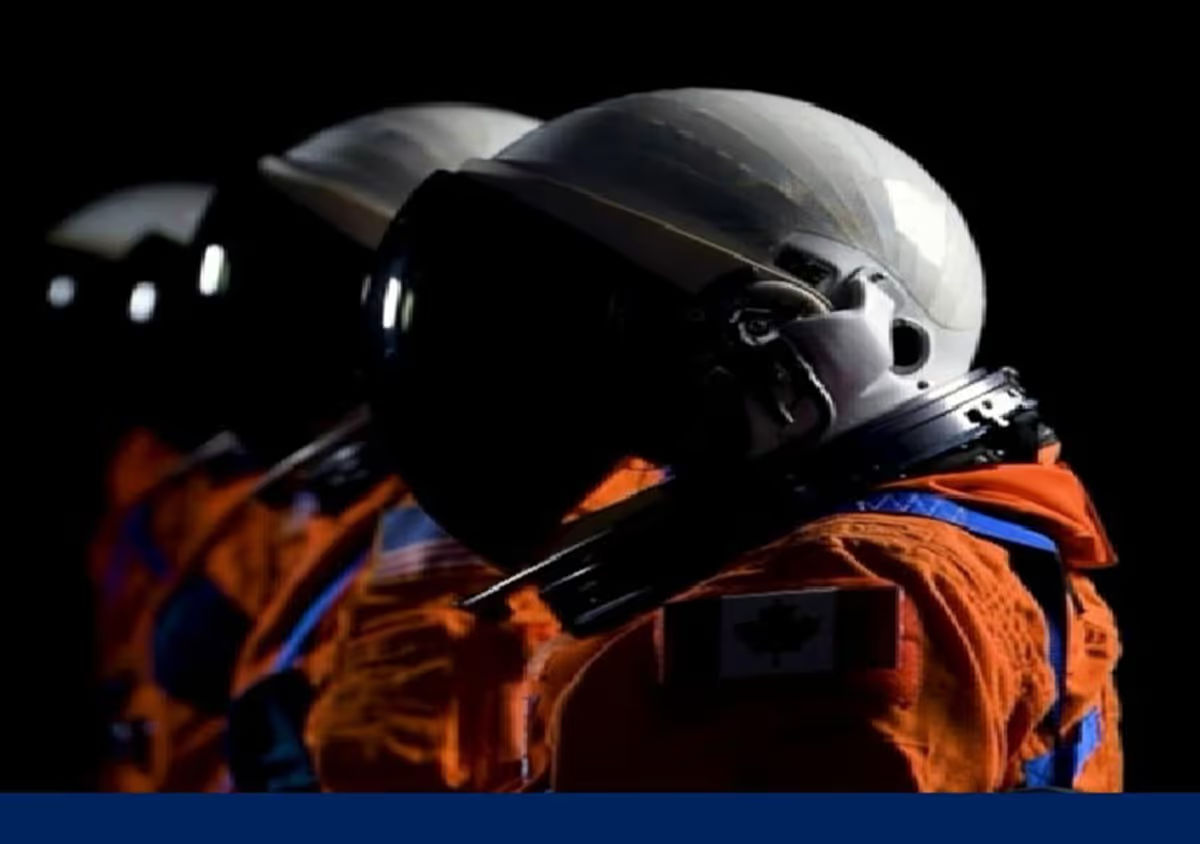
Artemis II: A Historic Journey Marks Humanity’s Return to the Moon
In a mission that has reignited global excitement about space exploration, the Artemis II crew has successfully completed a ground breaking journey to the Moon and back. From a powerful launch to a precise ocean landing, the mission represents a major step forward in humanity’s ambition to once again explore—and eventually inhabit—Earth’s closest celestial neighbor.
Led by NASA, Artemis II is more than just a symbolic return to lunar orbit. It is a critical test flight that lays the foundation for future missions aiming to land humans on the Moon for the first time since the Apollo era and ultimately establish a long-term human presence there.
A Mission for the Ages
The Artemis II mission stands out as the first crewed journey to the Moon in over 50 years, following the historic Apollo 17 in 1972. This time, however, the mission carried a broader vision—not just to revisit the Moon, but to prepare for sustained exploration.
The four-member crew—Commander Reid Wiseman, pilot Victor Glover, and mission specialists Christina Koch and Jeremy Hansen—embarked on a 10-day journey that took them farther into space than any humans before them.
Their spacecraft, the Orion spacecraft, was launched aboard the powerful Space Launch System from Florida on April 1. The launch marked the beginning of a mission that would capture the imagination of millions around the world.
From Lift off to Lunar Orbit
The journey began with a dramatic lift off, as the Space Launch System roared into the sky, carrying Orion and its crew into orbit. After circling Earth, the spacecraft began its journey toward the Moon on the second day.
By the sixth day, Artemis II reached a historic milestone: humans once again traveled to the far side of the Moon. At its most distant point, the spacecraft reached approximately 406,771 kilometers (252,756 miles) from Earth—a record-breaking distance for human spaceflight.
As the spacecraft passed behind the Moon, communication with Earth was temporarily lost for about 40 minutes. During this time, the astronauts conducted observations, capturing detailed photographs and notes on lunar features such as craters and ancient lava plains.
The crew described the Moon’s surface in vivid detail, noting its textures and colors in ways that had never been experienced firsthand in decades. According to Victor Glover, the sights were beyond description, saying that “no adjectives” could fully capture what they witnessed.
A Shared Human Experience
One of the most remarkable aspects of Artemis II was how it brought people on Earth along for the journey. Through live updates, images, and audio recordings, the mission allowed millions to experience the wonder of space exploration in real time.
From breath taking views of Earth rising above the lunar horizon to observations of a solar eclipse from deep space, the mission provided moments of awe and inspiration. Even small human touches—like the crew listening to music, including tracks by David Bowie—helped make the experience relatable to people back home.
This shared sense of exploration has helped rekindle public interest in space, particularly among younger generations who may one day participate in future missions.
The Crew Behind the Mission
The success of Artemis II is largely due to the expertise and dedication of its crew, each of whom brought unique experience to the mission.
Reid Wiseman, the mission commander, is a seasoned astronaut and former U.S. Navy pilot who previously spent 165 days aboard the International Space Station.
Victor Glover, the pilot, made history as the first Black astronaut to participate in a lunar mission. He previously served on SpaceX Crew-1 and spent six months in orbit.
Christina Koch holds the record for the longest single spaceflight by a woman, spending 328 days in space. With Artemis II, she became the first woman to travel around the Moon.
Jeremy Hansen, representing Canada, became the first Canadian astronaut to journey to the Moon, marking a significant milestone in international space collaboration.
Together, this diverse team represents a new era of inclusivity and global partnership in space exploration.
A “Textbook Touchdown”
After more than nine days in space, the Artemis II mission concluded with a precise re-entry and splashdown in the Pacific Ocean. The landing occurred within just one mile of NASA’s intended target—an impressive feat demonstrating the accuracy and reliability of the Orion system.
Recovery teams quickly reached the capsule, and the astronauts were safely brought back to Earth. Reports confirmed that all crew members were “happy and healthy,” marking a successful end to a mission that had been years in the making.
Setting the Stage for the Future
While Artemis II did not land on the Moon, its importance cannot be overstated. The mission serves as a critical stepping stone toward future lunar landings, including Artemis III, which aims to return astronauts to the Moon’s surface by 2028.
NASA’s long-term vision goes even further. The Artemis program is designed to establish a sustainable human presence on the Moon, including the development of a permanent base. This would enable extended stays, scientific research, and the testing of technologies needed for future missions to Mars.
The idea of a “Moon base” is no longer science fiction—it is becoming an achievable goal.
The New Space Race
Artemis II also highlights the growing role of private companies in space exploration. Firms like SpaceX and Blue Origin are playing increasingly important roles in NASA’s plans.
SpaceX, founded by Elon Musk, is developing the Starship spacecraft, which is expected to transport astronauts from lunar orbit to the Moon’s surface. However, the company faces pressure to prove that Starship can complete a full mission within NASA’s timeline.
Meanwhile, Blue Origin, backed by Jeff Bezos, is advancing its own lunar lander and the New Glenn rocket, positioning itself as a strong competitor in the emerging lunar economy.
This competition is driving innovation and accelerating progress, creating what many are calling a new space race—this time focused not just on reaching the Moon, but on staying there.
Challenges Ahead
Despite the success of Artemis II, significant challenges remain. Experts caution that orbiting the Moon is far less complex than landing on it and establishing a sustainable presence.
Technical hurdles, budget constraints, and tight timelines all pose risks to NASA’s ambitious goals. While the agency aims to achieve a lunar landing by 2028, some analysts believe this target may be overly optimistic.
Nevertheless, political support and funding from governments, particularly in the United States, continue to drive the program forward.
Inspiring a New Generation
Perhaps the most lasting impact of Artemis II is its ability to inspire. The mission has captured the imagination of people around the world, reminding us of what humanity can achieve through innovation, collaboration, and determination.
For young people watching from Earth, Artemis II is more than just a mission—it is a glimpse into the future. It suggests that one day, living and working on the Moon—or even traveling to Mars—could become a reality.
Conclusion
The Artemis II mission marks a historic return to deep space exploration. From its dramatic launch to its precise landing, every moment demonstrated the capabilities of modern space technology and the resilience of human explorers.
While challenges remain, the mission has successfully paved the way for future lunar landings and the eventual establishment of a human presence on the Moon. It also signals the beginning of a new era—one defined by international cooperation, commercial innovation, and a renewed sense of curiosity about the universe.
As humanity looks toward the Moon once again, Artemis II stands as a powerful reminder that exploration is not just about reaching new destinations—it’s about expanding the boundaries of what is possible.
Related Posts