Viral Cockroach Janta Party’s X account restricted in India
Cockroach Janata Party: How a Satirical Meme Movement Became India’s New Digital Protest Symbol
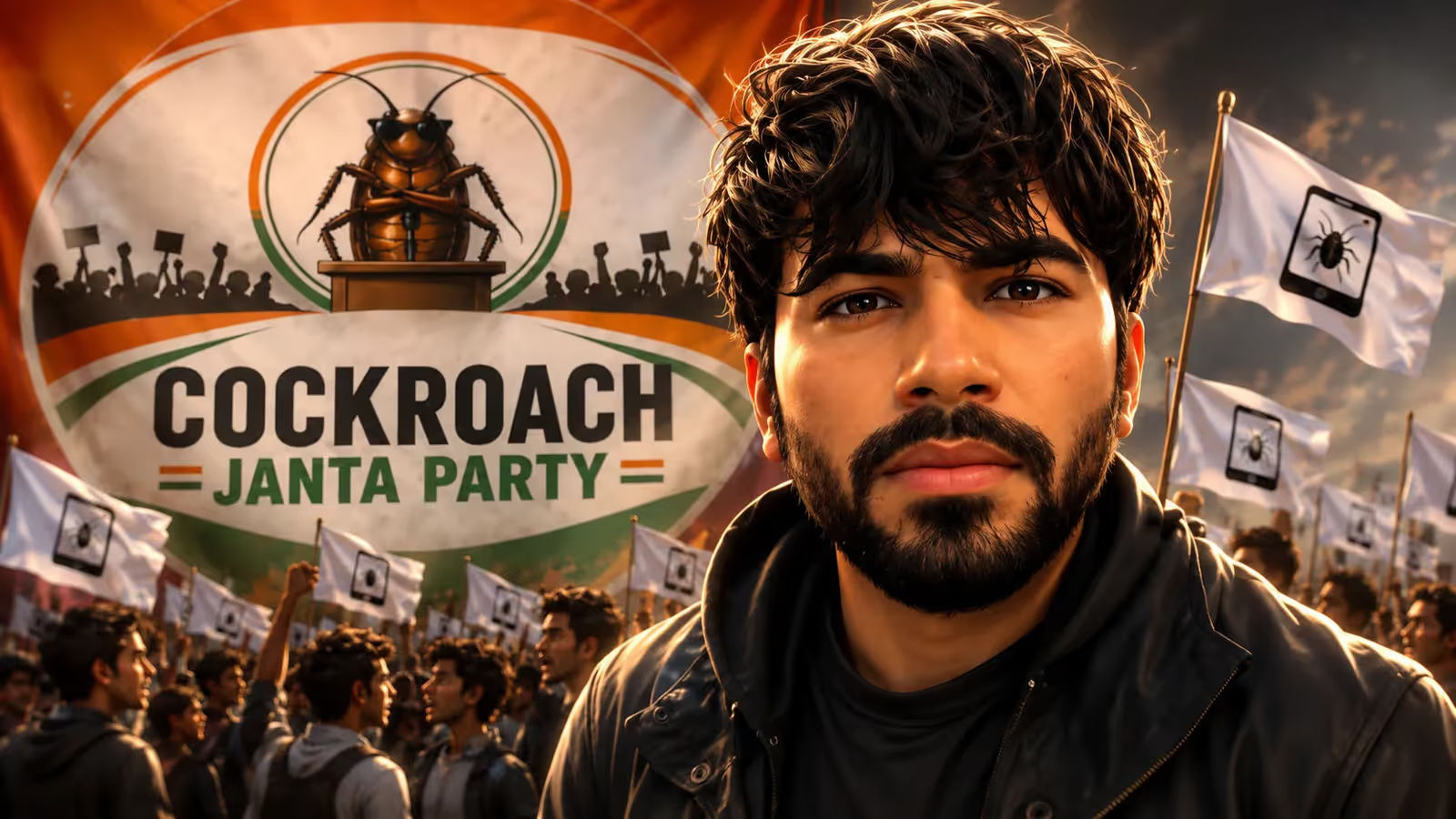
In a dramatic turn that has further fueled debate around digital dissent and online satire in India, the X account of the Cockroach Janata Party (CJP) has been withheld in India following a legal demand, according to the movement’s founder, Abhijeet Dipke. What began merely days ago as a meme-driven online satire campaign has rapidly transformed into one of the most discussed internet-led protest movements in the country.
The development has raised larger questions about freedom of expression, internet activism, political satire, and the growing influence of meme culture in shaping public discourse.
X Account Withheld After Massive Growth
According to Mr. Dipke, the Cockroach Janata Party’s X account was launched on May 16 and experienced explosive growth within just four days. In a post shared before the account became inaccessible in India, he claimed that the page amassed more than 200,000 followers in an extremely short period.
“The Cockroach Janata Party account was started on 16th May. Within four days the account got banned because it got more than 200K following,” Mr. Dipke wrote on X.
He further alleged that attempts were also made to hack the organization’s Instagram account. Shortly after the withholding of the original handle, the founder announced the launch of a new X account named “Cockroach Is Back,” signaling that the movement had no intention of slowing down despite the setback.
Within little more than an hour of its launch, the replacement account reportedly attracted over 16,000 followers, showcasing the movement’s extraordinary online momentum and the curiosity surrounding it.
Mr. Dipke also stated that the team would pursue the matter legally and communicate with relevant authorities regarding the action taken against the original account.
The Origins of the Cockroach Janata Party
The Cockroach Janata Party was founded by Abhijeet Dipke, a former political strategist associated with the Aam Aadmi Party. Although it began as satire, the movement quickly resonated with thousands of young Indians frustrated with unemployment, economic insecurity, and what many perceive as political indifference toward youth concerns.
The immediate trigger for the campaign was a controversial comment attributed to Chief Justice of India Surya Kant. According to widespread social media discussion, unemployed youth were allegedly referred to as “cockroaches” during proceedings. The statement sparked outrage online, particularly among younger users already disillusioned by job scarcity and rising competition.
Later, clarification emerged stating that the remarks had been “misquoted” by sections of the media. However, by then the internet had already seized upon the metaphor. Instead of rejecting the insult, many users embraced it ironically.
That irony soon became a political symbol.
The term “cockroach” was reclaimed as a representation of survival, resilience, and invisibility within the system. Young users began posting memes, slogans, satirical manifestos, and mock political graphics under the banner of the Cockroach Janata Party.
The movement’s rapid rise demonstrated how quickly internet culture can convert outrage into organized symbolism.
From Meme to Mass Movement
At first glance, the Cockroach Janata Party appeared to be another short-lived meme trend. However, its growth trajectory suggested something much deeper.
The movement’s Instagram presence reportedly crossed 14.5 million followers, surpassing even the official Instagram following of the Bharatiya Janata Party, commonly known as BJP, which has approximately 8.8 million followers.
This astonishing growth turned the CJP from a niche satire project into a mainstream internet phenomenon. Across platforms, users began identifying themselves humorously as “cockroaches,” sharing memes that criticized unemployment, inflation, social inequality, and political rhetoric.
Several derivative accounts also emerged across social media platforms, including names such as “The Cockroach Youth,” “Cockroach News,” “IAmCockroach,” and “Cockroach Party of India.”
What made the movement especially notable was the way it blurred the line between comedy and political commentary. Users were not simply making jokes; they were channeling real frustration through humour.
In the age of short attention spans and algorithm-driven communication, satire became the language of protest.
Political Leaders and Activists Join the Conversation
The Cockroach Janata Party soon began attracting attention from prominent political figures and activists.
Leaders from the All India Trinamool Congress, including Mahua Moitra and Kirti Azad, interacted with or acknowledged the movement online. Activists such as Prashant Bhushan and Anjali Bharadwaj also reportedly engaged with discussions surrounding the campaign.
Their involvement gave the movement additional visibility and legitimacy, even if indirectly.
Political observers noted that the movement tapped into a growing digital trend where satire and meme culture are increasingly influencing public opinion, especially among younger demographics who consume news primarily through social media.
Unlike traditional political campaigns, which rely heavily on speeches, rallies, and television appearances, movements like the Cockroach Janata Party thrive through viral content, humour, relatability, and community participation.
Why the Movement Resonated With Young Indians
One reason the movement spread so rapidly was its emotional relatability.
India’s youth face multiple challenges, including intense competition for jobs, rising education costs, economic uncertainty, and pressure to succeed in an increasingly digital economy. Many young people feel unheard within conventional political structures.
The “cockroach” metaphor unexpectedly captured that sentiment.
Cockroaches are often associated with survival in hostile conditions. Online users transformed the insult into a badge of resilience, implying that despite neglect or ridicule, they continue to survive and adapt.
Memes portraying students preparing for competitive exams for years, graduates struggling to find employment, and young workers coping with financial stress became central to the movement’s online identity.
Humour allowed users to discuss painful realities without sounding overtly confrontational.
This style of protest is particularly powerful in digital spaces because it spreads quickly, lowers participation barriers, and encourages collective identity through shared jokes and symbolism.
The Role of Meme Culture in Modern Protest
The rise of the Cockroach Janata Party reflects a broader transformation in political communication worldwide.
Historically, protests depended on physical mobilization—marches, rallies, posters, and slogans. Today, however, memes have become political tools capable of reaching millions instantly.
A meme can compress anger, satire, criticism, and commentary into a single image or phrase. It is easy to share, emotionally engaging, and highly adaptable.
Movements driven by humour are often difficult to suppress because satire spreads organically. Even when one account is restricted, multiple new versions emerge rapidly. The internet’s decentralized nature makes it hard to contain viral narratives once they gain momentum.
The CJP’s quick reappearance through “Cockroach Is Back” demonstrated precisely this phenomenon.
Experts increasingly describe meme culture as a form of participatory politics, where ordinary users contribute to political discourse not through formal speeches but through jokes, edits, reels, hashtags, and satire.
In this environment, virality itself becomes political influence.
Free Speech and Platform Regulation Debate
The withholding of the CJP account has also intensified discussions around content moderation and government requests directed at social media platforms.
X, formerly known as Twitter, periodically withholds accounts in specific countries in response to legal demands or government orders. In such cases, content may remain visible internationally while being inaccessible within the concerned jurisdiction.
Critics argue that excessive restrictions can create concerns regarding freedom of expression, particularly when satire and political commentary are involved. Supporters of stricter regulation, however, contend that platforms must comply with local laws and prevent misinformation or inflammatory content.
At present, the precise legal basis for the withholding of the CJP account has not been publicly detailed.
Nevertheless, the incident has once again highlighted the delicate balance between regulation, online safety, political expression, and internet freedom in democratic societies.
Internet Satire as a Political Language
One of the most fascinating aspects of the Cockroach Janata Party is how effectively it used humour as a political language.
Unlike traditional activism, which often relies on formal ideological structures, internet-led satire movements are fluid and decentralized. There is no strict hierarchy, no membership process, and no official manifesto in the conventional sense.
Instead, participation happens through reposts, memes, comments, and shared symbols.
This style of engagement appeals strongly to younger audiences who are more comfortable expressing opinions online than through formal political participation.
Humour also provides emotional distance. People who may hesitate to openly criticize institutions or political systems sometimes feel safer participating through satire and irony.
As a result, meme culture can become a gateway into political consciousness.
The Cockroach Janata Party appears to have tapped directly into this evolving digital psychology.
What Happens Next?
Although the original X account has been withheld in India, the movement itself shows no signs of disappearing immediately. The rapid growth of alternate accounts demonstrates the resilience of internet communities once they achieve viral momentum.
Whether the Cockroach Janata Party eventually fades as a meme trend or evolves into a more structured socio-political movement remains uncertain. Internet culture is notoriously unpredictable. Viral movements can disappear overnight, but they can also reshape public conversations in lasting ways.
What is clear, however, is that the episode has revealed the immense power of online satire in modern India.
The movement has forced conversations about unemployment, youth frustration, political messaging, digital censorship, and the changing nature of protest in the social media era.
More importantly, it has shown that in today’s internet-driven world, even a meme can become a national political conversation.
The Cockroach Janata Party may have started as satire, but its rise demonstrates how humour, frustration, and digital participation can combine to create a powerful cultural phenomenon—one capable of influencing discourse far beyond social media timelines.
Related Posts