Green light given to Santiago Metro’s new line that will save passengers 23 minutes in travel time.
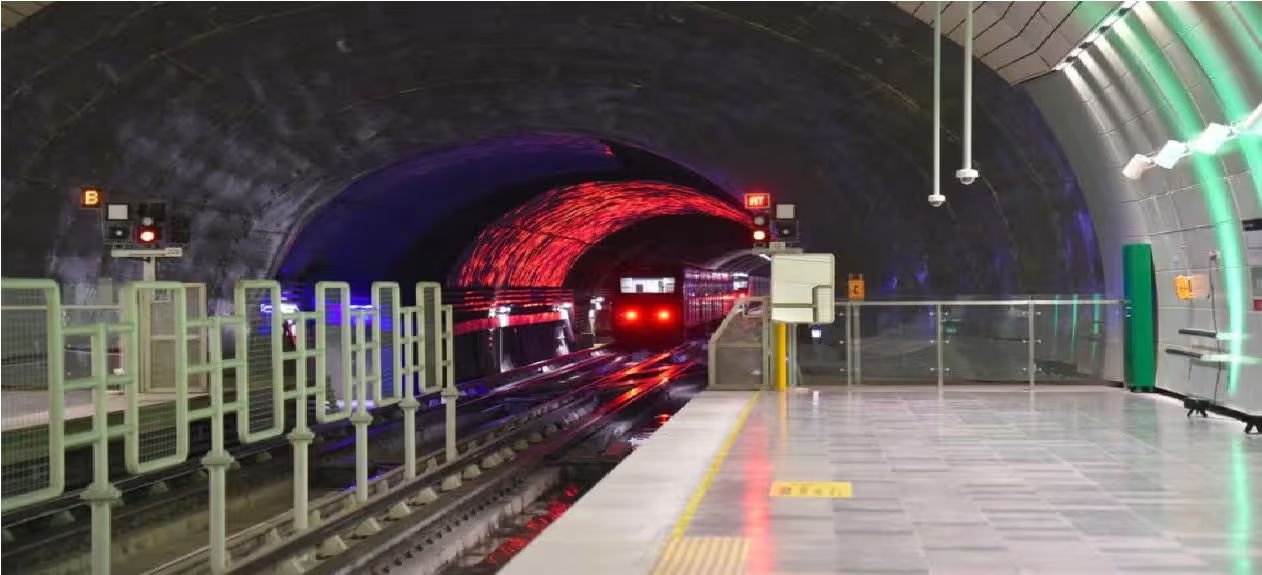
Santiago Metro Line 8 Gets Major Approval: The $1.9 Billion Project That Will Transform Travel Across Chile’s Capital
A major transformation in public transportation is approaching for the Chilean capital as the ambitious Line 8 project of the Santiago Metro has received a crucial environmental recommendation, bringing it one step closer to construction and future operation. The mega-project, valued at approximately US$1.9 billion, promises to significantly improve urban mobility by connecting the southern and eastern sectors of Santiago through a fully underground metro route that will reduce travel times by nearly 41 percent.
The project has generated widespread attention because of its scale, expected social impact, and potential to reshape commuting patterns for millions of residents across several densely populated communes.
Key Environmental Recommendation Clears Major Hurdle
The latest development came after Chile’s Environmental Assessment Service (SEA) issued a favorable technical recommendation for the future metro line. This endorsement is considered one of the most important administrative stages for the project because it indicates that environmental authorities believe the plan meets the required technical and environmental standards.
The recommendation now places the project before the Environmental Assessment Commission of the Metropolitan Region, which is expected to make the final decision regarding environmental approval in the coming days. If approved, authorities will be able to move toward the next phase, including tenders, infrastructure contracts, and eventual construction.
Transportation officials and urban planners view this progress as a milestone for Santiago’s long-term mobility strategy.
A Mega-Project Designed to Change Urban Mobility
Line 8 is not merely another metro extension. Officials describe it as one of the most important transportation projects planned for Santiago in recent years.
The future line will extend approximately 18.5 kilometers and operate entirely underground. It will directly connect multiple high-density residential and commercial sectors that currently depend heavily on buses and congested road networks.
The project is expected to benefit nearly two million residents by offering a faster and more efficient transportation alternative across the city.
Urban mobility experts have repeatedly emphasized that Santiago’s growing population and vehicle congestion require large-scale investment in public transportation infrastructure. The Line 8 project aims to address precisely those challenges.
By improving connectivity between southern and eastern districts, authorities hope to reduce pressure on road traffic while also improving daily quality of life for commuters.
Travel Times to Be Reduced by 23 Minutes
One of the most attractive aspects of the project for future passengers is the dramatic reduction in travel time.
According to technical estimates associated with the project, the new metro route will reduce journeys by approximately 23 minutes compared to current transportation options. This represents nearly a 41 percent decrease in commuting time for many travelers moving between the affected communes.
For thousands of residents who spend hours commuting daily, the impact could be significant.
Transportation analysts note that shorter commute times have broader social and economic benefits. Reduced travel duration means more personal time for families, lower stress levels, improved productivity, and easier access to jobs, education, and services across the city.
Long commutes are one of the major concerns in large metropolitan regions throughout Latin America, and Santiago is no exception. Therefore, projects like Line 8 are increasingly viewed not just as transport upgrades but as quality-of-life improvements.
Which Communes Will Benefit?
The future metro line will directly serve several important communes within Santiago’s metropolitan area. According to project details, Line 8 will include 14 stations distributed across the following sectors:
Puente Alto
La Florida
Peñalolén
Macul
Ñuñoa
Providencia
Las Condes
These areas represent a mixture of residential, educational, and commercial districts, many of which experience heavy daily congestion.
The connection between Puente Alto and Providencia has drawn particular attention because commuters traveling between those sectors currently face long and often exhausting journeys involving multiple transfers or heavy traffic conditions.
The future metro line aims to create a direct and efficient corridor that significantly simplifies those trips.
Why Santiago Needs New Metro Infrastructure
Santiago has experienced steady urban growth for decades, resulting in increasing transportation demand and road congestion.
Although the Santiago Metro is already considered one of the most modern and extensive public transportation systems in Latin America, population expansion and suburban development have created additional pressure on the network.
Many commuters living in peripheral sectors spend several hours every day traveling to workplaces, universities, and commercial centers in other parts of the city.
Transportation experts believe expanding metro connectivity is essential to ensuring sustainable urban development.
Line 8 is expected to complement existing metro lines while also improving integration with bus services and other transportation systems.
In particular, the project is designed to strengthen east-west and south-east connectivity, areas where traffic congestion remains a persistent challenge.
Economic Impact of the US$1.9 Billion Investment
Beyond transportation improvements, the project is also expected to generate substantial economic activity.
Large infrastructure projects typically create thousands of jobs during construction phases, including opportunities in engineering, architecture, construction, logistics, and public services.
The US$1.9 billion investment associated with Line 8 reflects the Chilean government’s long-term commitment to public transportation modernization and urban development.
Economists note that efficient transport infrastructure often produces indirect economic benefits as well. Better transportation can increase productivity, improve access to employment opportunities, stimulate commercial activity, and raise property values near stations.
Businesses located near future metro stations may also benefit from increased foot traffic and improved accessibility.
Environmental Importance of Underground Public Transport
Another major aspect of the project is its environmental significance.
The route will operate completely underground, minimizing disruption to surface traffic while also helping reduce vehicle dependency.
Environmental planners increasingly advocate for mass public transport systems because they can lower greenhouse gas emissions and reduce urban pollution when compared with heavy reliance on private vehicles.
Santiago, like many major cities, faces ongoing concerns related to air quality and traffic congestion. Expanding metro infrastructure is seen as part of a broader strategy to promote cleaner and more sustainable urban mobility.
The favorable recommendation issued by the Environmental Assessment Service indicates that the project’s environmental mitigation plans were considered technically acceptable at this stage of evaluation.
Construction Timeline and Expected Opening
Although the environmental recommendation represents significant progress, residents will still need to wait several years before using the new metro line.
Authorities currently expect the project to unfold in two main phases.
First Phase
A partial inauguration is projected for the year 2032. This initial opening would allow portions of the line to begin operating while remaining construction continues.
Full Completion
The complete metro line is expected to become fully operational by 2033.
Infrastructure experts caution that mega-projects of this scale often require careful planning, multiple stages of construction, and extensive testing before entering full service.
However, supporters argue that the long-term benefits justify the timeline and investment.
Public Reaction and Expectations
The project has generated excitement among many Santiago residents, especially those who regularly experience long commute times.
Social media users and transportation advocates have praised the initiative as a necessary modernization effort for the growing capital.
For many commuters, the possibility of saving more than 20 minutes on daily travel represents a meaningful lifestyle improvement. Over weeks and months, such reductions can amount to hundreds of hours saved annually.
Residents from southern communes have particularly welcomed the project because those sectors often experience longer commuting times compared to more central districts.
At the same time, some observers continue monitoring issues related to construction impact, budget management, and execution timelines—common concerns associated with large urban infrastructure developments.
The Next Step: Final Environmental Approval
Following the SEA’s favorable recommendation, the next major step will be review by the Environmental Assessment Commission of the Metropolitan Region.
If the commission formally approves the project, authorities will be able to move forward with procurement processes, construction planning, and contractor selection.
That decision is expected in the near future and is being closely watched by transportation officials, urban planners, and residents alike.
Approval would effectively clear the path for one of Santiago’s most ambitious metro expansions in recent years.
A Project That Could Reshape Santiago’s Future
The future Line 8 of the Santiago Metro represents much more than a transportation upgrade. It symbolizes Santiago’s broader effort to modernize urban mobility, reduce congestion, improve environmental sustainability, and create a more connected city.
With 14 planned stations, a fully underground route, and the promise of dramatically shorter commute times, the project has the potential to transform how millions of people move across the Chilean capital.
As cities worldwide confront growing transportation demands and urban expansion, projects like Santiago’s Line 8 illustrate how major public infrastructure investments can shape the future of metropolitan living.
If final approvals proceed as expected, construction on this landmark transportation corridor could soon begin, marking the start of a new chapter in Santiago’s urban development journey.
Related Posts