Myanmar Airstrikes Kill 15, Including Newborn, at Clinic and School
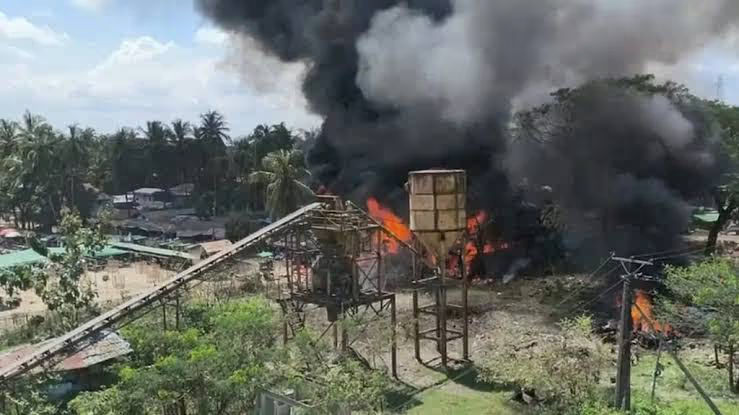
A week-old baby was among at least 15 people reportedly killed in Myanmar military airstrikes that struck several locations, including a makeshift maternity clinic and a school. The attacks across Rakhine and Kayah states also left dozens injured, according to an ethnic armed group, an aid worker and human rights monitors. The deaths have renewed concerns over the growing impact of Myanmar's civil war on civilians, particularly children and people seeking medical care.
The reported attacks took place over the weekend as Myanmar's military-backed government continued its campaign to regain territory held by resistance groups. Among the locations hit were a maternity facility in Mrauk-U, in western Rakhine State, and a school in Loikaw, in Kayah State near the Thai border.
Reuters reported that at least 15 people were killed in the strikes, citing information from an ethnic armed group, a local aid worker and rights monitors. The military-backed government's spokesperson did not immediately respond to requests for comment.
Key Details at a Glance
- Reported death toll: At least 15 people
- Victims: Included a week-old baby and three students
- Areas affected: Rakhine State and Kayah State
- Maternity facility: A makeshift clinic and maternity ward in Mrauk-U was hit
- School attack: A school in Loikaw was struck during an educational activity, according to rights monitors
- Reported injuries: 32 people in the Rakhine strikes and five students in Loikaw, according to the cited sources
- Military response: No immediate comment on the specific attacks was reported
Newborn Killed as Maternity Clinic Is Hit in Rakhine
One of the most distressing incidents occurred in Mrauk-U, a town in Rakhine State controlled by the Arakan Army. An airstrike hit a makeshift clinic and maternity ward, killing at least five people, according to an aid worker quoted by Reuters.
Among those killed was a baby girl who was just one week old. The newborn had a twin who survived and was reportedly due to return home with her family the following day.
Local aid worker Wai Hun Aung, who is based in Mrauk-U, said the baby was killed when the building collapsed following the blast. Four other people, including healthcare workers, also died in the incident, he said.
The reported loss of a newborn in a facility intended to provide care for mothers and babies has drawn particular attention to the danger faced by civilians seeking medical assistance in conflict-affected areas.
The maternity facility was among several locations hit during airstrikes across four townships in Rakhine State. An Arakan Army spokesperson and the aid worker said the attacks killed at least 12 people and wounded 32 across the affected areas.
Airstrikes Reported Across Four Rakhine Townships
The attacks in Rakhine State affected Kyauktaw, Kyaukpyu, Pauktaw and Mrauk-U, according to the accounts cited by Reuters.
Reported targets included a bridge in Kyauktaw, locations in Kyaukpyu and Pauktaw, and the makeshift clinic and maternity ward in Mrauk-U. The strikes came amid intense fighting in the region, where the Arakan Army controls much of the state and has been advancing towards the state capital, Sittwe.
The reported toll from Rakhine was at least 12 killed and 32 injured. These figures were attributed to an Arakan Army spokesperson and an aid worker, rather than an independent on-the-ground verification.
Rakhine has experienced sustained fighting as the military attempts to regain territory from armed opposition groups. The latest attacks add to growing concerns about the safety of residents living in areas exposed to aerial bombardment.
Three Students Killed in School Strike in Loikaw
A separate airstrike struck a school in Loikaw, in Kayah State, also known as Karenni State, near Myanmar's border with Thailand.
The Karenni Human Rights Group (KnHRG) said three students were killed and five others injured when the school was hit. The incident reportedly occurred a day before the strikes in Rakhine State.
According to the rights group and Banyar Khun Aung, secretary of the Karenni Interim Executive Council, a Y-12 transport aircraft and a fighter jet dropped more than 20 bombs on the school.
Banyar Khun Aung said there were no military movements or clashes in the immediate area at the time. He condemned the attack, describing the repeated bombing of a school where children were present as an inhumane act that amounted to a war crime.
That statement reflects the assessment of an opposition official and is not a legal determination by a court. The reported deaths nevertheless highlight the risks faced by children and education facilities in areas affected by the conflict.
Anadolu Agency, citing local media, also reported three children killed in the school attack, while giving a different injury figure of eight. The Reuters account cited the Karenni Human Rights Group's figure of five injured students.
Myanmar Military Has Not Immediately Commented on the Specific Strikes
A spokesperson for Myanmar's military-backed government did not immediately respond to requests for comment about the reported attacks, according to Reuters.
The military has previously described its operations as a legitimate campaign against what it calls terrorists. Myanmar's Foreign Ministry has also said that the military exercises maximum restraint to avoid civilian harm.
However, the latest reports have raised questions about the impact of air operations on civilian locations, including healthcare facilities and schools.
The casualty figures and descriptions of the attacks have been provided by local sources, an ethnic armed group and rights monitors. Independent verification of events in areas affected by Myanmar's conflict remains difficult, and the full circumstances of each strike have not been independently established in the reports.
Thailand Raises Concern as Conflict Reaches Border Areas
The fighting in Myanmar has also created security concerns for neighbouring Thailand. Loikaw, where the school was reportedly struck, is located in Kayah State near the Thai border.
Reuters reported that Thai fighter jets have been carrying out air patrols as the conflict has spilled across the border. Thailand's government said homes had been damaged and at least one person injured on the Thai side.
Thai Prime Minister Anutin Charnvirakul said his government had urged Myanmar to exercise caution to prevent the conflict from affecting Thailand.
The developments demonstrate how Myanmar's internal conflict can create consequences beyond its borders, particularly for communities living close to areas of active fighting.
Myanmar's Civil War Continues to Displace Millions
Myanmar has been engulfed in political turmoil and armed conflict since the military ousted the elected government led by Aung San Suu Kyi in a coup in February 2021.
The takeover triggered widespread resistance and escalated fighting between the military and a range of opposition forces, including ethnic armed organisations. Several of these groups now control significant areas of the country.
The United Nations estimates that the conflict has killed around 100,000 people and displaced more than 3.5 million. Years of fighting have damaged infrastructure, disrupted essential services and made access to healthcare and education increasingly difficult for many communities.
The military has increasingly relied on airstrikes as it struggles to dislodge opposition groups from areas they control. United Nations investigators accused Myanmar's military in August of deliberately carrying out aerial attacks on civilian buildings, including schools and hospitals.
Myanmar's Foreign Ministry rejected the allegations by saying the military exercises maximum restraint to avoid civilian harm.
Fresh Attacks Follow Earlier Deadly Strikes on Displacement Camps
The latest attacks come after another deadly wave of airstrikes in Rakhine State approximately a month earlier.
Strikes in Kyauktaw and Ponnagyun townships reportedly killed at least 58 people at camps housing internally displaced civilians. The attacks prompted strong international condemnation and further highlighted the vulnerability of people forced from their homes by the conflict.
For civilians in Rakhine and other conflict-affected regions, repeated attacks have created an environment in which even places intended to provide shelter, healthcare and education may no longer feel safe.
Growing Questions Over the Protection of Civilians
The reported deaths of a newborn and schoolchildren have once again placed the protection of civilians at the centre of international concern over Myanmar.
International humanitarian law provides special protection for civilians, medical facilities and schools. Parties to an armed conflict are required to distinguish between civilian populations and military objectives and to take precautions to reduce harm to civilians.
Whether specific attacks violated international law depends on the facts, including the target, circumstances, precautions taken and any military objective involved. The reported incidents have not, by themselves, resulted in a judicial determination of responsibility or a war crime.
The latest reports also underline the difficulties of independently investigating attacks in areas where fighting continues and access for journalists and humanitarian organisations may be restricted.
What Happens Next?
The immediate questions concern the full number of casualties, the circumstances surrounding the attacks and whether further information will emerge from the affected communities.
The military-backed government has not immediately commented on the specific strikes described in the reports. Meanwhile, local aid workers and rights monitors continue to raise concerns about civilian deaths and damage to facilities used by children and patients.
The situation also places renewed pressure on regional governments and international organisations to press all parties to the conflict to protect civilians and respect humanitarian obligations.
For the families affected, however, the consequences are already devastating. A newborn who was expected to leave a maternity ward, students attending school and healthcare workers providing assistance have all been caught up in the violence.
As Myanmar's conflict continues, the reported attacks serve as another stark reminder that civilians remain among those paying the heaviest price.
Keywords:
Related Posts