Jensen Huang Resigns as Nvidia CEO: Colette Kress Takes Over
Nvidia is facing one of the most consequential turning points in its history after co-founder Jensen Huang resigned as president and chief executive officer, ending a 33-year period at the helm of the company he helped build into a global technology powerhouse. The company has appointed longtime chief financial officer Colette Kress as interim CEO while its board searches for a permanent successor. The sudden departure comes amid intense scrutiny surrounding Huang's personal relationships, national security concerns and Nvidia's business connections with China, raising questions about the future of a company central to the global artificial intelligence industry.
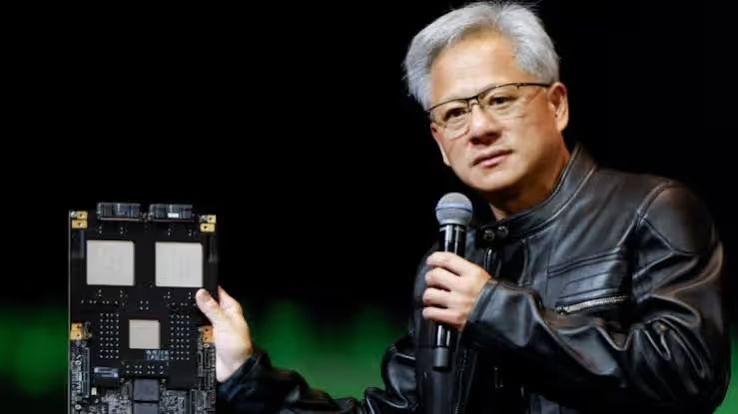
Huang's exit is more than an ordinary corporate leadership change. For decades, he has been the public face of Nvidia, representing the company's technology, strategy and ambitions as demand for artificial intelligence computing transformed the semiconductor industry. His signature leather jacket, energetic product presentations and close relationships with technology companies and political leaders made him one of the most recognisable figures in the global AI race.
His departure leaves Nvidia with an immediate leadership challenge at a time when its chips, software and business relationships have become essential to the development of modern AI systems. Investors, technology companies and governments will now be watching closely to see whether the company can maintain its position without the founder who directed its transformation.
Key Details of Nvidia's Leadership Change
- Departing CEO: Jensen Huang, co-founder and leader of Nvidia for 33 years.
- New interim CEO: Colette Kress, Nvidia's executive vice president and chief financial officer since 2013.
- Board departure: Huang has also resigned as a member of Nvidia's board.
- New board chair: Harvey C. Jones has been appointed the company's first-ever chair of the board.
- Succession process: Nvidia will consider both internal and external candidates for a permanent CEO.
- Background: The resignation follows reports about Huang's personal relationships and concerns surrounding a possible foreign intelligence effort.
- Company position: Nvidia's official announcement did not provide a reason for Huang's resignation.
- Market impact: Investors are assessing the consequences for Nvidia's strategy, leadership, stock performance and wider AI ecosystem.
- Next financial milestone: Nvidia's third-quarter fiscal 2027 results remain scheduled for the company's previously announced reporting date.
Jensen Huang Steps Down After 33 Years at Nvidia
Nvidia announced that Jensen Huang had resigned as president, chief executive officer and a member of the board, with the departure taking effect immediately. The decision marks the end of an extraordinary period during which Huang transformed a relatively specialised graphics-chip manufacturer into one of the most influential companies in the global technology industry.
Huang co-founded Nvidia in 1993 alongside Chris Malachowsky and Curtis Priem. The company initially focused on graphics processing technology, particularly products used in computer games and professional visual computing. Over time, its graphics processing units, commonly known as GPUs, became increasingly important for scientific research, high-performance computing and artificial intelligence.
The rise of generative AI dramatically increased demand for Nvidia's advanced processors. Technology companies began investing enormous amounts in data centres and computing infrastructure to train and operate increasingly sophisticated AI models. Nvidia's hardware and software became central to that expansion.
Huang was closely associated with nearly every major stage of the company's development. His leadership helped establish Nvidia's position in accelerated computing, while its CUDA software platform encouraged developers to build applications around the company's GPU architecture.
His departure therefore represents a major change for a company whose corporate identity, product strategy and public reputation have been closely connected to its founder.
According to Reuters, Huang held approximately 3.61% of Nvidia's shares, making him one of its largest individual investors. He will also leave the board, meaning the change affects both the company's executive leadership and its governance structure.
Why Did Jensen Huang Resign?
Nvidia's official announcement confirmed Huang's resignation but did not explain why he decided to leave. The company thanked him for his contributions and described his impact on the business and the technology industry as significant.
However, the departure followed several days of growing controversy involving reports about Huang's personal relationships and allegations that one of the women connected to the reports had links to Chinese intelligence.
The situation had developed into a serious issue for Nvidia because of the company's position in the global semiconductor industry and the political sensitivity surrounding advanced AI chip exports to China.
Reports about Huang's relationships prompted questions from investors, lawmakers and national security officials. The company's board had already announced an independent investigation into reports that Huang had been the target of a foreign intelligence effort.
Huang had initially remained in his position while the investigation proceeded. However, additional reporting about another alleged relationship involving a senior Nvidia employee intensified scrutiny of his leadership and the company's internal governance.
Reuters reported that the board had been considering Huang's future before the resignation was announced. The timing of his departure has therefore led to widespread speculation that the controversy contributed to the decision.
Reports of Extramarital Relationships Triggered a Major Controversy
The controversy surrounding Huang began attracting international attention after reports described an alleged relationship with a businesswoman connected to the technology sector in Singapore. The woman was identified in reporting as Alice Huang, a former executive associated with Megaspeed International.
Reports citing US intelligence assessments alleged that she had connections to Chinese intelligence and had provided information to Beijing. These claims raised concerns because Megaspeed operated in the data-centre and AI infrastructure sector and had commercial connections involving Nvidia technology.
Huang subsequently acknowledged that he had been unfaithful to his wife and apologised to his family and Nvidia employees. His statement did not publicly identify the person involved or establish that he had knowingly assisted a foreign government.
A separate controversy emerged after reporting described an alleged relationship between Huang and Kimberly Powell, a senior Nvidia executive who reportedly reported directly to him. The reports raised questions about workplace boundaries, executive accountability and potential conflicts of interest within the company's leadership structure.
These developments intensified pressure on Nvidia's board to examine the situation and consider whether Huang could continue leading the company while the controversy remained unresolved.
The allegations should be treated carefully. Reports about personal relationships, possible intelligence links and potential conflicts of interest are not the same as proven misconduct involving national security. The existence of a relationship does not establish that confidential information was transferred or that an individual knowingly assisted a foreign intelligence agency.
Why the Allegations Raised National Security Concerns
The controversy became particularly sensitive because Nvidia is one of the most important suppliers of advanced computing technology used in artificial intelligence. Its processors are strategically significant in the competition between the United States and China to develop increasingly powerful AI systems.
Washington has introduced restrictions on the export of certain advanced semiconductors to China, arguing that access to high-performance computing technology could have implications for military capabilities and national security.
Huang had publicly argued that Nvidia should retain access to the Chinese market where legally permitted. He maintained that American technology companies should be able to compete internationally rather than allowing foreign competitors to gain an advantage.
His position placed him in the middle of a difficult policy debate. Technology companies want access to one of the world's largest markets, while US policymakers are concerned about the potential strategic consequences of supplying advanced chips to Chinese organisations.
The reported relationship with a businesswoman suspected by US authorities of having intelligence connections added another layer of concern. Investigators and lawmakers were interested in whether personal relationships could have created vulnerabilities around sensitive commercial or technological information.
Nvidia's board announced that it had no reason to believe that national security or company secrets had been compromised. It nevertheless said that an independent investigation would examine the available information.
The distinction is important: the investigation was initiated because of reports about a possible foreign intelligence effort, not because Nvidia publicly confirmed that its technology or confidential information had been stolen.
Nvidia's Board Had Already Launched an Independent Investigation
Before Huang's resignation, Nvidia's board announced that it was initiating an independent investigation following reports that the founder had been the target of a foreign intelligence effort.
The board said a committee of independent directors would oversee the review with assistance from outside legal counsel. It also stated that the company had no reason to believe that national security or Nvidia's secrets had been compromised.
Huang had indicated that he supported the review and would cooperate with the investigation. The company initially expressed confidence in him and said its operations would continue without interruption.
The later reports about another alleged relationship and the board's reported discussions about his future changed the situation considerably. By the time Nvidia announced his departure, the issue had developed into a major corporate governance and public relations crisis.
The company's official announcement did not explain whether the investigation had reached any conclusions or whether its findings influenced the leadership transition.
That leaves several important questions unanswered, including the precise status of the investigation, whether any company policies were violated and whether the board identified any security or governance weaknesses.
Who Is Colette Kress, Nvidia's New Interim CEO?
Nvidia has appointed Colette Kress as interim chief executive officer, placing a longtime financial executive in charge of one of the world's most important technology companies.
Kress joined Nvidia in September 2013 and has served as its executive vice president and chief financial officer. During her tenure, the company underwent a dramatic transformation, moving from a business widely associated with gaming graphics into a central supplier of the computing infrastructure behind the AI industry.
Her responsibilities included overseeing Nvidia's financial organisation and helping manage the company's finances during a period of extraordinary expansion. She also became a familiar figure to investors through earnings calls, financial presentations and discussions about the company's performance.
Before joining Nvidia, Kress spent nearly 25 years working in finance roles at major technology companies, including Cisco and Microsoft. Her professional background gives her substantial experience in corporate finance, financial planning and the management of large technology businesses.
Kress will continue serving as Nvidia's CFO while holding the interim CEO position. This arrangement means she will temporarily oversee both the company's executive leadership and its financial operations.
In her statement following the appointment, Kress said she was committed to building on the foundation Huang had created over the company's 33-year history. She also emphasised Nvidia's continued focus on customers, partners, developers and shareholders.
The board has expressed confidence in Kress and the existing leadership team, arguing that the company's operations, customer commitments and product roadmap should continue without interruption.
Colette Kress: Key Facts
- Current position: Interim CEO and executive vice president and CFO of Nvidia.
- Joined Nvidia: September 2013.
- Previous experience: Senior finance roles at Cisco, Microsoft and other technology companies.
- Professional background: Nearly 25 years of finance experience before joining Nvidia.
- Immediate responsibility: Maintain business continuity while the board searches for a permanent CEO.
- Permanent appointment: Not yet confirmed; the board will consider internal and external candidates.
Can Colette Kress Lead an AI Technology Giant?
Kress's appointment has created an important debate about the kind of leadership Nvidia needs during its next stage of growth.
Her supporters point to her long experience inside the company and her understanding of its financial position, customers and commercial relationships. Having spent more than a decade working alongside Huang, she is familiar with the organisation's operations and the financial decisions that supported its expansion.
Her appointment also offers continuity during a period when investors may be concerned about uncertainty at the top of the company. A familiar executive taking temporary control can help reassure employees, customers and business partners that daily operations will continue.
However, leading Nvidia involves more than managing its finances. The company operates in a highly competitive technology market where product development, software ecosystems, research investment and relationships with major AI companies are critical.
Huang was deeply involved in Nvidia's technology direction and was widely recognised for his ability to communicate the company's vision to customers, developers, investors and governments. Replacing that combination of technical influence, commercial ambition and public visibility will be a considerable challenge.
Analysts have questioned whether a finance-focused executive can maintain the same level of risk-taking and technological ambition that characterised Huang's leadership. Others believe Kress's experience could provide a more measured approach to financial commitments and corporate governance.
For now, her role is temporary. Nvidia's board has not announced that she will become the permanent CEO.
Who Could Become Nvidia's Permanent CEO?
Nvidia's board has confirmed that it will conduct a search for a permanent chief executive and consider candidates from both inside and outside the company.
One name discussed in reporting is Ian Buck, a longtime Nvidia engineer associated with the company's AI hardware and software products. Buck has worked at Nvidia for many years and has been involved in the development and expansion of its computing platforms.
His technical background could make him an attractive candidate if the board wants a leader with deep knowledge of Nvidia's products and engineering organisation.
Another name mentioned in discussions about possible successors is Rene Haas, the chief executive of Arm Holdings and a former Nvidia executive. His experience in the semiconductor industry could be relevant if the board looks beyond its existing leadership team.
Other potential names may emerge as the succession process develops. However, Nvidia has not officially confirmed a shortlist, and speculation about possible candidates should not be mistaken for formal board decisions.
The company faces a difficult choice. It needs a leader capable of preserving its technological advantage, maintaining investor confidence, managing complex international relationships and guiding the next phase of AI infrastructure development.
Harvey C. Jones Becomes Nvidia's First-Ever Board Chair
Alongside the CEO transition, Nvidia announced the appointment of Harvey C. Jones as its first-ever chair of the board.
Jones has served on Nvidia's board since 1993, the year the company was founded. His experience includes entrepreneurship, technology management and venture investment, as well as leadership roles in the semiconductor and software industries.
He previously served as chief executive and executive chairman of Synopsys, a major company specialising in electronic design automation and semiconductor design software.
His appointment gives Nvidia a formally designated board chair at a moment when corporate oversight and succession planning have become major issues for the company.
Jones has publicly expressed confidence in Kress, highlighting her understanding of Nvidia's business, customers, operations and financial position.
The board will now have to balance the need for a smooth leadership transition with the responsibility to examine the circumstances surrounding Huang's departure.
Why Jensen Huang Was So Important to the AI Boom
Nvidia's rise is closely connected to the transformation of artificial intelligence from a specialised research field into a major commercial industry.
The company's GPUs were originally developed to process graphics efficiently, but their ability to perform many calculations simultaneously made them useful for other demanding computing tasks.
Researchers discovered that these processors could accelerate important parts of machine learning, including the training of large neural networks. As AI models became larger and more complex, demand for powerful GPU systems increased dramatically.
Nvidia strengthened its position by building more than just individual chips. Its CUDA software platform, networking technology, systems and developer tools helped create an ecosystem that made it easier for businesses and researchers to build AI applications using Nvidia hardware.
The company's products became central to the data centres operated by major cloud providers and technology companies. These facilities require enormous computing capacity to train and run generative AI models, recommendation systems, scientific applications and other advanced software.
Huang also helped shape Nvidia's commercial strategy by building relationships across the AI industry. The company increasingly invested in and partnered with organisations involved in cloud computing, data centres and AI development.
His departure therefore raises questions not only about who will manage Nvidia but also about whether its future strategy will remain as closely connected to the founder's vision.
What Huang's Exit Means for the Global AI Industry
Nvidia's leadership change is being closely watched because the company occupies an unusually important position in the global AI ecosystem.
Its processors power a large share of the infrastructure used to train and operate advanced AI systems. Major technology companies depend on Nvidia hardware to expand their data centres and deliver AI services to businesses and consumers.
A sudden change in leadership could influence how Nvidia approaches partnerships, pricing, product development, investment and long-term supply agreements.
Some analysts believe the company's technology roadmap is sufficiently established that its operations can continue without immediate disruption. Nvidia has an experienced management team, substantial engineering resources and long-standing relationships with customers and suppliers.
Others warn that Huang's personal involvement in strategic decisions was unusually extensive. His departure could therefore affect the pace and direction of some of the company's business initiatives.
The wider AI industry could also feel the effects if Nvidia changes how it finances customers, invests in cloud providers or structures commercial partnerships. These relationships have helped support the expansion of AI infrastructure, but they have also attracted questions about financial risk and the interconnected nature of the industry.
For competitors, the transition could create an opportunity to attract customers seeking alternative chip suppliers. Companies such as AMD, Broadcom and Marvell may benefit if customers decide to diversify their technology investments.
Investors React as Nvidia Faces a Leadership Discount
The announcement created uncertainty among investors, who had become accustomed to Nvidia's founder-led management structure and Huang's central role in the company's public image.
Reuters reported that Nvidia shares fell during trading following the announcement, while rival semiconductor companies recorded gains. The market reaction reflected concerns about the consequences of losing a leader who had become closely associated with the company's success.
Some analysts described the situation as a potential leadership discount. In simple terms, investors may value a company differently when its founder and long-standing chief executive suddenly departs, particularly if there is uncertainty about the successor's long-term direction.
However, short-term share-price movements do not necessarily determine the company's long-term prospects. Nvidia continues to own important technology, software platforms and customer relationships that are not dependent on one individual.
Investors will likely pay close attention to the board's succession process, the results of the company's financial reporting and any changes to its business strategy.
Nvidia's next quarterly results are particularly important because they will provide an opportunity for the company to discuss its financial performance and reassure investors about its operational direction under the interim leadership.
The Debate Over Nvidia's Business Relationships and Circular Financing
Another issue receiving attention is Nvidia's network of investments and commercial relationships across the AI industry.
As demand for AI computing increased, Nvidia expanded its involvement with cloud providers, technology companies and organisations building data-centre infrastructure. Some arrangements involve investments, partnerships, supply agreements and financing relationships that connect Nvidia to companies buying or using its technology.
These arrangements can help customers obtain the capital and computing resources needed to expand their businesses. They can also strengthen Nvidia's position by supporting the growth of organisations that rely on its products.
However, critics have questioned whether some of these relationships create circular financing risks. This concern arises when a technology supplier invests in or provides financial support to companies that then use some of that money to purchase the supplier's products.
Such arrangements are not automatically improper, but they can make it more difficult for investors to assess the underlying strength of demand and the financial independence of companies involved.
Huang's departure has renewed questions about whether Nvidia's next leader will maintain the same approach to investments and partnerships or introduce stricter financial discipline.
Kress's background in finance could become particularly important in this area. Investors will want to understand whether the company plans to continue its existing strategy or make changes to the way it supports customers and partners.
US-China Chip Competition Returns to the Spotlight
The controversy also comes at a sensitive time for relations between Washington and Beijing over advanced semiconductors.
The United States has increasingly treated high-performance AI chips as strategically important technology. Restrictions on exports are designed to limit China's access to certain advanced computing capabilities, particularly those that could have military or national security applications.
Nvidia has been directly affected by these policies because China represents an important potential market for its products. Huang had repeatedly argued that maintaining access to international customers was important for American technology leadership.
The allegations surrounding the businesswoman connected to the controversy have intensified scrutiny of Nvidia's commercial relationships in Asia. Lawmakers may seek further information about chip shipments, export-control compliance and the company's interactions with intermediaries.
Reuters reported that the controversy could increase pressure on US officials to reconsider the rules governing advanced AI chip exports to China.
The issue is politically complicated. Restricting exports may limit access to advanced technology, but it can also reduce revenue for American companies and create opportunities for competitors in other countries.
Nvidia's next leadership team will therefore need to navigate a business environment where technology strategy and international politics are increasingly connected.
What Happens to Nvidia's Product Roadmap?
One of the immediate concerns for customers and technology partners is whether Huang's departure will affect Nvidia's product development plans.
The company has invested heavily in GPU architecture, high-speed networking, AI software and complete computing systems designed for large data centres. These products require years of research, engineering and coordination with suppliers and customers.
Nvidia's board has indicated that it expects operations, customer commitments and the product roadmap to continue without interruption. The company also has a large engineering organisation and experienced executives who can continue managing ongoing projects.
Nevertheless, the longer-term direction of the company will depend on the permanent CEO and the strategic decisions made by the board.
Customers will want clarity on product availability, delivery schedules, software support and future performance improvements. Cloud providers and AI developers also need confidence that Nvidia will remain a reliable partner as they commit billions of dollars to infrastructure.
Any major change in strategy could influence the competitive balance across the semiconductor industry, but there is no indication from the company that its immediate product commitments are being abandoned.
Donald Trump and the Political Dimension of Huang's Departure
Huang's departure also has political implications because of his relationship with US President Donald Trump and his involvement in discussions about American technology policy.
Huang had become an influential voice in Washington's debate over artificial intelligence regulation, semiconductor exports and the future of American competitiveness. His arguments often focused on the importance of allowing US companies to compete globally while maintaining leadership in advanced computing.
His resignation could reduce the influence of one of the technology industry's most prominent executives in discussions about AI policy and chip exports.
It may also increase pressure on other senior officials and industry figures connected to the debate over technology sales to China. Reuters reported that the controversy had drawn attention to Commerce Secretary Howard Lutnick, who had supported a more permissive approach to certain chip sales.
Any government review or investigation would need to establish facts rather than rely on allegations. The wider policy debate, however, is likely to continue regardless of who leads Nvidia.
What Happens Next for Nvidia?
Nvidia now faces several major priorities as it begins the transition to a new permanent chief executive.
The first is maintaining stability inside the company. Employees, customers, suppliers and investors will want reassurance that the leadership change will not interrupt product development, manufacturing coordination or commercial commitments.
The second is completing the CEO succession process. The board must identify a leader capable of managing Nvidia's financial performance while also understanding the technical and strategic demands of the AI industry.
The third is addressing questions surrounding governance and the investigation into the reported foreign intelligence effort. The company may face pressure to explain how its internal review is progressing and whether additional safeguards are necessary.
The fourth is managing the relationship between Nvidia's commercial ambitions and US export-control requirements. The company will need to balance access to international markets with compliance and national security concerns.
Nvidia is also expected to proceed with its previously scheduled third-quarter fiscal 2027 financial results announcement. The results and the accompanying management commentary will be closely watched for signs of how the company intends to navigate the transition.
A Defining Moment for the Company That Helped Build the AI Era
Jensen Huang's departure marks the end of one of the most influential founder-led leadership periods in modern technology. Under his direction, Nvidia moved far beyond its original graphics business and became a central force behind the infrastructure powering artificial intelligence.
His resignation comes at a moment when the company is more important to the global economy than ever, but also faces difficult questions about governance, international business relationships and the responsibilities of technology leaders.
Colette Kress now has the responsibility of maintaining confidence in a company whose future is closely connected to the direction of the AI industry. Her financial experience and long history at Nvidia offer continuity, but the search for a permanent successor will determine the company's leadership for years to come.
The technology Nvidia has built does not disappear with its founder. Its engineers, software platforms, manufacturing relationships and customer commitments remain in place. Yet the departure of a leader who shaped so much of its strategy inevitably creates uncertainty about what comes next.
Nvidia helped turn artificial intelligence into one of the defining industries of the modern economy. Now, without the founder who guided that transformation for more than three decades, the company must prove that its influence can survive beyond one individual. The next chapter will test not only Colette Kress's leadership, but also the strength of the organisation Jensen Huang leaves behind.