Newly found inscription reveals a temple dedicated to Heracles in Heraclea Sintica.
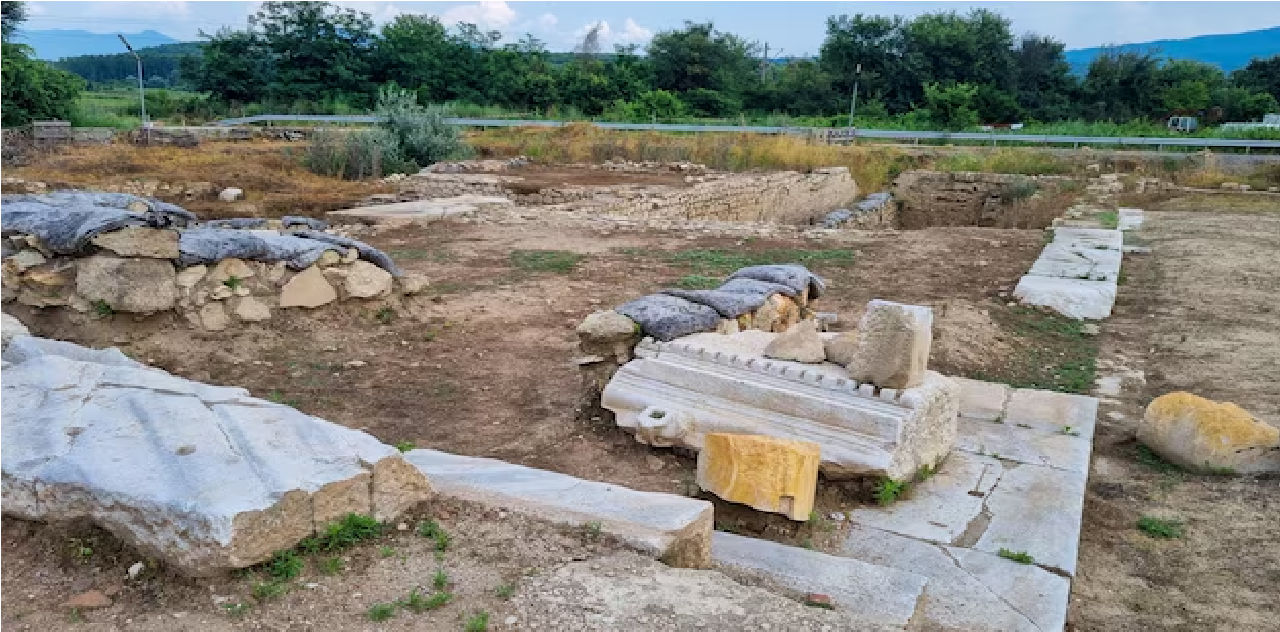
Ancient Inscription Confirms Existence of Temple Dedicated to Heracles in Heraclea Sintica
Archaeological Discovery Sheds New Light on Religious Life in Ancient Macedonia
A remarkable archaeological discovery in the ancient city of Heraclea Sintica has provided scholars with the strongest evidence yet that a temple dedicated to the legendary hero Heracles once stood within the city. The finding, announced by archaeologists working at the site, centers on a newly discovered stone inscription that confirms long-standing theories about the purpose of a significant building unearthed during recent excavations.
The discovery is being described as one of the most important developments in the study of Heraclea Sintica in recent years. Experts believe the inscription not only identifies the structure as a sanctuary devoted to Heracles but also offers valuable insight into the religious traditions, cultural identity, and political history of ancient Macedonia.
Located in present-day southwestern Bulgaria near the village of Rupite, Heraclea Sintica was once an important urban center in the ancient world. Over the past decade, excavations have revealed streets, public buildings, statues, inscriptions, and other artifacts that have transformed historians' understanding of the region. The latest discovery adds another significant piece to this historical puzzle.
Discovery of the Inscription
The stone inscription was uncovered during ongoing archaeological excavations in Heraclea Sintica. Researchers had previously identified a large building situated east of the city's central square and suspected that it may have served a religious purpose. However, until now, there had been no direct evidence linking the structure to a specific deity.
That changed with the discovery of a carved inscription that specialists from Sofia University were able to translate and interpret. The text reads:
"Antigonus – to Heracles Cynagides the Hunter."
According to archaeologists, the inscription likely formed part of an altar positioned in front of the temple. The wording provides the first direct confirmation that the building was associated with the worship of Heracles, one of the most celebrated figures in Greek mythology.
For historians and archaeologists, inscriptions are among the most reliable forms of evidence because they provide contemporary information created by the people who lived during the period being studied. Unlike myths or later historical accounts, inscriptions often offer direct testimony about religious practices, political activities, and public life.
Who Was Heracles?
Heracles, known as Hercules in Roman mythology, is one of the most famous heroes of the ancient world. According to Greek mythology, he was the son of Zeus and the mortal woman Alcmene. He became renowned for his extraordinary strength, courage, and the famous Twelve Labors he was required to complete.
Stories of Heracles spread throughout the Greek world and later across the Roman Empire. He became a symbol of perseverance, heroism, and divine favor. Temples, statues, shrines, and festivals dedicated to him were established in many cities.
However, the newly discovered inscription refers specifically to Heracles Cynagides, a title associated with hunting. The term translates roughly as "Heracles the Hunter," highlighting a particular aspect of the hero's character that was especially important in ancient Macedonia.
Importance of Hunting in Macedonian Culture
According to Prof. Dr. Lyudmil Vagalinski, head of the excavations at Heraclea Sintica, the cult of Heracles the Hunter was widespread throughout ancient Macedonia.
Hunting played a central role in Macedonian aristocratic culture. It was considered not only a practical activity but also a symbol of courage, leadership, military readiness, and noble status. Young men often participated in hunting expeditions as part of their preparation for public and military life.
The rulers of Macedonia also attached special significance to Heracles. Ancient Macedonian kings frequently claimed descent from the legendary hero, using this connection to strengthen their political legitimacy and reinforce their royal status.
As a result, worship of Heracles became deeply connected to both religion and state identity. Sanctuaries dedicated to the hero served as places where citizens could express devotion while also celebrating cultural traditions associated with bravery and leadership.
Why the Discovery Matters
The newly discovered inscription is significant because it provides direct confirmation of a theory that had previously been based largely on architectural evidence.
Archaeologists often identify ancient temples through their design, layout, and location. However, such interpretations can remain uncertain until supporting evidence is found. The inscription discovered at Heraclea Sintica removes much of that uncertainty.
Researchers now have clear proof that the building functioned as a sanctuary connected to Heracles. This confirmation helps historians reconstruct the religious landscape of the city and better understand the beliefs of its inhabitants.
The discovery also contributes to broader research into religious practices across the ancient Macedonian world. Evidence of Heracles worship has been found elsewhere, but each new discovery helps scholars trace how religious traditions developed and spread across different regions.
Heraclea Sintica: A City of Growing Importance
Heraclea Sintica has become one of the most exciting archaeological sites in southeastern Europe. Founded during the Hellenistic period, the city occupied a strategic position connecting various trade routes and cultural regions.
Over the centuries, it became a thriving center of commerce, administration, and religion. The city remained important under both Macedonian and Roman rule, leaving behind a rich archaeological record.
Recent excavations have uncovered public buildings, marketplaces, inscriptions, sculptures, drainage systems, and residential areas. These discoveries have provided valuable information about urban planning and daily life in the ancient world.
The identification of a temple dedicated to Heracles further enhances the site's historical significance and demonstrates the complexity of religious life within the city.
The Role of Inscriptions in Archaeology
Inscriptions are among the most valuable tools available to archaeologists. Unlike pottery fragments or architectural remains, inscriptions often contain names, dates, dedications, and descriptions that can be directly interpreted.
The Heraclea Sintica inscription is a perfect example of how a relatively small artifact can transform historical understanding. A few carefully carved words have provided definitive evidence regarding the purpose of an entire building.
Such discoveries remind researchers that even after decades of excavation, ancient cities can still reveal important secrets. Every inscription, statue, coin, or architectural fragment has the potential to answer long-standing questions about the past.
International Interest in the Discovery
The announcement has attracted attention from historians, archaeologists, and cultural heritage specialists across Europe. Experts note that discoveries linked to Heracles are always significant because of the hero's prominent role in Greek and Roman civilization.
The finding also highlights the growing importance of Bulgarian archaeological research. Sites such as Heraclea Sintica continue to generate discoveries that contribute to international understanding of the ancient Mediterranean world.
As research continues, scholars hope additional excavations may reveal further evidence connected to the sanctuary, including statues, offerings, ceremonial objects, or inscriptions that provide deeper insight into worship practices.
Looking Ahead
Archaeologists plan to continue their investigations at Heraclea Sintica in the coming excavation seasons. The newly discovered inscription has opened fresh avenues of research and may lead to a more comprehensive understanding of the city's religious and political history.
Researchers will focus on studying the temple complex, examining surrounding structures, and searching for additional artifacts that can help reconstruct the sanctuary's appearance and function.
The discovery also raises new questions. Who was Antigonus, the individual named in the inscription? Was he a local official, a wealthy benefactor, or a member of the ruling elite? What ceremonies took place at the temple? How important was the sanctuary within the wider religious life of the city?
Future excavations may provide answers to these questions and reveal even more about one of the ancient world's most fascinating urban centers.
Conclusion
The discovery of a stone inscription confirming the existence of a temple dedicated to Heracles in Heraclea Sintica represents a major achievement in archaeological research. By providing direct evidence of the sanctuary's purpose, the inscription strengthens understanding of religious traditions in ancient Macedonia and sheds new light on the cultural significance of Heracles worship.
As excavations continue, Heraclea Sintica is likely to yield additional discoveries that deepen knowledge of the ancient world. For now, the inscription stands as a powerful reminder that history often survives in unexpected places, waiting to be uncovered and interpreted by modern researchers.
Related Posts