NASA's asteroid monitoring system works by tracking and analyzing near-Earth objects that could pose a threat to our planet.
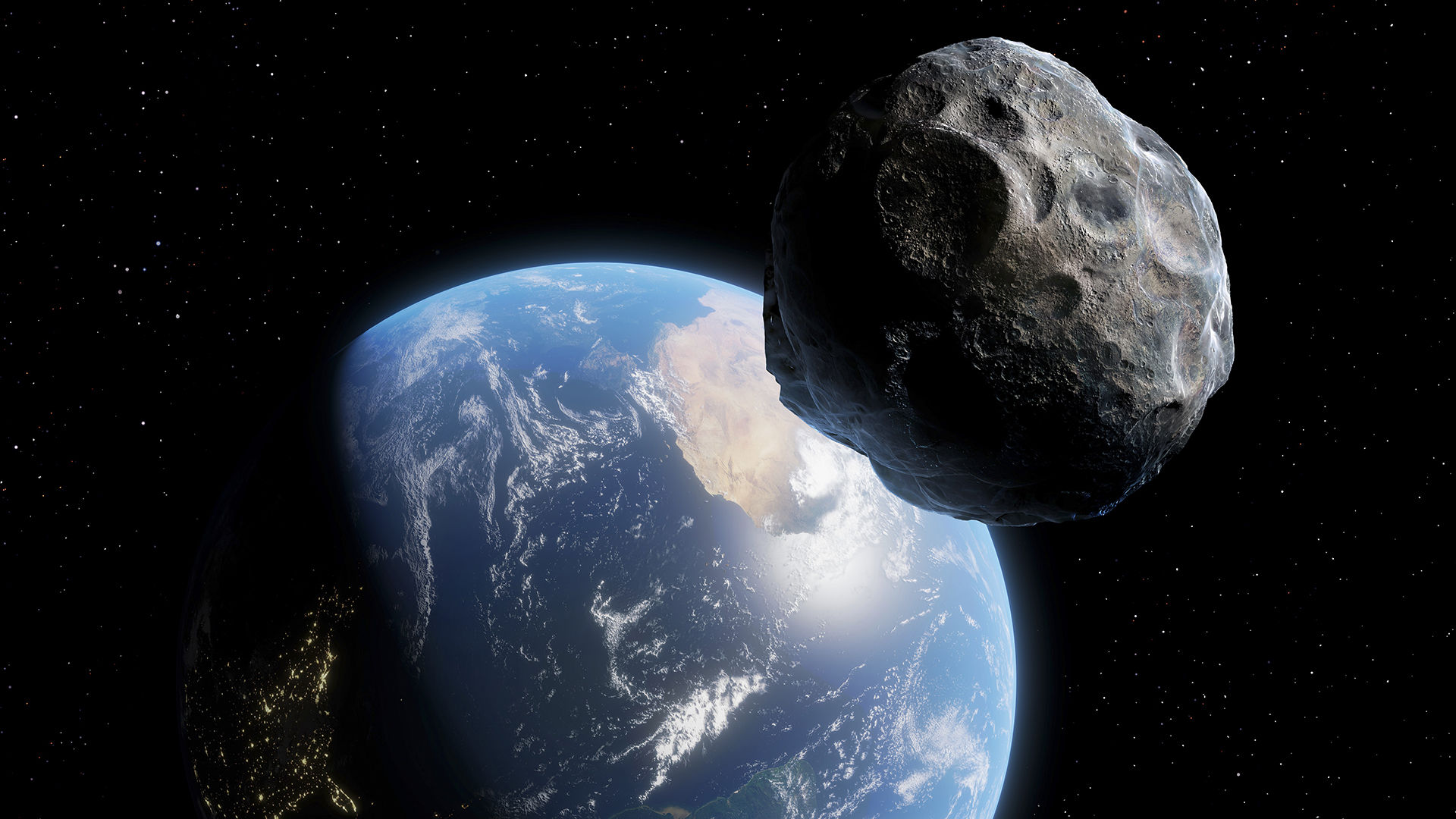
How NASA's Planetary Defense System Tracks Near-Earth Asteroids and Protects Earth from Potential Space Threats
The vastness of space contains countless celestial objects moving through the solar system at extraordinary speeds. While most of these objects remain far from Earth, some pass close enough to our planet to attract the attention of scientists and space agencies. Among these are asteroids and comets that could potentially collide with Earth, causing significant damage. To address this possibility, the National Aeronautics and Space Administration (NASA) has established a comprehensive planetary defense system designed to detect, track, and assess the risk posed by near-Earth objects.
NASA's efforts to monitor and study these objects have become increasingly important as technological advancements allow scientists to identify more asteroids than ever before. Through sophisticated telescopes, radar systems, and space missions, the agency continuously monitors the skies to ensure that any potentially hazardous object is detected well in advance.
NASA's Planetary Defense Mission
Recognizing the need for a coordinated approach to planetary protection, NASA established the Planetary Defense Coordination Office (PDCO) in 2016. The office serves as the agency's central hub for detecting, tracking, and characterizing near-Earth objects (NEOs) that may pose a threat to Earth.
The primary goal of the PDCO is not only to discover potentially dangerous objects but also to determine their future trajectories and assess whether they could impact Earth. If a threat is identified, the office works with scientists, government agencies, and international partners to develop appropriate response strategies.
NASA emphasizes that planetary defense is a long-term effort. The earlier an asteroid is detected, the more options scientists have to prevent a potential collision.
What Are Near-Earth Objects?
Near-Earth objects, commonly referred to as NEOs, are asteroids and comets whose orbits bring them relatively close to Earth's orbital path around the Sun. While most NEOs pose no danger, some require close monitoring because of their size and proximity.
According to data from NASA's Center for Near-Earth Object Studies (CNEOS), scientists have identified more than 41,700 near-Earth objects. This number continues to increase as new discoveries are made through advanced observation programs.
Among the known NEOs:
Approximately 878 objects are at least one kilometer (0.6 miles) in diameter.
More than 11,600 objects measure at least 140 meters (460 feet) across.
The size of an asteroid plays a crucial role in determining the level of threat it could pose. Larger objects have the potential to cause regional or even global devastation if they were to collide with Earth. Fortunately, most known large asteroids have been carefully tracked, and their future paths are well understood.
How Scientists Predict Asteroid Movements
One of the most significant achievements in modern astronomy is the ability to accurately predict asteroid trajectories years or even decades into the future.
Whenever astronomers observe an asteroid, they record its position and movement. Over time, repeated observations allow scientists to calculate the object's orbit with increasing precision. Advanced mathematical models and computer simulations then project the asteroid's future path through space.
As more observational data becomes available, the uncertainty surrounding an object's orbit decreases. This enables researchers to determine whether an asteroid might come close to Earth in the future and assess any potential impact risk.
The international scientific community collaborates extensively in this effort. Observatories around the world continuously share data, helping to improve orbital calculations and ensure that potentially hazardous objects are identified as early as possible.
The Role of the Minor Planet Center
A critical component of the global asteroid-monitoring network is the Minor Planet Center (MPC).
The MPC serves as the world's official repository for observations of asteroids, comets, and other small celestial bodies. Observatories from numerous countries submit their measurements to the center, which compiles and verifies the data.
Once collected, this information is distributed to researchers and organizations worldwide, including NASA's planetary defense teams. The centralized system ensures that scientists have access to the most up-to-date information when evaluating potential threats.
The collaborative nature of asteroid monitoring highlights the importance of international cooperation in protecting Earth from possible space hazards.
NASA's Network of Telescopes and Detection Systems
To detect and monitor near-Earth objects, NASA relies on a combination of ground-based observatories and space-based missions. These systems work together to identify new objects, track their movements, and study their physical characteristics.
Pan-STARRS
The Panoramic Survey Telescope and Rapid Response System (Pan-STARRS), located in Hawaii, is one of the most productive asteroid discovery programs in the world.
Equipped with powerful digital cameras, Pan-STARRS scans large portions of the night sky every evening. Its observations have contributed significantly to the discovery of thousands of asteroids and comets, including many near-Earth objects.
The system's ability to repeatedly survey vast areas of space makes it particularly effective at identifying moving objects.
Catalina Sky Survey
Another major contributor to asteroid detection is the Catalina Sky Survey, based in Arizona.
This project specializes in discovering near-Earth asteroids and has identified a large percentage of the NEOs currently known to scientists. The survey uses multiple telescopes to monitor the sky and detect faint objects that might otherwise go unnoticed.
The Catalina Sky Survey has played a crucial role in expanding humanity's understanding of the population of near-Earth asteroids.
NEOWISE Space Mission
Unlike ground-based observatories, the NEOWISE mission operates in space and observes the universe using infrared technology.
Infrared observations allow scientists to detect objects that may be difficult to see with traditional optical telescopes. Asteroids often reflect limited amounts of visible light, but they emit heat that can be detected in infrared wavelengths.
This capability makes NEOWISE particularly valuable for identifying dark or distant objects that might escape detection through conventional methods.
Goldstone Solar System Radar
Detection alone is not enough. Scientists must also understand an asteroid's size, shape, rotation, and precise trajectory.
The Goldstone Solar System Radar, located in California, helps achieve this goal. By transmitting radio waves toward an asteroid and analyzing the returning signals, researchers can create detailed images and measurements of the object.
Radar observations provide some of the most accurate information available about asteroid movements, helping scientists refine impact predictions.
The Future: NASA's NEO Surveyor Mission
NASA is currently developing a next-generation space telescope known as NEO Surveyor.
This mission is specifically designed to detect near-Earth asteroids and comets using advanced infrared sensors. Unlike existing systems, NEO Surveyor will focus exclusively on identifying objects that may pose a threat to Earth.
Scientists believe the telescope will significantly accelerate the discovery of previously unknown asteroids, particularly those that are difficult to detect from Earth-based observatories.
By complementing existing monitoring systems, NEO Surveyor is expected to become one of the most important tools in NASA's planetary defense strategy.
How NASA Evaluates Impact Risks
Finding an asteroid is only the first step. NASA must also determine whether the object presents any danger.
To accomplish this, the agency uses sophisticated computer systems that continuously analyze asteroid trajectories and calculate the probability of future impacts.
The Sentry System
One of NASA's most important tools is Sentry.
This automated monitoring system examines the orbits of known asteroids and evaluates their long-term impact risks. Sentry performs millions of calculations to identify any possible future collisions with Earth.
Whenever new observational data becomes available, the system updates its predictions and refines risk assessments.
The Scout System
While Sentry focuses on known objects, Scout is designed to analyze newly discovered asteroids.
When astronomers detect a new object, Scout rapidly processes the available data to estimate its trajectory and determine whether immediate concern is warranted.
This rapid-response capability ensures that potentially dangerous objects are identified as quickly as possible.
Potentially Hazardous Asteroids
Among the thousands of known near-Earth objects, scientists pay special attention to a category known as Potentially Hazardous Asteroids (PHAs).
These are asteroids that come relatively close to Earth's orbit and are large enough to cause significant damage in the event of an impact.
Being classified as potentially hazardous does not mean an asteroid will strike Earth. Instead, it indicates that the object warrants continued observation and analysis.
According to NASA, none of the currently known potentially hazardous asteroids pose a significant impact threat within the next century.
Is Earth Currently in Danger?
Despite frequent headlines about asteroid flybys, NASA maintains that there is no known major impact threat to Earth for at least the next 100 years.
The agency continuously updates its databases and monitoring systems to ensure that any changes in asteroid trajectories are detected promptly.
Scientists stress that the greatest danger would come from an undiscovered object. This is why continued investment in detection technology remains a priority.
The more asteroids that are identified and tracked, the lower the likelihood of an unexpected impact.
DART Mission: Humanity's First Asteroid Deflection Test
Monitoring potential threats is important, but what if an asteroid were actually on a collision course with Earth?
To answer this question, NASA launched the Double Asteroid Redirection Test (DART) mission in 2022.
The mission represented humanity's first real-world attempt to alter the trajectory of an asteroid.
DART targeted Dimorphos, a small asteroid orbiting a larger asteroid known as Didymos. The spacecraft intentionally crashed into Dimorphos at high speed, allowing scientists to measure the impact's effect on the asteroid's orbit.
The results exceeded expectations.
Observations confirmed that the collision successfully changed Dimorphos's orbit, demonstrating that kinetic impact technology can be used to alter the course of a celestial object.
The success of DART marked a historic milestone in planetary defense and provided proof that humanity possesses the technological capability to deflect potentially dangerous asteroids.
A New Era of Planetary Defense
NASA's planetary defense efforts represent one of humanity's most important scientific endeavors. Through a combination of advanced telescopes, international cooperation, sophisticated computer systems, and innovative space missions, scientists are building a comprehensive defense strategy against potential asteroid impacts.
While no major threat currently exists, the universe remains unpredictable. Continuous monitoring, technological advancement, and preparedness are essential to ensuring Earth's long-term safety.
The success of missions such as DART demonstrates that humanity is no longer limited to simply observing potential threats from space. For the first time in history, scientists have shown that it is possible to change the trajectory of an asteroid, transforming planetary defense from theory into reality.
As NASA continues expanding its monitoring capabilities and prepares for future missions like NEO Surveyor, the agency is helping ensure that Earth remains protected from one of the oldest natural hazards in the solar system. The ongoing work of planetary defense experts provides reassurance that if a dangerous asteroid is ever discovered, humanity will be better prepared than ever before to respond.
Related Posts