May Day Golden Week: Times Square Looks Quiet, But Crowds Gather Near Famous Egg Tart Shop and SOGO
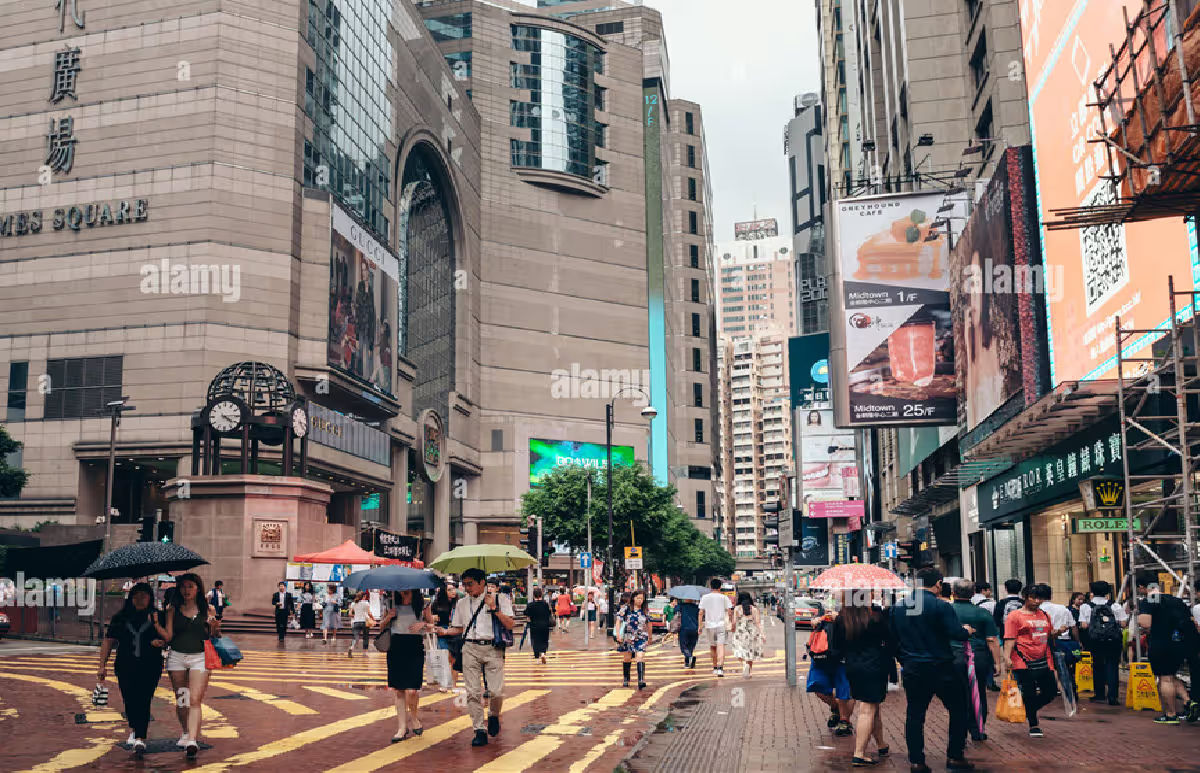
May Day Golden Week: Causeway Bay Draws Crowds, But Times Square Remains Quiet as SOGO and Egg Tart Shop See Heavy Footfall
Hong Kong, May 1: The first day of the May Day Golden Week holiday brought a mixed picture for Causeway Bay, one of Hong Kong’s most popular shopping and tourist districts. While several streets, department stores, restaurants and food outlets in the area saw strong footfall, Times Square, one of the district’s best-known landmarks, remained noticeably quiet.
The contrast was clear on May 1, when visitors and shoppers gathered in different parts of Causeway Bay. SOGO Department Store, Hysan Place, Windsor House and a famous egg tart shop recorded heavy movement of people, but Times Square appeared to have missed out on the holiday rush. The scene has again raised discussion about the changing shopping atmosphere in the district and the challenges faced by some traditional shopping malls.
Times Square Remains Quiet During Golden Week
Times Square has long been regarded as a landmark in Causeway Bay. For years, it was known as a major shopping destination, attracting both local residents and tourists. Its location, branded shops, restaurants and open-air public space once made it a popular stop for visitors.
However, in recent years, the mall has often been described as quieter than before. Some netizens have even called it a “dead city”, while others have said that it looks “quieter than a library”, especially during weekends. These online comments have created public debate about whether Times Square is losing its attraction in Hong Kong’s changing retail market.
On the first day of the May Day Golden Week holiday, a reporter from Sing Tao Headlines visited Causeway Bay to observe the overall consumption and tourism atmosphere in the district. Despite the holiday period, Times Square did not appear to benefit much from the expected increase in visitors.
At around noon, the ground floor and first floor of the mall were sparsely populated. Several mid-to-high-end branded stores had only a few customers inside. In some shops, there were reportedly just two or three people. The open-air square and the area near the large television screen also looked empty, with only a few people sitting and resting.
This quiet scene stood in sharp contrast to the busy atmosphere seen just a few streets away. While the surrounding areas of Causeway Bay were filled with shoppers, tourists and pedestrians, Times Square appeared calm and almost deserted.
Causeway Bay Streets See Strong Visitor Flow
Although Times Square remained quiet, Causeway Bay as a whole was not empty. The streets around the district were crowded, and many shops had visitors. The flow of people showed that the May Day Golden Week holiday had indeed brought crowds to the area, but the movement was not evenly distributed across all shopping landmarks.
SOGO Department Store, located close to Times Square, saw a much stronger crowd. The ground floor and entrance areas were busy, with many people entering and leaving the store. A queue was also seen near the elevator entrance. Inside, the cosmetics and lifestyle sections were crowded with customers.
SOGO has traditionally been one of Causeway Bay’s strongest shopping attractions. It offers a wide range of products, including cosmetics, fashion, household goods and lifestyle items. For tourists and local residents, department stores like SOGO remain convenient because they provide many shopping options in one place. The crowd at SOGO showed that shoppers were still active in Causeway Bay during Golden Week.
Hysan Place also recorded steady footfall. Visitors were seen moving across different floors, and there was continuous movement near elevators and entrances. The mall appeared much livelier than Times Square. Hysan Place has become popular among younger shoppers because of its retail mix, dining options and modern shopping environment.
Windsor House also had a busy atmosphere. The underground market and entrances were full of people, and several restaurants were packed. This showed that food, casual shopping and leisure activities remained important reasons for people to visit Causeway Bay during the holiday.
Restaurants and Food Outlets Attract Visitors
Food remained one of the biggest crowd-pullers in Causeway Bay. According to the report, many restaurants in the area were full, especially inside busy shopping centres. This suggests that visitors were not only coming to shop but also to eat and spend time with family or friends.
One of the most crowded spots was a famous egg tart shop, where a long queue formed outside. The area around Pak Sha Road was also packed with people. Some trendy clothing stores nearby also had queues, with lines extending for a considerable distance.
The strong response to the egg tart shop shows the importance of food tourism in Hong Kong. Many visitors are attracted to famous local snacks and well-known food outlets. For tourists, a popular egg tart shop may offer a more memorable and affordable experience than a luxury store. Such food destinations are also easy to share on social media, making them even more attractive to younger travellers.
This shift in visitor behaviour may explain why some food shops and street-level stores are doing better than traditional malls. Today’s tourists often look for local experiences, quick food stops, photo opportunities and places that are popular online. They may not necessarily spend long hours inside large shopping malls unless those malls offer something unique or lively.
Uneven Retail Recovery in Causeway Bay
The May Day Golden Week scene in Causeway Bay highlights an important change in Hong Kong’s retail market. The district still has strong visitor appeal, but the benefits are not being shared equally by all businesses and shopping centres.
SOGO, Hysan Place, Windsor House and the famous egg tart shop all saw strong visitor traffic. This indicates that people are still visiting Causeway Bay and that the area remains an important retail and tourism hub. However, the quiet atmosphere at Times Square suggests that some traditional landmarks may be struggling to maintain their former popularity.
The issue may not be a lack of tourists or shoppers in Causeway Bay. Instead, it may be that visitors are becoming more selective. They are choosing specific destinations based on convenience, product variety, food options, social media popularity and overall atmosphere.
In the past, large malls in prime locations could attract visitors mainly because of their landmark status. However, today’s shoppers have more choices. They may prefer malls with stronger dining options, popular lifestyle brands, youth-oriented shops or unique experiences. They may also prefer street-level shopping areas where the atmosphere feels more active and lively.
For Times Square, this could be a serious challenge. Even though it remains a well-known landmark, its name alone may no longer be enough to draw large crowds. If visitors do not find the mall exciting or relevant to their current preferences, they may choose nearby alternatives instead.
Public Image Becomes a Challenge for Times Square
Another challenge for Times Square is public perception. Once a shopping centre is repeatedly described online as deserted, such comments can affect how people see the place. Even if some stores continue to operate normally, a quiet atmosphere can create the impression that the mall is declining.
When visitors enter a mall and see empty spaces, they may not feel encouraged to stay. A busy mall often creates a sense of energy and excitement, while a quiet mall can feel less attractive. This is especially important during major holidays, when people expect shopping districts to be lively.
The description of Times Square as “quieter than a library” has become a powerful image in online discussions. Such comments can spread quickly and influence public opinion. For mall operators and tenants, changing this perception may require more than regular business operations. They may need fresh campaigns, special events, new tenants, stronger food options and more attractions that can bring people back.
At the same time, foot traffic alone does not tell the full story of business performance. Some high-end shops may have fewer customers but higher spending per person. However, visible footfall remains an important sign of commercial vitality. A shopping centre that looks empty during a major holiday can easily become the focus of public concern.
Changing Tourist Behaviour in Hong Kong
The situation also reflects a wider shift in tourist behaviour in Hong Kong. In earlier years, many visitors came to Hong Kong mainly for luxury shopping and branded products. But consumer habits have changed. Many travellers now focus on food, lifestyle items, affordable products, local culture and unique experiences.
Mainland tourists and local shoppers may now be more careful and selective in their spending. Instead of visiting every major mall, they may plan their trips around specific shops, restaurants or popular social media locations. This makes competition among shopping centres more intense.
Shopping malls must now offer more than retail stores. They need a complete experience that includes food, entertainment, convenience, atmosphere and strong branding. Malls that fail to adapt may find it harder to attract crowds, even if they are located in prime areas.
Causeway Bay remains one of Hong Kong’s most important commercial districts, but the pattern of movement has changed. Visitors are not simply walking into every landmark mall. They are choosing places that match their needs and interests.
Golden Week Remains Important for Retailers
The May Day Golden Week holiday is an important period for Hong Kong’s retail and tourism sectors. Many mainland visitors travel during this period, and businesses hope to benefit from increased spending. Shopping districts such as Causeway Bay, Tsim Sha Tsui, Mong Kok and Central usually receive strong attention during the holiday.
For retailers, Golden Week can provide an opportunity to increase sales, attract new customers and improve business performance. Restaurants, department stores, food outlets and lifestyle shops often prepare for higher demand. Therefore, the level of foot traffic during the first day of the holiday is closely watched.
In Causeway Bay, the first-day picture was mixed. On one hand, the crowds at SOGO, Hysan Place, Windsor House and the egg tart shop showed that the district still has strong pulling power. On the other hand, the quiet scene at Times Square showed that not every business location automatically benefits from holiday crowds.
This uneven pattern may continue to shape Hong Kong’s retail recovery. Some businesses may perform well because they match current consumer preferences, while others may need to rethink their positioning.
What Times Square May Need to Do
To regain stronger footfall, Times Square may need to refresh its appeal. More popular food outlets, youth-focused brands, seasonal events, pop-up stores, cultural activities and promotional campaigns could help attract visitors. The mall may also need to create stronger links with the lively street environment around Causeway Bay.
In a competitive district, shopping centres must give people a clear reason to enter. This could be a special event, a popular restaurant, an exclusive brand, a photo-worthy installation or a family-friendly attraction. Without such attractions, visitors may choose to remain on the streets or go to nearby malls with more active offerings.
Times Square still has advantages. It is well known, centrally located and connected to one of Hong Kong’s busiest districts. But to compete in the current retail environment, it may need to adapt to new consumer expectations.
Causeway Bay Remains Busy, But Visitor Choices Are Changing
The first day of the May Day Golden Week holiday showed two very different sides of Causeway Bay. The streets, SOGO, Hysan Place, Windsor House and famous food outlets were busy and energetic. At the same time, Times Square remained quiet despite its landmark status.
This contrast does not mean Causeway Bay is losing its importance. Instead, it shows that visitor choices are changing. People are still coming to the district, but they are choosing where to spend their time more carefully.
Food, convenience, atmosphere and social media appeal are becoming more important. Traditional shopping malls must now compete not only with other malls but also with street shops, restaurants and viral food outlets.
As Golden Week continues, retailers will be watching closely to see whether crowd levels improve further. For now, the holiday has brought strong footfall to parts of Causeway Bay, but Times Square remains a reminder that landmark status alone may no longer guarantee success in Hong Kong’s fast-changing retail market.
Related Posts