Hantavirus-hit cruise ship on way to Canary Islands after three evacuated
Deadly Hantavirus Outbreak on Cruise Ship Sparks International Health Alert


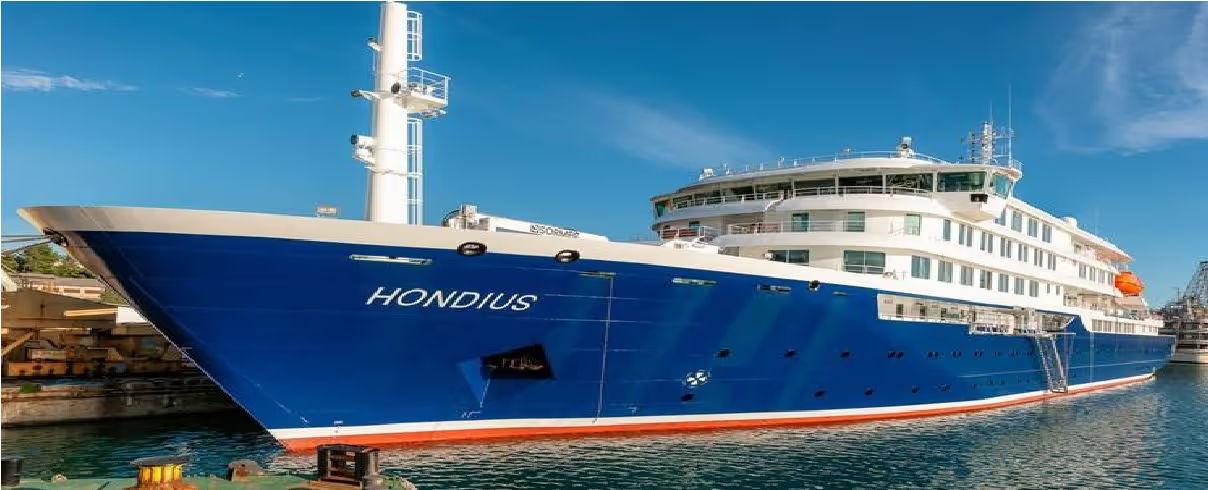
A luxury expedition cruise ship travelling across the Atlantic Ocean has become the centre of an international public health concern after a deadly outbreak of hantavirus infected several passengers and crew members. The vessel, identified as the MV Hondius, is currently sailing toward Spain’s Canary Islands after spending several days anchored near Cape Verde amid emergency medical operations and growing fears over the spread of the virus.
Health authorities from multiple countries, including the Netherlands, South Africa, Switzerland, the United Kingdom, Spain, and the United States, are now involved in monitoring passengers and tracing potential contacts linked to the outbreak.
Emergency Evacuations and Medical Response
The situation escalated after three passengers were medically evacuated from the cruise ship. According to the ship’s operator, Oceanwide Expeditions, two evacuees were transported to the Netherlands in serious condition for urgent medical treatment, while a third passenger in stable condition remained aboard a delayed evacuation flight.
The evacuated individuals include a British passenger, a Dutch crew member, and a German national. Reports identified the British evacuee as 56-year-old former police officer Martin Anstee, who is currently said to be in stable condition in the Netherlands.
The German evacuee, aged 65, was reportedly closely associated with a German woman who died aboard the ship on 2 May. Authorities believe this connection may help investigators understand how the virus spread among passengers.
The outbreak has already resulted in three deaths linked to the voyage since the ship departed from Argentina approximately one month ago. While only one of the deceased has been officially confirmed to have contracted hantavirus, investigations into the remaining deaths continue.
Timeline of the Outbreak
The cruise began in Ushuaia, Argentina, on 1 April, taking passengers on an expedition route across the South Atlantic Ocean toward Africa and Europe.
The first death occurred on 11 April when a passenger died at sea. Later, on 24 April, the wife of the deceased passenger left the ship at the remote island of St Helena after reportedly becoming seriously ill. She was transported to South Africa, where she died two days later in Johannesburg.
Another passenger later died on board the ship on 2 May, increasing concerns that a contagious outbreak was spreading among those on the vessel.
After arriving near Cape Verde on 3 May, the ship remained anchored for several days as health officials assessed the situation and coordinated emergency evacuations.
The ship has now resumed its journey toward the Canary Islands, where Spanish authorities are preparing strict quarantine and medical screening procedures before passengers are allowed to disembark.
What Is Hantavirus?
Hantavirus is a rare but potentially deadly virus typically spread through contact with infected rodents, especially through their urine, droppings, or saliva. Humans usually become infected by inhaling contaminated particles in enclosed spaces.
Symptoms often begin like flu, including:
Fever
Muscle pain
Headaches
Fatigue
Chills
In severe cases, the disease can develop into life-threatening respiratory complications or kidney failure.
What has alarmed health experts in this case is the suspected involvement of the Andes strain of hantavirus, which has previously shown evidence of limited human-to-human transmission. This strain is most commonly found in parts of Latin America, including Argentina and Chile, where the cruise originally began.
South African health authorities confirmed that tests conducted by the country’s National Institute for Communicable Diseases identified the Andes strain in two confirmed patients linked to the cruise ship.
World Health Organization Monitoring Situation
The World Health Organization (WHO) has officially confirmed at least eight cases associated with the outbreak so far, including three laboratory-confirmed infections and five suspected cases.
WHO Director-General Tedros Adhanom Ghebreyesus stated that a passenger who returned to Switzerland after leaving the ship had tested positive for hantavirus and was receiving treatment in a hospital in Zurich.
According to WHO officials, the infected Swiss traveller only sought medical attention after receiving an email alert from Oceanwide Expeditions informing passengers about the health emergency aboard the ship.
WHO experts are also assisting with international contact tracing operations, especially involving flights and airports used by passengers after disembarking.
Airline Exposure Concerns
The outbreak has also affected commercial aviation operations. Dutch media reported that a flight attendant working for KLM Royal Dutch Airlines had been admitted to hospital in Amsterdam after developing symptoms associated with hantavirus exposure.
The flight attendant reportedly came into contact with a 69-year-old Dutch woman who had briefly boarded a KLM flight from Johannesburg to Amsterdam on 25 April. However, airline staff prevented her from continuing the journey after noticing her deteriorating medical condition.
The woman later died in South Africa, and her death is currently being investigated as a suspected hantavirus case.
Health officials are now tracing passengers and airline crew who may have interacted with the infected traveller during her journey.
Monitoring in the United States and Europe
Authorities in the United States have also begun monitoring former passengers from the ship. Health departments in the states of Georgia and Arizona confirmed that three individuals who had earlier left the cruise were under observation.
Officials stated that none of these individuals were currently displaying symptoms of infection.
Meanwhile, the UK Health Security Agency confirmed that two British nationals who had disembarked earlier in the voyage were self-isolating at home due to possible exposure. Both individuals were reportedly asymptomatic.
Across Europe, hospitals and health agencies are maintaining heightened vigilance as more passengers arrive home from the voyage.
Life on Board Under Strict Precautions
Despite the outbreak, 146 passengers and crew members from 23 different countries remain aboard the MV Hondius under what Oceanwide Expeditions described as “strict precautionary measures.”
Passengers are reportedly being monitored daily for symptoms, while medical staff continue testing and isolation procedures.
The operator said enhanced sanitation measures and restricted movement protocols had been introduced to reduce the risk of further transmission aboard the ship.
However, uncertainty remains high because experts are still trying to determine whether all infections originated from rodent exposure or whether limited human-to-human transmission has occurred during the voyage.
Canary Islands Tensions
The decision to allow the cruise ship to sail toward the Canary Islands has triggered political tensions in Spain.
Fernando Clavijo publicly opposed the move, arguing that regional authorities had not received enough technical information about the health risks involved.
Speaking to Spanish radio station Onda Cero, Clavijo said he could not support allowing the ship to enter the islands without clearer safety guarantees.
However, Spain’s Health Minister Mónica García defended the decision, stating that strict protocols would ensure there was no risk to local residents.
According to Spanish authorities:
All passengers will undergo medical assessments upon arrival in Tenerife.
Foreign passengers who are healthy enough to travel will be repatriated to their home countries.
Spanish citizens may be transferred to a defence hospital in Madrid for quarantine and further monitoring.
Controlled evacuation procedures will minimise contact with the local population.
Officials stressed that the risk to the general public remains low.
Why Experts Are Concerned
Although hantavirus outbreaks are uncommon, this incident is attracting worldwide attention because cruise ships can potentially accelerate disease transmission due to close living conditions, shared facilities, and international travel connections.
Experts are particularly focused on whether the Andes strain may have spread directly between humans aboard the vessel. Previous outbreaks in South America have shown that close contact between infected individuals can occasionally transmit the virus.
If confirmed, this would make containment efforts more complicated than standard rodent-borne infections.
Health authorities are continuing laboratory testing and epidemiological investigations to determine exactly how the virus spread during the voyage.
International Cooperation Underway
The outbreak has become a complex multinational public health operation involving:
Passenger tracing across multiple continents
Hospital coordination between countries
Airline exposure investigations
Maritime health monitoring
Quarantine planning and border health procedures
Public health agencies continue urging calm, emphasising that hantavirus does not spread easily among the general public and that most infections are linked to close exposure.
For now, the world’s attention remains focused on the MV Hondius as it approaches the Canary Islands carrying passengers who have spent weeks at sea under mounting medical uncertainty.
Related Posts