Extreme Heat Grips Region, Spreading Northward Until July; Florence Swelters at 41°C
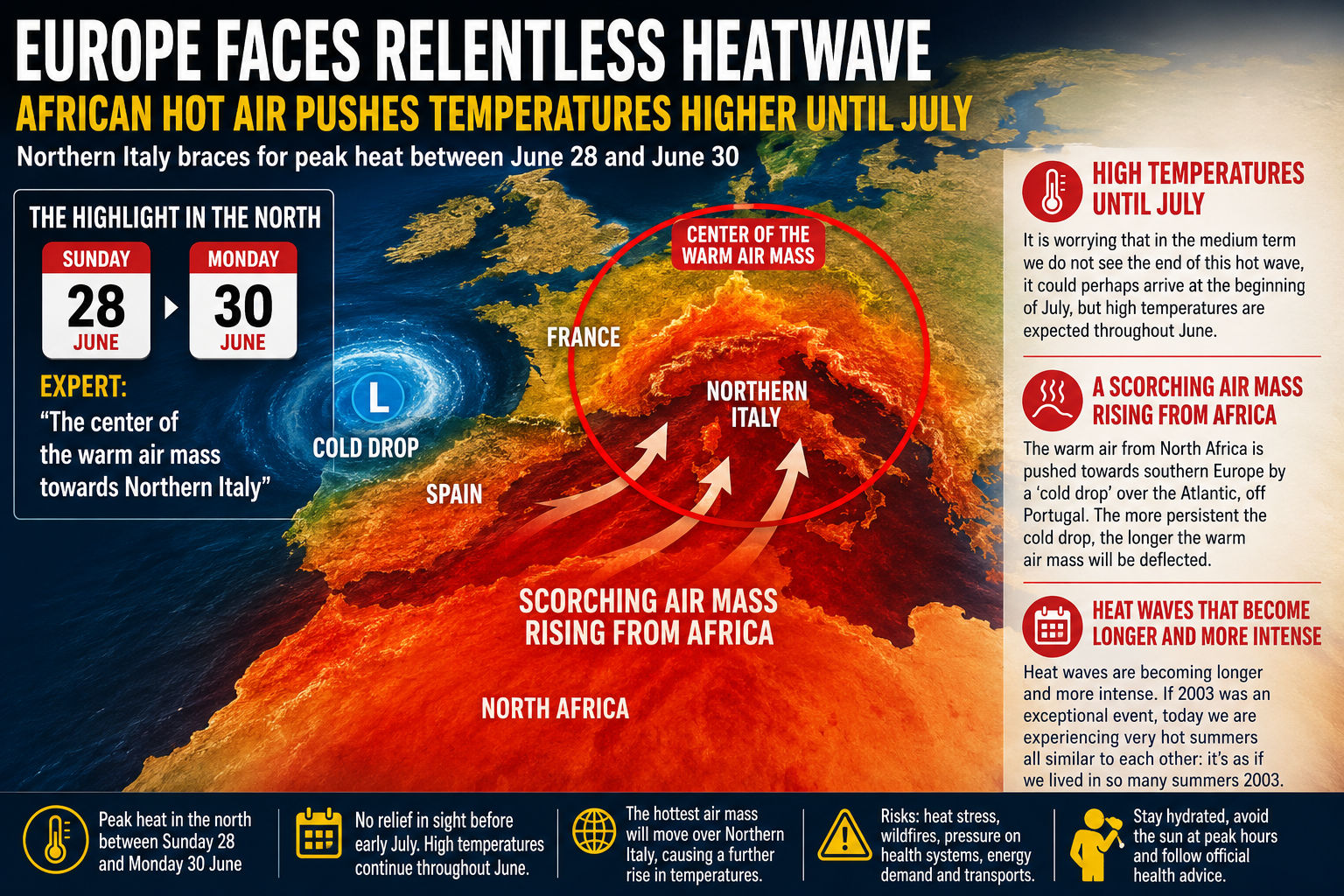
Europe Faces Relentless Heatwave as African Hot Air Pushes Temperatures Higher Until July
Northern Italy Braces for Peak Heat as Temperatures Continue to Climb
Europe is once again in the grip of an intense heatwave, with meteorologists warning that scorching temperatures are likely to persist well into July. The latest forecasts indicate that the hottest phase of the current weather pattern is expected to occur between June 28 and June 30, particularly across northern Italy, where temperatures could rise significantly above seasonal averages.
Experts say the prolonged heat is being driven by a massive warm air mass originating from North Africa. This system, which has already brought exceptionally high temperatures to Spain and France, is now shifting toward Italy and other parts of central Europe. As a result, residents across the region are being advised to prepare for several more days of extreme heat.
The latest developments have renewed concerns about the increasing frequency and intensity of heatwaves across Europe, with climate scientists warning that such events are becoming more common due to global warming.
Red Alert for Northern Italy Between June 28 and June 30
Weather experts have identified the period between Sunday, June 28, and Monday, June 30, as the most critical phase of the current heatwave. Forecast models show the center of the hot air mass moving directly over northern Italy, leading to a further rise in temperatures.
According to meteorologists, the highest temperatures are expected in major cities and densely populated regions across northern Italy. Urban areas could experience particularly severe conditions because of the urban heat island effect, where concrete structures and roads absorb and retain heat, causing temperatures to remain elevated even during nighttime hours.
The approaching heat dome is expected to affect millions of people, increasing the risk of heat-related illnesses, especially among elderly residents, children, outdoor workers, and individuals with pre-existing health conditions.
Heatwave Expected to Continue Until July
One of the most concerning aspects of the current weather event is its duration. Experts note that there are currently no strong indications of a significant cooling trend before the beginning of July.
Meteorologist Lorenzo Giovannini explained that forecast models continue to show above-average temperatures across much of southern and central Europe throughout the remainder of June. While some temporary fluctuations may occur, the overall pattern suggests that hot conditions will persist for several more days.
The prolonged nature of the heatwave is raising concerns among health authorities and emergency services. Extended periods of high temperatures can place significant stress on public health systems, increase energy demand due to air-conditioning use, and worsen drought conditions in already vulnerable regions.
How the African Air Mass Is Driving the Heat
The mechanism behind the current heatwave is relatively well understood by meteorologists. A large mass of extremely warm air is rising from North Africa and spreading northward into Europe.
This hot air originates in desert regions where temperatures routinely exceed 40 degrees Celsius. When atmospheric conditions align, the warm air is transported across the Mediterranean and into southern Europe.
At present, the movement of this warm air mass is being influenced by a weather phenomenon known as a "cold drop." This refers to an area of cooler air located over the Atlantic Ocean near Portugal.
The interaction between the cooler Atlantic air and the hot African air creates a compensation process in the atmosphere. As the cooler air remains relatively stationary, it effectively pushes the warm air northward toward Europe.
Meteorologists explain that the longer the cold drop remains in place, the longer the warm air continues to flow into southern and central Europe.
Spain and France Already Experienced Extreme Temperatures
Before moving toward Italy, the center of the heatwave affected Spain and France, where temperatures soared to exceptionally high levels.
Several regions recorded temperatures well above seasonal averages, prompting heat alerts and public health warnings. Authorities in affected areas urged residents to avoid unnecessary outdoor activities during peak afternoon hours and to remain hydrated.
The extreme heat also increased the risk of wildfires, a growing concern across southern Europe during summer months. Dry vegetation, low humidity, and strong sunshine create ideal conditions for fire outbreaks, which can spread rapidly under hot weather conditions.
As the heatwave migrates eastward and northward, similar challenges are expected in Italy and neighboring countries.
Why Heatwaves Are Becoming Longer and More Intense
While African air masses have influenced European weather for decades, experts say there is a noticeable change in the behavior of modern heatwaves.
According to climate scientists, heatwaves are becoming both longer and more intense. The current event serves as another example of this trend.
Historically, periods of extreme heat would often be followed by a relatively quick return to normal temperatures. Today, however, many heatwaves persist for extended periods, lasting several weeks rather than a few days.
Scientists attribute this change largely to climate change, which has increased global average temperatures and altered atmospheric circulation patterns.
Warmer baseline temperatures mean that when a heatwave occurs, it starts from a higher temperature level than in previous decades. As a result, extreme temperature records are broken more frequently.
Comparison With the Historic 2003 European Heatwave
The current heatwave has inevitably drawn comparisons with the devastating European heatwave of 2003, one of the deadliest weather disasters in modern European history.
The 2003 event resulted in tens of thousands of heat-related deaths across Europe and caused significant economic damage.
However, experts note an important difference between then and now.
In 2003, the heatwave was considered an extraordinary and highly unusual event. Temperatures were far above the historical average and were viewed as an exceptional anomaly.
Today, such extreme conditions are no longer considered rare.
Meteorologists point out that recent summers have repeatedly produced temperatures similar to those experienced during 2003. What was once an exceptional event has increasingly become part of a recurring pattern.
Experts describe the situation by saying that Europe is effectively experiencing multiple versions of the summer of 2003, with extreme heat becoming a regular feature of the climate.
Growing Impact on Daily Life
The consequences of prolonged heatwaves extend far beyond uncomfortable temperatures.
High temperatures can affect public health, agriculture, transportation, and energy systems.
Hospitals often report increased admissions related to heat exhaustion, dehydration, and cardiovascular complications during prolonged hot spells.
Agricultural sectors face additional challenges as crops experience water stress and soil moisture levels decline. Farmers across southern Europe have already reported concerns regarding reduced rainfall and increasing irrigation demands.
Transport infrastructure can also suffer. Extreme heat may cause railway tracks to expand, road surfaces to deteriorate, and air travel operations to face disruptions.
Meanwhile, electricity demand typically rises as households and businesses increase air-conditioning usage, placing additional pressure on power grids.
Climate Change and Persistent Weather Extremes
Experts emphasize that the current heatwave should be viewed within the broader context of climate change.
Research consistently shows that rising global temperatures are increasing the likelihood of extreme weather events. Heatwaves that were once considered rare are now occurring more frequently.
At the same time, climate scientists note that weather patterns are becoming increasingly persistent. This means that once a particular weather regime establishes itself, it tends to remain in place for longer periods.
As a result, both heatwaves and severe weather events can become more prolonged and damaging.
Meteorologists warn that Europe must adapt to a future in which extreme weather events are likely to occur more often.
What Residents Can Do During the Heatwave
Health authorities recommend several precautions during periods of extreme heat:
Drink plenty of water throughout the day.
Avoid direct sunlight during peak afternoon hours.
Wear lightweight and light-colored clothing.
Check regularly on elderly family members and neighbors.
Limit strenuous outdoor activities.
Keep homes cool by using blinds and ventilation where possible.
Follow local weather advisories and health warnings.
Individuals with chronic health conditions should take extra care and consult healthcare professionals if they experience symptoms related to heat stress.
Outlook for the Coming Days
Forecast models suggest that temperatures will remain significantly above average across much of southern Europe through the end of June. Northern Italy is expected to experience the most intense conditions between June 28 and June 30 as the core of the African air mass shifts northward.
Although some meteorological models indicate a possible weakening of the heatwave in early July, confidence remains low, and experts caution that temperatures may continue to stay above normal levels.
For now, Europe appears set to endure another prolonged period of extreme heat, highlighting the growing challenge posed by increasingly persistent and intense weather events.
As climate trends continue to evolve, heatwaves that were once considered extraordinary are becoming an increasingly familiar part of European summers.
Related Posts