Canadians Begin Receiving Bread Price-Fixing Settlement Payments
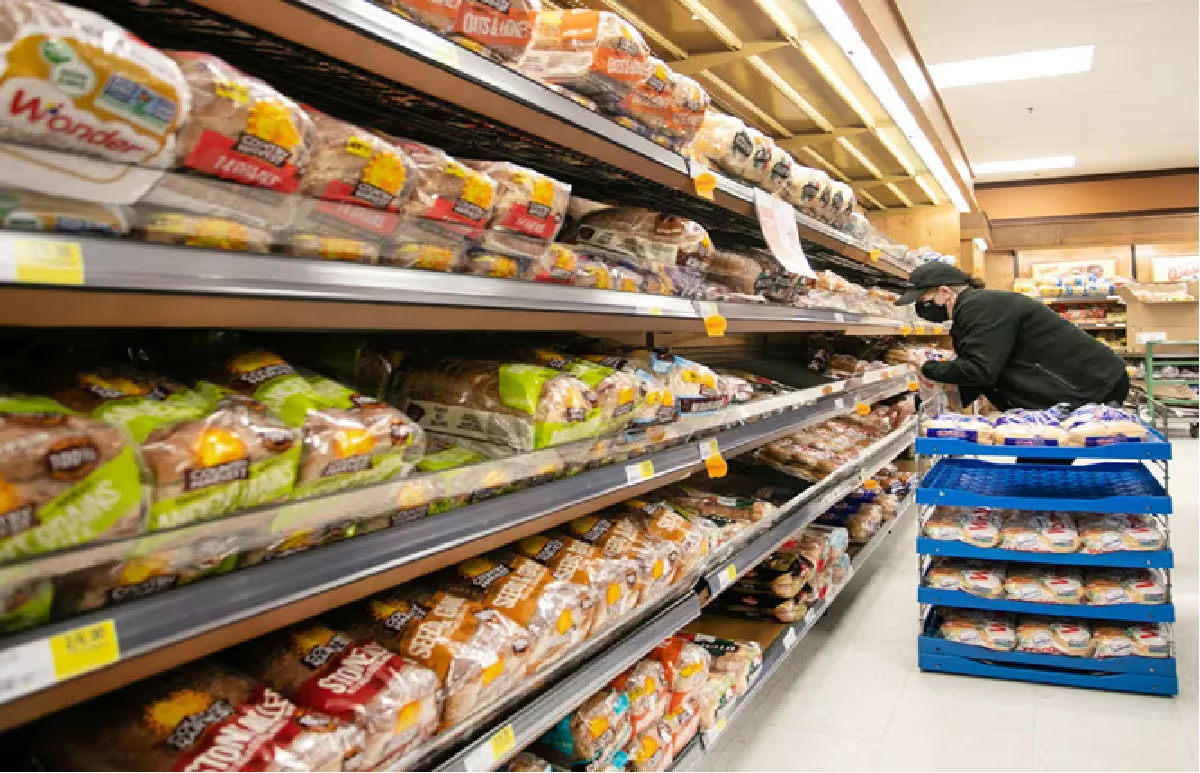
Canadians Begin Receiving Bread Price-Fixing Settlement Payments After $500-Million Class Action
Payments are now being sent to approved claimants across Canada
Canadians who filed approved claims in the packaged bread price-fixing class-action settlement have started receiving payments in their bank accounts. The payout process began in May 2026 after the claims period for the $500-million settlement officially closed on December 12, 2025. The settlement is linked to allegations of an industry-wide bread price-fixing arrangement that affected packaged bread products sold in Canada over many years.
According to the official Canadian Packaged Bread Class Actions Settlement website, compensation for approved claims began during the week of May 11, 2026. Payments are being issued on a rolling basis, meaning not everyone will receive money on the same day. Some claimants are receiving payments by Interac e-Transfer, while others who selected cheque payment will receive money by mail.
How much money are Canadians receiving?
The amount paid to each approved claimant depends on whether they previously received a $25 Loblaw gift card under the Loblaw Card Program. Those who did not participate in the Loblaw Card Program are receiving $49.11. Those who did receive the earlier $25 Loblaw card are receiving $24.11. Claimants who chose to receive payment by cheque will have their payment reduced by $2 to cover cheque-related costs.
The payment amount may seem small compared with the size of the overall settlement, but the case involved a very large number of eligible consumers across Canada. Because packaged bread is a common household product, the potential class included millions of Canadians who bought bread or bread-like products over a long period.
What was the bread price-fixing settlement about?
The settlement relates to class-action lawsuits alleging that several major food retailers and manufacturers were involved in anti-competitive conduct that increased the price of packaged bread products in Canada. The lawsuits alleged that consumers paid more than they should have because of coordinated pricing behaviour in the packaged bread market.
The settlement with Loblaw Companies Ltd. and George Weston Ltd. was announced in July 2024. The total settlement amount was $500 million. Of this, $404 million was to be paid in cash, while $96 million was credited to the earlier Loblaw Card Program, under which some customers had already received $25 gift cards. Loblaw and George Weston said the settlement related to their role in a historical industry-wide bread price-fixing arrangement between 2001 and 2015 involving certain packaged bread products.
Who was eligible to claim compensation?
To be eligible, claimants generally had to be residents of Canada, except Quebec residents under the separate Quebec process, and had to have purchased packaged bread for personal use between January 1, 2001, and December 31, 2021. The official settlement website states that no proof of purchase was required to file a claim.
Packaged bread included more than just a standard loaf of bread. Eligible products included bagged bread, buns, rolls, bagels, naan bread, English muffins, wraps, pita and tortillas. However, bread that was frozen when sold and bread baked on-site in the same establishment where it was sold were excluded from the definition.
Why did the claims process close in December 2025?
The claims process opened in September 2025 and closed on December 12, 2025. Late claims were not accepted. After the deadline, the settlement administrator reviewed submitted claims, checked eligibility and determined the amount payable to approved claimants. Payments then began in May 2026.
This is why many Canadians are only now seeing payments in their accounts. The settlement had to move through several steps: court approval, opening of the claims process, verification of claims, calculation of payment amounts and final distribution.
Why is this case important?
The bread price-fixing case is important because bread is a basic household food item. It is not a luxury product that only some consumers buy. Packaged bread, buns, wraps and similar products are part of everyday grocery shopping for many families. If prices were artificially increased, the impact would have been widely felt, especially by lower- and middle-income households.
The case also became a major symbol of public concern about competition in Canada’s grocery sector. Food prices have been a sensitive issue for Canadian consumers in recent years, and this settlement has reminded many people that anti-competitive conduct in essential goods markets can affect household budgets over long periods.
What role did the Competition Bureau play?
Canada’s Competition Bureau began investigating alleged bread price fixing in January 2016. The investigation focused on whether companies had coordinated price increases for bread products. The Bureau later said Canada Bread Company Ltd. was fined $50 million in June 2023 after pleading guilty to its role in a criminal price-fixing arrangement that raised the wholesale price of fresh commercial bread.
The Competition Bureau described the $50-million penalty as the highest price-fixing fine ever imposed by a Canadian court at that time. Canada Bread pleaded guilty to four counts of price fixing under the Competition Act.
What did Loblaw and George Weston say?
When the $500-million settlement was announced, George Weston Ltd. and Loblaw Companies Ltd. apologized to Canadians for their role in the historical bread price-fixing arrangement. They said the settlement was intended to resolve nationwide class-action lawsuits against them.
The settlement breakdown showed that George Weston would pay $247.5 million in cash, while Loblaw would pay $252.5 million. Loblaw’s portion included $156.5 million in cash and credit for the $96 million already distributed through the Loblaw Card Program.
Did all accused companies settle?
No. The $500-million settlement resolved the class actions against the Loblaw and Weston group of defendants. The official settlement FAQ says the settlement also included cooperation from Loblaw and Weston to assist plaintiffs in continuing their case against remaining non-settling manufacturer and retailer defendants.
The lawsuits had named several major companies in the broader packaged bread market, including retailers and manufacturers. However, it is important to distinguish between allegations in civil class actions and criminal findings. Some companies were accused in the lawsuits, while Canada Bread separately pleaded guilty in the criminal case.
Why are some people getting less than others?
Some approved claimants are receiving $49.11, while others are receiving $24.11 because of the earlier Loblaw Card Program. People who already received a $25 Loblaw card are receiving a reduced amount so that their previous compensation is taken into account.
This means the settlement is designed to avoid double compensation for the same issue. Those who did not previously benefit from the gift card program receive the higher payment. Those who did receive the card get the balance between the current payout amount and what they already received.
Why was proof of purchase not required?
Proof of purchase was not required because the alleged price-fixing period covered many years, from 2001 to 2021 for class eligibility. Most consumers would not reasonably be expected to have receipts for bread purchases made years or even decades earlier. The official settlement website states that claimants needed to provide identifying information and confirm eligibility, but no proof of purchase was needed.
This made it easier for ordinary consumers to participate in the claims process. However, the deadline has now passed, so people who did not file a claim by December 12, 2025, are no longer able to submit a new claim under this process.
Court approval and fairness of the settlement
The settlement required court approval before money could be distributed. Global News reported that Ontario Superior Court Justice Ed Morgan described the $500-million settlement as excellent, fair and in the best interest of class members.
Court approval is an important part of class-action settlements because judges must consider whether the agreement is reasonable for class members. In this case, the size of the settlement and the number of affected consumers made the distribution process a major administrative task.
Why the settlement matters for grocery consumers
The bread price-fixing settlement comes at a time when consumers are already concerned about high grocery prices. Even though the alleged conduct dates back many years, the payout is arriving during a period when food affordability remains a public issue. For many Canadians, the case reinforces the importance of competition enforcement in essential consumer markets.
Price fixing is serious because it undermines normal market competition. In a competitive market, companies are supposed to set prices independently. When competitors coordinate prices, consumers can end up paying more than they would in a fair market. In the case of basic foods, that can affect nearly every household.
A small payment, but a major legal case
For individual claimants, the payment may be less than $50. But the broader case is significant because it represents one of the largest consumer class-action settlements in Canadian history involving grocery products. It also follows one of the largest price-fixing fines ever imposed by a Canadian court.
The case shows that even small price increases on everyday goods can become very large when applied across millions of purchases over many years. Bread is purchased frequently, often weekly, and by a large share of households. That is why alleged price fixing in such a product can become a major national issue.
What claimants should know now
Approved claimants should watch their email and bank accounts for payment updates. Since payments are being issued gradually, delays do not necessarily mean a claim was rejected. The official settlement website has made clear that not all claimants will receive payment at the same time.
Those receiving Interac e-Transfer payments should also be careful about scams. Because major settlements often attract fraudulent messages, claimants should rely on official settlement communications and avoid clicking suspicious links from unknown senders.
The larger message
The bread price-fixing settlement is more than a story about a few dollars being deposited into Canadian bank accounts. It is a reminder that competition matters in everyday life. When essential food markets are affected by anti-competitive behaviour, the cost is ultimately carried by consumers.
The payout process may soon be completed, but the case will likely remain an important example in discussions about grocery prices, corporate accountability and consumer protection in Canada. For many households, the settlement payment is modest. But legally and economically, the case is a major warning: even the price of a basic loaf of bread can become a national competition issue when the market does not work fairly.
Related Posts