Why Didn’t Delhi Receive Rain After Cloud Seeding? Experts Break Down What Went Wrong and Future Plans
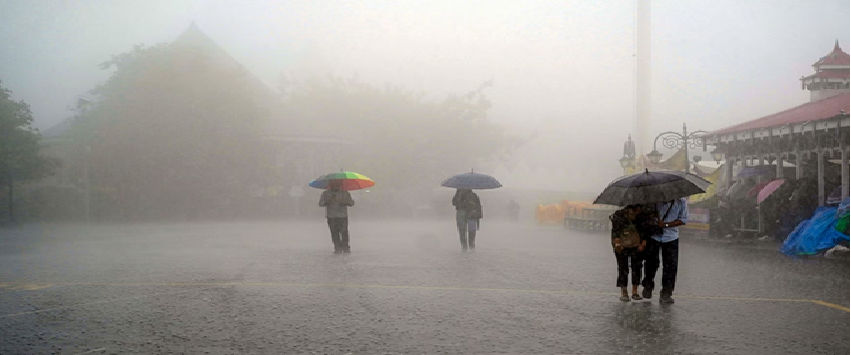
Cloud Seeding Trial Fails to Bring Expected Rain in Delhi; More Attempts Planned as Scientists Study Low Moisture Levels
New Delhi:
Delhi’s much-anticipated cloud-seeding experiment, aimed at inducing artificial rainfall to fight the city’s dangerous pollution levels, did not produce any significant showers on Tuesday. Scientists said that while the operation was technically successful, the clouds present over the national capital had insufficient moisture, making rainfall nearly impossible despite the deployment of rain-inducing chemicals.
The project, undertaken by the Delhi government in collaboration with IIT Kanpur, is designed to trigger precipitation using silver iodide and other seeding agents when favourable clouds are present. However, the first formal attempt of the latest trial batch ended with little measurable success, apart from a slight dip in pollution concentrations.
Officials and researchers stressed that the initiative is still in a testing stage and urged the public to treat the outcome as part of a larger scientific assessment rather than a failed attempt.
Low Moisture Levels Blamed for No Rainfall
According to the scientists leading the operation, cloud conditions over the city were simply not supportive enough to generate rainfall.
IIT Kanpur Director Prof. Manindra Agarwal explained that the relative humidity inside the clouds targeted for seeding was only 15–20%, far below the 60–70% generally needed for artificial rain to materialize.
“There hasn’t been any rain so far, so in that sense, it was not completely successful,” Prof. Agarwal told NDTV.
An aircraft deployed for the mission fired 14 flares containing 20% silver iodide, with the remaining compound made up of rock salt and common salt. The chemicals act as artificial nuclei for water droplets to form around. But with too little moisture in the cloud environment, there was not enough condensation to trigger precipitation.
Prof. Agarwal said the aircraft covered zones where cloud cover was available, but a combination of weak cloud density, limited moisture and atmospheric instability reduced the effectiveness of the seeding effort.
“Some predictions said there would be rain and some said there would not. What we found was that the cloud cover had very little moisture content. So we did not expect any rain to occur on Tuesday,” he added.
Technical Operation Performed Successfully
Despite the lack of rain, the scientists involved described the trial as technically encouraging, noting that this was one of the first controlled operations of its kind directly above densely populated areas in Delhi.
They highlighted the successful:
• Airspace coordination with civil aviation authorities
• Deployment of equipment above target cloud layers
• Dispersal of seeding agents using calibrated flare systems
• Collection of atmospheric data for scientific review
A senior scientist from the IIT team, requesting anonymity, said the trial demonstrated that cloud-seeding operations can be executed safely even amid the complex weather system and heavy air traffic over the capital.
“Our confidence has only increased. The goal is to understand the technology’s behaviour in India’s specific climatic conditions,” the researcher said.
More Cloud Seeding Attempts This Week
Prof. Agarwal confirmed that two more similar flights were scheduled on Wednesday, and the initiative will continue as long as suitable cloud formations appear over the city.
“We will keep testing whenever there is enough cloud cover in the sky,” he said.
Officials said the current mission is not intended to produce immediate and guaranteed rainfall. Instead, the goal is to measure seeding efficiency, atmospheric receptiveness, and the ability to reduce harmful particulates temporarily during peak pollution periods.
The Delhi government and IIT Kanpur had signed an agreement earlier this year to conduct a series of trials throughout the winter pollution season.
Objective: Temporary Relief from Severe Pollution
Delhi has experienced hazardous air quality in recent weeks, with PM2.5 levels crossing 400 at several monitoring stations — categorized as “severe”.
Exposure to such pollution can cause:
• Breathing problems
• Throat and eye irritation
• Increased risk of lung disease
• Worsening of asthma and cardiac issues
Cloud seeding is seen as an emergency tool to reduce air pollutants by inducing rainfall that helps settle dust and soot from the air. Prof. Agarwal cautioned that the method is not a long-term solution to Delhi’s pollution crisis.
“It is an SOS solution, something we try during an emergency. The real solution lies in controlling sources of pollution,” he emphasized.
Even if artificial rain works as expected, experts say the relief would last only a few days without strict emission-reduction measures across the region.
Minor Improvement in Air Quality Recorded
While no widespread rain fell, the Delhi government reported a slight improvement in pollution levels after the cloud-seeding attempt. The following reductions were noted in PM2.5 concentration:
• Mayur Vihar — decreased from 221 to 207
• Karol Bagh — from 230 to 206
• Burari — from 229 to 203
Similarly, PM10 levels also dipped:
• Mayur Vihar: 207 → 177
• Karol Bagh: 206 → 163
• Burari: 209 → 177
The government also recorded 0.1 mm of rain in Noida and 0.2 mm in Greater Noida — very light precipitation that may still have contributed to cleaning the air marginally.
A senior Delhi Pollution Control Committee (DPCC) official said:
“Even minimal drizzle helps bind particulate matter, preventing toxic particles from staying suspended in the air.”
Cloud Seeding: A Quick Scientific Overview
Cloud seeding is a weather modification technology that enhances rainfall from existing clouds. It does not create clouds but improves their rain-producing potential when natural conditions are close to favourable.
How it works:
- Identify clouds with appropriate moisture
- Fly aircraft or use ground generators to disperse chemicals
- Silver iodide particles act as a base for ice crystals or droplets to form
- Droplets grow heavier and fall as rain
The method has been used for decades worldwide, including in:
• China
• United Arab Emirates
• United States
• Australia
• Thailand
However, success depends heavily on real-time meteorological conditions.
India’s Cloud-Seeding Experience So Far
India has previously conducted cloud-seeding trials in:
• Maharashtra — for drought relief between 2015–2019
• Karnataka and Tamil Nadu — to boost reservoir inflow
• Hyderabad — localized rainfall enhancement
The results have been mixed, largely due to unpredictable weather patterns associated with India’s monsoon-based climate.
Experts say cloud seeding in northern India is particularly challenging during winter because:
• Clouds are often shallow
• Moisture is limited
• Temperature profiles vary rapidly
• Wind patterns change frequently
Public Expectations Remain High
Residents across Delhi had hoped for artificial showers to clear the city’s smog blanket. Social media saw several posts expressing disappointment as skies remained dry.
Some users joked that Delhi’s pollution was “too strong for science,” while others demanded faster pollution-control action instead of weather experiments.
Environmental activists argued that cloud seeding may divert attention from systemic reforms such as:
• Clean energy transition
• Heavy-duty vehicle emission control
• Construction dust management
• Crop stubble burning alternatives
A representative from a citizen-led air quality group said that solutions must address root causes rather than temporary fixes.
Authorities Defend the Decision
Delhi government officials said the trial was justified due to the extreme pollution emergency. They reiterated that cloud seeding was initiated only after other measures such as:
• School closures
• Work-from-home advisories
• Construction bans
• Vehicle restrictions
failed to deliver adequate relief.
“Any improvement in pollution levels is a win for public health. We will continue to support the scientific team,” a government spokesperson said.
Officials added that data from ongoing trials will help evaluate whether cloud seeding should be included as a standing emergency response plan in future winters.
More Research Needed Before Scaling Up
Scientists emphasized that cloud-seeding deployment must remain data-driven, not expectation-driven. If repeated operations show clear pollutant reduction and rainfall generation, policymakers may consider long-term investment in advanced seeding systems.
However, if trials consistently fail due to weather conditions, experts say resources should be directed elsewhere.
IIT Kanpur will analyze:
• Cloud structures
• Moisture variation
• Ground-level aerosol response
• Temporal improvement in AQI
before submitting a complete performance report to the government.
What Happens Next?
✔ More seeding trials this week, depending on cloud conditions
✔ Continuous monitoring of air quality to evaluate impact
✔ Detailed scientific review after operation window closes
✔ Recommendations on future applicability in Delhi
Officials remain cautiously optimistic.
“We are learning from every attempt. When favourable clouds return, rain is likely,” a senior scientist said.
Conclusion
While the absence of rain was disappointing for many Delhi residents who hoped for immediate relief from choking smog, scientists insist that the cloud-seeding effort must be viewed through a research lens.
The first trial has already demonstrated that Delhi’s meteorological environment poses significant challenges to weather modification. But the operation has also proven that cloud seeding can be executed safely and effectively from a technical standpoint.
As Delhi waits for the next spell of moisture-laden clouds, the mission continues with the broader objective of finding every possible tool — even temporary ones — to fight the annual pollution crisis.
Related Posts