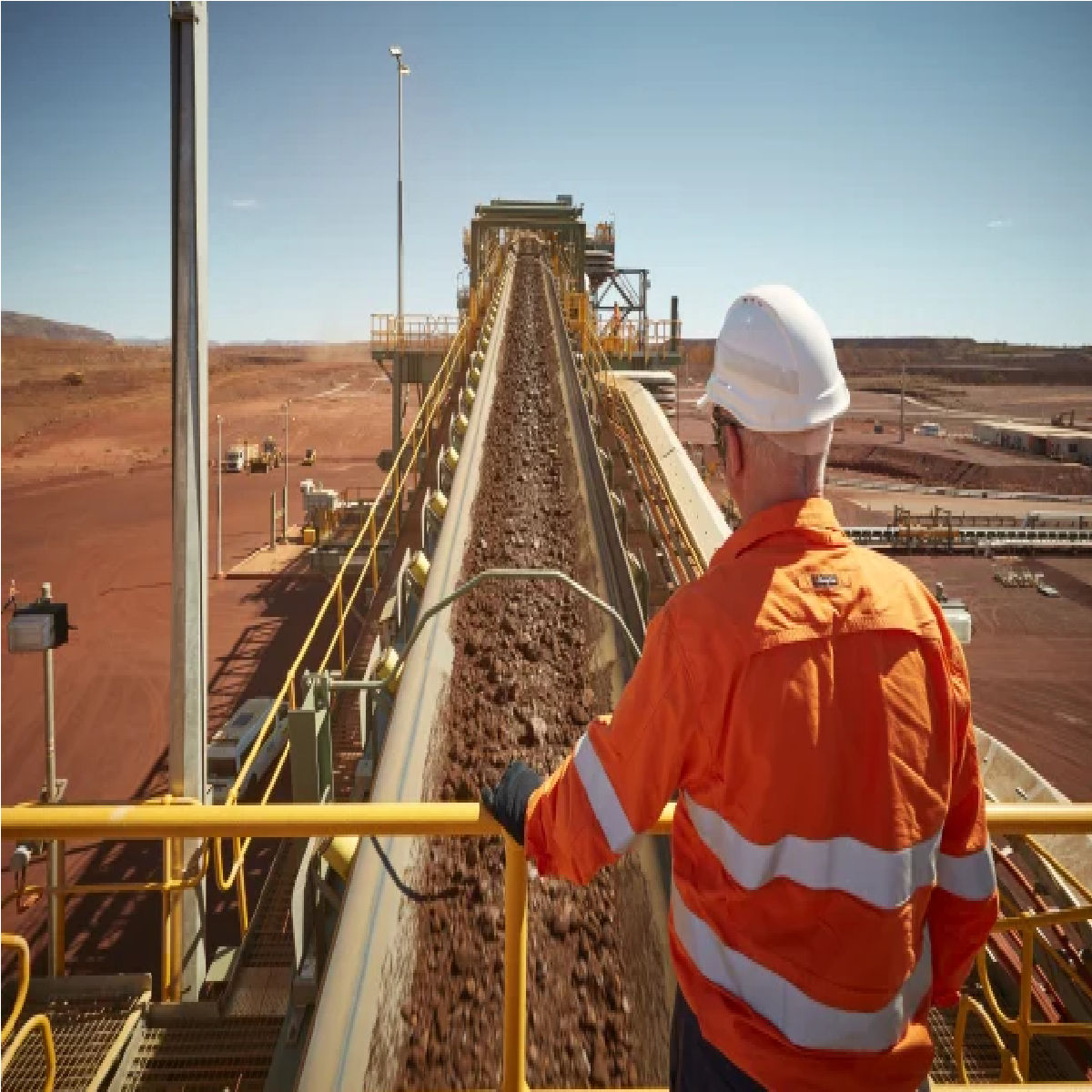
Western Australia’s mining city still struggles with electricity shortages as peak demand approaches.
Industry’s Power Woes Continue in WA Mining City as Peak Demand Looms
Western Australia’s mining sector, long considered the backbone of the state’s economy, is once again bracing for a difficult period as power shortages threaten operations in one of its key mining cities. With peak summer demand only weeks away, local industries are expressing growing frustration over what they describe as recurring and avoidable electricity supply issues. The mining city, which hosts some of the largest iron ore and mineral processing facilities in the region, is already experiencing intermittent disruptions—raising concerns about the stability of the grid and the impact on production, employment, and investment confidence.
For years, power availability has been a critical concern in remote and industrial hubs across WA. The combination of extreme temperatures, ageing infrastructure, rapidly expanding industrial activity, and inconsistent investment in energy upgrades has created a fragile system. The situation this year appears even more precarious, according to energy analysts and industry bodies, who warn that the region may be heading toward one of its most challenging seasons in recent memory.
Growing Power Demand Meets Old Infrastructure
The city’s power grid is heavily stretched during the summer months, when temperatures routinely exceed 40°C, causing residential and industrial electricity demand to surge. Mining companies—especially those operating smelters, refineries, and automated processing plants—require uninterrupted power to maintain production levels and ensure employee safety.
However, the infrastructure supplying these high-demand operations was originally designed decades ago, at a time when the scale of industrial activity was far smaller. While mining output has expanded dramatically, grid upgrades have not kept pace.
Engineers working with the regional network say the demand-supply imbalance has now become a “structural issue” rather than a seasonal inconvenience. A senior electrical systems engineer, speaking on condition of anonymity, described the region’s grid as “a network built for yesterday’s industry, trying to support tomorrow’s growth.”
According to preliminary estimates, electricity demand in the city’s industrial corridor has grown by nearly 40% over the last decade. Yet, grid capacity has only increased by about 10%, mostly through temporary solutions or short-term expansions. This mismatch has created recurring bottlenecks—especially during the months of peak energy usage.
Industries Report Rising Costs and Safety Risks
Mining and processing companies in the region say the effects of unstable electricity supply are becoming more difficult to manage. Frequent voltage drops, temporary outages, and planned load shedding have forced operations to slow down or shut off equipment more often than usual.
These interruptions cost companies millions of dollars each year, particularly when they occur during critical production sequences. For mineral processing plants, even a short outage can damage equipment, lead to wastage of partially processed ore, and require hours of recalibration before production can resume.
One operations manager at a large iron ore facility said that the plant experienced three significant power fluctuations last month alone. “Every time we shut down unexpectedly, we lose productivity, damage our machinery, and increase safety hazards for our workers. This is becoming unsustainable,” he said.
Other industry representatives echo similar concerns and warn that the ongoing power instability could affect long-term investment decisions. With global competition intensifying and commodity prices fluctuating, mining companies rely heavily on efficient, steady production cycles. A volatile energy supply makes planning more difficult and increases operational costs—costs that may eventually impact employment and economic output in the region.
Small Businesses Also Affected
While major mining companies have backup generators and contingency planning, smaller businesses in the city have fewer resources to protect themselves from electricity disruptions. Workshops, mining service providers, commercial stores, and hospitality outlets all rely on steady power to run equipment, refrigeration, air conditioning, and digital systems.
Local business owners say that recurring outages have increased maintenance costs and reduced customer footfall, especially during heatwaves. Some have invested in expensive backup generators, while others say they simply cannot afford such systems.
“We lose customers every time the temperature hits the high 40s and the power flickers,” said the owner of a local café located near the industrial precinct. “People don’t want to sit in a hot room while the air conditioning keeps shutting off. And food spoilage is becoming a serious expense for us.”
Business groups are urging the state government and energy providers to offer clearer timelines for infrastructure upgrades and provide interim support for small commercial operations.
Government and Energy Providers Respond
State officials acknowledge the seriousness of the situation, but point out that large-scale infrastructure upgrades require significant funding, technical planning, and long timelines. The government says it has already committed millions to grid modernisation projects across WA, including new transmission lines, improved substations, and expansions in renewable energy generation.
However, critics argue that these commitments have not translated into immediate benefits for the mining city. Many promised projects are still in the planning or early construction stage, leaving industries to cope with the existing system for at least one or two more years.
Energy providers maintain that they are working closely with industry partners to implement load management strategies and prioritise supply to essential facilities. They warn that the upcoming summer could push the grid to its limit, especially if heatwaves occur back-to-back.
In a recent statement, a spokesperson for the regional electricity provider said, “We understand the frustrations of businesses and residents. The region has grown faster than forecasts predicted, and we are accelerating upgrades as quickly as possible. Our teams are monitoring demand closely and preparing contingency plans for extreme weather.”
Shift Toward Renewable Energy Accelerates but Faces Barriers
As power reliability becomes a bigger concern, industries in the region are exploring long-term alternatives—especially renewable energy projects and microgrid solutions. The city is well-positioned for solar power, with year-round sunlight and large open areas that can accommodate large solar farms.
Several mining companies have already invested in private solar installations and battery storage systems to reduce reliance on the central grid. These projects help stabilise operations and cut energy costs. Some companies are even studying hybrid systems that combine solar, gas, and battery storage to ensure continuous power supply.
Despite these promising developments, renewable solutions cannot yet fully replace the scale of electricity demanded by heavy mining and processing facilities. Energy experts note that without major storage capacity upgrades and modern transmission systems, renewables will remain only part of the solution in the short term.
Workers Fear Reduced Shifts and Production Slowdowns
The uncertainty over power availability has also created anxiety among workers. Mining operations often require steady, round-the-clock activity. If electricity disruptions force companies to temporary scale back operations, workers may face reduced shifts, altered rosters, or temporary stand-down periods.
Several union representatives have urged the government to act quickly, warning that unreliable electricity could indirectly jeopardise job stability. “When production slows down, it affects everyone—from machine operators to truck drivers to caterers,” a union spokesperson said.
Workers are also concerned about safety risks. Heat stress becomes more dangerous when ventilation systems and cooling units shut down unexpectedly due to voltage fluctuations. Industrial sites have reported several near-miss incidents linked to power instability over the past year.
Calls for a Long-Term Energy Strategy
Business councils, local leaders, and industry associations are pushing for a comprehensive, long-term energy strategy tailored to high-growth resource regions. They argue that the mining city’s electricity needs are unique and require targeted investment rather than generic upgrades.
Proposed solutions include:
- New high-capacity transmission lines linking remote regions to state-wide grids
- Large-scale battery storage to stabilise supply during peak demand
- Investment in renewable-plus-storage hybrid systems at industrial sites
- Faster approvals for private microgrid projects
- Public-private partnerships to build new power stations
- A regional energy task force focusing on mining and industrial hubs
Industry leaders say such measures are essential to secure the region’s economic future. Without reliable energy, they warn, WA risks losing its competitive edge in the global mining market.
Peak Season Approaches With Uncertainty
With summer approaching and demand expected to spike, industries in the mining city are preparing for another challenging season. Many companies are updating their emergency protocols, inspecting backup systems, and running stress tests on critical equipment.
Yet, despite all preparations, the uncertainty remains. Businesses, workers, and residents alike are hoping that the grid can withstand the pressure—but many fear that the cycle of power instability will continue unless long-term solutions are implemented swiftly.
As one mining executive put it, “We’re not asking for miracles. We’re asking for a reliable power supply. In a region that fuels the state’s economy, that shouldn’t be too much to expect.”
Related Posts