US Treasury Secretary cautions China on rare earth curbs, says Washington expects backing from India
US Warns China on Rare Earth Curbs, Seeks Support from India and Allies
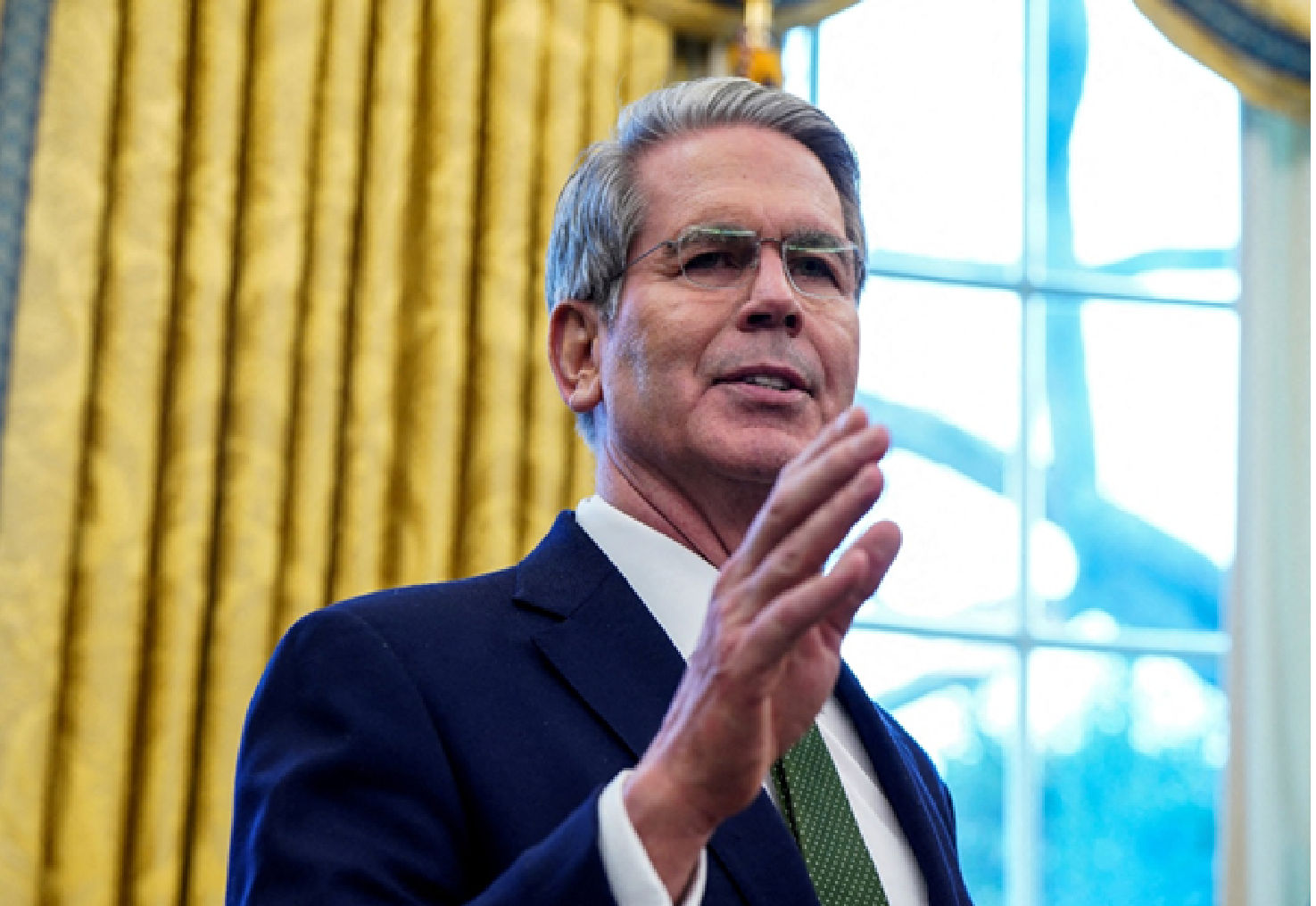
US Treasury Secretary Scott Bessent has warned that Washington and its allies will not allow China’s new export restrictions on rare earth materials to proceed unchallenged, calling the move a direct threat to the global supply chain. He described the situation as “China versus the rest of the world,” emphasizing that the U.S. will coordinate with partner nations, including India and European allies.
“It’s China versus the world. They had pointed a bazooka at the supply chain and industrial base of the entire free world. We are not gonna have it. China is a command-and-control economy. We’re going to assert our sovereignty in various ways. We’ve already been in touch with allies. We will be meeting with them this week. I suspect we will get substantial global support from the Europeans, from Indians, and the democracies in Asia — and we will not let the export restrictions and monitoring continue,” Bessent told Fox News.
While reiterating that the U.S. remains open to dialogue, Bessent stressed that Washington is prepared to respond forcefully if Beijing does not reverse course.
“I believe China is open to discussion on this. If they are not, we have substantial levers that we can pull, equivalent to or even more aggressive than what they have done with rare earths. We don’t want to use them. Here in the U.S., we have an all-hands-on-deck policy,” he said.
Bessent underlined that U.S. policy aims to “de-risk, not decouple” from China, highlighting efforts to bolster domestic manufacturing in critical sectors such as semiconductors, critical minerals, and pharmaceuticals.
“We do not want to decouple. We want to de-risk. De-risking — including critical minerals, semiconductor independence, and reshoring pharmaceuticals — is a key part of the strategy, consistent with the America First agenda,” he said.
Regarding President Donald Trump’s decision to delay the 100% tariff on Chinese goods until November 1, Bessent said it was intended to ease tensions ahead of Trump’s planned meeting with President Xi Jinping in Korea. He added that several staff-level meetings between U.S. and Chinese officials would take place during the IMF–World Bank meetings in Washington.
“Everything is on the table. I’m optimistic this can be de-escalated, but we are ready to take whatever actions are necessary. This is a global problem, and our allies will support us,” Bessent said.
The Treasury Secretary also noted previous U.S. countermeasures against China, covering sectors from natural resources to aviation, and highlighted educational imbalances:
“We have 300,000–400,000 Chinese students studying here versus only 800 American students in China. That’s substantially imbalanced,” he said.
China defended its export controls on rare earths, lithium batteries, and superhard materials, as well as overseas transfers of mining and processing technologies, framing them as measures to safeguard global peace. Beijing warned of “resolute measures” if the U.S. proceeds with the 100% tariff. The Chinese government said the restrictions were prompted by concerns that foreign firms were using Chinese-sourced materials for military applications.
The U.S. has accused Beijing of weaponizing critical materials, with Bessent emphasizing that “there is no business model that shows it is a good idea to harm your customers.”
Related Posts