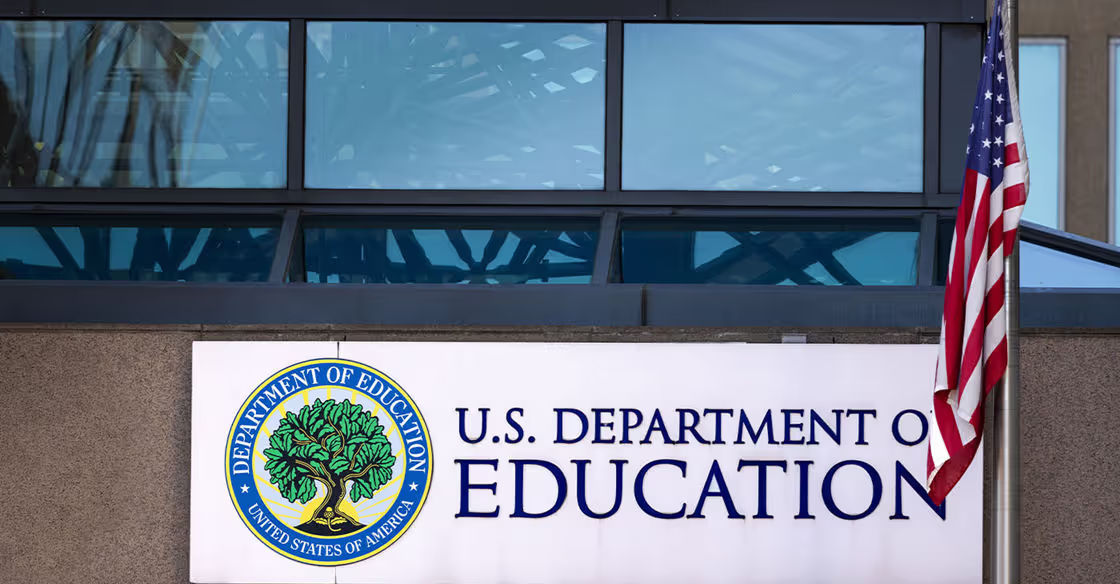
US Department of Education Ends Race-Based Grant Programs for Minority-Serving Institutions
For decades, Minority-Serving Institutions (MSIs) have benefited from federal programs designed to expand access and resources for historically underrepresented communities. These initiatives—covering Hispanic-Serving, Predominantly Black, Native American, and other categories of MSIs—traditionally linked funding eligibility to racial or ethnic enrollment quotas.

While originally intended to promote equity, such programs have recently come under scrutiny for embedding racial classifications into the allocation of taxpayer dollars. This has raised constitutional concerns regarding equal protection under the law.
In response, the U.S. Department of Education has announced the termination of discretionary funding for MSI grant programs that rely on race-based eligibility criteria. The decision follows a July ruling by the U.S. Solicitor General, who concluded that certain Hispanic-Serving Institution programs violate the equal-protection component of the Fifth Amendment’s Due Process Clause. As a result, approximately $350 million in discretionary funds will be redirected toward initiatives that support underprepared and under-resourced students—without reliance on racial quotas.
Secretary of Education Linda McMahon emphasized the legal and moral foundation of this move:
“Discrimination based on race or ethnicity has no place in the United States. Diversity is not defined by skin color alone. Reducing individuals to immutable traits overlooks their full character, merit, and life experiences.”
This shift signals a broader federal acknowledgment that racially tied quotas in programs such as Hispanic-Serving Institution (HSI) grants and Predominantly Black Institution (PBI) grants are no longer legally defensible. By reallocating funds, the Department seeks to preserve support for MSIs while aligning with constitutional principles.
The affected grant programs include:
- Strengthening Alaska Native and Native Hawaiian-Serving Institutions
- Strengthening Predominantly Black Institutions
- Strengthening Asian American and Native American Pacific Islander-Serving Institutions
- Strengthening Native American-Serving Nontribal Institutions
- Minority Science and Engineering Improvement
- Developing Hispanic-Serving Institutions
- Promoting Postbaccalaureate Opportunities for Hispanic Americans
Previously, eligibility required institutions to meet racial or ethnic enrollment thresholds ranging from 10% to 50%. With the change, discretionary funding will now focus on student need, preparedness, and merit. Mandatory appropriations of around $132 million will continue but are unlikely to fully replace lost discretionary funds, leaving institutions to navigate transitional challenges.
The consequences for students are mixed: scholarships, STEM initiatives, and research programs may face short-term disruption. However, the shift aims to ensure that support is determined by individual merit and resource needs rather than race. In the long run, this approach may broaden opportunities for students outside of traditional racial categories who nonetheless face systemic educational barriers.
Ultimately, the Department’s decision represents a significant shift in U.S. higher education policy—one that redefines equity by prioritizing academic potential and financial need over race-based criteria. Legal scholars expect the move to influence state-level policies, private grant allocations, and broader debates on affirmative action and inclusion in education.
Related Posts