The U.S. move against Venezuela has little to do with drug trafficking and is actually focused on other underlying objectives.
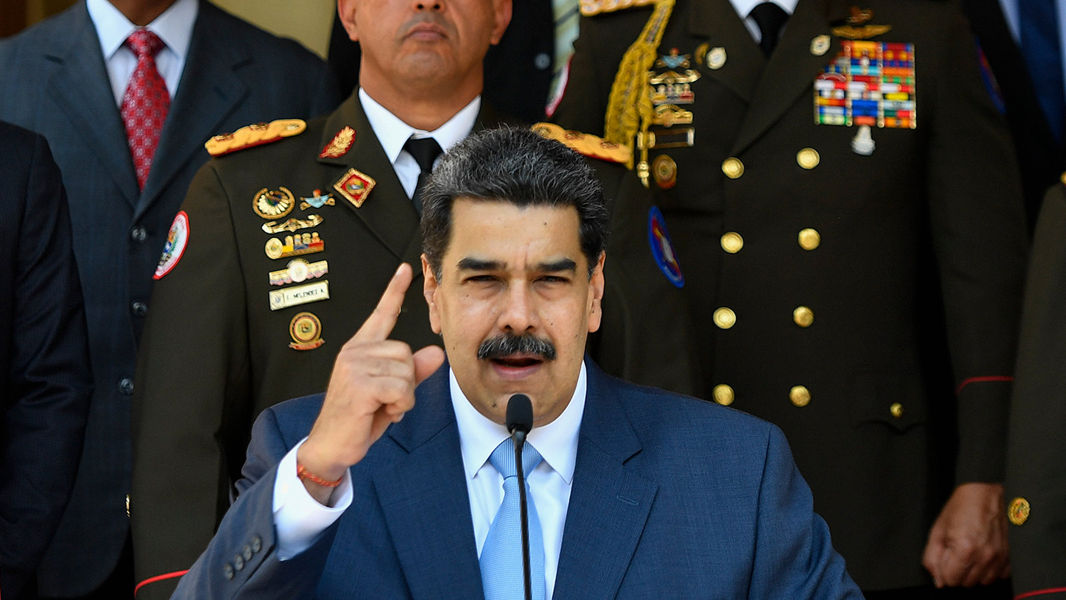
Trump Draws a Hard Line in U.S. Foreign Policy with Dramatic Venezuela Strike
In a move that has sent shockwaves across the international community, U.S. President Donald Trump has drawn a bold and unmistakable line under his new foreign policy approach. The dramatic overnight operation in Venezuela signals a fundamental shift in how the United States intends to assert its power on the global stage—particularly in its own hemisphere.
According to reports emerging from Venezuela, explosions were heard in multiple locations late last night. Hours later, President Trump confirmed that U.S. forces had carried out coordinated attacks inside Venezuelan territory and had taken President Nicolás Maduro into custody. The confirmation marked one of the most extraordinary escalations in U.S.–Venezuela relations in modern history.
“This is the clearest expression yet of Trump’s foreign policy doctrine,” said Lasse Engelbrecht, foreign affairs journalist at Denmark’s DR and a long-time expert on U.S. politics. “Trump is openly demonstrating that the United States is prepared to force regime change when it suits its strategic interests.”
From Anti-Drug Operations to Regime Change
For months, U.S. military activity near Venezuela had been framed as part of a broader effort to combat international drug trafficking. Since early September, American forces have conducted repeated operations against vessels suspected of transporting narcotics in international waters off Venezuela’s coast. Washington justified these actions as necessary steps to prevent drugs from reaching U.S. shores.
However, according to analysts, the events of today make it clear that drug enforcement was never the true objective.
“What we’re seeing now is that the drug argument was largely a pretext,” Engelbrecht explained. “This is about power, influence, and redefining America’s role as an unquestioned superpower.”
Just one day before the attack, Nicolás Maduro had publicly stated that he was willing to negotiate with the United States on both drug enforcement and oil exports. The Venezuelan leader appeared to be extending an olive branch in a last-ditch effort to preserve his grip on power.
“That statement was essentially an attempt to save his political life,” Engelbrecht said. “But Trump had already made up his mind—and he chose to act in the most dramatic way possible.”
A Clear Message to Venezuela—and the World
With the arrest of Maduro, the United States has sent an unmistakable message: Washington wants new leadership in Caracas, and it wants leaders who are aligned with American interests.
“There is very little ambiguity here,” Engelbrecht noted. “The U.S. is saying that Venezuela must be governed by people who are acceptable to Washington—especially when it comes to oil policy.”
Venezuela holds some of the largest proven oil reserves in the world, a fact that has long made it strategically important to global powers. Under Maduro, the country had increasingly strengthened ties with U.S. rivals, particularly China and Russia. That alignment now appears to have played a central role in Washington’s decision to act.
In its most recent national security strategy, the United States emphasized its intention to “restore American leadership in the Western Hemisphere.” According to Engelbrecht, this language signals a renewed commitment to keeping rival powers out of Latin America.
“This is about influence,” he said. “The United States wants to ensure that countries in its neighborhood do not fall under the sway of China or other hostile actors.”
Months of Escalation Culminate in Direct Intervention
While today’s events may appear sudden, experts stress that the U.S. attack is the culmination of a long and carefully calibrated escalation.
Shortly before the New Year, the United States officially acknowledged carrying out a strike on Venezuelan territory for the first time in this crisis. According to President Trump, that operation targeted a port facility allegedly used to load narcotics for export.
At the time, the move was already seen as a major step up in aggression.
“That was a clear escalation—crossing from operations at sea into direct action on land,” said Rasmus Sinding Søndergaard, senior researcher at the Danish Institute for International Studies (DIIS) and an expert on American foreign policy.
But even that strike now appears modest compared to what followed.
“Now we’re talking about a full-scale attack and the apprehension of a sitting president,” Søndergaard said. “It’s an extraordinary development—both surprising and, from a strategic perspective, deeply significant.”
Trump’s Longstanding Goal: Removing Maduro
According to Søndergaard, Trump’s desire to remove Nicolás Maduro from power is not new. During his first term as president, Trump repeatedly criticized the Venezuelan leader and openly supported opposition efforts to unseat him.
“This has been an ambition of Trump’s for years,” Søndergaard explained. “What’s different now is that he has decided to act decisively rather than relying on sanctions or diplomatic pressure.”
The boldness of the operation reflects Trump’s broader worldview—one in which the United States acts unilaterally when it believes its interests are at stake.
“This fits perfectly with Trump’s idea of strength,” Søndergaard added. “He believes that decisive, overwhelming action commands respect and deters opposition.”
The Big Unknown: Venezuela’s Domestic Reaction
Despite the dramatic nature of the intervention, experts caution that its ultimate success will depend largely on how the Venezuelan population responds.
“The key question now is what happens on the ground,” Søndergaard said. “Will Venezuelans see this as liberation from an unpopular regime—or as foreign aggression?”
There are two possible scenarios, according to analysts. In one, citizens take to the streets to reject Maduro’s rule and support the installation of a new government. In the other, resentment toward U.S. intervention fuels a nationalist backlash, causing people to rally around leaders connected to the existing power structure.
“History shows that foreign intervention can sometimes strengthen the very forces it aims to dismantle,” Søndergaard warned.
A Limited Commitment—At Least for Now
Despite the scale of the operation, experts believe Trump is unlikely to involve the United States deeply in Venezuela’s long-term political reconstruction.
“Trump has never shown much interest in nation-building,” Søndergaard said. “He prefers swift, high-impact actions followed by a relatively quick withdrawal.”
Nevertheless, Washington is expected to play a key role behind the scenes in shaping Venezuela’s political future.
“It’s clear that the U.S. hopes to see a government emerge that is friendly to American interests,” Søndergaard explained. “That includes limiting China’s influence and opening the door for U.S. companies to access Venezuela’s natural resources.”
China, Oil, and the Western Hemisphere
China’s growing presence in Latin America has been a persistent concern for U.S. policymakers, and Venezuela has been one of Beijing’s most important regional partners. Through loans, infrastructure projects, and energy agreements, China has secured significant influence in the country.
“From Washington’s perspective, Venezuela has become a symbol of what happens when the U.S. steps back,” Engelbrecht said. “This operation is about reversing that trend.”
By acting forcefully in Venezuela, the United States is not only reshaping one country’s political landscape—it is also sending a warning to others in the region.
“The message is that the U.S. is back and prepared to enforce its interests,” Engelbrecht emphasized.
A Defining Moment for Trump’s Foreign Policy
Taken together, the attack on Venezuela and the arrest of Nicolás Maduro represent one of the most defining moments of Donald Trump’s presidency. It marks a clear departure from cautious diplomacy and underscores a foreign policy built on dominance, speed, and spectacle.
“This is Trump showing the world how he believes power should be exercised,” Søndergaard said. “Whether that approach succeeds in the long term remains to be seen.”
For now, the situation in Venezuela remains fluid, with global attention fixed on how events will unfold in the coming days. As tensions rise and uncertainty grows, one thing is clear: U.S. foreign policy has entered a new and far more confrontational phase.
Readers can continue to follow developments in our live coverage as more details emerge about the U.S. operation and its consequences for Venezuela and the wider region.
Related Posts