The Clintons have declined a congressional request to testify in the Jeffrey Epstein investigation, despite warnings that refusal could lead to contempt proceedings.
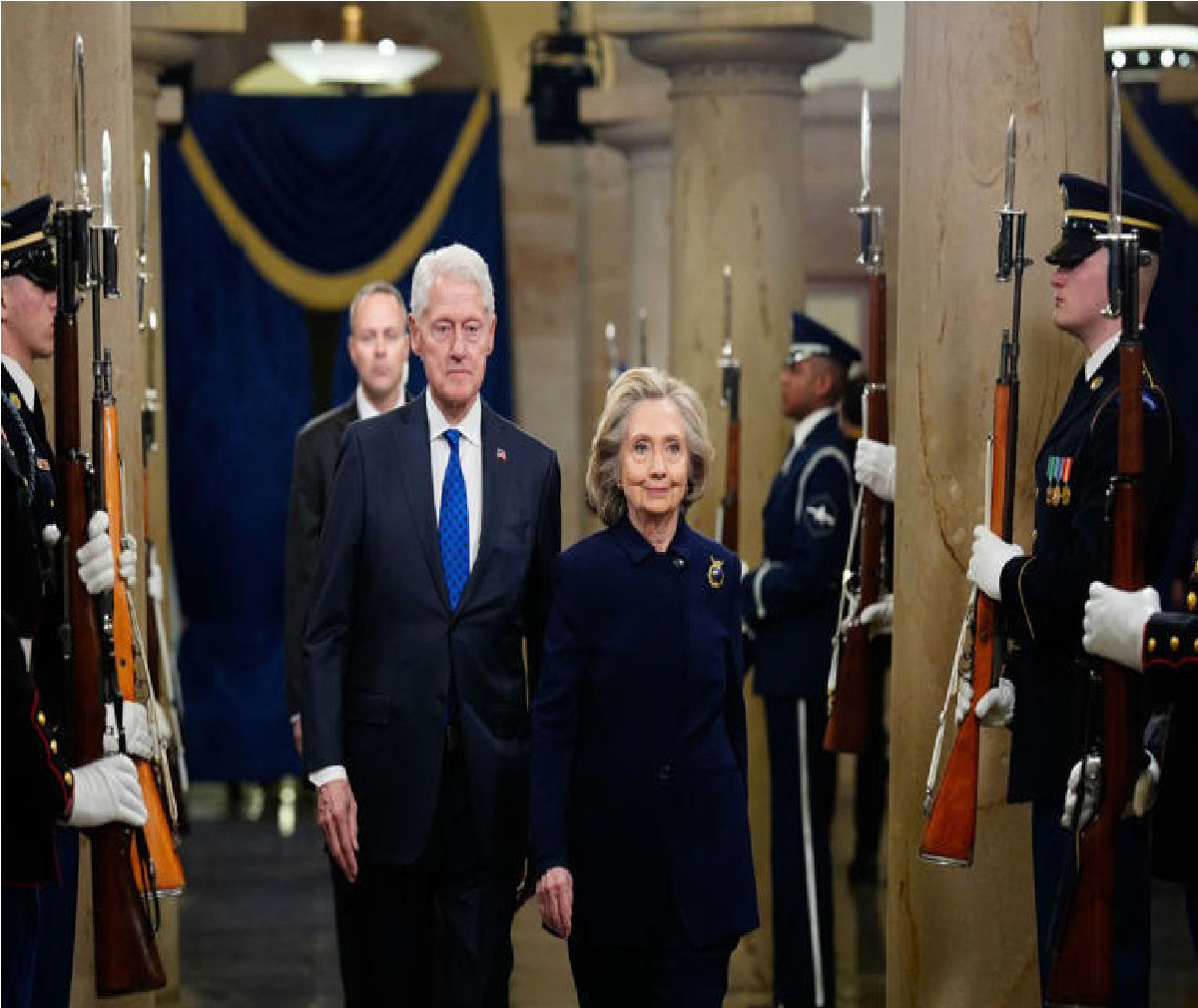
Clintons Defy Congressional Subpoenas in Escalating Epstein Investigation Showdown
The long-running congressional investigation into the late financier Jeffrey Epstein took a sharper political turn this week as former President Bill Clinton and former Secretary of State Hillary Clinton declined to testify before the House Oversight Committee, despite warnings that their refusal could lead to contempt of Congress proceedings.
The decision, communicated through a series of letters sent to lawmakers, represents a significant escalation in the committee’s efforts to scrutinize Epstein’s network of powerful associates and raises the prospect of a rare and highly symbolic confrontation between Congress and one of the most prominent political couples in modern American history.
A Standoff on Capitol Hill
House Oversight Committee Chairman James Comer, a Republican from Kentucky, had set a firm deadline for the Clintons to appear for closed-door interviews this week as part of the panel’s investigation into Epstein’s crimes and the government’s handling of them. When neither Bill nor Hillary Clinton complied, the chairman indicated that the committee would move forward with contempt proceedings, beginning as early as next week.
In a statement to reporters, Comer said the committee would convene to advance potential contempt actions against Bill Clinton, while leaving open the possibility that Hillary Clinton could still reconsider her decision and appear voluntarily.
“The committee will meet next week to determine how to proceed,” Comer said, signaling that the standoff is far from over.
Letters Signal Defiance and Legal Objections
The Clintons’ refusal was delivered in a set of sharply worded letters obtained by CNN, written both personally and through their legal representatives. In the correspondence, the former president and former secretary of state challenged the legitimacy of the subpoenas and accused the committee of selectively targeting them.
“You will say it is not our decision to make,” the Clintons wrote in a message directed at Chairman Comer. “But we have made it. Now you have to make yours.”
The tone of the letters suggested not only legal resistance but also a political challenge to the Republican-led committee. The Clintons argued that they were being unfairly singled out, noting that several other individuals who had been subpoenaed by the committee were ultimately allowed to provide information without appearing in person.
According to the letters, at least seven subpoenaed witnesses had their in-person testimony waived, a fact the Clintons cited as evidence of unequal treatment.
Claims of Invalid Subpoenas
Central to the Clintons’ argument is their assertion that the subpoenas issued by the House Oversight Committee are “invalid and legally unenforceable.” Their attorneys argued that the committee’s actions exceeded precedent and could set dangerous new standards for congressional investigations.
The letters also framed the dispute in broader terms, portraying the Clintons’ refusal as a stand against what they described as a politically motivated agenda.
“Every person has to decide when they have seen or had enough and are ready to fight for this country, its principles and its people, no matter the consequences,” the Clintons wrote. “For us, now is that time.”
In a later passage, they accused Republicans of prioritizing contempt proceedings over substantive investigative work, suggesting that the committee’s focus had shifted away from uncovering facts related to Epstein’s crimes.
Comer Pushes Back
Chairman Comer has rejected the Clintons’ characterization of the subpoenas, emphasizing that they were issued with unanimous bipartisan support from the House Oversight Committee.
“This wasn’t something that I just issued as chairman,” Comer said. “This was voted on by the entire committee in a unanimous vote to subpoena former President Clinton and former Secretary of State Hillary Clinton.”
Comer also noted that Hillary Clinton was scheduled to appear the following day and suggested that the situation remained fluid.
“We’ll see what happens there,” he said, adding that the committee’s goal was not to accuse the Clintons of wrongdoing but to gather information.
The Stakes of Contempt
If the committee votes to hold either or both Clintons in contempt of Congress, the matter would move beyond committee proceedings and into the hands of House leadership. The Republican-controlled House would then need to schedule a full floor vote.
A successful contempt vote would result in a referral to the Department of Justice, which would decide whether to pursue criminal charges. While such referrals are relatively rare and prosecutions even rarer—particularly involving former presidents—the symbolic weight of a contempt citation would be substantial.
Legal experts note that contempt proceedings can also be used as leverage, increasing pressure on witnesses to comply with congressional demands.
A Long-Negotiated Dispute
The current impasse follows months of private negotiations between the Clintons’ legal team and committee staff. The House Oversight Committee unanimously issued subpoenas in August, seeking depositions from both Clintons as part of its broader review of Epstein’s activities and government oversight failures.
According to the Clintons, they attempted to cooperate by providing written responses and limited information, which they say reflects the extent of their knowledge.
“We have tried to give you the little information we have,” they wrote. “We’ve done so because Mr. Epstein’s crimes were horrific.”
They added that the committee’s focus should be on understanding why Epstein was able to evade accountability for so long and how similar failures could be prevented in the future.
Epstein’s Crimes and Lingering Questions
Jeffrey Epstein, a wealthy financier with extensive social and political connections, died by suicide in a federal jail in 2019 while awaiting trial on sex trafficking charges. His death and the circumstances surrounding his prosecution have fueled years of public suspicion and congressional scrutiny.
Thousands of documents related to Epstein were released by the Department of Justice under court orders, shedding new light on his relationships with powerful figures. Among the released materials are previously unseen photographs showing Bill Clinton with Epstein and Epstein’s longtime associate, Ghislaine Maxwell.
Some images depict Clinton swimming with Maxwell, while others show him standing next to Epstein holding a drink. One controversial photograph shows a shirtless Clinton in a jacuzzi beside another individual whose face was redacted.
These images resurfaced this week amid a heated exchange between Comer and Clinton on social media, further intensifying public attention on the investigation.
White House Visits and Private Flights
Chairman Comer has repeatedly pointed to Epstein’s documented visits to the White House during Bill Clinton’s presidency as well as Clinton’s travel history on Epstein’s private jet.
According to Comer, Epstein visited the White House 17 times while Clinton was in office. After leaving the presidency, Clinton is reported to have flown on Epstein’s plane approximately 27 times.
“To my knowledge, former President Clinton has never answered questions about Epstein,” Comer said. “We just had questions.”
Comer stressed that the committee has not accused the Clintons of criminal conduct but believes their testimony could help clarify the nature of Epstein’s access to political power.
“I think anyone would admit they spent a lot of time together,” Comer said, adding that understanding those interactions is a legitimate subject of congressional inquiry.
Political Undertones and Public Reaction
The dispute has unfolded against a backdrop of heightened political polarization, with Republicans framing the investigation as a long-overdue examination of elite accountability and Democrats questioning the committee’s motives.
Supporters of the Clintons argue that the investigation risks becoming a partisan spectacle rather than a serious effort to address institutional failures. Critics counter that powerful figures should not be exempt from scrutiny, regardless of political affiliation.
The Clintons themselves have framed their refusal as a principled stand, suggesting that resisting the subpoenas is part of a broader effort to push back against what they describe as a “cruel agenda.”
What Comes Next
The House Oversight Committee is expected to meet next week to determine whether to formally advance contempt proceedings. If approved, the matter would move to House leadership and potentially to the Justice Department.
Whether Hillary Clinton ultimately decides to testify remains an open question, and legal experts say behind-the-scenes negotiations could still alter the trajectory of the case.
For now, the confrontation underscores the enduring shadow cast by the Epstein scandal and the unresolved questions surrounding his ties to powerful individuals. As Congress presses forward, the outcome may shape not only the future of the investigation but also the limits of congressional authority over former top officials.
Related Posts