Tesla drops Autopilot to push wider use of its Full Self-Driving system.
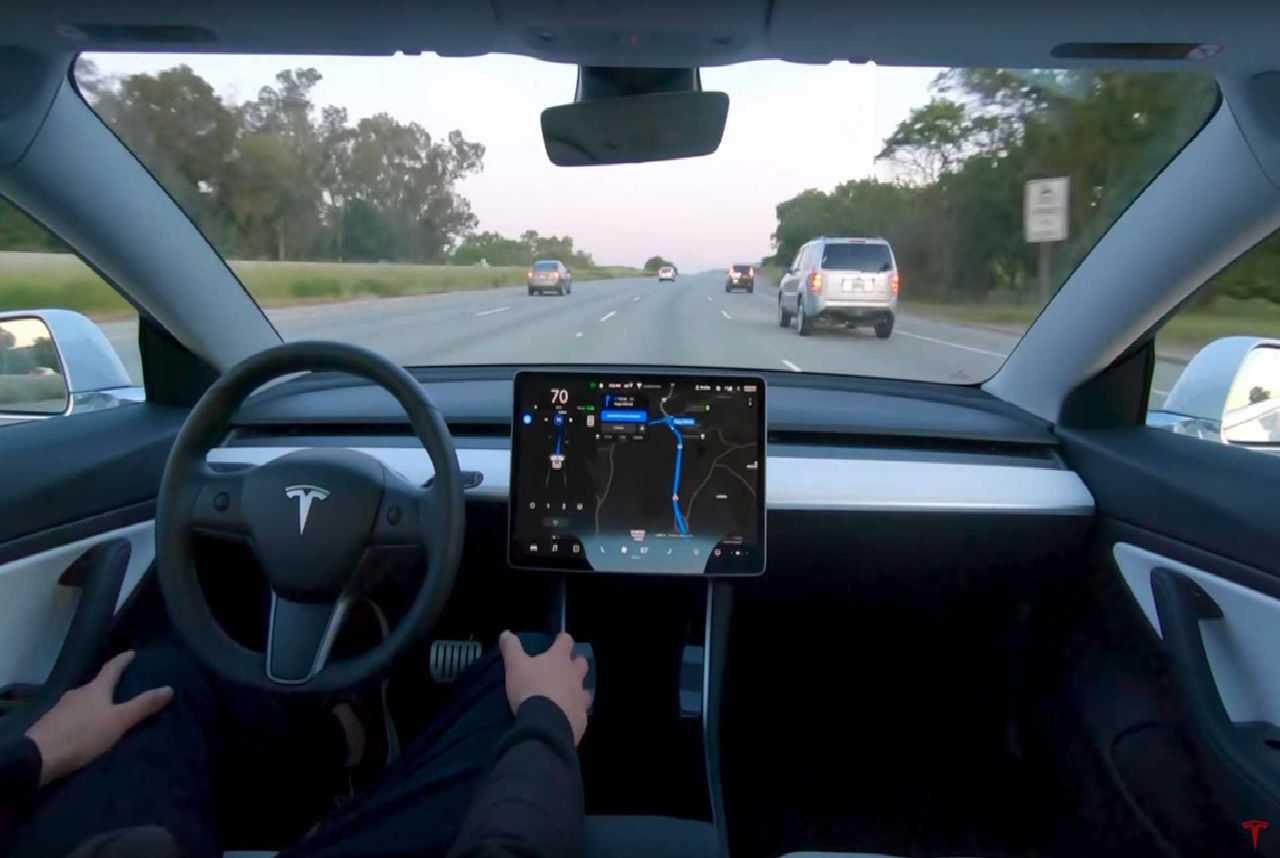
Tesla Discontinues Autopilot to Push Full Self-Driving Adoption Amid Regulatory Pressure
Tesla has officially discontinued Autopilot, its long-standing basic driver-assistance system, marking a significant shift in the company’s approach to automated driving technology. The move comes at a critical moment for the electric vehicle (EV) maker, as it faces mounting regulatory scrutiny, legal consequences, and slower-than-expected adoption of its more advanced software offering — Full Self-Driving (Supervised), commonly known as FSD.
While Tesla has long positioned itself as a leader in autonomous driving, the decision to remove Autopilot reflects both business strategy and regulatory necessity. The company is now betting that simplifying its software lineup and pushing customers toward FSD subscriptions will accelerate revenue growth and move Tesla closer to its ambitious vision of self-driving vehicles — even as questions persist about safety, ethics, and consumer trust.
Why Tesla Ended Autopilot
Autopilot was Tesla’s foundational driver-assistance package, bundled as standard equipment on most vehicles since 2019. It combined two main features:
- Traffic Aware Cruise Control, which maintains a set speed while adjusting to traffic conditions
- Autosteer, which helps keep the vehicle centered in its lane on highways
Although these features were designed to assist drivers rather than replace them, Tesla’s branding and marketing created confusion about the system’s real capabilities. Many customers believed Autopilot offered higher levels of automation than it actually did, which became a central issue in lawsuits and regulatory investigations.
The California Department of Motor Vehicles (DMV) accused Tesla of misleading advertising, arguing that the names “Autopilot” and “Full Self-Driving” implied autonomous capabilities the software did not deliver. In December, a judge ruled that Tesla’s marketing violated state consumer protection laws. As a result, Tesla now faces a potential 30-day suspension of its manufacturing and dealer licenses in California, its largest U.S. market.
To avoid these penalties, Tesla agreed to remove the Autopilot branding and comply with new advertising restrictions. The DMV granted the company a temporary stay on enforcement while Tesla made changes, including discontinuing the Autopilot name entirely.
This regulatory pressure appears to have accelerated a decision Tesla was already considering — shifting customers toward its more advanced, subscription-based driving software.
What Replaces Autopilot?
Tesla’s online vehicle configurator now lists Traffic Aware Cruise Control as the only standard driver-assistance feature included with new cars. Autosteer is no longer bundled unless customers subscribe to or purchase the FSD package.
It is unclear whether existing customers who already purchased vehicles with Autopilot will lose access to any features. Tesla has not announced retroactive changes, suggesting that previously enabled systems may remain active. However, the company’s silence on the matter has created uncertainty among long-time Tesla owners.
By separating basic cruise control from lane-centering features, Tesla has effectively made steering automation a premium option — available only through its FSD offering. This marks a significant departure from industry norms, as most major automakers include lane-keeping assist as standard equipment on new vehicles.
The Push Toward Full Self-Driving (Supervised)
Tesla’s ultimate goal has always been widespread adoption of Full Self-Driving software, which offers more advanced automation such as:
- Navigating city streets
- Handling intersections and traffic lights
- Changing lanes autonomously
- Parking without driver input
Despite its name, FSD still requires drivers to remain alert and ready to take control at all times. Tesla recently added the “Supervised” label to emphasize this requirement, though critics argue the name still exaggerates the system’s abilities.
Until recently, customers could purchase FSD outright for a one-time fee of $8,000. However, Tesla announced that starting February 14, it will discontinue this lifetime purchase option. Instead, customers will only be able to access FSD via a monthly subscription costing $99, a price that CEO Elon Musk says will increase as the software improves.
This shift aligns with Tesla’s broader move toward recurring revenue models. By making FSD subscription-only, the company hopes to generate long-term cash flow while lowering the upfront barrier to entry for customers hesitant to pay thousands of dollars for unfinished technology.
Musk has publicly stated that he expects Tesla vehicles to eventually achieve “unsupervised” driving, claiming future updates will allow passengers to sleep or use their phones during trips. However, texting or using a phone while driving is illegal in nearly all U.S. states, and current FSD systems still require active driver monitoring.
Regulatory Fallout and Legal Consequences
Tesla’s decision to discontinue Autopilot cannot be separated from its regulatory challenges — particularly in California, where the company sells the largest share of its vehicles.
The California DMV originally sued Tesla in 2022, alleging that its marketing materials falsely suggested its vehicles were capable of full autonomy. Regulators argued that terms like “Autopilot” and “Full Self-Driving” misled consumers into believing the vehicles could operate independently, even though Tesla’s own user manuals warned that drivers must stay engaged at all times.
In December, a judge ruled in favor of the DMV, finding Tesla guilty of deceptive advertising. As part of the ruling, Tesla was ordered to stop using misleading terminology and update its marketing practices. Failure to comply could result in a suspension of its manufacturing and dealer licenses for up to 30 days — a severe penalty that could significantly disrupt operations in the state.
The DMV temporarily stayed enforcement for 60 days to allow Tesla time to implement changes. Dropping the Autopilot name appears to be a direct response to that ruling, helping Tesla demonstrate compliance and avoid harsher penalties.
Safety Concerns and Public Trust
Beyond regulatory consequences, Tesla has faced years of scrutiny over the safety of its driver-assistance systems.
According to the National Highway Traffic Safety Administration (NHTSA), Tesla vehicles operating with Autopilot or FSD have been involved in hundreds of crashes and at least 13 fatalities. In many of these incidents, drivers were found to be inattentive or overly reliant on the system, believing it was more capable than it truly was.
Safety advocates argue that Tesla’s branding and marketing — combined with high-profile statements from Musk — contributed to dangerous misunderstandings. While Tesla has consistently warned users to keep their hands on the wheel and remain alert, critics say these disclaimers were undermined by product names suggesting autonomy.
This tension between branding and reality has made Tesla a lightning rod in debates over the ethical deployment of semi-autonomous driving technology. Regulators worry that exaggerated claims may encourage risky behavior, especially among less experienced drivers.
By eliminating Autopilot and emphasizing “Supervised” in FSD branding, Tesla appears to be attempting to reset public perception and signal a more cautious stance — even as Musk continues to promote ambitious timelines for full autonomy.
Tesla’s Robotaxi Experiment in Texas
Just days after announcing changes to its software offerings, Tesla launched its first robotaxi trials in Austin, Texas. The company deployed specially modified Model Y vehicles operating without human safety drivers inside the cars — though they are still remotely monitored and followed by Tesla vehicles for supervision.
These robotaxis use a more advanced version of Tesla’s self-driving software, reportedly capable of navigating urban environments with minimal intervention. While the trial represents a major milestone for the company, it remains tightly controlled and limited in scope.
Texas currently has more permissive regulations around autonomous vehicle testing than California, making it an attractive location for Tesla to experiment with next-generation mobility services. Musk has repeatedly stated that robotaxis will be central to Tesla’s long-term business model, potentially transforming the company from a car manufacturer into a transportation services provider.
However, critics argue that Tesla’s public-facing FSD software still falls short of the capabilities demonstrated in these robotaxi trials, raising questions about whether consumer vehicles will soon reach the same level of automation.
Adoption Challenges: Why Customers Have Been Slow to Buy FSD
Despite years of development and aggressive marketing, Full Self-Driving adoption has lagged behind Tesla’s expectations.
In October 2025, Tesla’s Chief Financial Officer, Vaibhav Taneja, revealed that only 12% of Tesla customers had purchased or subscribed to FSD. This figure fell well below internal projections and investor expectations.
Several factors have contributed to this slow uptake:
1. High Cost
Even after Tesla reduced the price from earlier highs of $15,000, many customers remained reluctant to pay $8,000 for unfinished software — especially when basic driver-assistance features were already included.
2. Feature Inconsistency
FSD performance has improved over time, but users frequently report erratic behavior, phantom braking, and difficulty navigating complex urban environments.
3. Safety and Trust Issues
High-profile crashes, regulatory scrutiny, and mixed public reviews have made some consumers hesitant to rely on advanced automation.
4. Regulatory Uncertainty
Since FSD capabilities vary depending on local regulations, customers cannot be certain they will receive the same features everywhere they drive.
By removing Autopilot and making steering assistance exclusive to FSD, Tesla is effectively nudging customers toward subscription adoption — particularly those who want features beyond basic cruise control.
Financial Stakes: Musk’s Compensation and Tesla’s Long-Term Goals
Tesla’s shift toward subscription-based FSD is not just about safety or regulatory compliance — it also has major financial implications.
One of the key milestones in Elon Musk’s controversial new $1 trillion compensation package is achieving 10 million active FSD subscriptions by 2035. That target requires massive growth in adoption, especially considering current participation levels.
Subscription pricing at $99 per month could generate billions in recurring revenue if adoption scales as planned. For example:
- 5 million subscribers = ~$6 billion annually
- 10 million subscribers = ~$12 billion annually
These figures could rival or surpass profits from vehicle sales, transforming Tesla into a software-driven company rather than primarily a hardware manufacturer.
By discontinuing Autopilot, Tesla increases the likelihood that customers who want lane-centering, traffic-aware navigation, and more advanced automation will opt into paid subscriptions — effectively creating a funnel into higher-margin services.
Tesla’s History With Autopilot
Tesla introduced Autopilot in the early 2010s after discussions with Google collapsed over collaboration on autonomous driving technology. Google’s self-driving unit eventually became Waymo, now one of Tesla’s main competitors in autonomous mobility.
Tesla made Autopilot standard on all vehicles in April 2019, positioning it as a differentiator in the EV market. At the time, most automakers charged extra for advanced driver-assistance features, while Tesla bundled them as part of its core value proposition.
Over time, however, Tesla increasingly blurred the line between driver assistance and autonomy. Musk repeatedly predicted that fully self-driving Teslas were only months or years away — predictions that have yet to materialize.
As the gap widened between marketing claims and real-world capabilities, regulators began to intervene. Autopilot’s discontinuation now marks the end of a decade-long chapter in Tesla’s product strategy.
Industry Comparison: How Tesla Differs From Other Automakers
Tesla’s approach to driver-assistance technology has always differed from traditional automakers.
Companies like GM, Ford, Mercedes-Benz, and Toyota typically market their systems using conservative language such as:
- “Driver Assist”
- “Lane Keep Assist”
- “Adaptive Cruise Control”
Some manufacturers, such as Mercedes-Benz with its Drive Pilot system, have achieved regulatory approval for limited hands-free, eyes-off driving under specific conditions — but they clearly define geographic and speed restrictions.
Tesla, by contrast, has relied heavily on software updates and over-the-air improvements, promoting its systems as constantly evolving and future-ready. While this has enabled rapid innovation, it has also exposed the company to greater regulatory and reputational risk.
By renaming FSD as “Supervised” and removing Autopilot entirely, Tesla appears to be moving closer to industry norms — though critics argue the branding still oversells current capabilities.
What This Means for Consumers
For buyers considering a Tesla today, the experience has changed in several important ways:
- No More Autosteer by Default
New vehicles now come only with Traffic Aware Cruise Control, not lane-centering assistance. - FSD Subscription Becomes the Primary Option
Customers must subscribe monthly to access advanced automation features. - Uncertain Impact on Existing Owners
Tesla has not clarified whether current Autopilot users will lose features, though industry observers expect existing functionality to remain unchanged. - Higher Long-Term Costs
While subscriptions reduce upfront expenses, long-term ownership costs may increase if drivers maintain FSD access for years. - More Regulatory-Compliant Marketing
Customers may see more conservative claims about what Tesla’s systems can actually do, reducing the risk of overconfidence and misuse.
Broader Implications for Autonomous Driving
Tesla’s Autopilot discontinuation highlights broader challenges facing the autonomous driving industry.
Despite years of investment and technological breakthroughs, fully autonomous vehicles remain elusive. Urban complexity, unpredictable human behavior, regulatory constraints, and ethical concerns continue to slow progress.
Tesla’s pivot toward subscriptions and regulatory compliance suggests a recognition that autonomy will evolve gradually rather than arrive suddenly. Instead of delivering robotaxis overnight, the company appears to be repositioning FSD as a continuously improving driver-assistance system — at least for now.
At the same time, Tesla’s Texas robotaxi rollout shows that the company remains committed to achieving full autonomy eventually, even if consumer vehicles lag behind specialized deployments.
Conclusion: A Strategic Reset for Tesla
Tesla’s decision to discontinue Autopilot represents far more than a product tweak — it marks a strategic reset shaped by regulatory pressure, safety concerns, and financial ambition.
By removing a feature that once defined its brand, Tesla is acknowledging the risks of overpromising in a domain where public safety and trust are paramount. At the same time, the company is doubling down on Full Self-Driving subscriptions as a long-term growth engine, seeking to transform itself into a software-driven mobility company.
Whether this strategy succeeds will depend on several factors:
- Can Tesla meaningfully improve FSD performance and reliability?
- Will regulators allow expanded autonomy without further restrictions?
- Will consumers trust and pay for advanced automation?
- Can Tesla balance ambition with transparency and safety?
For now, Autopilot’s disappearance closes a chapter in Tesla’s history — one defined by bold promises, technological breakthroughs, and ongoing controversy. The next chapter will test whether Tesla can turn its vision of autonomy into a sustainable and trusted reality.
Related Posts