Supreme Court judge refuses interim relief in Election Commission privacy dispute
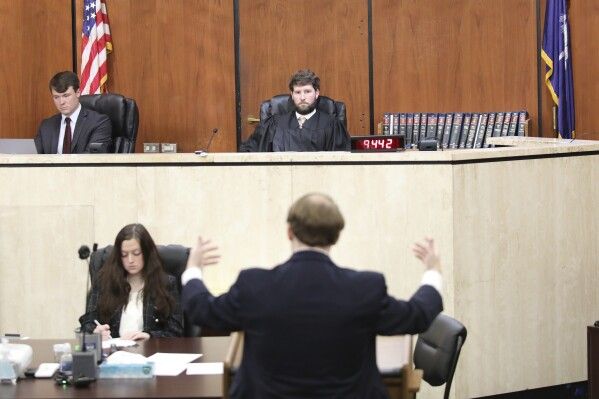
South Carolina Judge Rejects Bid to Block Sharing of Voter Data with U.S. Justice Department
A South Carolina circuit court judge has denied a request to stop the State Election Commission from sharing voter data — including driver’s license numbers and phone numbers — with the U.S. Department of Justice.
Judge Daniel Coble of Richland County issued the ruling Wednesday morning, rejecting a motion for a temporary injunction filed by Anne Crook, a retired Calhoun County teacher. The decision effectively places the responsibility for safeguarding the personal information of South Carolina’s 3.34 million registered voters in the hands of the five-member State Election Commission board. The board is still in the early stages of drafting an agreement with the Justice Department that it says will ensure strong protections for voters’ private information.
Judge’s Reasons for Denial
In his written decision, Judge Coble cited several legal grounds for turning down Crook’s request. Among them:
- Crook failed to demonstrate that she would suffer irreparable harm, given the commission’s assurances that no information would be released without a Memorandum of Understanding (MOU) establishing security safeguards.
- She did not prove there were no alternative legal remedies, since she could pursue claims under state or federal tort law if the data were mishandled.
- Crook is unlikely to win on the merits because state law explicitly authorizes the Election Commission to engage in the kind of data-sharing she sought to block.
Coble also dismissed the argument that South Carolina’s constitutional right to privacy prohibits the commission from sharing data with the federal government. He added that his court had no authority to dictate the terms of an agreement between the commission and the Justice Department, saying such an order would improperly interfere with executive functions and breach separation of powers.
The judge further noted that federal law likely requires the state to provide the requested information.
Commission Promises Safeguards
At a hearing last week, Election Commission attorney Liz Crum assured the court that no sensitive data would be released without an MOU. “The Election Commission is not going to share anyone’s data unless and until they have an MOU that protects the security of confidential information,” Crum said. She also pledged that any agreement with the Justice Department would be discussed and voted on in an open session.
The commission already makes certain voter details public, such as names, addresses, dates of birth, and voter history. But it also holds sensitive identifiers, including Social Security numbers, driver’s license numbers, phone numbers, and email addresses. These pieces of data are not released publicly, but Crook argued in her lawsuit that handing them over to federal officials would jeopardize voter privacy.
Her concerns gained weight from a recent controversy in which the National Archives — under the Trump administration — accidentally released the Social Security number of Rep. Mikie Sherrill (D-NJ), who is currently in a competitive race for governor.
In a sworn affidavit, interim Election Commission director Jennifer Wooten outlined the breadth of voter information the commission collects, including name, sex, race, date of birth, residential address, Social Security number, driver’s license number, phone number, and email address. She emphasized that some of these details — particularly Social Security numbers and driver’s license information — are never disclosed to the public.
Related Posts