Signal From Voyager 1 Detected by Amateur Astronomers at 25 Billion Kilometers Distance
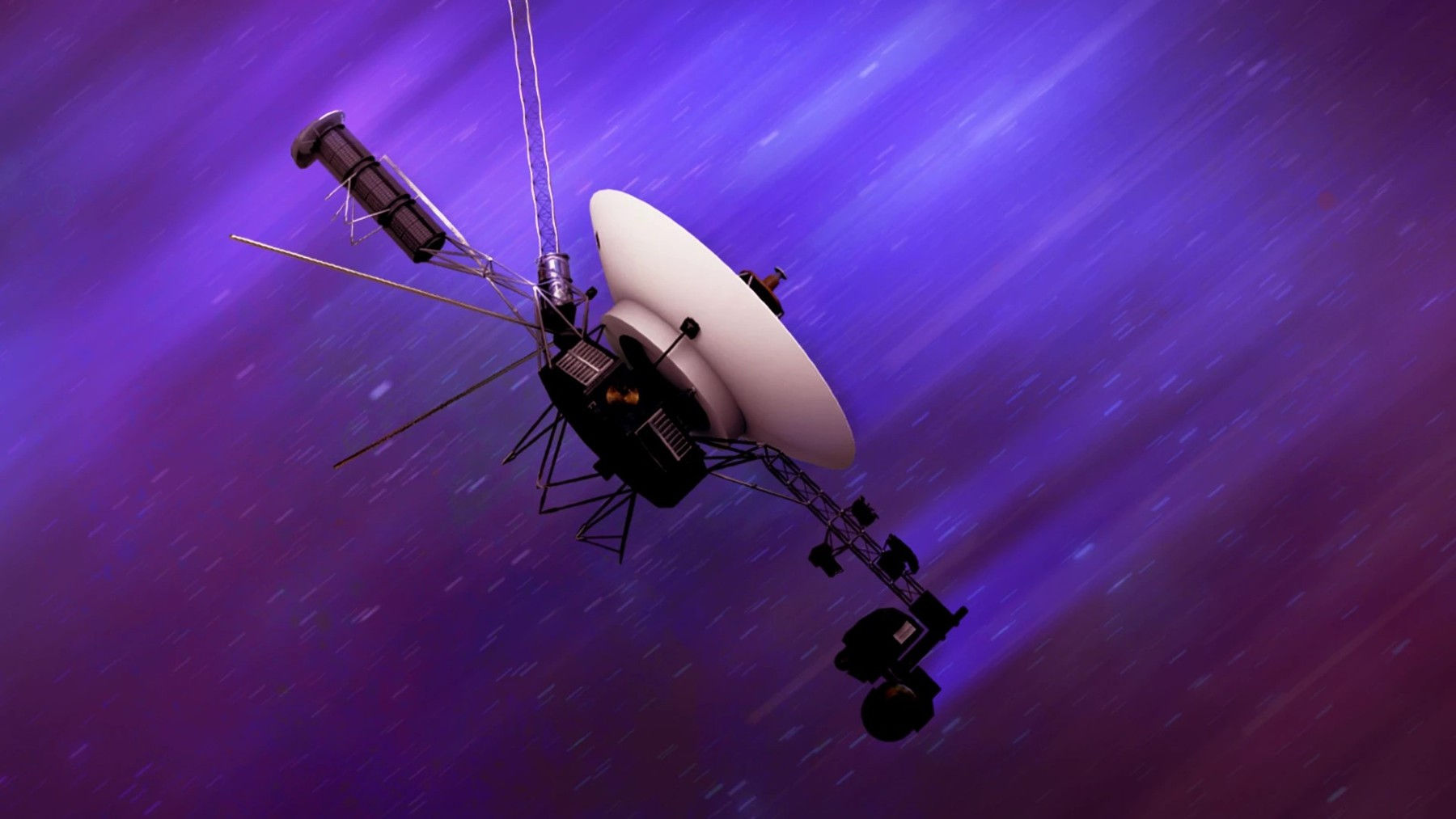
Amateur Astronomers Detect Signal From Voyager 1 25 Billion Kilometers Away
In a remarkable demonstration of both technological precision and scientific dedication, amateur astronomers in the Netherlands have successfully detected a radio signal from Voyager 1 — the most distant human-made object ever launched into space. The signal was captured using the historic Dwingeloo Radio Observatory by members of the Amateur Radio in Space (AMSAT) group.
What makes this achievement extraordinary is the distance involved. Voyager 1 is currently more than 25 billion kilometers (15 billion miles) away from Earth — roughly 171 astronomical units (AU). One astronomical unit equals the average distance between Earth and the Sun, about 150 million kilometers. That means Voyager 1 is now 171 times farther away than the Sun is from Earth.
Detecting a spacecraft from such a staggering distance is not just impressive — it borders on astonishing.
A Mission That Began in 1977
Voyager 1 was launched by NASA on September 5, 1977, just weeks after its twin spacecraft, Voyager 2. The original mission objective was to explore the outer planets of the Solar System, taking advantage of a rare planetary alignment that occurs only once every 176 years.
The Voyager probes conducted flybys of:
- Jupiter
- Saturn
- Uranus (Voyager 2)
- Neptune (Voyager 2)
During these encounters, they sent back detailed images and scientific data that revolutionized planetary science. They discovered new moons, analyzed planetary atmospheres, and revealed the complex structure of planetary rings.
After completing their primary missions, both spacecraft continued traveling outward. Voyager 1 eventually crossed the heliopause in 2012 — the boundary marking the end of the Sun’s influence — officially entering interstellar space.
Reaching a Light-Day Milestone
On November 13 this year, Voyager 1 is expected to achieve another historic milestone: becoming the first human-made object to reach a full light-day away from Earth.
A light-day is the distance light travels in 24 hours. Since light moves at about 300,000 kilometers per second, that distance is roughly 26 billion kilometers.
When Voyager 1 reaches this point:
- Any signal sent from Earth will take a full day to reach the spacecraft.
- A reply will require another full day to return.
In effect, every communication exchange will involve a minimum two-day delay.
This milestone underscores how far humanity’s reach now extends beyond our home planet.
The Challenge of Detecting Voyager’s Signal
Perhaps the most astonishing aspect of this story is the weakness of the spacecraft’s signal.
NASA has explained that the power of Voyager 1’s signal when it reaches Earth is about 10⁻¹⁶ watts — or one part in ten quadrillion. To illustrate how faint this is:
A simple digital wristwatch operates at power levels 20 billion times stronger than the signal arriving from Voyager 1.
Despite this, NASA’s Deep Space Network — a global system of massive radio antennas — routinely receives data from the spacecraft.
But the recent detection by amateur astronomers is particularly impressive because the Dwingeloo telescope is far smaller than the giant dishes used by NASA.
Communication with Voyager 1 is primarily handled by NASA's Deep Space Network (DSN). This network consists of giant radio antennas located in:
- California (USA)
- Spain
- Australia
Positioned roughly 120 degrees apart around the globe, these facilities ensure continuous coverage as Earth rotates.
The DSN’s largest antennas are 70 meters wide and designed to capture extremely faint signals from distant spacecraft. Even with such powerful equipment, receiving Voyager’s transmission requires extraordinary sensitivity and advanced signal processing.
The fact that the Dwingeloo observatory was able to detect the spacecraft underscores the skill of the AMSAT team and the enduring capability of the telescope.
A Telescope With History
The Dwingeloo Radio Observatory was originally constructed in the 1950s and has a long history in radio astronomy. Although it is no longer part of the primary global deep-space communication infrastructure, it remains an active and respected facility operated largely by volunteers.
AMSAT had previously detected Voyager 1 in 2006, when the spacecraft was about 14.7 billion kilometers away. Since then, Voyager has traveled billions more kilometers, causing its signal to weaken significantly.
Thomas Telkamp, a volunteer at the observatory, explained that the increased distance means the signal strength has diminished considerably. Radio signals spread out as they travel, and the farther they go, the weaker they become.
Yet despite these challenges, the team successfully captured Voyager’s faint transmission — making the Dwingeloo telescope one of the few facilities on Earth to have done so.
Technical Glitches and Aging Systems
While Voyager 1 remains operational, the spacecraft is nearly 50 years old. Over time, various technical issues have emerged.
In recent years:
- Corrupted memory caused Voyager to send back garbled binary patterns.
- Its main transmitter temporarily shut down.
- NASA had to reactivate a backup transmitter that had not been used since 1981.
In October 2024, engineers successfully resolved a major communication issue by switching systems and reconfiguring onboard software.
However, these solutions are temporary measures to extend the spacecraft’s operational lifespan.
The Power Problem
Voyager 1 relies on radioisotope thermoelectric generators (RTGs) for power. These generators convert heat from decaying radioactive material into electricity.
Over time, the radioactive fuel naturally decays, reducing power output. As a result:
- Scientific instruments have been gradually shut down.
- Non-essential systems have been deactivated.
- Engineers carefully manage remaining power reserves.
NASA estimates that Voyager 1 may continue transmitting data into the early 2030s. After that, it will likely fall silent permanently.
The Golden Record: A Message to the Cosmos
One of the most famous aspects of the Voyager mission is the Golden Record carried aboard both probes. This phonograph record contains sounds and images representing life and culture on Earth.
It includes:
- Greetings in multiple languages
- Music from around the world
- Natural sounds such as ocean waves and birds
- Images of Earth and humanity
If Voyager 1 is ever discovered by extraterrestrial intelligence — even millions of years from now — the Golden Record serves as a cultural time capsule.
Scientific Contributions Beyond the Solar System
Since crossing into interstellar space, Voyager 1 has continued to send valuable data about:
- Cosmic rays
- Magnetic fields
- Plasma density
- Interstellar particle environments
These measurements have provided humanity’s first direct observations of the space between stars.
Such data helps scientists better understand:
- How the heliosphere protects the Solar System
- How interstellar space differs from solar-influenced space
- The broader structure of our galaxy
Amateur Astronomy’s Growing Role
The detection of Voyager 1 by AMSAT highlights the increasing capabilities of amateur astronomers. With advanced technology and collaborative global networks, amateurs can now contribute meaningfully to scientific observation.
This achievement demonstrates that space exploration is not solely the domain of large government agencies. Passionate individuals equipped with the right tools can also make significant contributions.
The Final Chapter of Voyager 1
Although its mission is slowly approaching its conclusion, Voyager 1’s journey is far from over physically. Even after its systems shut down, the spacecraft will continue drifting through the Milky Way for millions — perhaps billions — of years.
Long after Earth’s continents shift and civilizations change, Voyager 1 will remain a silent artifact of human ambition.
Its faint radio whisper, traveling billions of kilometers to reach Earth, is a powerful reminder of humanity’s reach into the cosmos.
Conclusion
The successful detection of Voyager 1’s signal by amateur astronomers at the Dwingeloo Radio Observatory stands as both a technical triumph and a symbolic moment in space exploration. At more than 25 billion kilometers from Earth, the spacecraft continues to transmit — a fragile but persistent connection to humanity’s most distant creation.
As it approaches the historic milestone of one light-day away, Voyager 1 reminds us of the scale of the universe and the extraordinary achievements made possible by human curiosity and perseverance.
Even as its power dwindles and its mission nears its end, Voyager 1 remains a beacon of exploration — proof that humanity’s reach extends far beyond our home planet.
Related Posts