Putin: 'India and China Will Never Accept Humiliation Over Russian Energy'
Putin’s Provocative Warning
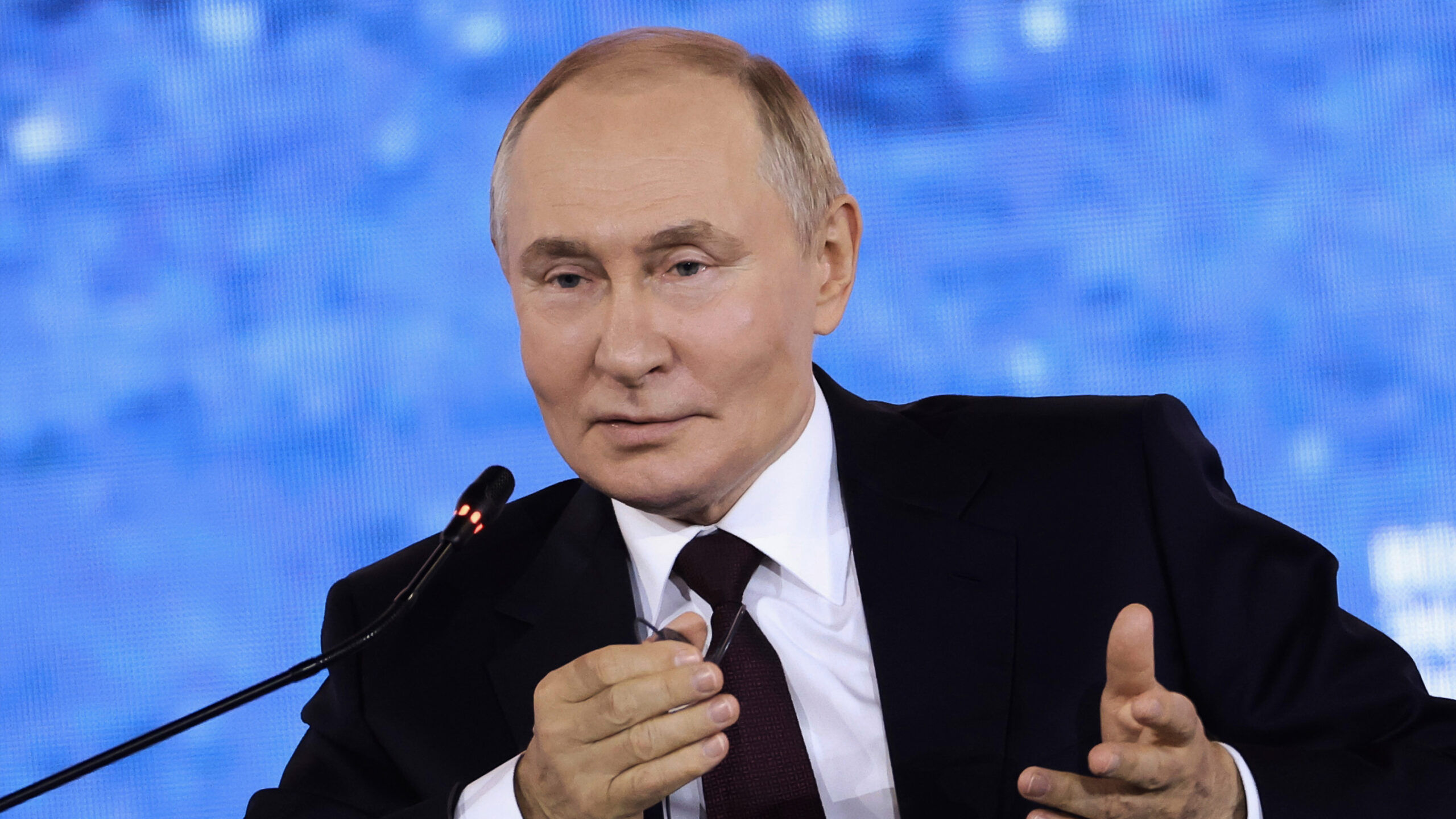
As global tensions mount over the Russia-Ukraine conflict and its spillover effects on international trade and energy markets, President Vladimir Putin delivered a strongly worded warning to the United States at the Valdai Discussion Club in Sochi. In his address, Putin criticized ongoing US efforts to pressure India and China into severing energy ties with Moscow. He declared emphatically that these “ancient civilizations” would never allow themselves to be humiliated or coerced into such decisions.
“India will never allow itself to be humiliated,” Putin asserted, praising Prime Minister Narendra Modi’s leadership and underscoring the deep-rooted, special relationship Moscow shares with New Delhi. The Russian president warned that US pressure tactics—including threatening punitive tariffs and higher duties—would not only fail but actually backfire by destabilizing global markets and slowing American growth.
US Tariffs and Economic Threats
The Biden (now Trump) administration, seeking to isolate Moscow due to its continued actions in Ukraine, has imposed punitive tariffs on multiple Russian trade partners, including India. Specifically, the US has raised tariffs on Indian exports to as much as 50% in August 2025, as a “punishment” for New Delhi’s continued purchases of Russian oil and gas. The White House argues that India’s energy purchases indirectly aid the Kremlin by providing a key revenue stream.
However, Putin countered that if India stopped importing Russian energy, the resulting losses would be between $9 billion and $10 billion—harmful not just for India’s economy, but also politically destabilizing for Prime Minister Modi’s government. Furthermore, should India comply with Western demands, Putin insisted, it would still face the same level of damage: “If not, high duties will be imposed on them. And once again, damage will be there. Why then decline to buy Russian energy just to sustain political risks?”
Geopolitical Stakes: Power, Pressure, and Prestige
At the heart of this standoff lies the struggle for influence over global energy trade and the balance of geopolitical power. India and China, the world’s largest rising economies, both share extensive energy ties with Russia and rely on Moscow for significant portions of their oil and gas needs.
Putin emphasized the futility of external pressure on sovereign nations, particularly those with ancient civilizational roots and ambitions for greater autonomy on the world stage. Foreign Minister Sergey Lavrov, echoing Putin, remarked that the US was finally learning that “pressure tactics” like tariff threats do not work against civilizations like India and China. “Talking to them like ‘either you stop doing what I don’t like or I’ll impose tariffs on you’ won’t work,” Lavrov said.
This view was underscored by Putin’s praise for India’s foreign policy independence and his close relationship with Prime Minister Modi, whom he described as “balanced and wise”. Moscow’s approach has been to frame the energy partnership as “purely economic” and mutually beneficial, rather than geopolitical.
The Indian Response: Pragmatism Over Politics
India’s stance on Russian energy is grounded in pragmatic economics. New Delhi’s dramatically increased purchases of discounted Russian oil since 2022 have kept inflation lower and energy supplies steady, even as Gulf suppliers raised prices. Russian oil accounted for nearly 40% of India’s crude imports at points in 2023 and 2024—up from less than 2% before 2022. From New Delhi’s viewpoint, buying Russian oil is a rational calculation, not a political statement.
Indian officials have repeatedly stressed their “strategic autonomy.” Accepting punitive tariffs or halting oil imports under US duress would not only hurt India’s economy but appear as an embarrassing reversal for the Modi administration. As Putin noted, “the people of a country like India…will closely monitor the decisions made by the political leadership and will never allow any humiliation in front of anyone”.
China’s Calculated Calculus
China, facing its own strategic rivalry with the US, has stood equally firm. As the world’s top energy importer, Beijing views Russian oil and gas as essential for economic security and resilience against Western disruptions. China’s foreign ministry has rebuffed Washington’s “long-arm jurisdiction” and insists that “normal energy cooperation” with Russia is legitimate and beneficial.
In both cases, the calculus is clear: economic consequences and national pride outweigh any leverage Washington may possess in the form of tariffs.
Global Energy Market Implications
Putin’s address also touched on the broader consequences for global energy markets. If forced displacement of Russian oil occurs, Putin warned, it will push up worldwide energy prices and “force the US Federal Reserve to keep interest rates high,” ultimately slowing American growth—an outcome neither desirable nor sustainable for global markets. The standoff could thus trigger knock-on effects, raising prices for all consumers and endangering post-pandemic economic recoveries in both developed and developing countries.
At the same time, Putin pointed out perceived US double standards, noting that Washington still imports Russian uranium for its nuclear energy industry—even while pressuring allies to halt oil and gas deals.
The US Angle: Security, Values, and Contradictions
The US justified its stance by arguing that continued purchases of Russian energy “fund the war machine” against Ukraine and undermine the Western alliance’s economic sanctions. President Trump’s administration, mirroring previous policies, has gone so far as to label India the “Maharaja of Tariffs” and slap higher tariffs on its exports. Washington finds itself in a delicate position, forced to balance the need for a united anti-Russian front with the realities of strategic ties with Asian powers.
Yet, the effect has been limited. Neither India nor China has signaled any intention to curtail their Russian imports, and attempts at coercion risk alienating both countries and pushing them closer to Moscow.
Looking Ahead: BRICS, Multipolarity, and Future Tensions
Putin concluded his speech by praising India and China for their role as “founders” of BRICS and their refusal to “take sides,” asserting that such nations “aspire to truly create a just world”. This vision of multipolarity—multiple centers of power rather than a US-led order—animates both New Delhi’s and Beijing’s approach to the current crisis.
With Putin set to visit India in December, attention will center on whether Moscow and New Delhi can further solidify their economic and strategic partnership in the face of continued Western pressure. Analysts expect India will double down on its policy of “national interest first,” deflecting outside intervention regardless of tariff threats or diplomatic ultimatums.
Conclusion
The contest over Russian energy is a microcosm of the shifting world order, as established powers test the resolve of rising giants. Putin’s warning—delivered with both bravado and calculation—reflects Moscow’s keen understanding that neither India nor China can be easily coerced or humiliated. Both countries, for reasons of economics, strategy, and self-respect, appear determined to hold their ground.
In this fractious environment, any forced curtailment of energy trade with Moscow could lead to further economic pain and global instability. For now, diplomacy and market pragmatism seem poised to outlast rhetoric and pressure, as India and China chart their own course—one where national interest, not foreign diktat, prevails.
Related Posts