Nine Major Takeaways from Nirmala Sitharaman’s Ninth Budget Address
Nine Key Takeaways From Finance Minister Nirmala Sitharaman’s Ninth Budget Speech
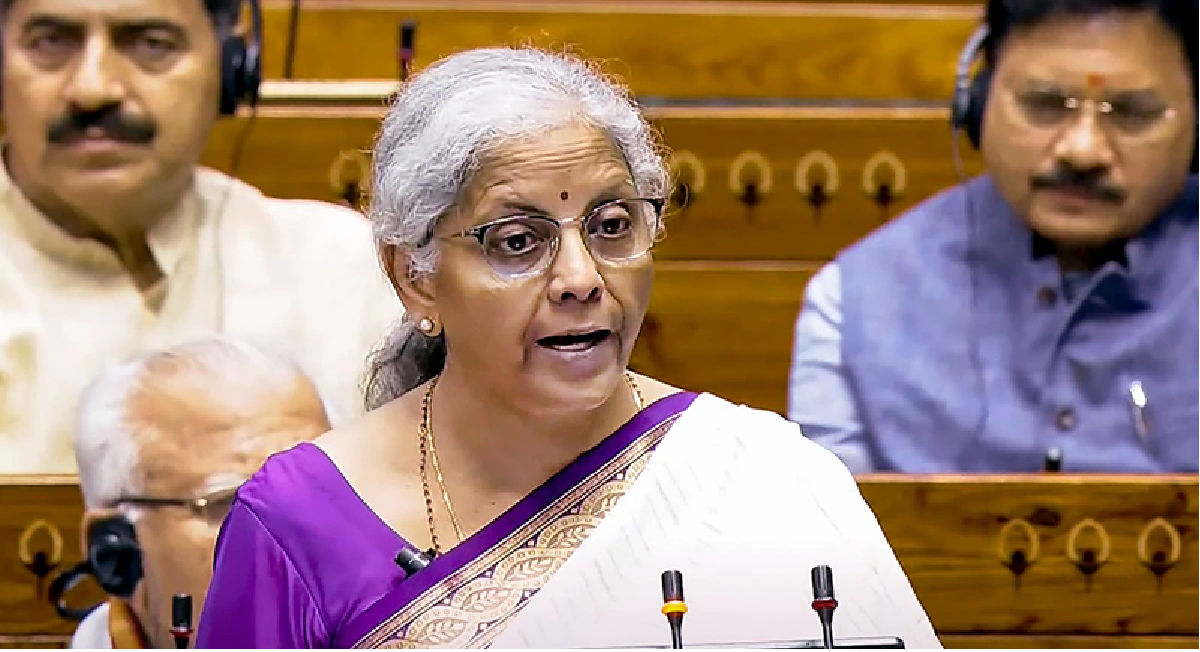
Finance Minister Nirmala Sitharaman presented her ninth Union Budget in the Lok Sabha on February 1, marking another significant moment in India’s economic policymaking under the Narendra Modi-led government. The Budget came at a time of heightened uncertainty, both globally and domestically. The world economy is witnessing instability due to geopolitical tensions and shifts in global power dynamics, including renewed policy assertiveness from US President Donald Trump. At home, India faces pressures from a weakening rupee, slowing exports, uneven job growth, and rising concerns around public welfare spending.
Against this backdrop, expectations from Budget 2026–27 were high. However, reactions to Sitharaman’s speech were mixed, with critics calling it underwhelming and lacking clarity on crucial social sector commitments. Below is a comprehensive explanation of the nine major themes and concerns that emerged from her address, along with what they reveal about the government’s economic priorities and challenges.
1. A Speech Heavy on Vision but Light on Budgetary Transparency
Sitharaman’s Budget speech lasted just under 90 minutes, outlining the government’s vision for economic growth, innovation, sustainability, and skill development. However, senior Congress leader Jairam Ramesh criticised the presentation as “lacklustre,” arguing that it failed to provide adequate detail about financial allocations for key schemes and flagship programmes. According to him, while the full budget documents later uploaded contain extensive numerical details, the speech itself lacked clarity and transparency.
This criticism reflects a broader concern that the government increasingly uses the Budget speech as a political and ideological narrative rather than a clear fiscal roadmap. Instead of specifying how much money would be spent on programmes such as employment generation, social security, education, healthcare, and welfare delivery, Sitharaman focused on announcing initiatives, intentions, and future frameworks.
For lawmakers, economists, and citizens alike, the Budget speech traditionally serves as the main gateway to understanding the government’s spending priorities. When core figures and allocations are omitted from the speech, it raises questions about accountability and democratic scrutiny. Critics argue that this approach shifts the burden to later document analysis, which most citizens do not access, weakening the transparency of fiscal governance.
In short, while the speech conveyed ambition and optimism, it left observers uncertain about how those promises would translate into actionable funding and policy outcomes.
2. India Semiconductor Mission 2.0: A Strategic Push for Tech Sovereignty
One of the most prominent announcements was the launch of India Semiconductor Mission (ISM) 2.0, aimed at strengthening India’s position in semiconductor manufacturing and design. Sitharaman said the initiative would focus on industry-led research, training centres, and full-stack Indian intellectual property (IP), allowing the country to reduce its heavy reliance on imported chips.
Under the Modified Programme for Development of Semiconductors and Display Manufacturing Ecosystem, the government allocated ₹8,000 crore, while ISM 2.0 itself received ₹1,000 crore. The broader aim is to position India as a serious player in global chip manufacturing, which is currently dominated by countries like Taiwan, South Korea, China, and the United States.
Semiconductors are now considered the backbone of modern economies, powering everything from smartphones and automobiles to defence systems and artificial intelligence platforms. The COVID-19 pandemic exposed the risks of global supply chain disruptions, especially India’s dependence on chip imports.
However, critics note that India’s semiconductor ambitions started relatively late compared to other countries. Building fabrication plants requires massive capital investment, stable power and water supplies, skilled talent, and strong global partnerships. While ISM 2.0 signals strategic intent, its relatively modest funding compared to international benchmarks raises concerns about whether India can truly compete at scale.
Nevertheless, the mission reflects a broader national priority: technological self-reliance and supply chain resilience in an increasingly fragmented world economy.
3. Air Pollution Missing, Carbon Capture Highlighted
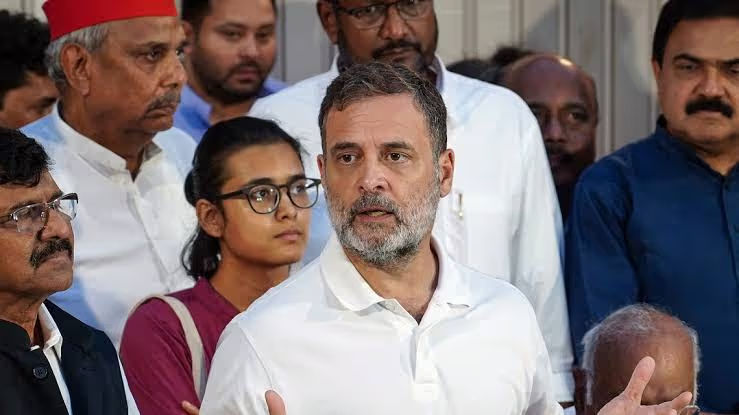
Ahead of the Budget, Congress leader Rahul Gandhi urged Parliament to treat air pollution as a national health emergency, calling for immediate government intervention and significant financial backing. Despite growing public health concerns around toxic air quality in cities like Delhi, Mumbai, and Kolkata, Sitharaman’s speech made no direct mention of air pollution.
Instead, the Finance Minister announced an allocation of ₹20,000 crore toward carbon capture and utilisation technologies, particularly in high-emission sectors such as steel and cement. These technologies aim to capture carbon dioxide before it enters the atmosphere and repurpose or store it, thereby reducing industrial emissions.
While carbon capture is an important climate mitigation strategy, critics argue that it does little to address the immediate public health crisis caused by particulate matter pollution from vehicles, construction, biomass burning, and coal-fired power plants. India continues to rank among the world’s worst countries for air quality-related mortality, with millions suffering from respiratory diseases and reduced life expectancy.
Environmentalists and public health experts point out that tackling air pollution requires targeted investments in public transport, renewable energy, clean cooking fuels, industrial emission control, and urban planning — areas that were not strongly emphasised in the speech.
Thus, while the carbon capture announcement aligns with India’s long-term climate commitments, the absence of air pollution policy signals a gap between environmental priorities and lived realities.
4. New Income Tax Act 2025: Simplification Drive
Sitharaman revealed that the government completed its review of the existing income tax framework in July 2024 and that a new Income Tax Act 2025 will come into force from April 1. According to her, the new law will feature simplified rules, clearer compliance procedures, and improved taxpayer convenience.
India’s tax laws are often criticised for being complex, litigation-prone, and administratively burdensome. Businesses and individuals face multiple interpretations, disputes, and compliance costs, which can discourage investment and voluntary tax compliance.
The government claims that the new Act will simplify language, remove outdated provisions, reduce ambiguity, and promote trust-based governance. This aligns with the broader economic reform narrative of improving the ease of doing business and encouraging entrepreneurship.
However, Sitharaman did not reveal specific changes to tax slabs, exemptions, deductions, or corporate taxation frameworks in her speech. As a result, taxpayers remain uncertain about how the new law will impact their finances. The actual effectiveness of the reform will depend on implementation details, digital infrastructure, and the fairness of enforcement.
Still, the announcement represents a significant structural reform with potential long-term benefits for revenue mobilisation and business confidence.
5. States’ Share Retained at 41%: Finance Commission Recommendations Accepted
Another important fiscal decision announced in the Budget was the acceptance of the 16th Finance Commission’s recommendation to retain the vertical devolution share of states at 41% of the Centre’s divisible tax pool. Sitharaman also said that the Commission recommended ₹1.4 lakh crore in grants to states for 2026–27.
This decision reinforces India’s constitutional commitment to fiscal federalism, ensuring that states receive a stable and predictable share of national tax revenues. States depend heavily on these transfers to fund education, healthcare, infrastructure, social welfare, and law enforcement.
In recent years, several opposition-ruled states have accused the Centre of weakening cooperative federalism through conditional grants, delayed transfers, and increasing reliance on centrally sponsored schemes that reduce state autonomy. By retaining the 41% share, the government signals continuity and institutional stability.
However, critics argue that while vertical devolution remains intact, states still face constraints due to rising central cesses and surcharges that are not shared, shrinking fiscal space, and growing expenditure responsibilities. Moreover, inflation, population growth, and developmental disparities place additional pressure on state finances.
Nevertheless, the announcement reassures states that the federal fiscal structure will not be radically altered in the near term.
6. Content Creator Labs and Skill Development Push
In a move reflecting the growing digital economy and youth-driven content culture, Sitharaman announced plans to establish “Content Creator Labs” in 15,000 schools across India and set up five university townships near industry corridors to promote innovation, skills, and employment opportunities.
The initiative aims to equip students with digital storytelling, multimedia production, coding, and creative economy skills, enabling them to participate in emerging sectors such as social media content creation, gaming, animation, advertising, and online education.
Prime Minister Narendra Modi had earlier remarked that many young Indians are now earning livelihoods through social media platforms, “reels,” and digital creativity. The government’s focus on this sector reflects recognition of non-traditional employment pathways in the 21st-century economy.
However, critics point out that India’s past skill development initiatives have delivered mixed results. A recent Comptroller and Auditor General (CAG) report found that overall placement rates under government skill programmes stood at just 41%, and over ₹277 crore in funds remained unutilised.
This raises questions about whether new digital skill labs will meaningfully translate into employment or income generation, especially for students from rural and disadvantaged backgrounds. Without industry linkages, mentorship networks, and sustainable market demand, such initiatives risk becoming symbolic rather than transformative.
Still, the move reflects a policy shift toward creative and digital industries as legitimate employment sectors, moving beyond traditional manufacturing and services models.
7. Employment Concerns and Silence on Job Guarantee Schemes
One of the most striking aspects of Sitharaman’s speech was what it did not include — a meaningful discussion of employment generation, especially rural and urban job guarantees.
The Budget was presented after a year in which the Modi government had significantly weakened the Mahatma Gandhi National Rural Employment Guarantee Scheme (MGNREGS), the world’s largest public employment programme. Budgetary allocations for the scheme have declined in real terms, and reports of delayed wage payments and reduced work availability have been widespread.
Many expected this Budget to clarify whether the government would revive MGNREGS or introduce a new employment guarantee framework, especially in light of rising rural distress, stagnant wages, and climate-related livelihood risks. However, Sitharaman’s speech made no mention of the controversial VB G RAM G Bill, which replaced MGNREGS.
Urban employment was also largely ignored, despite growing concerns about joblessness among educated youth, informalisation of labour, and the dominance of gig work without social protection. India continues to struggle with low labour force participation rates, especially among women, and weak job creation in manufacturing.
This silence has led critics to conclude that the government remains reluctant to expand public employment commitments or adopt rights-based job guarantees, instead relying on growth-led employment and skill development narratives.
8. Textile and Fibre Expansion as Employment Strategy
Sitharaman announced that fibre and textile expansion would form the backbone of a new employment-oriented scheme. The government plans to strengthen the textile spinning ecosystem, invest in upskilling workers, establish mega textile parks, and promote technical textiles — advanced materials used in medical, industrial, and infrastructure applications.
In addition, the Mahatma Gandhi Gram Swaraj Initiative aims to boost khadi and handicrafts, reviving rural cottage industries and traditional crafts.
India’s textile sector has historically been one of the largest employers after agriculture, particularly for women and migrant workers. It plays a key role in exports, regional development, and informal livelihoods. By investing in modern infrastructure, quality standards, and innovation, the government hopes to increase global competitiveness and generate employment at scale.
However, challenges remain. The sector faces intense competition from countries like Bangladesh and Vietnam, which benefit from lower costs, better trade agreements, and integrated supply chains. India’s textile workers also struggle with low wages, weak social security, and vulnerability to automation and global demand fluctuations.
While the textile push offers a potentially labour-intensive growth pathway, its success will depend on sustained investment, labour reforms, export competitiveness, and worker protections.
9. Fiscal Deficit Target Reduced to 4.3% of GDP
Finally, Sitharaman announced that India’s fiscal deficit for FY 2026–27 is projected at 4.3% of GDP, down from 4.4% in FY 2025–26. This reflects the government’s continued commitment to fiscal consolidation while maintaining growth momentum.
Reducing the fiscal deficit helps stabilise public debt, control inflation, maintain investor confidence, and preserve macroeconomic stability. It also signals prudence to global rating agencies and foreign investors, particularly at a time when emerging markets face capital flow volatility and currency pressures.
However, fiscal tightening also limits the government’s ability to expand spending on welfare, infrastructure, healthcare, education, and employment. Critics argue that in a developing economy with high inequality and underemployment, excessive focus on deficit reduction can undermine social investment and long-term human capital development.
The challenge lies in balancing fiscal discipline with inclusive growth — ensuring that economic consolidation does not come at the cost of livelihoods, public services, and social security.
Overall Assessment: A Budget of Stability, Not Transformation
Finance Minister Sitharaman’s ninth Budget reflects a government seeking to balance macroeconomic stability, technological ambition, and fiscal restraint, while avoiding large-scale expansion of welfare commitments or employment guarantees.
On the positive side, the Budget emphasises:
- Strategic industrial priorities such as semiconductors
- Digital and creative economy skills
- Federal fiscal stability
- Tax system simplification
- Climate mitigation through carbon capture
- Continued fiscal consolidation
However, it leaves unresolved concerns about:
- Job creation and income security
- Rural distress and employment guarantees
- Urban unemployment and informalisation
- Public health challenges like air pollution
- Transparency in budgetary allocations
- Effectiveness of skill development initiatives
Critics argue that the Budget relies heavily on long-term growth narratives and innovation frameworks while underplaying immediate socio-economic pressures faced by millions of households. Supporters counter that fiscal prudence, industrial upgrading, and digital transformation are necessary foundations for sustainable prosperity.
Ultimately, Budget 2026–27 appears less like a radical reset and more like a continuation of the government’s existing economic strategy — prioritising investment-led growth, market-driven employment, and structural reforms, while limiting the expansion of direct welfare spending.
Whether this approach delivers inclusive growth in an environment of global uncertainty, domestic inequality, and evolving labour markets remains to be seen. The success of Sitharaman’s ninth Budget will not be judged by speeches or policy announcements alone, but by how effectively these initiatives translate into jobs, incomes, stability, and opportunity for India’s diverse population in the years ahead.
Related Posts