Man from Bengal nabbed for forging more than 250 passports for Bangladesh citizens
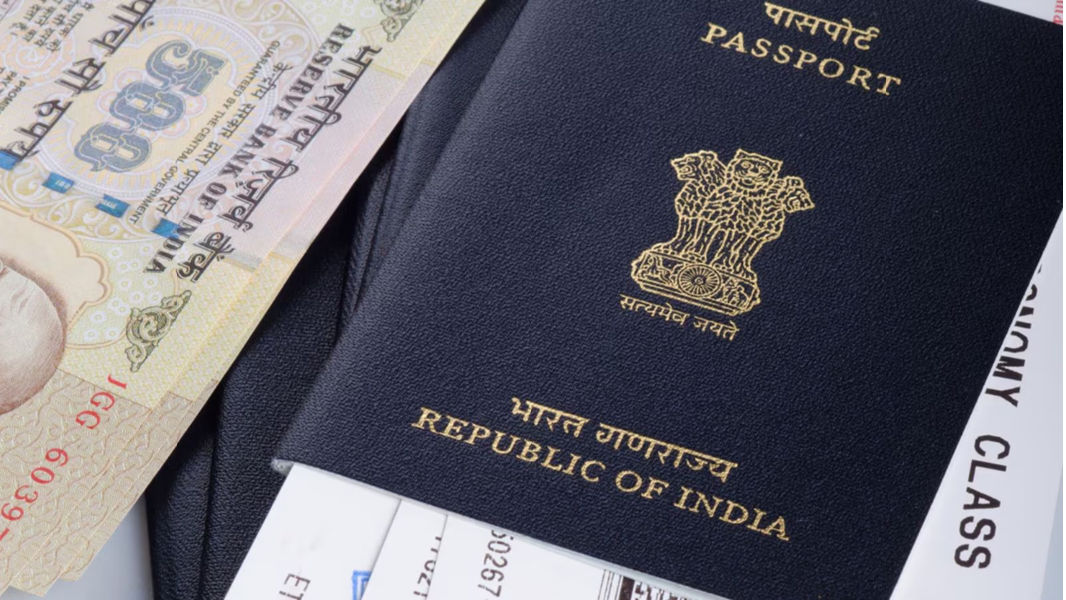
West Bengal Man Arrested in Massive Cross-Border Passport Forgery Linked to Pakistani Operative
Kolkata, October 19:
In a major crackdown on cross-border identity fraud, the Enforcement Directorate (ED) has arrested a resident of West Bengal for allegedly helping a Pakistani operative obtain Indian passports for hundreds of illegal Bangladeshi immigrants. The case, which spans multiple districts and involves over 250 forged documents, exposes a sophisticated criminal network operating along India’s eastern border.
The accused, Indubhushan Haldar, also known as Dullal, was taken into custody by ED officials on October 13 from his home in Chakdah, a small town in Nadia district of West Bengal. The area lies close to the India–Bangladesh international border, a region often under surveillance due to the high incidence of smuggling, infiltration, and fake documentation.
According to ED officials, Haldar’s arrest follows months of investigation that uncovered his alleged role in fabricating fake identity papers, which were then used to fraudulently acquire Indian passports. These documents were allegedly prepared on behalf of Azad Hussain, a Pakistani national who had been living illegally in India under multiple aliases — Ajad Mallik and Ahammed Hossain Azad. Hussain, the ED says, acted as the main conduit between Bangladeshi clients and local forgers.
How the Forgery Network Operated
The passport racket, according to investigators, was a highly organized operation. Azad Hussain reportedly used his network of contacts in Kolkata, Nadia, and border towns of North 24 Parganas to identify Bangladeshi nationals living in India without legal documentation. Many of these individuals had crossed the border illegally over the past few years, seeking work in small industries, agriculture, or domestic labor.
Once identified, these clients were promised legitimate Indian passports for a fee ranging from ₹25,000 to ₹1 lakh. They were then referred to Haldar, who allegedly specialized in creating counterfeit supporting documents, including birth certificates, voter IDs, ration cards, and Aadhaar cards. These papers were crafted to appear authentic enough to pass initial scrutiny at passport offices.
The ED believes that Haldar exploited his local contacts to manipulate the address verification process. Officials say that in several instances, passport applications were supported by fake residential proofs and false police verification reports.
An ED official said,
“Haldar was not just a small-time forger. He understood the document verification process very well. He knew how to make the fake documents look genuine enough to avoid suspicion. He was the technical backbone of this racket.”
The Pakistani Connection
The case took a significant turn earlier this year when the agency arrested Azad Hussain in April. Investigators found that Hussain, who entered India several years ago on forged documents, had built a wide network across eastern India. Despite being a Pakistani national, he allegedly assumed the identity of an Indian citizen and even managed to obtain local identification papers.
ED officials say Hussain acted as the link between illegal Bangladeshi immigrants and document forgers like Haldar. He collected money from clients, took their biometric and personal details, and passed them to Haldar for document preparation. Once the fake documents were ready, Hussain arranged for passport applications through intermediaries.
The proceeds from these transactions were allegedly laundered through hawala channels and informal money transfer systems. Investigators suspect that a portion of the funds was sent to accounts outside India, possibly in Bangladesh or the Gulf, to conceal the money trail.
250+ Forged Passports and a Trail of Evidence
According to the ED, Haldar was involved in over 250 cases where Bangladeshi nationals successfully obtained Indian passports using forged documents. These passports were used not only for domestic identification but also for traveling abroad, particularly to Middle Eastern countries for employment.
During raids at Haldar’s residence, the ED recovered several incriminating items, including scanned ID copies, rubber stamps, pen drives, digital files, and handwritten records. Investigators are also analyzing communication data that allegedly shows coordination between Haldar and other intermediaries in the network.
The agency said in its official statement:
“Haldar played a pivotal role in facilitating the issuance of Indian passports for Bangladeshi nationals. By creating forged documents and earning money from these illegal activities, he generated proceeds of crime in violation of the Prevention of Money Laundering Act.”
Haldar’s anticipatory bail petitions had been rejected earlier by both the Special PMLA Court in Kolkata and the Calcutta High Court, citing strong evidence and the gravity of the offenses. He was remanded to ED custody for detailed questioning following his arrest.
Security Implications and National Concerns
The case has raised serious concerns within India’s security establishment. The issuance of Indian passports to foreign nationals, especially with the help of a Pakistani handler, has potential implications for national security and counter-terrorism efforts.
A senior intelligence officer commented,
“A forged passport in the wrong hands can have dangerous consequences. It allows individuals with unknown backgrounds to blend into Indian society and even travel abroad as Indian citizens. The possibility that such documents could be used by criminal or extremist elements cannot be ruled out.”
India shares a 4,096-kilometer border with Bangladesh, much of which is porous and difficult to monitor despite fencing and Border Security Force (BSF) patrols. Illegal migration, smuggling, and document forgery are long-standing challenges in this region, often linked to local political, economic, and criminal interests.
Crackdown on Border Rackets
Over the past few years, the Enforcement Directorate and other agencies have intensified action against illegal document and passport rackets in eastern India. In 2023 and 2024 alone, several cases were registered across Assam, Meghalaya, and Tripura, where Bangladeshi nationals were found to be using forged Indian documents.
The ED believes that Haldar’s network may be connected to these broader criminal syndicates. The agency is coordinating with the Bureau of Immigration (BoI), Intelligence Bureau (IB), and Ministry of External Affairs (MEA) to identify all passports issued through fraudulent means and trace their holders.
An official involved in the probe said that the ED is examining whether any of these forged passports were used for international travel, particularly to the Middle East and Southeast Asia. If confirmed, the matter could involve INTERPOL and foreign intelligence agencies.
ED’s Investigation and Legal Process
The Enforcement Directorate’s investigation is being conducted under the Prevention of Money Laundering Act (PMLA), 2002, which empowers the agency to trace and seize assets derived from illegal activities. In this case, the “proceeds of crime” are defined as the money earned through the creation and sale of forged identity documents.
ED officers are also preparing to question several other individuals suspected of acting as intermediaries or beneficiaries of the racket. Some government employees who may have overlooked forged documents during verification are also under scrutiny. If evidence emerges, they may face charges of corruption and negligence.
Legal experts note that under the PMLA, those found guilty of money laundering can face imprisonment of up to seven years, in addition to fines and asset confiscation. Moreover, involvement in forgery of identity documents may attract additional charges under the Indian Penal Code (IPC) and the Passports Act, 1967.
Political Reactions in Bengal
The case has triggered a political war of words in West Bengal. Opposition leaders have accused the state government of failing to address the issue of illegal immigration and identity fraud effectively. The BJP’s Bengal unit demanded a state-wide review of passport issuance processes in border districts.
A BJP spokesperson said,
“For years, illegal immigrants have been obtaining documents with ease. This case shows the extent of the problem. The state administration’s negligence has turned border areas into safe zones for criminals.”
The ruling Trinamool Congress (TMC), however, rejected these allegations, arguing that the case was being investigated by central agencies and that law enforcement was functioning as it should.
A TMC leader said,
“This arrest shows that the system is working. It is unfair to politicize every criminal case. The focus should remain on the investigation, not on political blame games.”
Impact on India–Bangladesh Relations
While the case primarily involves illegal elements, analysts say it could have a diplomatic dimension. India and Bangladesh maintain strong bilateral relations, but illegal migration has often been a sensitive issue. Both countries have been working on mechanisms to strengthen border security and streamline identification processes.
Experts suggest that improving data sharing, digital identity verification, and the use of biometric databases could help prevent such forgeries in the future.
Professor Anindya Sengupta, a political analyst from Kolkata, said,
“The problem is not just law enforcement — it’s systemic. Poor record-keeping, local corruption, and economic desperation make it easy for such networks to thrive. A combination of technology and regional cooperation is needed to close these loopholes.”
Broader Issues of Documentation and Identity
The ED’s findings have reignited debate about the security of India’s identification systems. Although digital platforms like Aadhaar and e-passports have strengthened verification mechanisms, physical documents such as birth certificates and ration cards remain vulnerable to forgery.
Security experts say that many rural administrative offices lack digital record integration, making it easier for forgers to create duplicate or manipulated documents. This challenge is especially pronounced in border districts, where record verification is complex due to population mobility.
A retired bureaucrat familiar with passport administration explained,
“In smaller towns, verification often depends on local police and revenue officers. When systems are manual, it becomes easier for fake records to slip through. That’s how such large-scale frauds can happen undetected for years.”
Ongoing Probe and Future Action
As the ED continues its probe, investigators believe Haldar’s arrest could lead to further breakthroughs. The agency is now focused on tracking financial trails, identifying all beneficiaries of the racket, and seizing assets purchased using proceeds from illegal activities.
Officials also plan to conduct forensic analysis of seized devices to recover deleted data and communication logs. If further evidence emerges, additional arrests could follow in West Bengal and neighboring states.
A senior ED official summed up the agency’s stance:
“This case is not just about forged passports. It’s about safeguarding India’s national identity system. Every fake passport is a threat — to our security, to our credibility, and to the people who depend on these systems being genuine.”
As the investigation unfolds, authorities believe this case could become one of the largest passport forgery busts in recent years, revealing how criminal networks exploit both local corruption and regional vulnerabilities for profit.
For now, both Haldar and Hussain remain in custody, as the ED prepares to file a supplementary charge sheet in the coming weeks. The agency has assured that it will “pursue every lead until the entire network is dismantled.”
Related Posts