ISRO successfully launches India’s heaviest satellite, marking a major stride toward greater strategic independence
ISRO Launches India’s Heaviest Satellite, Marking a Leap Toward Strategic Space Independence
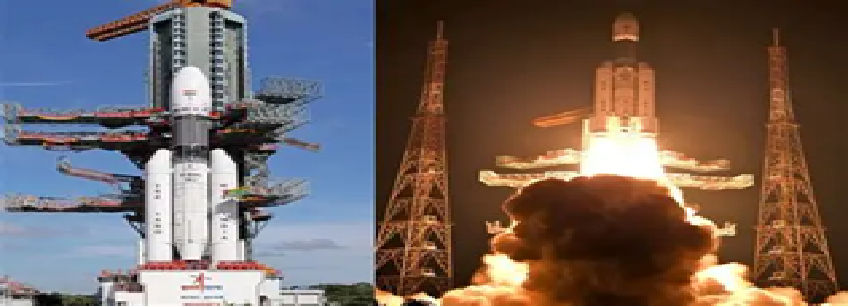
In a landmark achievement that highlights India’s growing technological self-reliance, the Indian Space Research Organisation (ISRO) on Sunday successfully launched CMS-03, the country’s heaviest communication satellite ever lifted by an Indian rocket. The launch not only strengthens India’s defence communication network but also showcases the heavy-lift capability of the Launch Vehicle Mark-3 (LVM3) — the same powerful rocket that carried Chandrayaan-3 to the Moon in July 2023.
The satellite, weighing 4,410 kilograms, was launched from the Satish Dhawan Space Centre in Sriharikota at 5:26 p.m., soaring into a geosynchronous transfer orbit. It is expected to significantly enhance the communication capabilities of the Indian Navy, providing advanced, secure, and uninterrupted connectivity across the vast expanse of the Indian Ocean Region (IOR).
This successful mission represents much more than a single technological milestone. It marks a critical step in India’s long-term effort to reduce its dependence on foreign rockets for launching heavy payloads and to establish full strategic autonomy in its space operations.
From Reliance to Self-Reliance
India has launched heavier satellites before, but until now, such missions depended on foreign launch vehicles. The GSAT-11, launched in December 2018, weighed over 5,800 kilograms, but it had to be carried by Europe’s Ariane-5 rocket from French Guiana. For decades, ISRO relied on the European Ariane series to lift its heaviest satellites — those exceeding 3,000 kilograms — since India’s launch vehicles were not yet capable of handling such massive payloads.
That situation has now changed. The CMS-03 launch, conducted entirely from Indian soil using an Indian rocket, proves that LVM3 has matured into a true heavy-lift launch vehicle. This means that India can now independently place large, complex satellites into orbit — a capability previously available only to a handful of advanced spacefaring nations such as the United States, Russia, China, and the European Union.
ISRO Chairman V. Narayanan said the mission required several performance upgrades to the rocket. “For accomplishing this launch, the performance of the vehicle had to be improved in multiple directions, and its payload capacity enhanced by around 10 percent,” he explained after the launch. “This mission demonstrates the confidence and competence our teams have built over years of dedicated work.”
A Boost for India’s Maritime Power
The CMS-03 satellite — also known by its defence designation GSAT-7R — will serve as a key communications hub for the Indian Navy, replacing the ageing GSAT-7 (Rukmini) satellite launched in 2013. GSAT-7 had provided reliable services for over a decade but had reached the end of its operational lifespan.
According to the Ministry of Defence, GSAT-7R will provide robust telecommunication coverage over the Indian Ocean Region, ensuring seamless, secure, and high-capacity data links between naval assets. Its multiband transponders will support voice, data, and video communication across multiple frequencies, allowing warships, submarines, aircraft, and shore-based command centres to remain connected in real time.
“GSAT-7R will significantly enhance the Navy’s maritime domain awareness, enabling coordination across thousands of kilometres of sea. With high-bandwidth and secure channels, it will strengthen India’s ability to monitor, communicate, and respond swiftly to maritime developments,” the ministry’s statement said.
Placed in a geosynchronous orbit, the satellite will appear stationary relative to Earth, ensuring stable coverage over the entire region. Its operational life is designed to last at least 15 years, making it one of the most enduring and capable satellites ever built by ISRO.
A Symbol of Atmanirbhar Bharat
Speaking after the mission, ISRO Chairman Narayanan described the launch as a “shining example of Atmanirbhar Bharat in action.”
“The CMS-03 satellite incorporates a host of new technologies, both in its payload and bus systems,” he said. “It demonstrates our ability not just to build advanced spacecraft but also to launch them indigenously using our own heavy-lift rockets.”
Prime Minister Narendra Modi congratulated ISRO scientists shortly after the launch. In a post on X (formerly Twitter), he wrote:
“Our space sector continues to make us proud! Congratulations ISRO on the successful launch of India’s heaviest communication satellite, CMS-03. Powered by our space scientists, it is commendable how our space sector has become synonymous with excellence and innovation. Their successes have furthered national progress and empowered countless lives.”
Modi’s message underlined how the Indian space programme has evolved from its early days of foreign dependence to becoming a global symbol of innovation, cost-efficiency, and self-reliance.
Expanding the Capabilities of LVM3
The LVM3 — often called India’s “Bahubali rocket” for its size and power — is ISRO’s most advanced launch vehicle. It is a three-stage rocket, equipped with two massive S200 solid boosters, an L110 liquid core stage, and a C25 cryogenic upper stage that burns liquid hydrogen and oxygen.
The cryogenic stage has always been the most complex part of the vehicle. For the CMS-03 mission, ISRO conducted a crucial experiment that could transform future missions: the reignition of the C25 cryogenic engine after satellite separation.
“For the first time, we have been able to reignite the thrust chamber of the indigenously developed C25 cryogenic stage after injecting the satellite in its orbit,” Narayanan revealed. “This opens new possibilities for restarting the engine in future missions, enabling greater flexibility for placing multiple satellites in different orbits using a single launch vehicle.”
This breakthrough capability — similar to those used by advanced rockets like SpaceX’s Falcon 9 and Europe’s Ariane-6 — will allow ISRO to undertake more complex mission profiles, including launching multiple satellites or repositioning payloads mid-orbit.
Strengthening India’s Space Strategy
The timing of the CMS-03 launch also aligns with India’s broader strategic vision for space. As space becomes a critical frontier for national security, communication, navigation, and surveillance, the ability to indigenously develop and launch strategic assets is central to maintaining autonomy and reducing vulnerability.
India’s expanding fleet of military and dual-use satellites now provides comprehensive coverage for communications, reconnaissance, weather monitoring, and navigation. CMS-03 will form the backbone of this network for the Indian Navy, while similar assets like GSAT-7A support the Indian Air Force, and EMISAT caters to electronic intelligence.
The success of CMS-03 also complements India’s emerging defence-space ecosystem, which now involves growing participation from private industry. With the establishment of IN-SPACe (Indian National Space Promotion and Authorisation Centre) and increasing collaboration between ISRO and private companies, India’s space sector is rapidly diversifying.
Preparing for Future Missions
ISRO’s immediate roadmap remains packed with activity. Narayanan confirmed that the agency plans seven more launches by March next year, including two missions in December, one of which will again use the LVM3 rocket.
Meanwhile, preparations are in full swing for the Gaganyaan programme, India’s first human spaceflight mission. Before astronauts are sent into orbit, ISRO will conduct three uncrewed test missions, the first of which will carry Vyommitra, a female-robot astronaut designed to simulate human responses in space.
“The activities for the first uncrewed mission are progressing well. Most of the hardware has already reached Sriharikota, and the assembly is under way,” Narayanan said. Though he did not disclose a launch date, the mission is expected to pave the way for a crewed flight within the next few years.
India is also working toward establishing its own space station, Bharat Antariksh Station, by the early 2030s. Such ambitious projects will require launching modules and components weighing many tonnes — precisely the kind of heavy-lift missions that the LVM3 is now demonstrating it can perform.
Reducing Costs and Dependence
Beyond national pride and strategic capability, launching heavy satellites domestically offers tangible economic benefits. Using the LVM3 instead of foreign rockets significantly reduces costs, keeping valuable funds within India and fostering local innovation.
Each Ariane-5 launch, for example, costs upwards of $100 million (₹830 crore), while ISRO’s own missions are conducted at a fraction of that cost. Developing indigenous launch capabilities ensures that India can continue to deploy new satellites — for communication, navigation, or defence — on its own schedule and budget, without relying on international agencies or commercial constraints.
This autonomy will prove critical as India expands its presence in space. The country is already preparing a series of ambitious missions, including Aditya-L1 (to study the Sun), NISAR (a joint mission with NASA for Earth observation), and future planetary exploration programmes targeting Venus and Mars.
A Defining Moment for India’s Space Future
The launch of CMS-03 marks not just another successful mission, but a defining moment in India’s space journey. It embodies the culmination of decades of perseverance — from humble beginnings in the 1960s to now being counted among the world’s top space powers.
By proving that the LVM3 rocket can carry heavy satellites into orbit, India has cemented its position as a self-reliant space nation. The mission strengthens defence capabilities, boosts communication infrastructure, and opens new avenues for scientific and commercial ventures.
As ISRO continues to push boundaries with each successive launch, CMS-03 stands as a symbol of technological excellence and national confidence — an achievement that reflects both India’s growing strategic autonomy and its commitment to using space for peaceful, developmental, and security purposes.
With this milestone, India has not only reached higher into space but also moved closer to fulfilling its long-standing dream of becoming a fully independent, globally respected space power.
Related Posts