Investors thought they struck gold with LG’s IPO—turns out it was the wrong stock
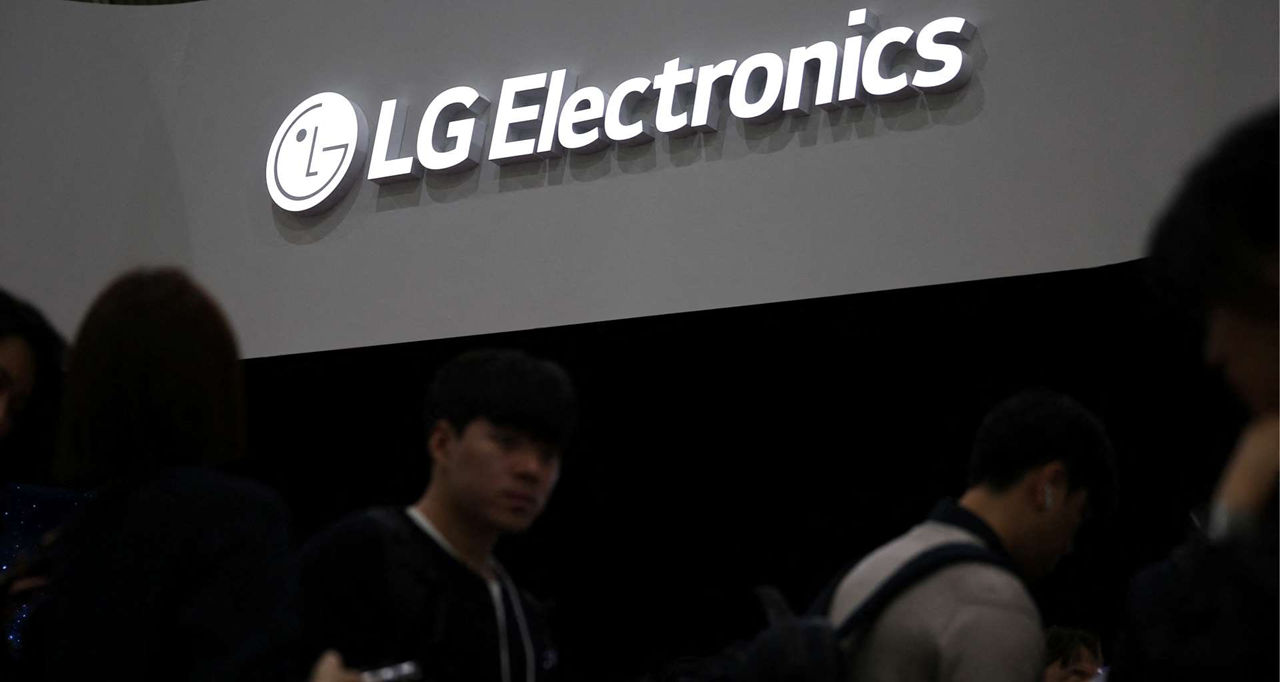
Investor Confusion Over LG IPO Sends Wrong Stock on Rollercoaster Ride
Mumbai: A rush to buy shares of LG Electronics India Ltd during its highly anticipated market debut on Tuesday triggered an unexpected market episode — investors mistakenly poured money into LG Balakrishnan & Bros Ltd, an entirely different company with no connection to the South Korean electronics giant.
The mix-up led to a brief but dramatic rally in LG Balakrishnan’s stock, followed by an equally sharp correction once traders realised the error. Market participants and analysts described the event as a classic case of “ticker confusion,” a phenomenon that occasionally surfaces during high-profile listings or news-driven trading sessions.
The Mix-Up Begins
The stock market was abuzz early Tuesday morning as LG Electronics India, the Indian arm of the Korean consumer electronics major, made its much-awaited debut on the bourses. Analysts had widely predicted strong retail participation, given the company’s household brand value and expectations of robust listing gains following a heavily oversubscribed IPO.
As the opening bell rang, trading screens across brokerages lit up with buy orders for “LG” — a prefix that, as it turned out, would cause costly confusion. Instead of entering orders for LG Electronics India, some retail investors mistakenly keyed in trades for LG Balakrishnan and Bros Ltd, a Coimbatore-based auto components manufacturer listed on the National Stock Exchange (NSE) and Bombay Stock Exchange (BSE).
LG Balakrishnan, which has been part of India’s industrial landscape since 1937, manufactures automotive chains, sprockets, and metal-formed parts. It bears no relation to the global consumer electronics brand beyond the shared initials “LG.”
The result was a flurry of buying activity in the wrong stock. Within minutes of the market’s opening, LG Balakrishnan’s share price surged nearly 15%, touching ₹1,600 on the NSE, compared to its previous close of ₹1,390.
Volumes Surge to Unusual Highs
The price movement was accompanied by a sudden explosion in trading volumes. According to exchange data, more than 684,000 shares of LG Balakrishnan changed hands across the NSE and BSE — over 20 times the company’s two-week average daily trading volume of roughly 31,400 shares.
For a mid-cap manufacturing company with a relatively quiet trading history, the spike was striking. Market watchers were quick to notice the anomaly, as LG Balakrishnan’s name began trending on brokerage terminals and trading chat groups.
“It was very clear something was off,” said a Mumbai-based equity dealer at a domestic brokerage. “We saw the order book filling rapidly for LG Balakrishnan at the exact time the LG Electronics India listing was taking place. That kind of coincidence almost never happens.”
Reality Sets In
The rally proved to be short-lived. By late afternoon, as word spread that the buying frenzy was rooted in a ticker mix-up, the stock began to lose steam. Traders unwound their accidental positions, and profit-taking intensified.
By the end of the session, LG Balakrishnan shares had not only given up all their intraday gains but closed 1.6% lower at ₹1,367.60, effectively wiping out the morning’s speculative surge.
“Some buy orders were likely punched in error,” said another Mumbai-based broker. “It’s not uncommon when a large and popular IPO hits the market. Retail investors, especially those using mobile apps or low-cost platforms, can sometimes enter the wrong ticker symbol in haste.”
Brokerage Perspective: Human Error Meets Technology
Several brokers privately acknowledged that such errors are often unintentional consequences of the modern trading environment — dominated by high-speed digital interfaces and mobile apps designed for ease of use.
“Investors today are operating in an environment where one or two misplaced letters can result in a costly mistake,” said a senior market analyst at a leading brokerage firm. “With LG Electronics India’s IPO commanding all the headlines, it was only a matter of time before confusion arose.”
He added that the similarity in tickers, combined with retail enthusiasm and algorithmic execution of bulk orders, likely amplified the buying pressure in LG Balakrishnan before human oversight corrected it.
Market Cap and Company Profile
At the time of Tuesday’s close, LG Balakrishnan & Bros Ltd had a market capitalization of ₹4,372 crore — a fraction of LG Electronics India’s valuation. The company operates in niche manufacturing segments such as automotive chains, sprockets, and metal-formed products. Its business is primarily tied to India’s automotive sector and export markets, with long-standing relationships with original equipment manufacturers (OEMs).
Despite being an established name in industrial circles, the stock typically trades in low volumes and receives limited attention from retail investors or analysts. That changed — at least temporarily — when it became the unexpected beneficiary of IPO euphoria meant for another company.
Ticker Confusion: A Recurring Market Phenomenon
Incidents of mistaken identity in stock markets are not new. Over the years, several companies have found themselves in the spotlight for reasons unrelated to their business fundamentals.
In India, Tata Motors and Tata Motors DVR have frequently been mixed up by retail traders during news-heavy periods, with the differential voting rights (DVR) shares occasionally witnessing abnormal price movements as a result.
Globally, one of the most notorious examples occurred in early 2020, when investors chasing the surging stock of Zoom Video Communications, the U.S.-based video conferencing firm, accidentally bought shares of Zoom Technologies, a defunct Chinese electronics company. The mix-up sent Zoom Technologies’ shares skyrocketing more than 1,800% before the U.S. Securities and Exchange Commission (SEC) intervened and temporarily halted trading.
Other examples include Twitter Inc. and Tweeter Home Entertainment, which were confused during Twitter’s 2013 IPO, as well as Signal Advance Inc., which surged 1,100% in January 2021 after Tesla CEO Elon Musk tweeted “Use Signal,” referring to the encrypted messaging app — not the tiny Texas-based healthcare firm.
Investor Psychology and the Role of Hype
Market psychologists say such episodes reflect how herd behavior, FOMO (fear of missing out), and the speed of digital trading can create temporary distortions in even well-regulated markets.
“When investors are gripped by IPO excitement, rational decision-making often gives way to impulse,” explained Ramesh Mehta, head of retail strategy at a Mumbai-based investment advisory. “People don’t always double-check ticker codes — especially if the stock name looks familiar. The rush to not ‘miss out’ on an opportunity overrides the need for precision.”
The LG Balakrishnan incident, he said, serves as a reminder that even in sophisticated markets, human behavior continues to play a major role. “Markets may be driven by algorithms, but the decisions behind them are still made by people — and people make mistakes.”
Regulatory and Platform Response
While the exchanges did not issue an official statement, traders said the unusual activity in LG Balakrishnan’s scrip was flagged internally. Exchange surveillance systems are designed to detect abnormal price and volume movements, which can trigger automated alerts.
A senior exchange official, speaking on condition of anonymity, said that while the system can identify spikes, it cannot always distinguish whether the cause is an error or genuine market activity. “In this case, the trades were legitimate — just misplaced in intention,” the official noted.
Several brokerage houses also circulated internal advisories reminding clients to verify ticker symbols before placing trades. Some online platforms are reportedly considering enhanced prompts or confirmation pop-ups for stocks with similar or identical prefixes, especially during IPO weeks.
Lessons for Retail Investors
Analysts say the incident underscores the importance of careful order placement and awareness of ticker symbols. In the case of LG Electronics India, which listed under a slightly different symbol from LG Balakrishnan, even a minor oversight could translate into substantial financial consequences.
“It’s a good learning moment,” said Anjali Deshpande, a senior research analyst with a domestic brokerage. “Retail investors should always double-check the company name, symbol, and even the segment they’re trading in. It’s a simple step that can prevent unnecessary losses.”
Financial advisors also recommend that investors avoid trading in haste during IPO listings, when markets are often volatile and attention is fragmented.
A Brief But Costly Episode
For LG Balakrishnan, the unintended attention provided a temporary surge in visibility — but not in market value. By closing bell, its price had not only erased early gains but dipped below the previous day’s close.
While the company has not commented publicly on the episode, industry observers believe the management would prefer not to be part of any trading anomaly narrative. “For a steady industrial firm, this kind of volatility adds unnecessary noise,” said a Chennai-based analyst tracking mid-cap manufacturing companies.
As for LG Electronics India, its listing proceeded smoothly, drawing robust participation and closing the day with solid gains — just as investors had hoped, albeit not in the stock some of them accidentally bought.
The Broader Message
Episodes like this serve as cautionary tales in an era where trading has become more democratized but also more impulsive. With millions of first-time investors entering the markets through mobile apps, the potential for human error amplified by technology has increased.
Experts note that even though such mistakes are rare and often self-correcting, they highlight the need for stronger investor education and user-friendly safeguards.
“Markets today move at lightning speed,” said Mehta. “But in that speed, a single misplaced order can turn into a mini flash event. Investors need to slow down — even if for just five seconds — before pressing the buy button.”
Aftermath and Outlook
By Wednesday morning, trading in LG Balakrishnan had largely normalized, with volumes reverting to near-average levels. Market analysts expect no lasting impact on the stock’s fundamentals or valuation, given the brief nature of the anomaly.
Still, the event will likely be remembered as one of the more peculiar moments in India’s IPO history — a reminder that in markets driven by abbreviations, algorithms, and adrenaline, even a pair of shared initials can spark a costly mistake.
In the end, LG Balakrishnan’s brief moment of fame encapsulated a timeless truth about the stock market: when hype takes over, clarity can take a back seat — and the price of confusion can be steep.
Related Posts