India’s Operation Sindoor Raises Questions: Did the U.S. Own the Nur Khan Airbase? Pakistan Responds
The ongoing negotiations between Pakistan and the Taliban leadership in Istanbul, Turkey, are facing a critical deadlock, with Afghan media reporting that the dialogue could break down at any moment. The primary dispute centers around Pakistan’s insistence that it retains the right to conduct cross-border strikes in response to attacks by the Tehreek-e-Taliban Pakistan (TTP). What has intensified the controversy even further is a major disclosure reportedly made by the Pakistani side — an admission that a foreign country has been granted legal rights to conduct drone operations from within Pakistan’s territory.
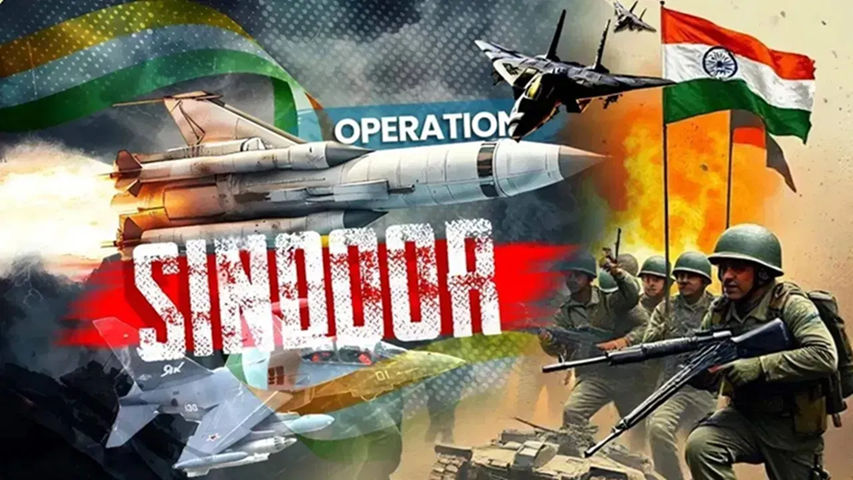
This unprecedented acknowledgment has sparked fresh debate over Pakistan’s long-standing security partnerships and revived suspicions about U.S. military access at strategic Pakistani airbases, particularly the Nur Khan Airbase — a facility previously thrust into global scrutiny following India’s Operation Sindoor.
Talks Intended for Peace Are Drifting Toward Confrontation
The Istanbul talks were initiated to defuse deteriorating relations between Islamabad and Kabul. Tensions have escalated dramatically over the past year as Pakistan accused the Afghan Taliban of failing to curb TTP activities along the border. Islamabad has repeatedly warned of unilateral action if attacks continue.
According to Tolo News, sources inside the Taliban delegation report that while progress was made on several agenda items, Pakistan’s rigid approach to defense prerogatives has become a stumbling block. One Taliban representative allegedly claimed:
“We showed flexibility and seriousness. But the Pakistani team could not present coherent positions. They seemed more prepared to walk away than to reach a settlement.”
The Afghan side insists that Pakistan’s proposed authority to strike anywhere in Afghanistan — without Kabul’s consent — is unacceptable and a violation of national sovereignty.
Drone Strike Agreement Revealed for the First Time
The most significant development of the negotiations has been Pakistan’s implicit confirmation of an existing pact with a foreign state allowing that nation to utilize Pakistani airspace and bases to launch drone operations.
According to Tolo News:
- Pakistan admitted such drone strikes “cannot be halted”
- The agreement is binding under prior commitments
- The foreign partner has operational control
This revelation raises immediate questions:
- Which foreign nation holds these rights?
- Where exactly are drone missions being launched from?
- Is Pakistan compromising sovereignty under external pressure?
While Pakistani officials did not name the country, analysts and regional sources overwhelmingly point toward the United States, given Washington’s historical use of Pakistani bases for Afghanistan-focused drone missions.
If this assumption is correct, it would mean the U.S. military footprint in Pakistan may still exist — albeit quietly.
Nur Khan Airbase Back in the Spotlight
Following India’s military strike known as Operation Sindoor, rumors surged that the targeted Nur Khan Airbase was more than just a Pakistani air defense facility. There were claims across media circles that:
- The U.S. had operational assets stationed there
- Intelligence infrastructure was jointly managed
- The attack triggered immediate U.S. involvement to defend Pakistan
Pakistan dismissed such claims at the time, but the new admission about foreign drone rights is reviving speculation.
Analysts argue:
“If a foreign country continues to operate drones from Pakistan, Nur Khan Airbase is the most likely hub due to its strategic significance and legacy involvement with U.S. missions.”
The airbase has historically been linked with NATO supply chains and CIA-assisted counterterror operations during the peak of the Afghan conflict.
Taliban Suspicions Grow: ‘Whose War Is Pakistan Fighting?’
The Taliban reportedly confronted Pakistani negotiators with concerns that Islamabad’s operations against TTP are influenced — if not directed — by external security partners.
Sources told Tolo News:
“Pakistani officials spoke of sovereignty but simultaneously defended access for foreign drones. We expect transparency if the goal is mutual cooperation.”
The Taliban leadership fears that ongoing Pakistan-sanctioned drone strikes into Afghan provinces could spark wider conflict, particularly if attributed to the United States.
For the Taliban, this is a political red line:
- A foreign military presence on Afghan borders could undermine their claims of independence
- Civilian backlash could destabilize governance already facing crises
Thus, Pakistan’s acknowledgment has deepened mistrust at a delicate moment in negotiations.
Pakistan’s Dilemma: Domestic Pressure vs. International Commitments
Islamabad faces multiple constraints:
Internal Pressures
- Frequent TTP attacks across Khyber Pakhtunkhwa and Balochistan
- Strong public demand for firm retaliatory action
- A fragile economy dependent on security cooperation from allies
External Pressures
- Strategic dependence on the U.S. for financial and defense support
- Regional pressure to keep Afghan militancy in check
- Diplomatic balancing between Washington and Beijing
Analysts say Pakistan cannot easily revoke existing defense agreements without risking geopolitical fallout.
A security researcher in Islamabad explained:
“Pakistan is caught between Afghan realities and the expectations of global partners. A foreign military exit is not as simple as turning off the lights.”
Historical Context: Pakistan and U.S. Drone Operations
Washington’s drone program in and around Pakistan dates back nearly two decades:
| Phase | Focus | Pakistan’s Role |
| Mid-2000s | Al-Qaeda leadership hunt | Base access + Intel sharing |
| 2010–2016 | TTP & Haqqani network | Controversial strikes inside Pakistan |
| Post-2021 | Taliban takeover | Expanded over-the-horizon operations |
While Pakistan publicly condemned U.S. drone strikes in the past, internal cooperation reportedly persisted. The Istanbul admission signals that such arrangements did not end after the U.S. withdrawal from Afghanistan.
Operation Sindoor’s Shadow: U.S. Involvement Questioned Once Again
India’s Operation Sindoor — a retaliatory strike conducted during heightened border tensions — targeted key defense infrastructure, including Nur Khan Airbase. Following the strike, analysts claim:
- The U.S. rapidly communicated with Indian and Pakistani authorities
- Washington applied pressure to avoid further escalation
- Pakistan emphasized foreign involvement at strategic sites
Those events laid the foundation for current suspicions.
Now, Pakistan’s indirect confirmation of foreign drone operations is being seen by observers as:
✅ A validation of earlier claims
✅ Proof of hidden U.S. assets in Pakistan
✅ Evidence that Operation Sindoor hit a deeply sensitive facility
Taliban’s Calculus: Pakistan Not Acting Independently
Afghan officials fear Pakistan’s justification of “anti-TTP operations” masks deeper geopolitical objectives. A senior Taliban source reportedly stated:
“Pakistan wants a free hand to strike us while foreign drones fly from its soil. That is unacceptable.”
From Kabul’s perspective:
- Pakistan’s demands violate Afghan sovereignty
- Any drone presence linked to the U.S. threatens Afghanistan’s image as a free Islamic state
- Allowing such activity undermines Taliban legitimacy among hardline factions
This clash of priorities makes it difficult for both sides to agree on security frameworks.
What Happens If Talks Collapse?
Experts warn that a breakdown in Istanbul could lead to:
⚠️ Increased Border Escalations
- Pakistan more likely to conduct unilateral strikes
- Taliban may respond with military pressure near Durand Line
⚠️ Diplomatic Fallout
- Growing mistrust could disrupt regional connectivity projects
- China’s investment interests (CPEC extension) may face risks
⚠️ New Safe-Haven Crisis
- TTP may exploit the vacuum to strengthen capabilities
A former Pakistani diplomat commented:
“Istanbul talks are a last attempt at preventing a prolonged shadow conflict. Failure will destabilize the entire region.”
International Community Observing Closely
Global powers have a stake in the outcome:
| Country/Bloc | Likely Interest |
| United States | Maintain counterterror capability |
| China | Stability along Belt & Road corridors |
| Russia & Iran | Weakening U.S. presence in the region |
| India | Prevent Pakistan-Taliban cooperation against Indian interests |
The current uncertainty is creating new fault lines in South Asian geopolitics.
Conclusion: A Negotiation That Could Redefine Regional Security
The Istanbul talks were supposed to foster cooperation and reduce the threat of cross-border terrorism. Instead:
- Pakistan’s firm stance on military autonomy
- Taliban’s sovereignty concerns
- The revelation of a foreign drone-strike agreement
…have pushed both sides toward confrontation instead of compromise.
The debate over whose aircraft operate from Pakistani soil — particularly at sensitive sites like Nur Khan Airbase — remains unresolved and highly politically charged.
As one senior analyst put it:
“If foreign drones are still flying from Pakistan, the implications go far beyond the Afghan frontier.”
The coming days will determine whether diplomacy can salvage a solution — or whether the Islamabad-Kabul relationship enters its most volatile chapter since the Taliban returned to power.
Related Posts