India’s latest defence breakthrough adds pressure on Pakistan, China; DRDO replicates China’s key technology
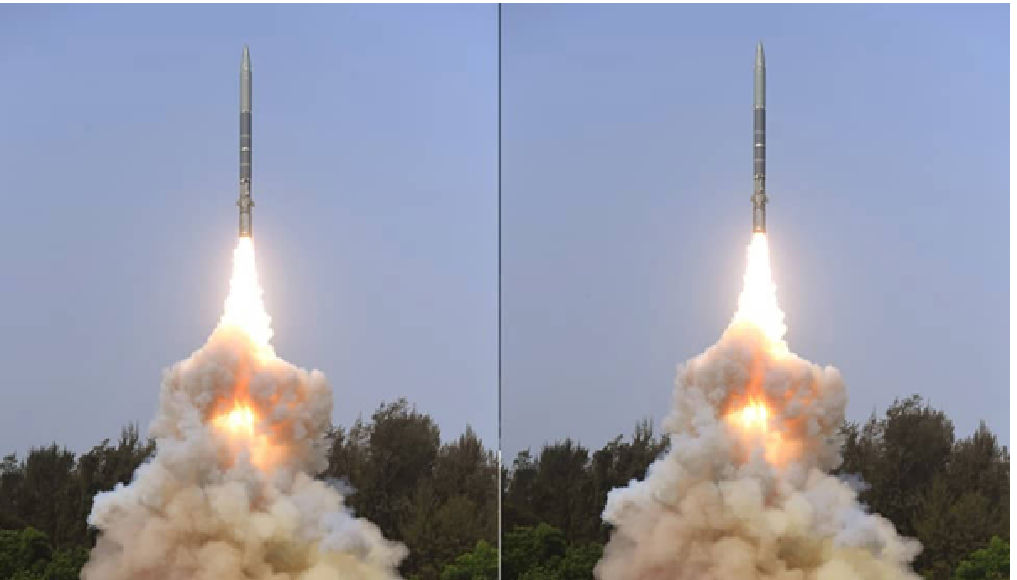
Astra Mark-2: DRDO to Equip India’s Next-Gen Missile with Advanced Chinese-Inspired Tech After Pakistan’s Failed Strike
India’s indigenous missile development program is entering a new and crucial phase, with the Defence Research and Development Organisation (DRDO) set to enhance the Astra Mark-2 air-to-air missile by integrating advanced technologies inspired by China’s PL-15 system. The decision follows a detailed technical study of a Chinese PL-15E missile that was fired by Pakistan but failed to reach its target earlier this year.
The move underscores India’s growing capability not just to produce world-class weapons systems, but also to learn from global technologies and adapt them to domestic innovation. As India strengthens its air defence and export ambitions, the Astra Mark-2 upgrade could mark a major milestone in its journey towards complete self-reliance in missile technology.
India’s Growing Defence Edge
In recent years, India has made rapid progress in developing indigenous defence platforms. From fighter jets and tanks to advanced missile systems, New Delhi has pursued a comprehensive strategy to reduce dependence on foreign suppliers. The government’s ‘Make in India’ and ‘Atmanirbhar Bharat’ initiatives have played a key role in encouraging local research and manufacturing.
India has also emerged as a rising exporter of defence equipment. In 2023–24, the country’s defence exports crossed ₹21,000 crore, with Southeast Asian, African, and Latin American nations expressing interest in Indian-built radar systems, drones, and missiles. The Astra missile family—India’s first domestically produced beyond-visual-range air-to-air missile—has been one of the most closely watched programs in this effort.
The Astra Project: India’s Answer to Global Missile Systems
The Astra series was developed to arm India’s frontline fighter aircraft such as the Sukhoi Su-30MKI, Tejas, and Mirage-2000 with modern, homegrown air-to-air weaponry. The Astra Mark-1, which entered service in 2022, can engage aerial targets beyond 100 kilometres with high precision.
Building on that success, DRDO initiated the Astra Mark-2 project to extend the range to approximately 160–170 kilometres, enabling Indian pilots to strike enemy aircraft long before they enter Indian airspace. The upcoming Astra Mark-3, already under conceptual development, aims for a range exceeding 300 kilometres, putting it in the same league as the most advanced global missile systems such as the American AIM-260 JATM and the Chinese PL-15.
The PL-15 Episode: Pakistan’s Failed Attempt and India’s Discovery
The turning point came earlier this year during Operation Sindoor, a Pakistani Air Force exercise in which a PL-15E missile—an export variant of China’s advanced long-range air-to-air weapon—was fired, reportedly from either a JF-17 Thunder or J-10C fighter aircraft.
The missile, however, failed to strike its intended target and instead landed in a field near Hoshiarpur, Punjab. On May 9, local authorities and the Indian Air Force recovered the missile intact. Unlike Indian missiles, the PL-15E lacked a self-destruct mechanism, allowing DRDO scientists to conduct an extensive examination.
For India’s defence establishment, the recovery was a rare opportunity. The PL-15 is one of China’s most advanced air-to-air missiles, often compared with the US AIM-120D and considered a symbol of Beijing’s growing aerospace prowess. A comprehensive reverse-engineering effort began shortly after the recovery, with teams from DRDO’s missile laboratories and the Air Force analysing its internal systems and electronic modules.
What DRDO Found Inside the PL-15E
Though DRDO has not publicly released its findings, officials familiar with the assessment—quoted by Hindustan Times—revealed that the analysis uncovered several advanced features. Among them were:
- Miniaturised Active Electronically Scanned Array (AESA) radar: A compact but powerful radar seeker capable of tracking multiple targets simultaneously and maintaining lock-on in high-interference environments.
- High-efficiency propulsion system: The PL-15E reportedly employs a dual-pulse rocket motor, enabling sustained speeds exceeding Mach 5, or five times the speed of sound.
- Anti-jamming technology: The missile features sophisticated countermeasures against electronic warfare systems, helping it resist signal jamming attempts.
- Enhanced data-link communication: Allowing the missile to receive mid-course guidance updates from the launching aircraft, improving hit probability at long distances.
These features reflect the growing sophistication of Chinese defence research and highlight the strategic competition underway in Asia’s aerial combat domain.
Astra Mark-2 Upgrade: Learning from the PL-15
Following the technical study, DRDO decided to incorporate some of the Chinese missile’s superior design elements into the Astra Mark-2 program. According to officials, the aim is not to copy but to adapt and improve—developing a missile that matches or exceeds global standards while remaining fully indigenous.
Key upgrades under consideration include:
- Integration of an advanced AESA seeker for better target acquisition in all weather and combat conditions.
- Improved propulsion and solid-fuel motor design to increase the missile’s top speed and range.
- Enhanced resistance to jamming and countermeasures, ensuring reliable performance in electronic warfare environments.
- Optimised weight-to-power ratio through miniaturisation, enabling greater payload capacity and fuel efficiency.
The upgraded Astra Mark-2 is expected to give Indian pilots a decisive edge in beyond-visual-range engagements, where seconds can determine the outcome of an aerial duel.
Pakistan’s Response: Seeking PL-17 and Turkish Drones
Pakistan’s military, aware of India’s advancements, has reportedly intensified its own arms procurement. According to media reports, the Pakistan Air Force (PAF) is in talks with Beijing to acquire the PL-17 missile, a longer-range successor to the PL-15, with an estimated range exceeding 300 kilometres.
In addition, Islamabad has approached Turkey for the purchase of nearly 2,000 YIHA suicide drones, part of an effort to enhance its asymmetric and precision-strike capabilities. Sources suggest that Pakistan has also shared a list of high-tech weapon requirements with the United States, hoping to modernize its arsenal amid tightening defence budgets.
These developments illustrate a renewed arms race in South Asia’s skies, with India, China, and Pakistan each investing heavily in next-generation aerial warfare systems.
Strategic Implications for India
The discovery and study of the PL-15E missile have provided DRDO with valuable insights into modern missile design and Chinese engineering philosophy. For India, this has several strategic implications:
- Accelerated innovation: Analysing the PL-15’s systems enables Indian engineers to fast-track solutions to similar challenges without starting from scratch.
- Enhanced deterrence: A more capable Astra Mark-2 will deter hostile incursions, particularly from Pakistan’s newly equipped JF-17 and J-10C fighters.
- Export potential: As the Astra family matures, it could attract interest from friendly nations seeking cost-effective air-to-air missiles, positioning India as a competitive exporter in the global defence market.
- Technology indigenisation: By mastering advanced radar and propulsion technology domestically, India can reduce its dependence on foreign suppliers such as Russia or Israel.
In essence, the Astra Mark-2 upgrade is not just a technical enhancement—it’s a strategic leap forward in India’s defence posture.
Expert Opinions
Defence analysts view DRDO’s move as a pragmatic and timely step. Retired Air Marshal Anil Chopra, Director-General of the Centre for Air Power Studies, noted that “analysing foreign weapons systems, even those that fail in operation, offers crucial intelligence. Every major power studies enemy equipment to improve its own technology.”
Similarly, aerospace expert Girish Linganna remarked that “the Astra Mark-2, incorporating lessons from the PL-15, will help India bridge the capability gap in long-range air combat. The key lies in improving seeker sensitivity and propulsion efficiency—areas where the PL-15 has shown considerable progress.”
These views reflect a growing consensus in India’s defence circles that self-reliance does not mean isolation—it means adaptation, learning, and advancement through smart research.
India’s Broader Missile Ambitions
Beyond Astra, DRDO is working on a suite of next-generation missile systems, including:
- SFDR (Solid Fuel Ducted Ramjet) missile: A propulsion technology project designed to power future air-to-air missiles with ranges beyond 350 km.
- Rudram series: Air-to-surface anti-radiation missiles capable of neutralizing enemy radar installations.
- BrahMos-II: A hypersonic cruise missile under joint development with Russia, targeting speeds of up to Mach 7.
Together, these projects are shaping India’s position as a global leader in missile innovation.
Challenges Ahead
While DRDO’s progress is commendable, challenges remain. Advanced AESA seekers and high-efficiency propulsion systems require precision manufacturing and high-end materials. Establishing supply chains for such components domestically will be critical. Moreover, integrating these systems seamlessly into India’s diverse fleet of aircraft—from Russian-origin Sukhois to French Rafales—demands extensive testing and certification.
Funding and collaboration with private industry will also determine how quickly the Astra Mark-2 reaches operational readiness. According to officials, test flights are expected within the next 12–18 months, followed by limited series production.
Conclusion: A Lesson in Adaptation and Innovation
The story of the PL-15E missile that failed to explode in Punjab may well become a defining chapter in India’s missile development history. What began as a failed Pakistani strike could end up strengthening India’s technological edge in aerial warfare.
By studying, understanding, and improving upon China’s missile design, DRDO is turning an adversary’s failure into an opportunity for innovation. The Astra Mark-2, once upgraded, will not only reinforce India’s air superiority but also symbolize the nation’s growing confidence in its defence ecosystem.
As New Delhi moves forward with a vision of self-reliance, the Astra program stands as proof that India’s scientists can match—and perhaps surpass—the best in the world. For Pakistan and China, it’s a reminder that India’s technological momentum is not slowing down anytime soon.
Related Posts