Indian Navy Displays Strength Near Yemen Coast; INS Trikand Extinguishes Fire and Saves Crew in a Brave Rescue Mission
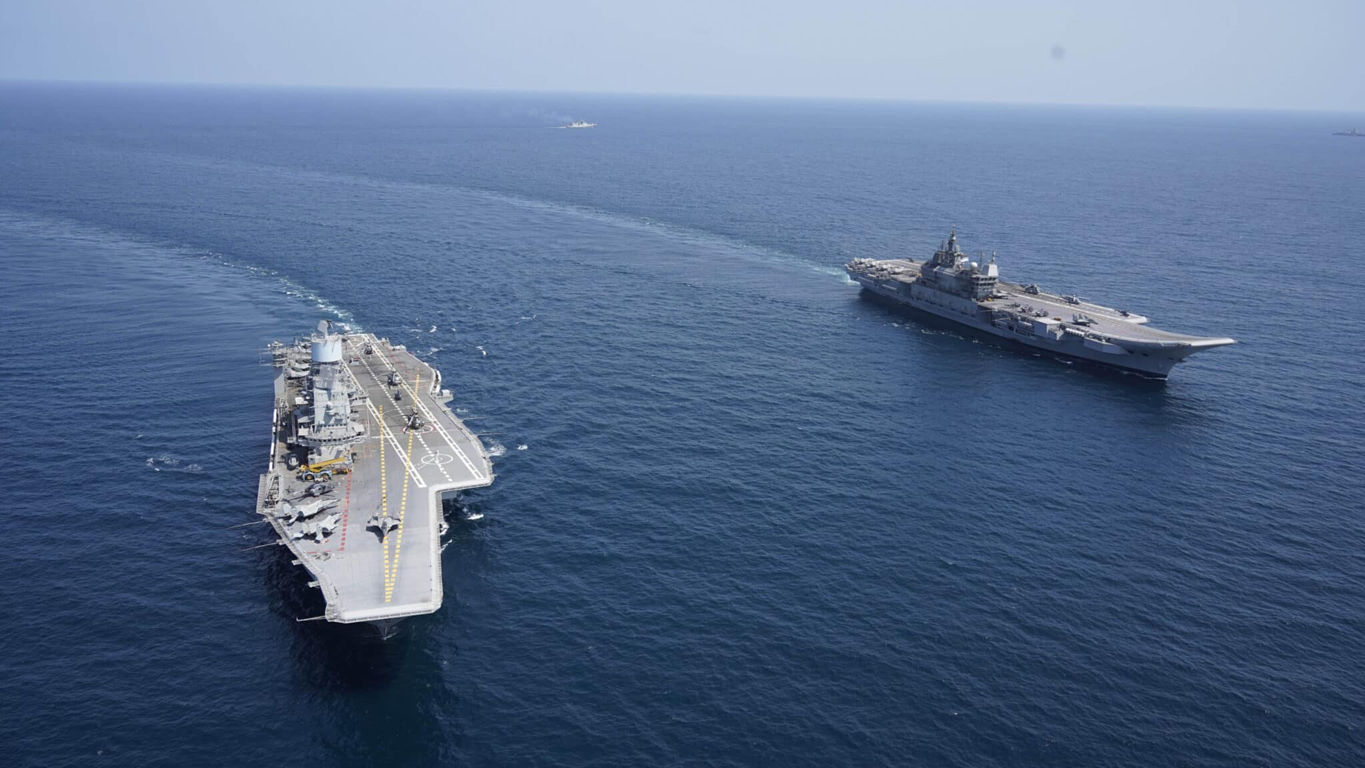
INS Trikand’s Daring Mission Off Yemen Coast: Indian Navy Battles Fire, Rescues Crew from Burning LPG Carrier MV Falcon
Djibouti: Demonstrating remarkable courage and professionalism, the Indian Navy’s warship INS Trikand, deployed in the Gulf of Aden as part of ongoing maritime security operations, executed a high-risk firefighting and rescue mission after a massive explosion and fire broke out aboard the Cameroon-flagged liquefied petroleum gas (LPG) carrier MV Falcon on October 18.
The incident unfolded roughly 113 nautical miles southeast of Aden, Yemen, in one of the world’s busiest and most volatile sea lanes. The Navy confirmed that its crew, responding to an international distress alert, coordinated with civilian vessels and regional security forces to bring the situation under control, rescue stranded sailors, and prevent further disaster in the Gulf of Aden.
Swift Response to Distress Signal
According to an official statement from the Indian Navy spokesperson, INS Trikand received a distress call from the merchant vessel MV Falcon late on Saturday evening after reports of a powerful explosion followed by a raging fire onboard. The LPG carrier, sailing from Sohar Port in Oman to Djibouti, was carrying a highly flammable cargo when the explosion occurred.
Within minutes, INS Trikand—an advanced Talwar-class frigate equipped for anti-piracy and maritime security operations—was diverted to the location under Maritime Security Operations (MSO) in the Gulf of Aden. The ship’s captain immediately activated the Search and Rescue (SAR) protocol while maintaining communication with the United Kingdom Maritime Trade Operations (UKMTO) and the European Union Naval Force’s Operation Aspides, which were also monitoring the emergency.
By the time INS Trikand arrived at the scene, the blaze had engulfed nearly 15 percent of the vessel, forcing most of the crew to abandon ship. Twenty-four out of 26 crew members—including 25 Indians and one British national—had already evacuated and were rescued by nearby merchant vessels responding to the distress call.
Firefighting in Extreme Conditions
After ensuring the safety of the survivors, the Navy deployed a specialised team of firefighters and medical personnel to board the burning MV Falcon. Despite the vessel being structurally compromised and filled with toxic fumes and intense heat, the team boarded the ship using inflatable boats and boarding ladders, beginning an hours-long effort to extinguish the flames.
According to sources, the onboard team encountered high thermal radiation, near-zero visibility due to smoke, and risk of secondary explosions caused by the LPG cargo. The Navy’s statement highlighted that the operation required “exceptional courage and professional skill,” given the constant threat of the ship’s pressurised tanks igniting.
After controlling the fire in critical compartments, the naval team conducted a systematic search to locate the two missing crew members. Tragically, their mortal remains were later recovered from the damaged section of the ship. These were subsequently transferred to INS Trikand and handed over to officials at the Indian Embassy in Djibouti for repatriation, following standard maritime protocols.
Investigation into Cause of Explosion
The British maritime security firm Ambrey, which tracks commercial shipping incidents in the region, reported that preliminary assessments suggest the explosion was accidental, possibly linked to a technical malfunction or gas leak. However, the exact cause remains under investigation by the vessel’s owners and international maritime authorities.
Ambrey added that radio transmissions received from MV Falcon before the crew abandoned ship indicated repeated attempts to control the fire. Crew members were heard reporting that the fire was spreading rapidly and the heat had reached the storage tanks. The ship eventually lost power and drifted without propulsion until assistance arrived.
The European Union Naval Force (EUNAVFOR) confirmed that Operation Aspides, its maritime mission in the Red Sea and Gulf of Aden, launched a joint search and rescue effort soon after the incident. INS Trikand’s arrival later completed the recovery phase and ensured safety in the affected area.
Heightened Maritime Tensions in the Region
The disaster occurred against the backdrop of escalating maritime tensions in the Red Sea and Gulf of Aden, where Yemen’s Houthi rebels have intensified attacks on merchant shipping. Over the past year, several vessels transiting the Bab el-Mandeb Strait—one of the world’s key chokepoints for oil and gas shipments—have come under drone and missile fire.
While there is no evidence linking the MV Falcon incident to hostile activity, maritime security agencies remain on high alert. The Houthis have repeatedly claimed responsibility for targeting commercial vessels they allege are linked to nations supporting Israel, citing solidarity with Palestinians amid the Gaza conflict.
The Indian Navy, which has maintained a continuous presence in the region since 2008 under its anti-piracy and security patrols, has often been the first responder in crises involving merchant ships, especially those with Indian crews. Officials noted that this latest operation underscores India’s growing role as a security provider in the Indian Ocean Region (IOR).
INS Trikand: A Key Asset in Maritime Security
Commissioned in 2013, INS Trikand is one of the most capable frontline frigates in the Indian Navy’s Western Fleet. Armed with surface-to-air and anti-ship missiles, advanced radar systems, and multi-role helicopters, the ship regularly participates in joint exercises and anti-piracy patrols across the Arabian Sea and Gulf of Aden.
Under the Navy’s Mission-Deployed Concept, INS Trikand has been stationed in the region to provide constant surveillance, maritime domain awareness, and emergency response. Its latest mission highlights the Navy’s multi-dimensional capability—from combat readiness to humanitarian assistance and disaster response (HADR).
A senior naval officer described the crew’s performance as “textbook professionalism,” saying, “They demonstrated precision, teamwork, and bravery under life-threatening circumstances. This operation once again proves the importance of having a capable Indian presence in international waters.”
Rescue Operation Timeline
October 18, 2025 (Saturday):
- Around 1600 hours IST, the Indian Navy’s Information Management and Analysis Centre (IMAC) in Gurugram receives an alert from UKMTO regarding a fire on board the MV Falcon.
- INS Trikand, already operating nearby under Gulf of Aden patrol, is directed to the coordinates of the incident, approximately 113 nautical miles southeast of Aden.
- Civilian merchant ships in the vicinity begin rescue of crew members who had jumped overboard after the explosion.
October 19, 2025 (Sunday):
- INS Trikand arrives on scene and assesses the situation. The ship establishes communication with merchant vessels that rescued 24 survivors.
- A firefighting team, equipped with breathing apparatus, chemical extinguishers, and thermal gear, boards the MV Falcon.
- After hours of firefighting in confined, smoke-filled spaces, the team brings the blaze under control and conducts a detailed search for missing personnel.
- The two missing sailors are found deceased in a damaged compartment. Their remains are respectfully transferred to INS Trikand.
October 20, 2025 (Monday):
- The recovered remains are handed over to the Indian Embassy in Djibouti. INS Trikand continues to monitor the area for any potential pollution or navigational hazards.
- The EU Operation Aspides issues an advisory warning vessels to maintain distance from the MV Falcon’s drift path until it is towed to port.
Global Acknowledgment of India’s Role
Following the operation, the Indian Navy received praise from international maritime organisations, including the International Maritime Organization (IMO) and partner navies operating in the region. A statement from the EU Naval Force Headquarters commended India’s “rapid and professional intervention” that “prevented a potential maritime catastrophe.”
Maritime analysts point out that India’s consistent deployment of naval assets in the region has not only safeguarded Indian shipping but also contributed to global maritime safety. Over the past decade, Indian warships have escorted more than 3,000 merchant vessels and rescued hundreds of seafarers from pirate attacks, fires, and mechanical failures in the high-risk zones near the Horn of Africa.
Human Element of the Mission
Accounts from survivors highlight the sheer panic and chaos that followed the explosion on MV Falcon. A rescued crew member reportedly told investigators that the blast was sudden and intense, sending shockwaves through the vessel. “There was smoke everywhere. We could feel the heat through the deck plates. Within minutes, we knew we had to abandon ship,” he recounted.
Another crew member described how distress messages were sent repeatedly but received no immediate reply due to communication breakdowns caused by power loss. “When we saw the Indian Navy ship approaching, it felt like hope had returned,” he added.
INS Trikand’s onboard medical team treated several crew members for minor burns and smoke inhalation. The survivors were later provided accommodation and medical assistance in Djibouti before being repatriated.
LPG Cargo and Risk of Secondary Explosions
Carrying liquefied petroleum gas, MV Falcon posed a severe hazard not only to its crew but also to nearby shipping routes. LPG, being highly combustible, could have triggered chain explosions had the fire reached the main storage tanks.
According to naval sources, the firefighting strategy focused on cooling the tank areas using seawater sprays while isolating the engine and cargo compartments. The precision of this response was critical in averting a larger catastrophe.
The European Union Naval Force subsequently issued navigational warnings, directing all commercial ships within a 20-nautical-mile radius to reroute until the vessel was stabilized and towed to safety by a contracted tugboat.
India’s Expanding Maritime Footprint
India’s growing presence in the Gulf of Aden and Western Indian Ocean aligns with its broader strategic goal of ensuring freedom of navigation, maritime security, and safe passage for trade. Over 70 percent of India’s oil and gas imports pass through this corridor, making stability in these waters critical for national energy security.
Through operations like Mission SAGAR, Operation Samudra Setu, and continuous anti-piracy patrols, the Indian Navy has evolved into a credible regional first responder. INS Trikand’s recent mission adds another chapter to India’s maritime diplomacy—projecting both capability and compassion.
Defence analysts note that this incident reaffirms the importance of India’s Blue-Water Navy aspirations. “What we are witnessing is India’s steady transformation from a coastal defence force into a responsible net security provider,” said a senior maritime expert at the National Maritime Foundation.
Conclusion
The INS Trikand operation off the Yemen coast stands as a powerful testament to the Indian Navy’s professionalism, courage, and humanitarian ethos. By extinguishing a major fire aboard a foreign vessel, rescuing sailors, and preventing a possible environmental disaster, India once again demonstrated its commitment to maritime safety in one of the world’s most strategic and high-risk waterways.
As geopolitical tensions simmer in the Red Sea and Gulf of Aden, such missions highlight the critical role played by naval forces in ensuring the safety of global commerce. For the Indian Navy, the operation not only saved lives but also reinforced the message that the Indian Ocean remains a zone of peace and cooperation—protected by those prepared to serve in the face of danger.
Related Posts