Indian Army Enhances Combat Effectiveness with 4.25 Lakh CQB Carbines for Confined Spaces
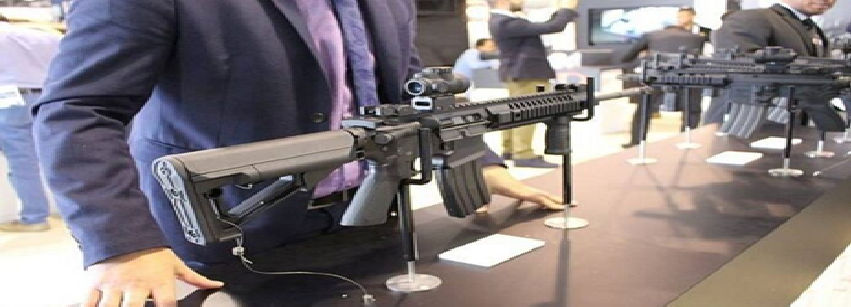
India Modernizes Infantry: Army Acquires 4.25 Lakh CQB Carbines for Superior Close-Combat Capabilities
The Indian Army is taking a major leap toward modernizing its infantry by signing a landmark contract for the acquisition of domestically produced Close Quarter Battle (CQB) Carbines. Valued at ₹2,770 crore (approximately USD 333 million), this historic procurement covers 4.25 lakh (425,000) next-generation CQB carbines, representing a significant milestone in India’s ongoing defense modernization efforts.
Lieutenant General Ajay Kumar, Director General of Infantry, highlighted that this contract is an essential step in equipping soldiers with advanced, high-performance firepower to meet the evolving challenges of contemporary warfare. “This acquisition strengthens our infantry and ensures soldiers are armed with modern, efficient, and reliable weapons suitable for close-combat operations,” he said.
What Are CQB Carbines?
CQB Carbines are specially designed short-range firearms intended for close-quarters combat, such as urban warfare, counter-insurgency operations, and raids in confined or restricted spaces. These carbines are engineered to deliver high lethality in tight environments, making them ideal for operations where speed, agility, and precision are critical.
The newly acquired CQB Carbines differ significantly from older-generation weapons in several key aspects:
- Lightweight and Agile: Soldiers can move swiftly and efficiently in confined spaces, improving their operational effectiveness during raids or urban missions.
- High Accuracy: Designed for fast target acquisition, these carbines allow soldiers to engage threats more precisely.
- Indigenous Design: Fully developed and manufactured in India, supporting the government’s ‘Aatmanirbhar Bharat’ (Self-Reliant India) initiative.
- Modular Attachments: The weapons are compatible with modern accessories such as optical sights, tactical flashlights, and suppressors, enhancing versatility in night operations and stealth missions.
These features collectively make the CQB carbines highly suitable for modern combat environments, including urban conflict zones and border security operations.
Contract Details and Manufacturing Partners
The massive contract for 4.25 lakh CQB carbines will be executed by two Indian private sector companies:
| Company | Production Share | Approximate Quantity |
| Bharat Forge | 60% | 2.55 lakh (255,000) |
| PLR | 40% | 1.70 lakh (170,000) |
The first batch of carbines is expected to be delivered next year, with frontline troops deployed along India’s borders receiving the weapons first. This procurement is also expected to significantly enhance India’s defense manufacturing capacity and reduce reliance on foreign suppliers.
Lt. Gen. Kumar emphasized that the initiative is not merely about acquiring weapons, but also about building a robust domestic defense ecosystem, promoting technological innovation, and creating employment opportunities in the defense sector.
Replacing the Sterling Carbines
The new CQB carbines will replace the Army’s aging 9x19mm Sterling Carbines, which were introduced in the 1940s. These Cold War-era rifles have become obsolete in modern combat scenarios, particularly in counter-terrorism operations and close-quarter urban engagements.
By replacing these outdated rifles, the Army expects to provide soldiers with:
- Enhanced Accuracy: Faster and more precise target engagement.
- Improved Safety: Safer handling in confined environments.
- Superior Close-Combat Capability: Better performance against contemporary threats, especially in urban and counter-insurgency operations.
This upgrade ensures that Indian soldiers are equipped with firearms that meet the requirements of 21st-century warfare.
Broader Infantry Modernization
The carbine procurement is part of a larger, multi-pronged modernization program for the Indian infantry. The initiative focuses on several critical areas:
- Lethality: Equipping troops with more effective and high-performing weapons.
- Mobility: Enhancing the ability of soldiers to maneuver quickly in diverse terrains.
- Situational Awareness: Improving real-time battlefield intelligence through advanced communication and surveillance tools.
- Survivability: Enhancing soldier protection with modern gear and tactics.
- Training: Providing updated programs for the effective use of sophisticated weaponry.
Lt. Gen. Kumar noted that this modernization is vital to ensuring that Indian infantry remains combat-ready, capable of addressing threats along the borders with Pakistan and China, as well as handling counter-terrorism operations domestically.
Key Advantages of the New CQB Carbines
The strategic advantages of introducing these carbines are numerous:
- Counter-Terrorism: Enables quick and precise engagement of enemies in urban environments, particularly in operations against hidden adversaries.
- Border Security: Lightweight design and modularity make the carbines effective in diverse terrains, including mountains, forests, and urban areas.
- Troop Welfare: Reduced weapon weight decreases fatigue, improving soldier agility and endurance during prolonged operations.
- Self-Reliance: Promotes indigenous manufacturing, strengthens local technological expertise, and creates employment opportunities.
The combination of these benefits ensures that the Indian Army is not only better armed but also more agile, responsive, and capable of handling modern combat scenarios.
Indigenous Manufacturing and Technological Edge
One of the most significant aspects of this procurement is that the carbines are entirely developed and manufactured in India. This aligns with the government’s ‘Aatmanirbhar Bharat’ initiative, which aims to foster self-reliance and reduce dependence on imported defense equipment.
The domestic manufacturing process involves advanced technology and precision engineering, which enhances India’s defense industrial base. It also positions the country as a potential exporter of modern small arms in the future, further strengthening the Make in India vision.
Deployment and Training
The delivery of these carbines will be prioritized for soldiers stationed in frontline posts and sensitive border areas. Specialized training programs will accompany the deployment to ensure that troops can effectively operate the new weapons in close-quarter combat situations.
Training will focus on:
- Rapid target acquisition and engagement in urban and restricted spaces.
- Efficient use of modular attachments such as optics, suppressors, and tactical lights.
- Safe handling and maintenance of modern firearms in challenging environments.
These training measures will ensure that the new carbines are fully utilized to their maximum potential, enhancing operational efficiency and combat readiness.
Impact on Infantry Capability
The introduction of these 4.25 lakh CQB carbines will fundamentally transform the Indian Army’s close-combat capabilities. Soldiers will be able to respond faster to threats, operate more efficiently in urban and mountainous terrains, and execute counter-terrorism operations with greater precision.
Lt. Gen. Kumar emphasized that this acquisition is part of a broader strategy to ensure that the Indian infantry remains one of the most modern and effective forces globally.
Related Posts