India Launches Massive ‘Exercise Trishul’ From Sir Creek To Karachi Region; Pakistan Raises Alert Levels
New Delhi: India’s western coastline has become the stage for one of the most extensive military drills in recent history, as the Army, Navy, and Air Force come together for a massive tri-service exercise dubbed ‘Exercise Trishul.’ The operation, lasting 12 days from October 30 to November 10, spans from the marshy Sir Creek wetlands near Gujarat all the way to the approaches of Karachi, showcasing India’s growing prowess in joint warfare and inter-service coordination.
Officials say this is the largest integrated wargame undertaken by the Indian armed forces in recent years and is aimed at refining combat readiness, interoperability, and real-time decision-making across all domains of warfare—land, air, and sea. A Notice to Airmen (NOTAM) has already been issued to restrict civilian air movement in designated areas, highlighting the scale of ongoing operations.
A New Benchmark in Joint Preparedness
According to senior defence officials, Exercise Trishul serves as the first comprehensive tri-service drill since the highly publicized Operation Sindoor, which was conducted earlier this year to display India’s modern military capability. Building on the lessons learned from Sindoor, Trishul’s primary goal is to test integrated battle doctrines, streamline communication systems, and validate joint strategies under high-intensity conditions.
“This is the first time after Operation Sindoor that all three services are operating together in such a large-scale environment,” a senior military official told reporters. “It is designed to test the synergy of our armed forces and ensure we can act as one unified entity in real-world conflict scenarios.”
The exercise underscores India’s push toward joint theatre command structures, a concept being developed to improve response time and coordination among the three branches of the military.
Air Power: Precision and Reach
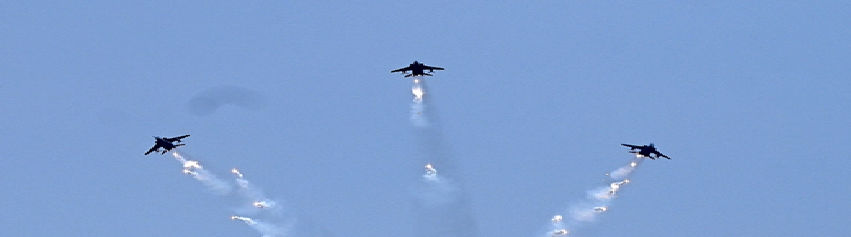
The Indian Air Force (IAF) has taken centre stage in Trishul’s aerial component, deploying its most advanced fighters, surveillance platforms, and refuelling aircraft. The IAF’s Rafale and Su-30MKI fighters are executing deep-strike missions, air dominance patrols, and close-air-support sorties, coordinated with ground and naval elements. Supporting them are Remotely Piloted Aircraft (RPAs) and Unmanned Aerial Vehicles (UAVs) that provide real-time reconnaissance and intelligence data.
Additionally, IL-78 aerial refuellers and Airborne Early Warning & Control (AEW&C) aircraft are maintaining round-the-clock airspace monitoring and extending operational reach. This combination allows the Air Force to sustain long-duration missions and ensure continuous oversight across the western theatre.
An Air Force officer described the operation as “a rehearsal for integrated combat, where airpower is fully synchronized with land and sea elements.” He added that the emphasis is on rapid coordination and precision targeting, reflecting India’s evolution toward technology-driven warfare.
Navy Dominates the Seas
Parallel to air operations, the Indian Navy has deployed a formidable armada across the Arabian Sea. Major surface combatants, including guided-missile destroyers, frigates, and corvettes, are conducting simulated combat patrols and live-fire drills. Long-range maritime reconnaissance aircraft such as the P-8I Poseidon are flying sorties to detect and engage hypothetical enemy movements.
Naval formations are practicing blockade and anti-submarine warfare, while amphibious landing exercises are taking place along the Saurashtra coast. The Navy’s coordination with Air Force fighter cover and Army amphibious units demonstrates the maturing interoperability between services.
“These drills reflect the complexity of a real maritime conflict scenario,” said a retired naval strategist. “The aim is to ensure that the Navy, Air Force, and Army operate seamlessly as one fighting machine when called upon.”
The Army on the Ground
On land, the Indian Army has mobilized over 25,000 personnel along with an impressive range of mechanized assets. Columns of main battle tanks, infantry fighting vehicles, and artillery batteries are executing large-scale manoeuvres in desert and coastal sectors. Supporting firepower comes from surface-to-surface missile systems, rocket launchers, and armed helicopters conducting coordinated strikes.
The Army’s participation also features extensive use of indigenous defence technologies, including locally produced artillery guns, drones, and surveillance systems developed under India’s ‘Aatmanirbhar Bharat’ (self-reliant India) initiative. These systems are being tested under live operational conditions to validate their performance in complex combat environments.
“The aim is not just to practice tactics but to evaluate new-generation systems under realistic stress conditions,” said an Army source. “It’s about combining human capability with indigenous technology.”
Testing Integration and Interoperability
Exercise Trishul’s real purpose, according to defence planners, lies in its ability to test interoperability and information-sharing between the services. In an era where wars are fought simultaneously across multiple domains, the capacity to coordinate quickly and efficiently can determine success or failure.
The exercise includes networked command centres that connect ground formations, naval task groups, and air assets through secure, encrypted communications. This ensures that all three forces share a common operational picture, enhancing coordination and precision.
Cybersecurity resilience, communications integrity, and data exchange protocols are being tested intensively to prepare for potential electronic warfare challenges.
A senior official explained: “The focus is on command integration—ensuring that decisions can be made instantly, and all services can respond as one entity. This is modern warfare, where speed and synchronization matter as much as firepower.”
Pakistan on High Alert
While Indian officials have emphasized that Trishul is a routine military exercise, reports suggest that its scale and location have triggered unease in Pakistan. According to a CNN-News18 report, Pakistani military installations along the southern corridor have been placed on heightened alert, with special monitoring of the Sir Creek and Karachi sectors.
Sources indicate that the Pakistan Army’s Southern Command has intensified surveillance activities and deployed additional assets along the border to track Indian troop movements. Intelligence inputs also suggest that Pakistan’s air defence network is maintaining a state of readiness amid the ongoing drills.
The Sir Creek-Sindh-Karachi axis—a sensitive corridor where land and maritime boundaries intersect—has long been a contentious area between India and Pakistan. Analysts say that India’s choice to conduct a major tri-service drill in this region underscores its determination to assert strategic dominance along its western frontier.
Strategic Timing and Broader Implications
The timing of Exercise Trishul is significant. Coming months after Operation Sindoor and amid ongoing global geopolitical shifts, the exercise reinforces India’s intent to project strength and readiness on multiple fronts. The wargame also aligns with the government’s long-term goal of establishing theatre commands, which will allow for unified control over resources during conflicts.
Defence experts believe that such large-scale exercises are vital for adapting to new-generation warfare, which increasingly involves cyber, space, and electronic domains alongside conventional operations. Trishul, therefore, is seen as part of India’s broader effort to future-proof its armed forces against emerging security challenges.
“Trishul sends a clear message of deterrence and preparedness,” said defence analyst Major General (Retd.) Sanjay Chauhan. “It demonstrates that India’s tri-service integration is operationally mature and capable of responding effectively to any contingency.”
Technology and Self-Reliance at the Core
Another defining feature of Exercise Trishul is its emphasis on indigenous defence technology. The Defence Research and Development Organisation (DRDO) and several private sector companies are reportedly observing the exercise to assess system performance in real-time. This includes trials of AI-enabled reconnaissance drones, satellite communication systems, and automated logistics software designed to enhance battlefield efficiency.
Such live tests are crucial for fine-tuning domestic systems under operational conditions, bridging the gap between laboratory design and battlefield utility. This supports India’s goal of becoming a global defence manufacturing hub while reducing dependency on imported equipment.
Message to the Region
Regional analysts view Exercise Trishul as a strategic message beyond its immediate military purpose. Conducting large-scale joint manoeuvres near Pakistan’s coast, experts say, serves to reinforce India’s deterrence capabilities while reassuring allies about its defence preparedness.
“India’s exercises are conducted on its own territory, but their scale naturally draws attention,” said Dr. Meera Pathak, a defence policy expert. “Trishul signals to both adversaries and partners that India’s integrated defence capability is not theoretical—it is operational and ready.”
Future of Joint Warfighting
The lessons from Exercise Trishul are expected to play a central role in shaping India’s future joint operational doctrines. Defence planners are already working on incorporating the findings into upcoming reforms, particularly in the establishment of integrated theatre commands.
By emphasizing interoperability, communication, and coordination, Trishul sets the foundation for India’s transformation from a service-based force structure to a joint force framework capable of managing simultaneous multi-front operations.
Conclusion: A Clear Signal of Preparedness
As Exercise Trishul progresses through its final phases, the message emerging from India’s western coast is unmistakable. The Indian Army, Navy, and Air Force are not only rehearsing war scenarios but are actively validating the doctrines, technologies, and systems that will define future conflicts.
From the salt marshes of Sir Creek to the blue expanse near Karachi, India’s tri-service exercise is showcasing the seamless fusion of land, sea, and air power. It stands as a testament to India’s strategic vision—an integrated defence force that is agile, technologically advanced, and ready for any challenge.
In a world of evolving threats, Exercise Trishul demonstrates that India’s military readiness is not confined to statements or policy documents. It is being tested, refined, and proven—on the ground, in the skies, and across the seas.
Related Posts