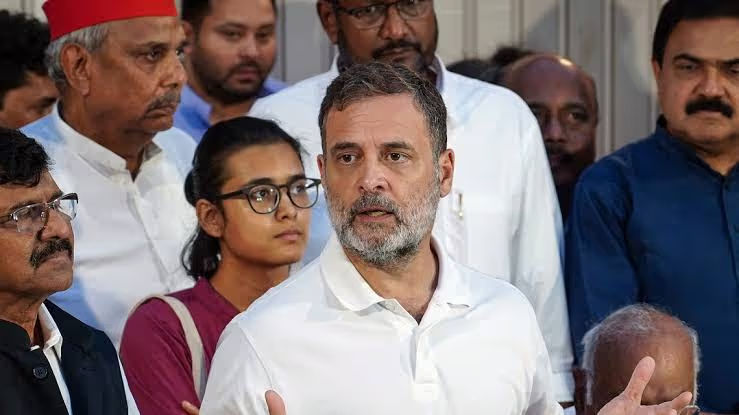
Former Infosys employee, who retired at 38 and is now reportedly worth ₹300 crore, continues to live a simple life in Bengaluru, according to an X user.
Retired at 38, Now Worth ₹300 Crore? A Viral Post About a Former Infosys Engineer Rekindles Nostalgia and Debate
Bengaluru | Updated: October 2025 —
A throwback video from the 1990s, reportedly filmed inside the Infosys canteen in Bengaluru, has gone viral on social media — sparking waves of nostalgia, debate, and reflection about the company’s early years and the fortunes of its pioneering employees.
The grainy footage shows a group of young engineers — dressed in casual shirts, chatting animatedly over stainless steel plates of lunch — a stark contrast to today’s sprawling, glass-walled tech campuses. For many, the clip rekindled memories of a simpler, hungrier era when India’s IT revolution was just beginning to take shape.
But beyond nostalgia, a claim accompanying the viral video has sparked intense discussion online.
The Viral Claim: Early Retirement, Massive Wealth, and Simple Living
According to an X (formerly Twitter) user, one of Infosys’ early employees — reportedly among the first 5,000 hires — had managed to retire at the age of 38, back in 2006, after amassing a fortune of nearly ₹100 crore through stock options and share sales.
The user claimed to personally know the individual, describing him as someone who, despite his enormous wealth, continues to live a modest life in Bengaluru — without luxury cars, expensive properties, or foreign holidays.
“He neither moved abroad nor flaunted his success,” the post read. “He still lives in the same city, drives a regular car, and keeps a low profile. All his wealth came from Infosys stock options — not from salary savings.”
The post went on to speculate that, given Infosys’ stock appreciation over the past two decades, the individual’s net worth could today stand between ₹200–300 crore.
The story — mixing corporate legend with personal humility — quickly caught fire. Thousands of users shared and discussed it, praising the alleged ex-employee’s groundedness and lauding Infosys’ early culture of employee ownership.
Social Media Divided: Admiration Meets Scepticism
While many were inspired by the tale of wealth without extravagance, others weren’t convinced by the numbers. As The Economic Times reported, several X users questioned whether the claim was mathematically feasible.
One commenter wrote:
“₹100 crore in 2006 would have required holding around 53 lakh Infosys shares since the 1990s. Unless this person was very senior or connected to the founders, it seems highly unlikely.”
Another user, identifying as a former Infosys employee from the 1990s, added:
“You’re overestimating by a factor of ten. Early employees did extremely well, yes — but ₹100 crore before 2006 sounds exaggerated. Even senior managers rarely reached that figure back then.”
Financial analysts, too, pointed out that while Infosys’ Employee Stock Option Plans (ESOPs) were indeed life-changing, the truly staggering levels of wealth were usually limited to a handful of early executives or founding members.
Infosys: Humble Beginnings of a Global Giant
Founded in 1981 in Pune by N.R. Narayana Murthy, Nandan Nilekani, N.S. Raghavan, S. Gopalakrishnan, S.D. Shibulal, K. Dinesh, and Ashok Arora, Infosys started with a capital of just ₹10,000 — borrowed from Murthy’s wife, Sudha Murthy.
In the early years, operations were run from the front room of Murthy’s modest home, while the registered office was located at Raghavan’s residence. From those humble beginnings, the company gradually grew into a symbol of India’s economic liberalisation and technological rise.
By the late 1990s, Infosys had become one of the world’s most admired IT services firms — the first Indian company to be listed on the NASDAQ — and an aspirational workplace for a generation of engineers.
Today, the firm employs over 3 lakh people worldwide and serves global clients across industries, but for many, its true legacy lies in the way it redefined wealth creation for India’s middle class.
The Power and Promise of Early ESOPs
Infosys’ Employee Stock Option Plan (ESOP), introduced in the early 1990s, became a pioneering move in India’s corporate history. It allowed employees — even at junior levels — to own a stake in the company’s growth.
During the dot-com boom between 1995 and 2000, Infosys’ share price soared, creating an entirely new class of employee millionaires. Engineers who joined in the early days and stayed long enough often found that their modest stock grants had multiplied several times in value.
When Infosys shares listed publicly in 1993 at ₹95 per share, few could have predicted the meteoric rise that followed. Within a decade, stock splits and bonus issues made the shares accessible to thousands of employees, and the company’s market capitalisation grew exponentially.
While most mid-level engineers gained respectable sums — enough to buy homes or retire debt-free — senior managers and early joiners who held on to their options during the late 1990s saw wealth creation on an entirely different scale.
Experts Weigh In: The Math Behind the Myth
To evaluate the viral claim, market analysts have pointed out a few numbers. Infosys’ share price, adjusted for splits and bonuses, grew nearly 1,000 times between its listing and 2006. However, amassing ₹100 crore in 2006 would have required significant stock holdings — possibly millions of shares.
Assuming an average exercise price of ₹200 per share, an individual would have needed to sell shares worth over ₹100 crore, which implies ownership of at least 5 lakh shares — an unlikely number for a mid-level employee.
Unless the individual had joined in the very first few years, participated in multiple ESOP rounds, and held on through every split and bonus, such wealth accumulation seems improbable.
Nevertheless, early ESOP beneficiaries did become extremely affluent. Some retired early, others started startups, and a few even became angel investors in the next wave of Indian tech ventures.
Living Simply Amid Abundance
Despite doubts about the exact figures, the viral post struck a chord because it resonated with India’s cultural admiration for modesty amidst success.
The alleged Infosys alumnus — whether symbolic or real — is portrayed as someone who embodies the “Infosys culture”: discipline, humility, and quiet prosperity.
In a city like Bengaluru, where many tech millionaires prefer understated lifestyles, the story doesn’t feel entirely out of place. Apartments instead of mansions, ordinary sedans instead of luxury cars, and weekend walks in Cubbon Park instead of flashy vacations — such are the hallmarks of a generation that built India’s IT revolution.
Sociologists note that this ethos of “simple living, high thinking” is deeply rooted in the early IT community’s values — influenced by founders like Narayana Murthy, who often emphasized ethical wealth and restraint.
The Broader Context: India’s IT Boom and Wealth Transformation
The 1990s and early 2000s marked a turning point for India’s economy. Liberalisation opened global markets, and companies like Infosys, TCS, and Wipro became symbols of the country’s software prowess.
Infosys, in particular, became the face of India’s IT miracle — offering young engineers a chance to work for global clients, travel abroad, and earn in dollars. Stock options added another layer of aspiration.
A 2006 report by Business Standard had noted that Infosys’ ESOP programme had created over 2,000 dollar-millionaires within the company. For many, this was the first time ordinary employees in India could build wealth through equity participation.
Today, that same model has been replicated across startups — from Flipkart and Zoho to newer firms like Zerodha and Freshworks — where employees are again reaping huge benefits from stock options.
Scepticism and Verification: The Challenges of Viral Stories
While the story continues to fascinate, The Economic Times noted that it could not independently verify the identity or net worth of the individual mentioned in the viral post.
The lack of documentation or corroboration makes it difficult to confirm whether the person indeed retired in 2006 at 38 or owned such a large equity stake.
Yet the fact that so many users found the tale believable underscores a deeper truth — that Infosys’ early culture of ownership did, indeed, create transformative wealth for many who took the risk to join a then-unknown startup in the 1980s and 1990s.
Legacy and Lessons
The “Infosys model” remains one of India’s most powerful corporate legacies. It demonstrated that success could be built on integrity, transparency, and broad-based wealth creation rather than hierarchy or privilege.
For the new generation of tech professionals and startup founders, the viral post serves as a reminder of how long-term conviction and equity participation can create generational wealth — and how humility can coexist with prosperity.
Even if the details of the 38-year-old retiree’s fortune are uncertain, the symbolism endures: India’s IT revolution not only transformed global outsourcing but also quietly reshaped middle-class aspirations, proving that a ₹10,000 dream from a Pune apartment could one day build fortunes worth hundreds of crores.
Final Word
The story — whether apocryphal or authentic — continues to inspire. It reflects the idea that the true wealth of India’s early tech pioneers wasn’t just in share prices or market capitalisation, but in the collective transformation they brought about.
Infosys’ early employees, through their dedication and belief in a fledgling company, became the unlikely architects of a new kind of Indian success story — one defined by discipline, not display; patience, not extravagance.
And as the viral clip from the old canteen circulates across timelines, it brings back not just memories of a bygone era — but also the enduring reminder that in India’s journey from code to crore, humility remains the most valuable currency of all.
Related Posts