Earthquake measuring 6.1 hits Türkiye, causing devastation to structures
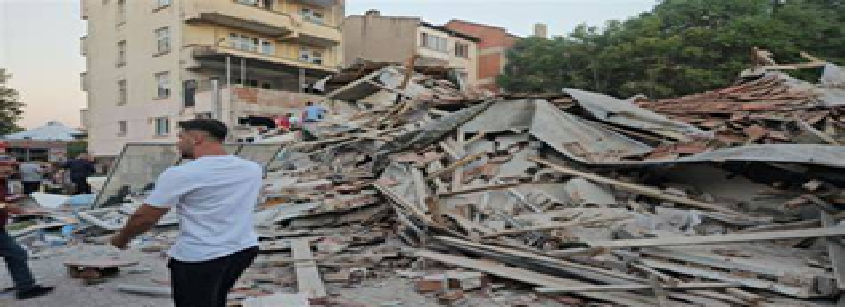
A powerful earthquake struck western Türkiye late Monday night, causing multiple already-damaged buildings to collapse and sending thousands of residents rushing into the streets in fear. While authorities confirmed that there were no immediate reports of fatalities, officials warned that assessments were ongoing and aftershocks could pose ongoing risks throughout the region.
The tremor — measured at magnitude 6.1 by Türkiye’s Disaster and Emergency Management Authority (AFAD) — was centered near the town of Sindirgi in Balikesir province. According to official data, the quake struck at 22:48 local time at a relatively shallow depth of approximately 6 kilometers, making its impact more strongly felt at the surface. Tremors were reported in several major cities including Istanbul, Bursa, Manisa, and Izmir, where residents experienced shaking strong enough to trigger alarm and evacuations from high-rise buildings.
Damaged Buildings Collapse After Fresh Shock
Interior Minister Ali Yerlikaya stated that at least three unoccupied buildings and a two-storey commercial structure gave way during the quake. Each of these structures had previously suffered structural damage during a 6.1-magnitude earthquake that hit the same region in August, raising concerns about the resilience of buildings left unrepaired after earlier seismic events.
Footage broadcast on local television showed plumes of dust rising into the night sky, as bystanders gathered around piles of debris that once formed the walls of abandoned houses and small shops. Rescue teams and local law enforcement quickly cordoned off streets to prevent people from entering hazardous zones.
Balikesir’s Governor, Ismail Ustaoglu, confirmed that at least 22 people sustained injuries, mostly due to panic-related falls and attempts to flee buildings during the intense shaking. “The fear triggered by earthquakes can cause psychological and physical reactions such as sudden running, jumping from stairways, and fainting,” he explained.
Emergency Shelters Opened as Rain Falls
With aftershocks rattling the region through the night, many residents chose not to return to their homes. Local television outlet Haberturk reported scenes of worried families gathering in public squares, some wrapped in blankets and others seeking shelter beneath makeshift coverings as rain began to fall.
Governor Ustaoglu assured displaced residents that mosques, schools, and sports facilities across Sindirgi would remain open through the night, offering safe refuge for those who feared further collapses.
“We understand the trauma these communities have been through,” he said. “Our teams are continuing inspections around the clock. Safety remains the priority.”
Previous Quake Trauma Still Fresh
Sindirgi district administrator Dogukan Koyuncu told Anadolu Agency that structural inspections were ongoing throughout the night. He emphasized that while no deaths had been confirmed, search and security operations would continue as the scale of damage became clearer.
The August earthquake, also centered in the Sindirgi region, killed at least one person and injured dozens. Many buildings damaged during that event had yet to undergo complete repair or reconstruction, leaving them vulnerable to secondary collapses during Monday’s tremor. AFAD had previously noted that while most critical infrastructure had been reinforced, private residential and commercial properties still faced risks due to limited restoration works.
Residents expressed frustration with the slow pace of inspections and retrofitting. “We reported cracks after the last quake, but no one came to repair our building,” a Sindirgi shopkeeper told local broadcasters. “Now we are scared every time even a truck passes.”
Felt Across Major Urban Centers
Reports from Istanbul — over 200 kilometers away — described buildings trembling and lights swaying in some districts. Emergency hotlines recorded high call volumes from concerned residents, though no major damage was identified in the city. In Bursa and Manisa, several apartment blocks were temporarily evacuated while authorities carried out rapid safety checks.
Seismologists noted that the quake occurred along one of Türkiye’s numerous active fault lines, part of the country’s broader vulnerability to seismic disasters.
Türkiye’s Seismic Vulnerability in Focus
Türkiye lies on the intersection of the Anatolian, Eurasian, and African tectonic plates — a setting that makes the country one of the most earthquake-prone regions in the world. According to experts from the Kandilli Observatory and Earthquake Research Institute, the western provinces, including Balikesir and Izmir, are located near the North Anatolian Fault system, which has produced some of the deadliest earthquakes in Turkish history.
Recent seismic activity has kept both the public and scientists on high alert. Throughout 2024 and 2025, medium-magnitude quakes repeatedly rattled regions across the country, although none were as catastrophic as the 2023 double earthquake disaster.
That tragedy, involving a magnitude 7.8 quake followed by a 7.5 aftershock in southern Türkiye, killed more than 53,000 people, devastated infrastructure in 11 provinces, and displaced millions from their homes. It remains Türkiye’s deadliest natural disaster in modern history. In neighboring Syria, at least 6,000 additional deaths were reported due to widespread destruction in the north.
Stricter Building Codes — But Enforcement Remains a Concern
Following the February 2023 disaster, Ankara accelerated reforms aimed at strengthening building construction standards and improving urban transformation efforts. However, enforcement continues to lag in some parts of the country, experts said.
Earthquake engineer and researcher Ayhan Yildiz noted in a televised discussion that the collapse of previously damaged buildings in Sindirgi served as a stark warning for nationwide risk management.
“If a building was weakened by the last quake and left unrepaired, it becomes a ticking time bomb,” he said. “Every aftershock or moderate quake can bring it down. Rapid assessments must be followed by visible action, not just paperwork.”
Officials acknowledged that financial constraints and bureaucratic delays continue to hinder retrofitting efforts, particularly in rural districts where older homes often fail to meet safety standards.
Psychological Impact Still Deep
Emergency workers reported numerous residents experiencing trauma-related symptoms including anxiety attacks and fear of re-entering enclosed spaces. Local psychologists were dispatched to temporary shelters to support families, particularly children who showed signs of distress.
“We are not only responding to physical damage,” said a crisis counselor from Balikesir’s health administration. “Earthquakes leave invisible scars.”
Government Urges Calm as Aftershocks Continue
Authorities advised residents to remain cautious as aftershocks — some measuring above magnitude 4 — persisted during the night and into Tuesday morning. AFAD repeatedly urged people to avoid entering visibly cracked buildings until engineering evaluations were complete.
Interior Minister Yerlikaya posted on social media:
“Our teams are working diligently. Please follow official announcements and avoid spreading unverified information. Safety checks are ongoing.”
Local mayors coordinated relief supplies including blankets, temporary heaters, and bottled water, preparing for the possibility of longer-term displacement if additional quakes occur.
Resilience and Recovery
Despite widespread fear, residents displayed their characteristic resilience. Community volunteers assisted emergency teams, helped elderly neighbors evacuate, and distributed warm drinks in public gathering spots.
The Sindirgi municipality confirmed that regional power and communications infrastructure remained largely operational, allowing authorities to maintain efficient emergency coordination. Road networks were also reported to be largely unaffected, allowing rapid deployment of search and response units.
Monitoring Continues as Situation Develops
Seismologists continue to analyze whether Monday night’s quake is part of a longer-term seismic sequence or an isolated event. Historical data suggests the region is prone to recurring activity, meaning a cautious approach will remain necessary for days or even weeks.
As daylight arrived Tuesday, building inspection teams spread across affected districts, documenting structural damage and evaluating long-term safety risks. AFAD stated that final loss and damage assessments may take several days to complete.
Conclusion
While the magnitude 6.1 earthquake in western Türkiye caused no known deaths and relatively limited direct destruction, it served as another reminder of the nation’s exposure to powerful seismic threats and the importance of enforcing stronger building safety measures. The collapse of weakened structures, widespread panic, and overnight displacement highlighted ongoing vulnerabilities — particularly in regions still recovering from previous disasters.
Authorities emphasized that Türkiye will remain vigilant as aftershocks continue and full evaluations unfold. With the emotional toll still evident and residents wary of returning home, stability may take time to restore in Sindirgi and neighboring districts.
Related Posts